
Chef Fai
Dry Egg Noodles (Ba Mee Haeng)
The four pillars live at the bottom of the bowl before the noodles ever touch it: nam pla for salt, sugar for sweet, vinegar for sour, chili for heat. Every noodle cart in Bangkok runs on this principle.
A cooking platform built around craft, culture, and the stories behind what we eat.
Created by
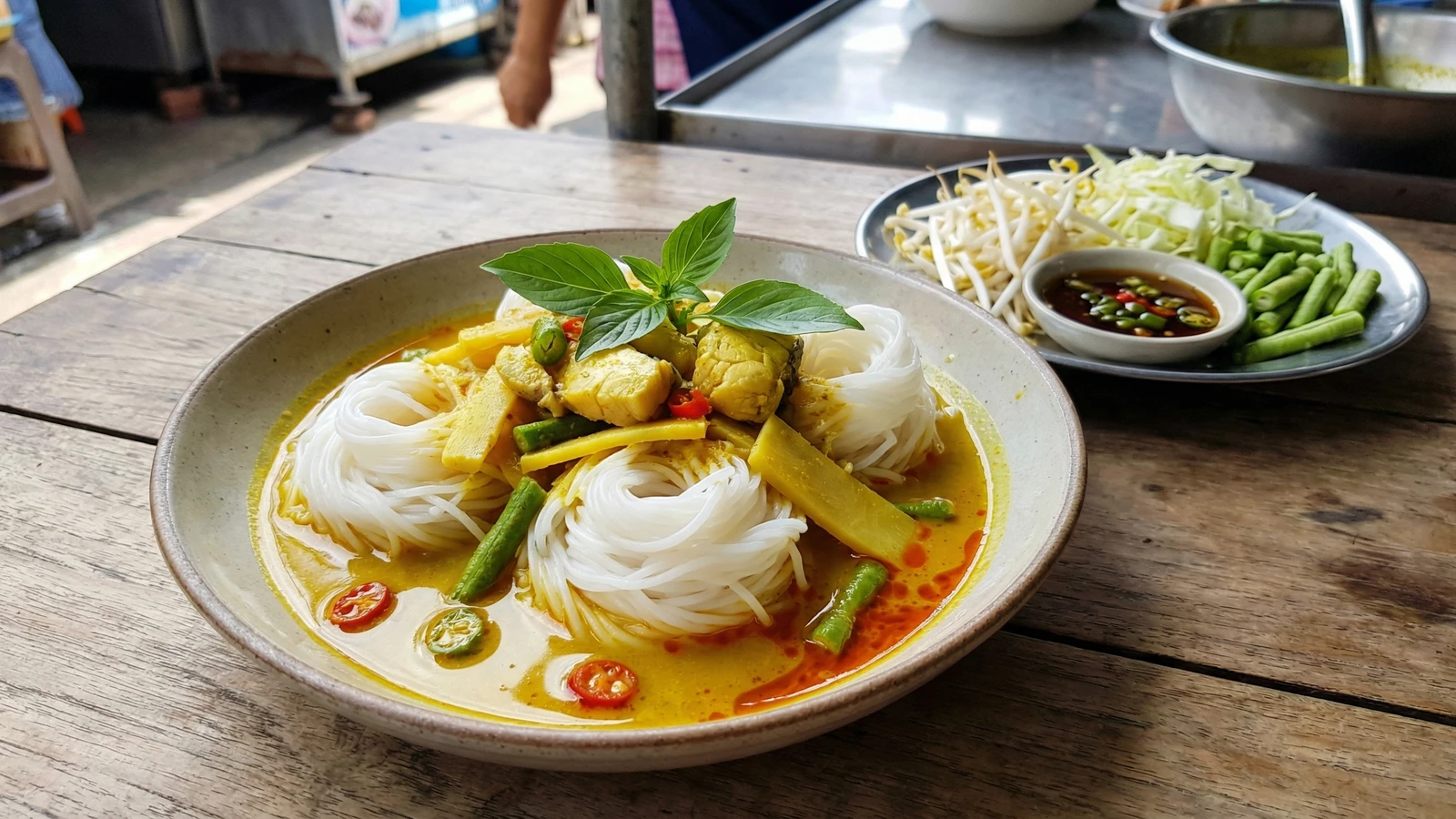
No coconut milk, just a kreung tam stained electric yellow with fresh turmeric root, dissolved into water with fish and tamarind. Southern Thailand strips the four pillars bare: sour dominates, sweet barely shows up, and the paste has nowhere to hide.
Gaeng luang breaks the assumption that Thai curries need coconut milk. They don't. Southern Thailand makes curries with water and a kreung tam so loaded with fresh turmeric that the broth turns electric yellow. No coconut cream to crack. No richness to round things out. Just paste, water, fish, and acid. The four pillars stripped to their most honest form.
Ajarn always said the kreung tam is everything. Gaeng luang proves it. Without coconut milk to soften the flavors, the paste has nowhere to hide. Every ingredient you pound shows up in the final dish: the heat of dried chilies, the sharpness of garlic and shallots, the medicinal warmth of galangal, the citrus edge of lemongrass, and that unmistakable golden stain of fresh turmeric root (kamin, ขมิ้น). Not turmeric powder. Fresh root. Sliced thin and pounded until it bleeds yellow into everything it touches. That's the color. That's the name.
This is a khanom jeen dish, which means the curry is the sauce and the noodles are the vehicle. If you've never been to a khanom jeen stall in the South, picture a row of pots at a morning market in Nakhon Si Thammarat. Each pot holds a different curry, all of them thin and brothy, all of them waiting to be ladled over nests of fresh fermented rice noodles. You point. The vendor ladles. You sit down with a plate of raw bean sprouts, shredded cabbage, and long beans on the side, and you eat, pulling noodle strands through the golden broth, crunching raw vegetables between bites. That's breakfast. That's lunch. That's the South.
The balance here leans hard into sour and spicy. Tamarind water (nam makham) provides the acid that cuts through the fish and keeps the curry bright. Fish sauce (nam pla) for salt, or in the deep South, budu (น้ำบูดู), a fermented fish sauce that's funkier and more complex than standard nam pla. Palm sugar barely registers, just enough to blunt the sharp edge of the tamarind. This is Southern Thai cooking: sour, spicy, fish-forward, and unapologetically lean. Principles, not recipes.
Gaeng luang (แกงเหลือง, 'yellow curry') is a staple of Southern Thailand's provinces, particularly Nakhon Si Thammarat, Surat Thani, and the Andaman coast, where fresh turmeric grows abundantly and coconut-free curries are the regional norm rather than the exception. The dish belongs to the khanom jeen tradition, a communal eating format where fresh fermented rice noodles are served with multiple curries at market stalls, temple fairs, and family celebrations across the South. The noodles themselves (khanom jeen, ขนมจีน) are made by fermenting rice flour for several days before pressing through a sieve into boiling water, a technique with possible Mon origins predating the Sukhothai period.
Quantity
10
soaked 15 minutes, drained
Quantity
5
roughly sliced
Quantity
5 cloves
Quantity
2 stalks
tender inner part only, thinly sliced
Quantity
2-inch piece
thinly sliced
Quantity
30g (about 3-inch piece)
sliced
Quantity
1 teaspoon
Quantity
1 tablespoon
Quantity
5 cups
Quantity
400g
cut into bite-sized pieces
Quantity
150g
sliced into thin strips
Quantity
100g
cut into 1.5-inch pieces
Quantity
3 tablespoons
Quantity
2 tablespoons
dissolved in 1/4 cup warm water, strained
Quantity
1 teaspoon
Quantity
500g
Quantity
for serving
Quantity
for serving
Quantity
for serving
cut into 2-inch pieces
Quantity
for serving
| Ingredient | Quantity |
|---|---|
| dried red chilies (prik haeng)soaked 15 minutes, drained | 10 |
| shallots (hom daeng)roughly sliced | 5 |
| garlic (kratiam) | 5 cloves |
| lemongrass (takhrai)tender inner part only, thinly sliced | 2 stalks |
| galangal (kha)thinly sliced | 2-inch piece |
| fresh turmeric root (kamin)sliced | 30g (about 3-inch piece) |
| white peppercorns (prik thai khao) | 1 teaspoon |
| shrimp paste (kapi) | 1 tablespoon |
| water | 5 cups |
| firm white fish fillets (sea bass, snapper, or barramundi)cut into bite-sized pieces | 400g |
| bamboo shoots (no mai)sliced into thin strips | 150g |
| long beans (thua fak yao)cut into 1.5-inch pieces | 100g |
| fish sauce (nam pla) | 3 tablespoons |
| tamarind paste (makham piak)dissolved in 1/4 cup warm water, strained | 2 tablespoons |
| palm sugar (nam tan pip) | 1 teaspoon |
| fresh khanom jeen noodles (fermented rice noodles) | 500g |
| fresh bean sprouts | for serving |
| shredded white cabbage | for serving |
| raw long beanscut into 2-inch pieces | for serving |
| Thai basil leaves (horapha) (optional) | for serving |
Start with the white peppercorns in your granite mortar (krok hin). Pound them to a coarse powder. Add the drained soaked chilies and pound until they break down into rough fibers. Now the shallots and garlic. Pound and scrape, pound and scrape. The paste should be getting wet. Add the lemongrass and galangal, pound until fibrous but incorporated. Now the turmeric. The moment the fresh turmeric root hits the mortar, everything turns yellow. Your hands, the pestle, the paste. That golden stain is the soul of this curry. Pound until the turmeric has bled completely into the mixture. Finally, add the shrimp paste (kapi) and pound until you have a rough, fragrant, electric-yellow paste. It should smell sharp, medicinal, alive. If the aroma doesn't hit you from a foot away, keep pounding.
Bring the water to a rolling boil in a medium pot. Spoon in the entire kreung tam and stir to dissolve. The water will turn deep golden yellow within seconds. This is a Southern Thai curry: no coconut milk, no frying the paste in cream. The paste goes straight into water. Let it simmer for 5 minutes. The broth should look like liquid gold and smell intensely of turmeric and lemongrass. If it looks pale, your turmeric wasn't fresh enough or you didn't use enough. The color is the identity.
Drop in the bamboo shoots first. They need 3 minutes to soften slightly and absorb the curry. Then the long beans. One minute later, add the fish pieces gently. Don't stir aggressively or the fish will break apart. Let the chunks poach in the golden broth for 3 to 4 minutes. The fish should be just cooked through, white and flaky but still holding its shape. If it's falling apart, you've gone too far.
Remove the pot from heat. Add the fish sauce, tamarind water, and palm sugar. Stir once, gently. Now taste. The balance should be: sour first, hitting you bright and clean from the tamarind. Salty second, from the fish sauce, with a deep umami undertone. Heat building from the chilies. Sweet? Barely there. A whisper. If you can taste the sugar, you've added too much. The South doesn't lean sweet. Adjust. More tamarind if it needs brightness. More fish sauce if it needs depth. That's the method: taste, adjust, trust your tongue.
Portion the fresh khanom jeen noodles into shallow bowls or plates. The noodles come in coiled nests. Lay two or three nests per person. Ladle the yellow curry generously over the noodles. Be generous. The curry is the sauce. The noodles are the vehicle. You want the broth pooling around the nests, the fish chunks sitting on top, the bamboo shoots and long beans visible in the golden liquid. Set out a plate of raw bean sprouts, shredded cabbage, long bean pieces, and Thai basil leaves on the side. Eat by pulling noodle strands through the curry with a fork or your fingers, alternating with bites of crunchy raw vegetables. That's the khanom jeen stall experience. No ceremony. Just point, ladle, eat.
1 serving (about 550g)
Culinary guides, cultural storytelling, and the editorial depth that makes cooking meaningful.
Discover Culinary ExplorerChef Fai
The four pillars live at the bottom of the bowl before the noodles ever touch it: nam pla for salt, sugar for sweet, vinegar for sour, chili for heat. Every noodle cart in Bangkok runs on this principle.

Chef Fai
The kreung tam fried in cracked coconut cream until the oil bleeds red. That's the technique. Concentrated, semi-dry, spooned thick over crispy fish. This is what happens when the four pillars meet restraint.

Chef Fai
Isan foraging in a bowl: wild taro stems stripped of their sting, simmered in padaek broth with a pounded chili paste and yanang leaf extract. The land feeds you if you know the rules.

Chef Fai
Lanna's kreung tam breaks from Central Thai rules: ginger over galangal, cumin and coriander from Burmese spice routes, tamarind for sour instead of lime. The North has its own system, and this curry is its crown.