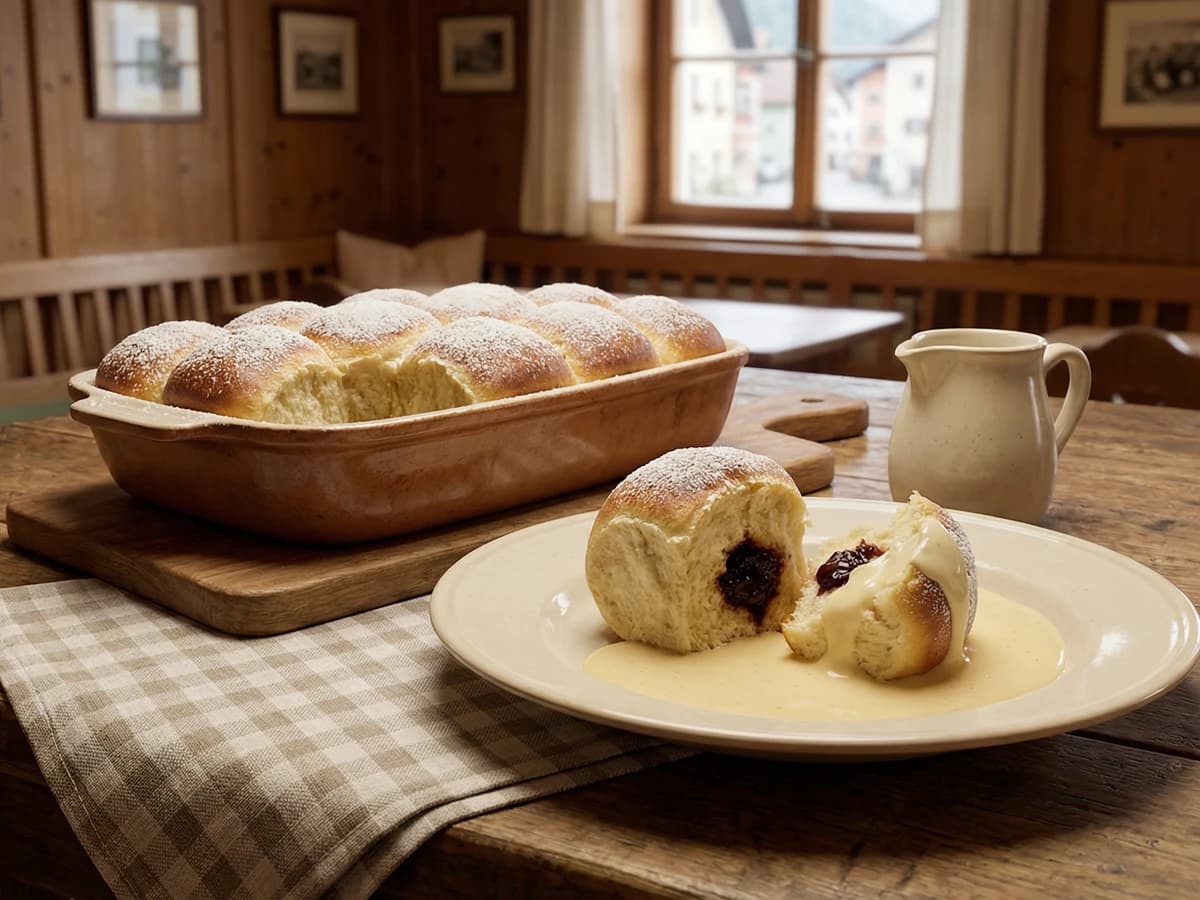
Carinthia's cinnamon-swirled Easter cake, coiled into a traditional Rein and baked until the kitchen smells like brown butter and warm spice. The centerpiece of every Carinthian Osterjause.
Desserts
Austrian
Easter
Holiday
45 min
Active Time
50 min cook•3 hr 30 min total
Yield10-12 servings
Ifirst tasted Reindling on one of those childhood trips to Austria with Gretel and my grandmother Eva. We were somewhere in Carinthia, south of the Tauern, staying at a Gasthaus where the owner's wife had baked one that morning for Easter. She brought it to the table still warm, turned it out of its pot, and sliced it so you could see the spiral: dark cinnamon filling wound through golden dough, raisins scattered through every layer like small, sweet punctuation marks. Gretel took one bite and asked the woman for her recipe. They spent twenty minutes at the kitchen table talking about how much butter to brown, how thin to roll the dough, whether rum in the raisins was tradition or showing off.
Reindling is Carinthia's Easter bread, though calling it bread doesn't do it justice. The dough is rich with eggs and butter and milk, soft enough that it stretches without tearing when you roll it out. You spread it with a filling of brown butter, cinnamon, and sugar, scatter rum-soaked raisins across the surface, then roll the whole thing up tight and coil it into a Rein, the round baking pot that gives the cake its name. When it bakes, the filling melts into the dough and the top turns deep gold. You turn it out and slice it to reveal the spiral.
In Carinthia, Reindling is part of the Osterjause, the Easter spread that goes to church to be blessed on Holy Saturday. It sits on the table alongside Osterschinken (smoked ham), Kren (freshly grated horseradish), colored eggs, and good bread. The sweet cake against the salty ham and sharp horseradish is one of those combinations that makes you wonder why anyone eats Easter any other way. This is not a dessert you eat after dinner. It's the heart of a meal that's been celebrated the same way in Carinthian kitchens for centuries.
The Reindling takes its name from the Rein, a round clay or metal baking pot used across southern Austria since the medieval period. Carinthia's version became inseparable from Easter tradition, carried to church as part of the Fleischweihe, the blessing of Easter foods on Holy Saturday. The custom is documented from at least the 16th century, and Carinthians guarded their Reindling recipes fiercely. Neighboring Styria and Slovenia have similar filled yeast cakes (Potiza in Slovenian tradition), reflecting centuries of cultural exchange across the Karawanken Alps.
The technique, the tradition, and the story behind every dish.
Put the raisins in a small bowl and pour the dark rum over them. Cover and leave them to soak for at least an hour, longer if you can manage it. Overnight is best. The raisins need to drink up that rum so they stay plump and fragrant inside the hot dough instead of drying out into sad little pebbles.
If you don't want to use rum, warm apple juice works. But the rum is tradition in Carinthia and it adds a depth that juice can't match.
2
Activate the yeast
Warm the milk until it's blood temperature, no hotter. If it feels warm on the inside of your wrist, that's right. Stir in a pinch of sugar and the yeast. Let it sit for ten minutes until the surface turns foamy and alive. If nothing happens, your yeast is dead and you need to start with a fresh packet. Better to find out now than after you've mixed the dough.
3
Make the dough
Put the flour in a large bowl. Add the sugar, Vanillezucker, salt, and lemon zest and mix briefly. Make a well in the center and pour in the foamy yeast mixture, the softened butter, egg yolks, and whole egg. Work everything together with your hands or a wooden spoon until a shaggy dough forms, then turn it out onto a lightly floured surface and knead. This takes a solid ten minutes by hand. The dough starts sticky and resistant. Keep going. By the end it should be smooth, elastic, and slightly tacky, pulling away from the surface cleanly.
Gretel always said you should be able to stretch a piece of dough thin enough to read a newspaper through it. That's the windowpane test. When you can pull a small piece into a translucent sheet without it tearing, the gluten is developed enough.
4
First rise
Shape the dough into a ball and place it in a lightly oiled bowl. Cover with a clean tea towel and let it rise in a warm spot until doubled in size. This takes about an hour, sometimes a bit longer depending on your kitchen. Don't rush it. The yeast needs time to do its work, and the flavor develops during the rise. If your kitchen is cold, set the bowl on top of the oven with the light on, or near a radiator.
5
Brown the butter for the filling
Melt the 120g butter for the filling in a small saucepan over medium heat. Let it foam, then continue cooking, swirling the pan, until the milk solids at the bottom turn a deep golden brown and the whole kitchen fills with a nutty, toasted smell. Watch it carefully. The gap between brown butter and burnt butter is about thirty seconds. Take it off the heat and let it cool until just warm. This is not optional. Melted butter and brown butter are completely different ingredients, and the Reindling filling depends on that toasty depth.
6
Prepare the pan
Butter a Gugelhupf form or bundt pan generously, reaching into every fluted crevice. Coat it with fine breadcrumbs, tipping out the excess. The breadcrumbs create a thin, crisp crust on the outside and guarantee the Reindling releases cleanly. Skip this step and you'll be chipping your cake out with a butter knife.
7
Roll and fill the dough
Punch the risen dough down gently and turn it out onto a lightly floured surface. Roll it into a large rectangle, roughly 40 by 50 centimeters, about half a centimeter thick. The dough should be soft and cooperative after its rise. If it springs back stubbornly, cover it with the towel and let it rest five minutes, then try again. Brush the entire surface with the brown butter, leaving a two-centimeter border along one long edge. Mix the filling sugar and cinnamon together, then scatter it evenly over the buttered surface. Drain the rum-soaked raisins and distribute them across the filling. Add the chopped walnuts if you're using them.
Don't skimp on rolling the dough thin enough. A thick roll means fewer spirals and less filling in every slice. You want tight, thin layers so every bite has cinnamon and butter running through it.
8
Roll and coil
Starting from the long edge opposite the bare border, roll the dough up tightly, like a Swiss roll. Use both hands and keep even tension so the spiral stays uniform. Pinch the seam closed. Now coil the rolled dough into the prepared Gugelhupf form, seam side up, fitting it snugly into the ring shape. If the roll is too long, overlap the ends slightly and press them together. The dough will fill any gaps as it rises.
9
Second rise
Cover the pan with the tea towel and let the Reindling rise again until the dough reaches about two-thirds of the way up the sides of the form. This takes thirty to forty minutes. Don't let it over-rise or the structure will collapse in the oven and your beautiful spiral will lose its shape. You want ambition in the dough, not recklessness.
10
Bake the Reindling
Heat your oven to 170°C (340°F) conventional, or 160°C fan. Place the Reindling on the middle rack and bake for 45 to 50 minutes. The top should turn deep golden brown and a skewer inserted into the center should come out clean with no raw dough clinging to it. If the top browns too quickly, lay a sheet of foil loosely over it for the last fifteen minutes. The filling will bubble and caramelize inside. You'll smell the cinnamon and brown butter from every room in the house.
Every oven is different. Start checking at 40 minutes. The Reindling should sound hollow when you tap the top. If it sounds dense and dull, give it five more minutes.
11
Cool and turn out
Let the Reindling cool in the pan for fifteen minutes. No longer. If you wait too long, the caramelized sugar will glue it to the form and you'll have a fight on your hands. Run a thin knife around the edges, place a wire rack or serving plate over the top, and flip it over in one confident motion. Lift the pan away. The Reindling should release cleanly, showing its golden, breadcrumb-crusted exterior. Let it cool a bit more before slicing. Dust with powdered sugar if you like, though in Carinthia it's often served without.
12
Slice and serve
Cut the Reindling into thick slices with a serrated knife. Each slice should reveal the tight spiral of cinnamon filling wound through the golden dough. Serve it as part of an Osterjause with smoked ham, freshly grated horseradish, and colored eggs. Or serve it on its own with a cup of strong coffee and the satisfaction of having made something that Carinthian grandmothers have been proud of for centuries. Mahlzeit!
Chef Tips
•Brown the butter properly. This is the single thing that separates a Reindling you'll remember from one you'll forget. The milk solids need to go past golden to a deep amber. You'll see tiny brown flecks at the bottom of the pan and smell toasted hazelnuts. That's where the flavor lives.
•Use real Vanillezucker in the dough, not vanilla extract. Austrian baking depends on vanilla sugar for its rounded, gentle sweetness. Buy it at a European grocery or make your own by burying a split vanilla pod in a jar of caster sugar for a week.
•The traditional Rein was a round clay pot, but a Gugelhupf form or bundt pan works perfectly. The ring shape ensures even baking and gives you that iconic presentation when you turn it out. Don't try this in a loaf pan. The center will still be raw when the outside is overdone.
•In Carinthia, the Reindling goes to church. On Holy Saturday, families carry their Osterjause to be blessed before the Easter meal. If you're making this for Easter, bake it Saturday morning. It keeps beautifully and is best eaten the day it's made or the day after.
Advance Preparation
•Soak the raisins in rum overnight for the best flavor. They can sit for up to 24 hours.
•The dough can be made the evening before and left to rise slowly overnight in the fridge. Bring it to room temperature for 30 minutes before rolling.
•Reindling keeps well wrapped at room temperature for two days. After that, slice and toast it in a dry pan with a little butter. Day-old Reindling, toasted and warm, is almost better than fresh.
Frequently Asked Questions
Nutrition Information
1 serving (about 120g)
Calories
500 calories
Total Fat
22 g
Saturated Fat
11 g
Trans Fat
0 g
Unsaturated Fat
10 g
Cholesterol
95 mg
Sodium
125 mg
Total Carbohydrates
69 g
Dietary Fiber
2 g
Sugars
30 g
Protein
8 g
Where cooking meets culture.
Culinary guides, cultural storytelling, and the editorial depth that makes cooking meaningful.