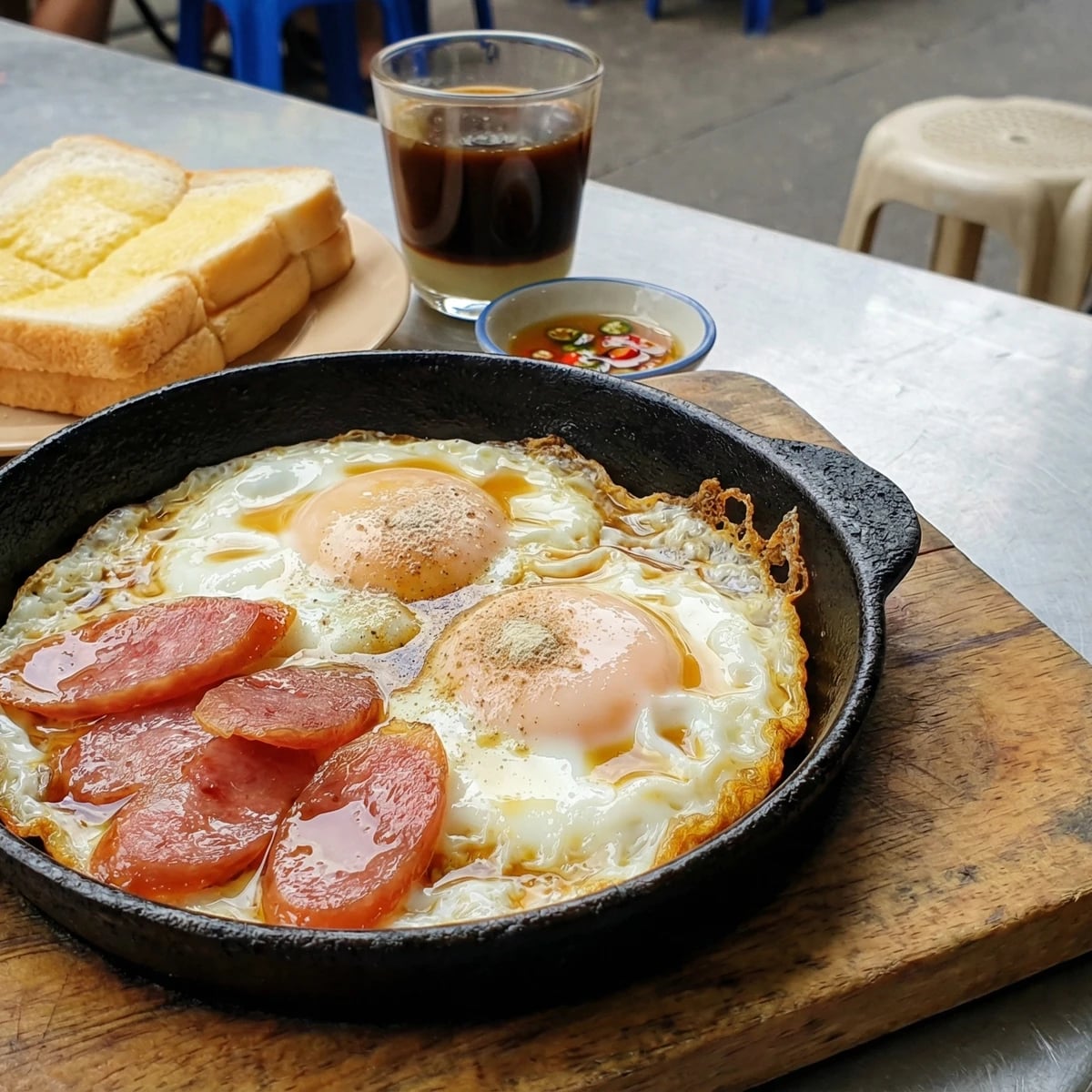
A tiny screaming-hot pan, two cracked eggs, sliced kun chiang sizzling in oil, a hit of white pepper and soy sauce. Bangkok's morning market fuel, Chinese by blood, Thai by condiment tray.
Breakfast & Brunch
Thai
Weeknight
Quick Meal
5 min
Active Time
5 min cook•10 min total
Yield1 serving
Kai gata breaks one of my rules. Soy sauce instead of fish sauce. White pepper instead of chili. No lime, no palm sugar, no kreung tam anywhere in sight. On paper, this dish shouldn't belong in a Thai cooking principles class.
But that's the lesson. Thai food is a living system, not a locked vault. Ajarn always said: "The principles are the skeleton. The flesh changes with time and place." Kai gata is proof. Chinese migrants brought their morning egg traditions to Bangkok over a century ago, the small iron pan, the soy seasoning, the sweet cured sausage. And Bangkok didn't reject it. Bangkok absorbed it. Then Bangkok put a condiment caddy next to it: nam pla prik (chili fish sauce), sriracha, prik pon (chili flakes). The Chinese dish hits the table. The Thai system surrounds it. By the second bite, you've added fish sauce through the back door.
This is a market-opening dish. Five, six in the morning, the sun hasn't started punishing yet, the vendors are firing up their stations, and the first customers are the other vendors. They need protein and fat, fast. Kai gata delivers in three minutes. Two eggs cracked into a tiny pan no bigger than a saucer, a few rounds of kun chiang (Chinese sausage) sizzling underneath, a crack of white pepper, a drizzle of si ew khao (light soy sauce). Served still bubbling with toast on the side and a glass of oliang (Thai iced black coffee) or kafae yen (Thai iced coffee with condensed milk). That's breakfast. No ceremony. Just fuel.
The pan matters. It's a tiny, individual-sized cast iron or pressed steel pan called a grata (กระทะ). The surface holds heat like a wok. The eggs cook from below while the top stays soft. If you use a regular frying pan, you lose the ratio of crust to runny yolk that makes kai gata what it is. The pan is the technique. Get a small one. Six inches maximum.
Kai gata (ไข่กระทะ, literally 'pan eggs') traces directly to the Teochew and Hokkien Chinese communities that settled Bangkok's Yaowarat (Chinatown) district from the late 19th century onward. The individual cast-iron pan service likely evolved from Chinese railway and dock-worker breakfast culture, where speed and portability mattered. The dish became a fixture at Bangkok morning markets by the 1960s and is now inseparable from the Thai breakfast trinity of kai gata, jok (rice porridge), and patongo (fried dough sticks), all Chinese-origin dishes that Thais claimed through the condiment tray.
The technique, the tradition, and the story behind every dish.
Chinese sausage (kun chiang)sliced diagonally into thin rounds
1 link
vegetable oil
1 tablespoon
light soy sauce (si ew khao)
1 teaspoon
ground white pepper (prik thai khao)
1/4 teaspoon
chili fish sauce (nam pla prik) (optional)
1 tablespoon
sriracha sauce (optional)
for serving
white toast with butter
2 slices
Equipment Needed
•Small cast-iron or pressed steel pan (grata), 5-6 inches diameter
•Small wooden board or folded towel for serving the hot pan
Instructions
1
Heat the pan
Set your small cast-iron or pressed steel pan (six inches, no bigger) over medium-high heat. Let it get properly hot, about two minutes. Add the oil. It should shimmer immediately and start to ripple. If the oil sits there doing nothing, the pan isn't ready. Patience here. The sizzle when the egg hits determines whether you get a crispy-edged, golden-bottomed kai gata or a sad, pale, steamed egg.
If you don't have a small pan, use the smallest skillet you own. But understand: the small pan is the whole point. The eggs fill the surface, the edges crisp against the hot metal, and the yolks stay soft because there's nowhere for the heat to dissipate. The vessel IS the technique.
2
Fry the sausage
Lay the kun chiang slices into the hot oil. They'll start rendering their fat within seconds, the sweet pork fat mixing with the oil, turning slightly translucent at the edges. Thirty seconds on each side. You want them warmed through and lightly crisped, not charred. The sugars in Chinese sausage burn fast. Watch them. Push the slices to one side of the pan when they're done.
3
Crack the eggs
Crack both eggs directly into the pan, one on each side of the sausage. The whites should spit and sizzle the instant they touch the surface. If they don't, your pan lost too much heat. That immediate sizzle is what creates the crispy, lacy edges on the bottom while the yolk stays liquid on top. Don't touch them. Don't poke. Don't flip. Let the heat do its job.
Kai gata yolks are always runny. That's not a preference. That's the dish. The yolk breaks over the toast. If you cook the yolk through, you've made a fried egg. Not the same thing.
4
Season and serve
When the whites are set but the yolks still tremble (about two minutes, maybe less depending on your heat), drizzle the soy sauce over the eggs. Hit them with the white pepper. Don't stir. Don't mix. The soy sauce pools against the white, the pepper sits on the yolk like dust. Serve the pan directly on a small wooden board or a folded towel. The eggs are still cooking from residual heat. Toast on the side, butter melting. And the condiment tray: nam pla prik and sriracha. This is where the Chinese dish becomes Thai. One spoonful of nam pla prik over the eggs and the fish sauce, chili, garlic, and lime hit. The four pillars arrive at the table, not in the pan.
Ajarn always said Thai food adapts, it doesn't replace. Kai gata proves it. The dish stays Chinese in the pan. It becomes Thai on the plate. That's the system working.
Chef Tips
•Kun chiang (กุนเชียง) is a sweet, dried Chinese pork sausage with a distinctive reddish color from curing. You'll find it in any Asian grocery, usually near the lap cheong. If you can't find it, use Vietnamese pork sausage (moo yor) or even a thin slice of ham. But know that the sweet rendered pork fat from kun chiang is half the flavor of this dish. It's worth hunting down.
•The condiment tray is not optional. Nam pla prik (fish sauce with sliced bird's eye chilies, garlic, and a squeeze of lime) is the bridge between the Chinese-origin dish and the Thai flavor system. Without it, you're eating Chinese eggs. With it, you're eating kai gata. Make a small bowl: two tablespoons nam pla (fish sauce), three sliced prik khi nu (bird's eye chilies), one crushed garlic clove, squeeze of manao (lime). Let it sit five minutes before serving.
•Kai gata vendors at Bangkok morning markets use tiny pressed-steel pans that they oil, fill, and serve in under three minutes. Some vendors add extras: moo yor (Vietnamese sausage), mu yong (pork floss), bacon, or even hot dogs. The base is always the same: two eggs, soy sauce, white pepper. The toppings are the variable. Principles, not recipes.
•White pepper (prik thai khao) is not black pepper. White pepper is hotter, sharper, more nasal. It's the defining spice of Chinese-Thai cooking in Bangkok: you'll find it in jok (rice porridge), bamee (egg noodles), and every bowl of kuay tiew (noodle soup). If your kai gata doesn't have that sharp white pepper punch on the yolk, it's not right.
Advance Preparation
•Slice the kun chiang the night before if you want to shave a minute off your morning. Keep it covered in the fridge.
•Make a batch of nam pla prik and keep it in a jar in the fridge. It lasts a week and improves every Thai meal you eat, not just kai gata.
•There is no other advance prep. This dish exists because it takes three minutes. If you're prepping more than that, you're overthinking it.
Frequently Asked Questions
Nutrition Information
1 serving (about 250g)
Calories
750 calories
Total Fat
53 g
Saturated Fat
19 g
Trans Fat
0 g
Unsaturated Fat
33 g
Cholesterol
450 mg
Sodium
2700 mg
Total Carbohydrates
38 g
Dietary Fiber
2 g
Sugars
9 g
Protein
27 g
Where cooking meets culture.
Culinary guides, cultural storytelling, and the editorial depth that makes cooking meaningful.