
Chef Fai
Thai Pan Eggs (Kai Gata)
A tiny screaming-hot pan, two cracked eggs, sliced kun chiang sizzling in oil, a hit of white pepper and soy sauce. Bangkok's morning market fuel, Chinese by blood, Thai by condiment tray.
A cooking platform built around craft, culture, and the stories behind what we eat.
Created by
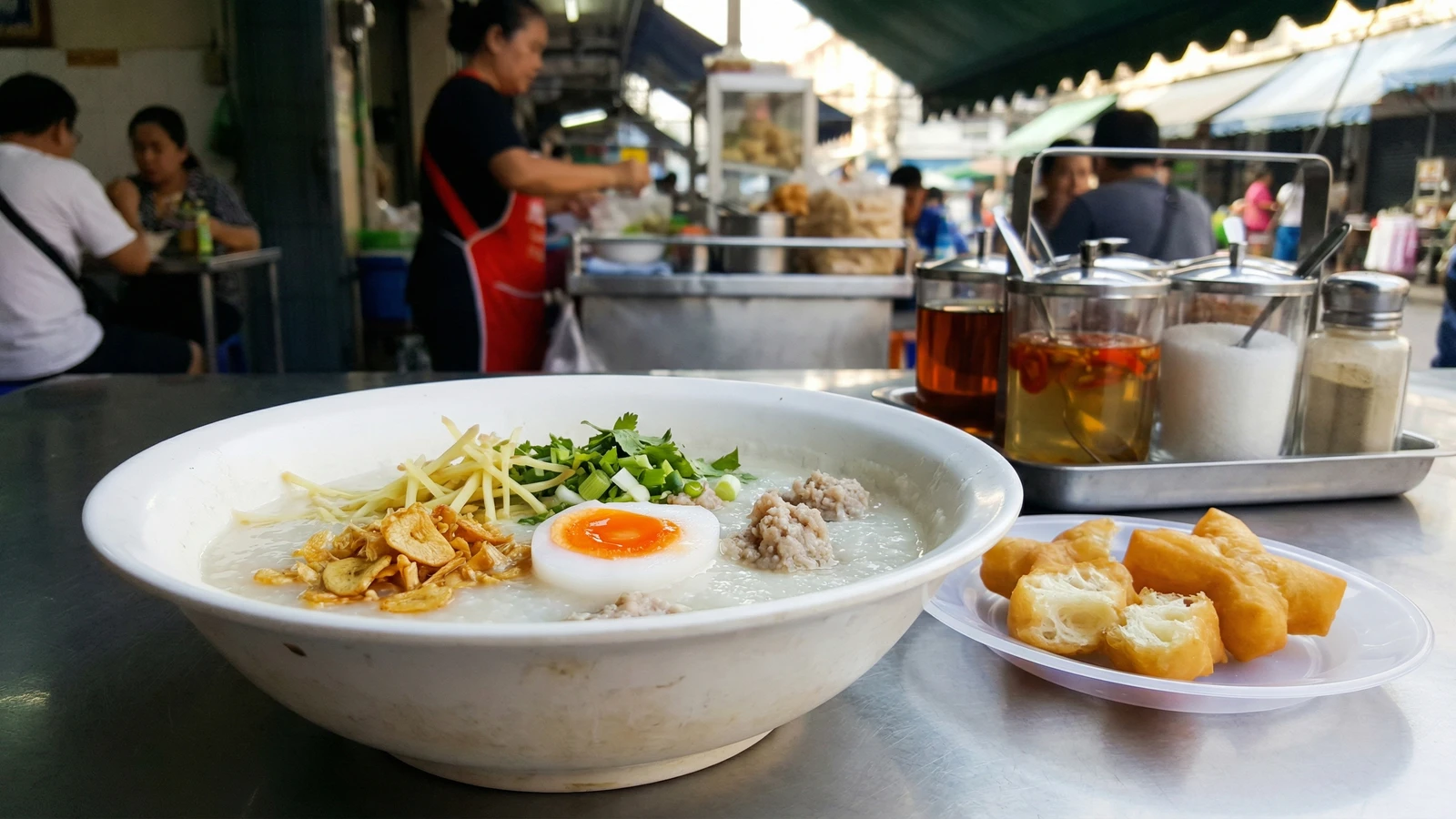
Rice cooked past the point of recognition, broken down to silk. The bowl is simple. The condiment tray delivers the four pillars to your hand. That's the system at work, even at 5 a.m.
Jok is the first dish Bangkok eats every day. Before the sun heats up, before the som tam vendors set out their mortars, before the pad kra pao woks start screaming, the jok pots are already on. Every market in Thailand opens with rice porridge.
Here's the principle at work: jok itself is mild. Almost blank. Rice cooked in so much water for so long that the grains dissolve into a thick, silky porridge with no edges, no bite, just body. That mildness is not a flaw. It's the design. Because the four pillars arrive at the table, not in the pot. Nam pla (fish sauce) for salt. Prik nam som (chili vinegar) for sour and heat. Phrik thai (white pepper) for warmth. The condiment caddy completes the dish. The cook gives you the canvas. You paint the balance yourself.
Ajarn always said Thai food is a system of balance, and jok proves that the system works even when the dish starts quiet. The pork is seasoned with garlic, cilantro root, and white pepper, a small kreung tam pounded just enough to perfume the meat. The egg goes in soft, cracked straight into the hot porridge or poached to a jammy center. Ginger, julienned thin as threads, cuts through the richness. Kratiam jiaw (fried garlic) adds crunch and sweetness. Every element has a job. Nothing is decoration.
This is a Chinese dish that became Thai. Teochew immigrants brought congee to Bangkok two centuries ago. Thailand kept the technique and replaced the soul. Soy sauce stepped aside for fish sauce. The condiment tray grew chilies and lime. The pork picked up cilantro root and white pepper, aromatics that belong to the Thai kreung tam tradition. Jok is proof that the Thai flavor system absorbs and transforms. It doesn't copy. It governs.
Jok (โจ๊ก) derives from the Teochew Chinese word for rice congee, brought to Thailand by Chaozhou immigrants who settled heavily in Bangkok's Yaowarat (Chinatown) district during the 18th and 19th centuries. While the slow-cooked rice technique is purely Chinese, the Thai adaptation is defined by its condiment system: fish sauce replaced soy sauce as the primary seasoning, chili vinegar (prik nam som) became the standard acidic condiment, and the pork filling adopted cilantro root and white pepper from the Thai kreung tam tradition. By the mid-20th century, jok had become Thailand's default breakfast, with dedicated vendors setting up before dawn at every fresh market in the country.
Quantity
1 cup
rinsed and drained
Quantity
8 cups
Quantity
1 cup
reserved for adjusting consistency
Quantity
250g
Quantity
2 tablespoons, plus more for serving
Quantity
3 cloves
minced
Quantity
2
finely minced
Quantity
1 teaspoon
ground
Quantity
1 tablespoon
Quantity
4
Quantity
50g
peeled and julienned into thin matchsticks
Quantity
8 cloves
thinly sliced
Quantity
3 tablespoons
Quantity
2 stalks
sliced thin
Quantity
for topping
Quantity
for finishing
Quantity
for serving
Quantity
for serving
| Ingredient | Quantity |
|---|---|
| jasmine ricerinsed and drained | 1 cup |
| pork stock or water | 8 cups |
| extra waterreserved for adjusting consistency | 1 cup |
| ground pork | 250g |
| fish sauce (nam pla) | 2 tablespoons, plus more for serving |
| garlic (for pork)minced | 3 cloves |
| cilantro roots (rak phak chi)finely minced | 2 |
| white peppercorns (phrik thai)ground | 1 teaspoon |
| light soy sauce (si ew khao) | 1 tablespoon |
| eggs | 4 |
| fresh ginger (khing)peeled and julienned into thin matchsticks | 50g |
| garlic (for frying)thinly sliced | 8 cloves |
| vegetable oil | 3 tablespoons |
| green onion (ton hom)sliced thin | 2 stalks |
| fresh cilantro leaves (phak chi) | for topping |
| ground white pepper | for finishing |
| chili vinegar (prik nam som) | for serving |
| patongo (Thai fried dough sticks) (optional) | for serving |
In a small mortar or a bowl, combine the ground pork with the minced garlic, minced cilantro roots, ground white pepper, light soy sauce, and 1 tablespoon of the fish sauce. Mix it with your hands until everything is incorporated. This is a tiny kreung tam at work: garlic, cilantro root, and white pepper are three of the foundational aromatics in Thai cooking. Even in a Chinese-origin dish, the Thai system shows up. Set the pork aside while you start the rice.
Bring the pork stock (or water) to a boil in a large heavy pot. Add the rinsed rice and stir once. Reduce to a steady simmer. This is the part that takes patience. Cook for 30 to 40 minutes, stirring every 5 minutes to prevent sticking, until the rice grains have completely broken down and the porridge is thick, smooth, and silky. The consistency you want is like heavy cream that just barely holds itself. It should pour off a spoon in a slow, continuous stream, not clump, not run like water. If it gets too thick, add the reserved water a splash at a time.
While the rice simmers, make the kratiam jiaw (fried garlic). Heat the oil in a small pan over medium heat. Add the sliced garlic and stir constantly. Watch it like a hawk. Garlic goes from golden to burnt in about ten seconds. The moment the slices are a light, even gold, pull the pan off the heat and strain the garlic onto a paper towel. Save the garlic oil in a small dish. Both the crispy garlic and the oil go on top of the jok at the end. This is not a garnish. It's a structural element: crunch against silk, sweet against savory.
When the porridge is smooth and silky, season it with the remaining 1 tablespoon of fish sauce. Taste. It should be lightly seasoned, not bland, not salty. Now take the seasoned pork and form it into small, rough balls about the size of a large marble, or pinch off irregular pieces and drop them directly into the simmering porridge. Don't compact them too tightly. You want them loose so they stay tender. Let them cook in the porridge for 3 to 4 minutes until they're cooked through and the porridge has absorbed their flavor.
Ladle the hot porridge into individual bowls. Crack one egg into each bowl while the porridge is still hot. The residual heat will gently set the white while leaving the yolk soft and runny. If you prefer a more set egg, stir it in immediately and the heat will cook it through. If you want a clean soft-boiled egg instead, cook eggs in boiling water for 6 and a half minutes, shock in ice water, peel, and halve over the bowl. The yolk should be jammy, orange, barely set. That's the standard at most jok stalls.
Pile the julienned ginger on top. Scatter the fried garlic. Drizzle a little garlic oil over the surface. Add sliced green onion and cilantro leaves. Finish with a heavy dusting of ground white pepper. Serve immediately with the condiment tray: fish sauce, chili vinegar (prik nam som), extra white pepper, and sugar if you like. The bowl is now yours to balance. More fish sauce for salt. A spoonful of chili vinegar for sour and heat. That's the four pillars arriving at the table. The cook gave you the foundation. You finish the building. If you've got patongo (fried dough sticks), tear them into pieces and dip. That's the Bangkok breakfast.
1 serving (about 550g)
Culinary guides, cultural storytelling, and the editorial depth that makes cooking meaningful.
Discover Culinary ExplorerChef Fai
A tiny screaming-hot pan, two cracked eggs, sliced kun chiang sizzling in oil, a hit of white pepper and soy sauce. Bangkok's morning market fuel, Chinese by blood, Thai by condiment tray.
Chef Juliette
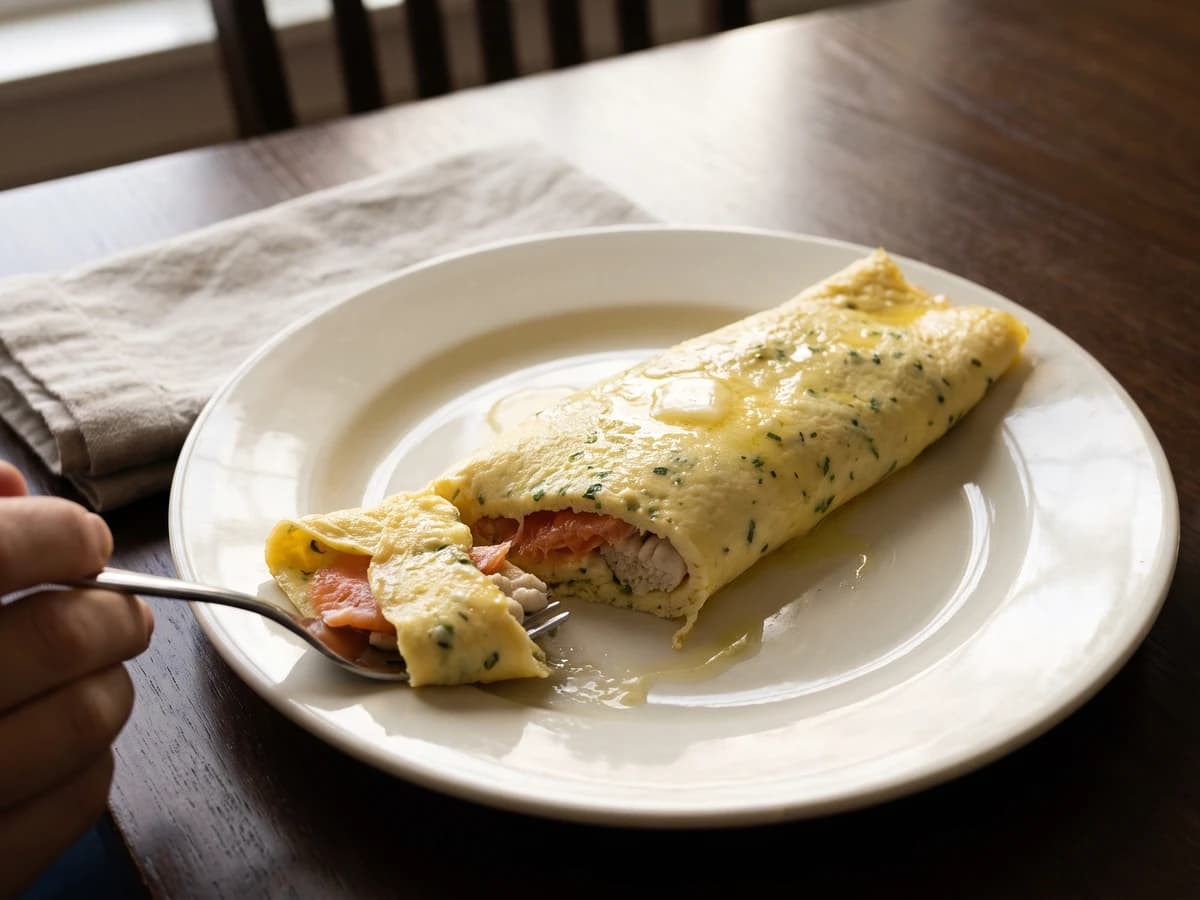
A creamy omelette aux fines herbes closes around smoked-salmon-wrapped herring milts, gently poached in butter. Have the filling ready, then roll the eggs while they still shine.

Chef Juliette
Four tender herbs, hot butter, and two eggs per pan: this rolled omelette teaches the quick hand and good judgment that keep the outside pale and the center creamy.

Chef Juliette
Four batters, one lesson: let the flour drink deeply before cooking, then spread the batter thinly in butter for crêpes and pannequets that bend without becoming tough.