
Chef Isabel
Aguaillo de la Sierra de Cadiz
Aguaillo is from the Sierra de Cadiz: cold water, stale bread, garlic, oil and vinegar, closer to a field drink than a bowl of soup, and sharp enough to wake you in the heat.
A cooking platform built around craft, culture, and the stories behind what we eat.
Created by
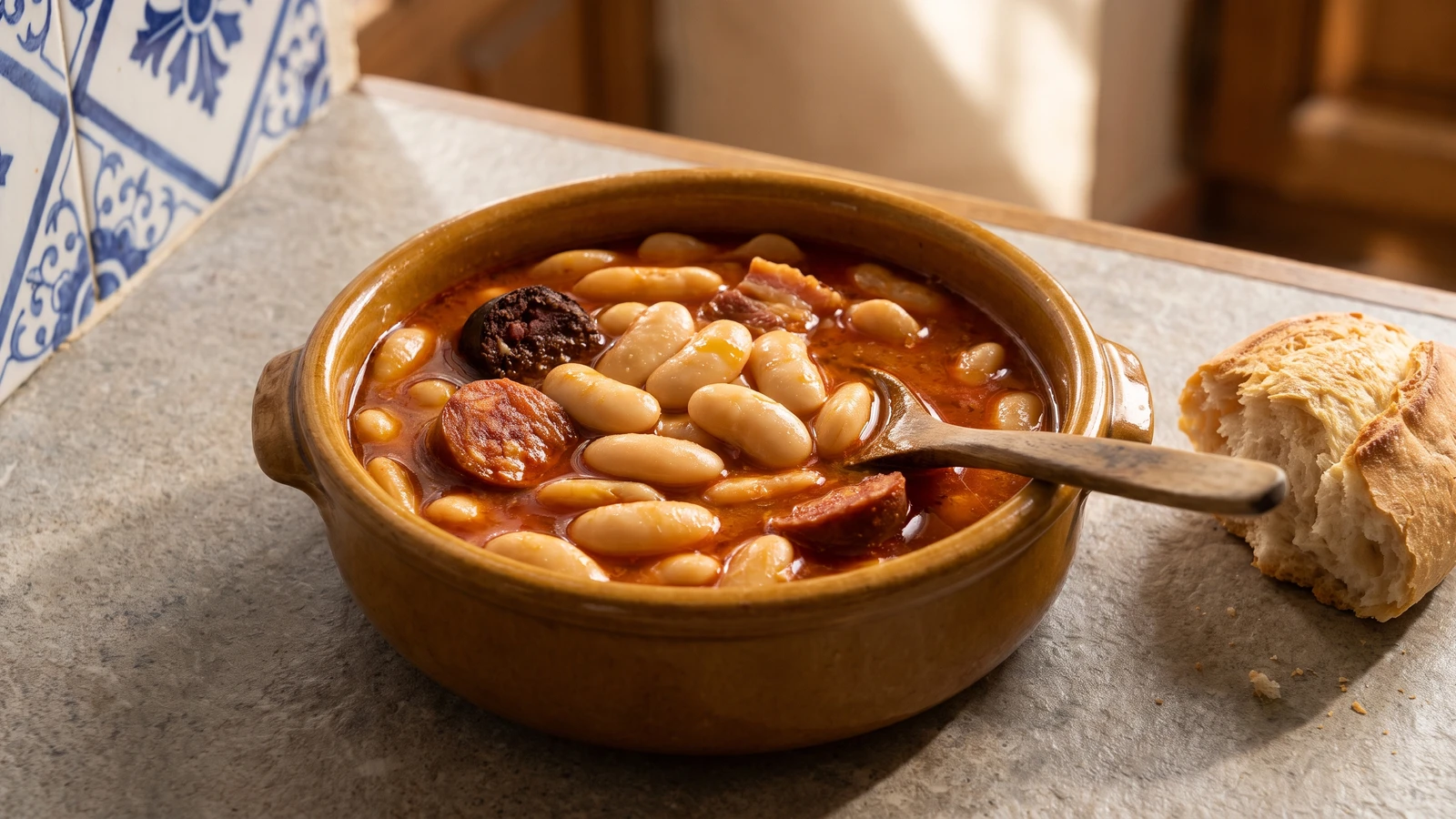
Judiones de La Granja are Segovia's great spoon dish: giant white beans cooked low with chorizo, morcilla, and pork until the broth turns glossy and the beans stay whole.
Judiones de La Granja belong to Segovia, in Castilla y Leon, and the bean gives the dish its name before anything else does. These are not small white beans pretending. A judion is large, broad, and buttery inside, strong enough to sit in a stew with chorizo, morcilla, panceta, and still taste of itself.
The method that decides it is the simmer. Soak the beans well, start them in cold water, and then keep the pot at the barest movement, not a boil. A hard boil splits those big skins and turns the broth rough. Low heat gives you whole beans with creamy centers and a broth stained red with pimenton and pork. Cocina de cuchara, spoon food, asks for patience. No mystery there.
If you are far from Segovia, no hace falta haber pisado Espana. Use dried Greek gigantes or large dried butter beans if you cannot get judiones. They will be a little less silky, and some skins may be firmer, but the dish still works if you soak them fully and keep the heat low. Siempre sale, si lo sigues.
Judiones de La Granja belong to La Granja de San Ildefonso, the royal town in the mountains of Segovia, where the cold air and generous water suited this large white bean. The dish grew from the Castilian habit of making a full meal from legumes and the matanza larder, with chorizo, morcilla, and pork giving strength to the pot. Around Segovia it remains a special cold-weather stew, richer than daily beans and tied closely to the bean grown there.
Quantity
500g
soaked overnight
Quantity
200g
left whole or in two pieces
Quantity
200g
left whole
Quantity
200g
in one piece
Quantity
150g
Quantity
1 large
peeled and halved
Quantity
1
peeled
Quantity
1
Quantity
4
2 whole and 2 minced
Quantity
60ml
Quantity
1 teaspoon
Quantity
1 tablespoon
Quantity
to taste
| Ingredient | Quantity |
|---|---|
| dried judiones de La Granjasoaked overnight | 500g |
| Spanish cooking chorizoleft whole or in two pieces | 200g |
| morcilla de cebollaleft whole | 200g |
| panceta or tocinoin one piece | 200g |
| pork ear or cured pork rib (optional) | 150g |
| onionpeeled and halved | 1 large |
| carrotpeeled | 1 |
| bay leaf | 1 |
| garlic cloves2 whole and 2 minced | 4 |
| extra virgin olive oil | 60ml |
| sweet pimenton de la Vera | 1 teaspoon |
| plain flour (optional) | 1 tablespoon |
| salt | to taste |
Rinse the judiones and soak them in plenty of cold water for 12 hours. They are large beans and need the full soak, so do not cheat this step. Drain them before cooking and throw away the soaking water.
Put the drained beans in a wide heavy pot with the chorizo, panceta, pork ear or rib if using, onion, carrot, bay leaf, and 2 whole garlic cloves. Cover with cold water by 4cm. Bring up slowly over medium-low heat, skimming off the grey foam that rises.
When the pot begins to move, lower the heat until the surface barely trembles. Do not boil and do not stir with a spoon. Shake the pot by the handles now and then so the beans do not catch. Cook like this for about 2 hours, adding small splashes of cold water if the beans rise above the liquid.
Add the morcilla once the beans are beginning to soften but are not fully tender, usually after 2 hours. If it goes in too early it can burst and muddy the pot. Keep the same low tremble for 45 to 60 minutes more, until a bean is creamy all the way through.
Warm the olive oil in a small pan and cook the 2 minced garlic cloves gently until pale gold. Stir in the flour if you want a thicker broth, then pull the pan off the heat and add the pimenton. Pimenton burns fast and turns bitter, so let the pan cool a breath before it goes in.
Stir the pimenton oil into the pot by shaking the handles, not by digging through the beans. Salt only now, when the skins are tender. Rest the stew off the heat for 20 minutes, then slice the chorizo, morcilla, and panceta and serve a little of each with the beans.
1 serving (about 450g)
Culinary guides, cultural storytelling, and the editorial depth that makes cooking meaningful.
Discover Culinary ExplorerChef Isabel
Aguaillo is from the Sierra de Cadiz: cold water, stale bread, garlic, oil and vinegar, closer to a field drink than a bowl of soup, and sharp enough to wake you in the heat.

Chef Isabel
Ajilimojili is Jaen's tomato-free cold soup: potato, roasted red pepper, garlic, olive oil, and vinegar pounded into a cool, silky spoonful.

Chef Isabel
Ajo carretero is Soriano, from the pine country of Soria: lamb cooked in a plain garlicky broth, then served the old way, meat first and bread-soaked soup after.

Chef Isabel
Ajoblanco Extremeño is the poor-kitchen cold soup of Extremadura: bread, garlic, oil, egg yolk, vinegar, and icy water, with no almonds. Whisk it slowly and serve it bien fresquito.