Chef Dean
Classic Italian Focaccia
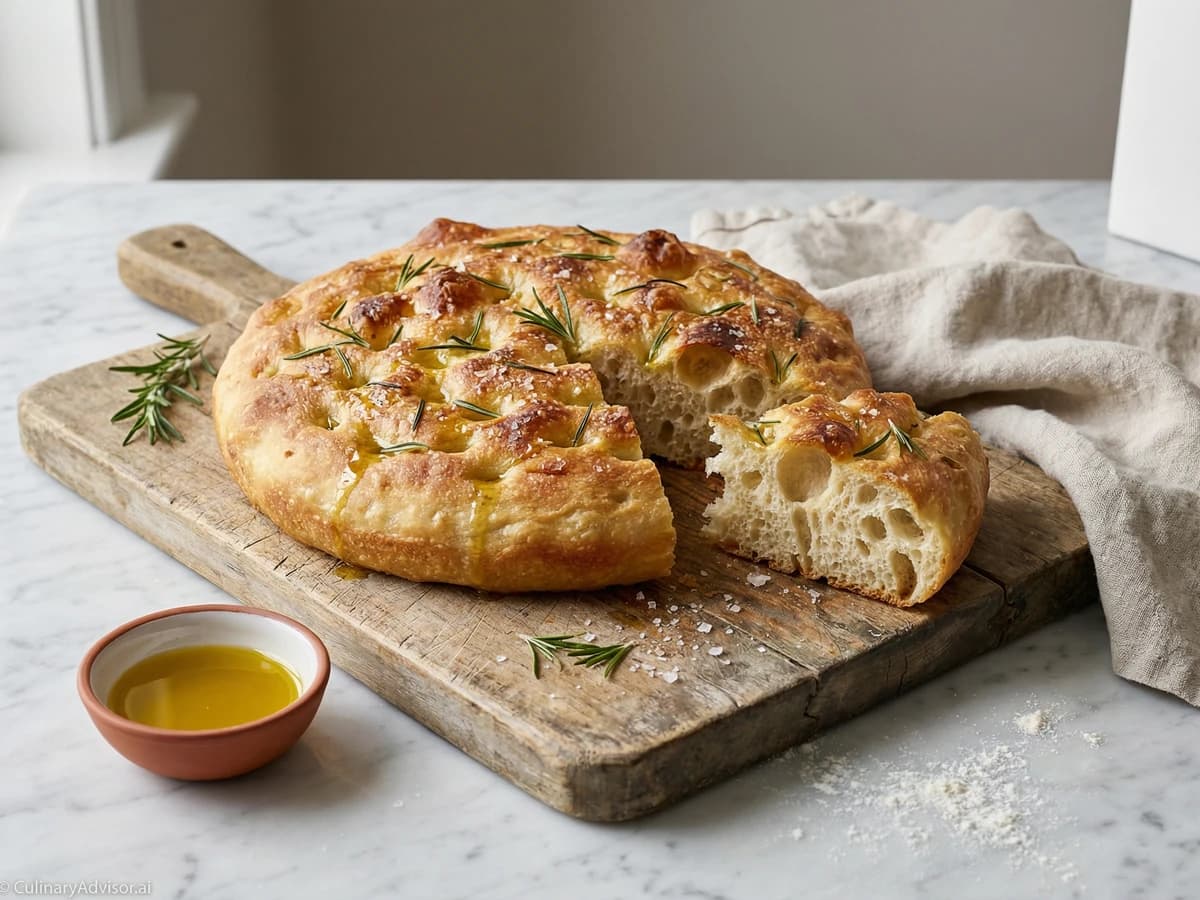
Golden-crusted Ligurian flatbread, generous with olive oil, dimpled by eager fingers, and scattered with rosemary and flaky salt. The bread that proves simplicity requires no apology.
A cooking platform built around craft, culture, and the stories behind what we eat.

Created by
The legendary Milanese Christmas bread with its golden dome, butter-rich crumb, and jeweled interior of candied citrus and plump raisins. Patient fermentation rewards you with texture like sweet clouds pulled apart by eager hands.
Panettone is a lesson in humility. This bread has broken more ambitious bakers than any soufflé or croissant ever could. The Milanese have been perfecting it since the fifteenth century, and they guard their methods with fierce regional pride. When I first attempted it in my own kitchen, the result resembled a hockey puck studded with fruit. It took me years to understand what the dough was telling me.
The magic of true panettone lives in its contradictions. A dough enriched with enough butter and egg yolks to make brioche blush, yet somehow lighter than air when baked. A bread that requires the patience of a saint during its long fermentation, then demands you hang it upside down like a bat while it cools. None of this makes sense until you tear into your first successful loaf and watch those long, cottony strands pull apart in your hands.
This recipe respects tradition while opening the door for home bakers. I've adapted the method to use instant yeast rather than requiring you to maintain a temperamental sourdough starter for weeks beforehand. The results won't fool a Milanese grandmother, but they'll earn you the gratitude of everyone at your holiday table. The key is time. You cannot rush panettone. The dough tells you when it's ready, and your job is to listen.
Quantity
500g (4 cups)
plus more for dusting
Quantity
150g (3/4 cup)
Quantity
10g (1 tablespoon)
Quantity
8g (1 1/2 teaspoons)
Quantity
6
room temperature
Quantity
1
room temperature
Quantity
120ml (1/2 cup)
warmed to 100°F
Quantity
2 tablespoons
Quantity
1 tablespoon
Quantity
1 large
zested
Quantity
1
zested
Quantity
200g (14 tablespoons)
softened and cubed
Quantity
100g (3/4 cup)
diced
Quantity
75g (1/2 cup)
diced
Quantity
100g (3/4 cup)
Quantity
2 tablespoons
Quantity
1
beaten with 1 tablespoon cream for egg wash
| Ingredient | Quantity |
|---|---|
| bread flourplus more for dusting | 500g (4 cups) |
| granulated sugar | 150g (3/4 cup) |
| instant yeast | 10g (1 tablespoon) |
| fine sea salt | 8g (1 1/2 teaspoons) |
| large egg yolksroom temperature | 6 |
| large whole eggroom temperature | 1 |
| whole milkwarmed to 100°F | 120ml (1/2 cup) |
| honey | 2 tablespoons |
| pure vanilla extract | 1 tablespoon |
| orangezested | 1 large |
| lemonzested | 1 |
| unsalted European-style buttersoftened and cubed | 200g (14 tablespoons) |
| candied orange peeldiced | 100g (3/4 cup) |
| candied citrondiced | 75g (1/2 cup) |
| golden raisins | 100g (3/4 cup) |
| dark rum or brandy | 2 tablespoons |
| egg yolkbeaten with 1 tablespoon cream for egg wash | 1 |
Combine the candied orange peel, candied citron, and golden raisins in a small bowl. Pour the rum over them and toss to coat. Cover and let stand at room temperature while you prepare the dough, at least 30 minutes. Better yet, do this the night before. The fruit will plump and soften, distributing more evenly through the finished bread. Drain any excess liquid before adding to the dough.
In the bowl of a stand mixer, whisk together the flour, sugar, yeast, and salt. Create a well in the center. Add the egg yolks, whole egg, warm milk, honey, vanilla, and both citrus zests. Fit the mixer with the dough hook and mix on low speed until the ingredients come together into a shaggy mass, about 2 minutes. The dough will look rough and unpromising. This is correct.
Increase the mixer speed to medium and knead for 10 minutes. The dough will slap against the sides of the bowl and slowly begin to smooth out. It will still be quite sticky. Stop the mixer and scrape down the sides as needed. After 10 minutes, the dough should pull away from the bowl sides in a cohesive mass, though it will stick to the bottom.
With the mixer running on medium-low, add the softened butter one tablespoon at a time. Wait until each addition is mostly absorbed before adding the next. This takes patience, roughly 8-10 minutes total. The dough will look greasy and broken at various points. Keep mixing. Eventually it transforms into something glossy and elastic, pulling completely away from the bowl sides. When you stretch a small piece, it should form a translucent windowpane without tearing.
Drain any excess rum from the soaked fruit. With the mixer on low speed, add the fruit mixture. Mix just until the fruit is evenly distributed, about 1-2 minutes. Over-mixing here will crush the delicate candied pieces and streak the dough with their color. Use a spatula to fold in any fruit that collects at the bottom of the bowl.
Transfer the dough to a large, lightly oiled bowl. Cover tightly with plastic wrap. Let rise at cool room temperature (68-72°F) until tripled in volume. This takes 10-14 hours, so plan accordingly. Starting in the evening and letting the dough rise overnight works beautifully. The slow fermentation develops complex flavor that quick-risen dough cannot match. The dough is ready when it looks puffy, billowy, and jiggles when you shake the bowl.
Turn the risen dough onto a lightly floured surface. Handle it gently. Divide into two equal portions, roughly 600g each if you have a scale. Working with one piece at a time, fold the edges toward the center, then flip the dough over so the seam faces down. Cup your hands around the dough and rotate it against the work surface in a circular motion, tucking the edges underneath to create surface tension. You want a taut, smooth ball with no seams visible on top.
Place each shaped ball into a paper panettone mold, seam-side down. The dough should fill about one-third of the mold. Cover loosely with plastic wrap or a clean kitchen towel. Let rise in a warm spot (75-78°F) until the dough reaches just below the rim of the paper mold, about 4-6 hours. The dough should look puffy and spring back slowly when pressed with a floured finger. Do not rush this rise. Under-proofed panettone will burst at the sides rather than doming gracefully.
Position a rack in the lower third of your oven and preheat to 350°F. Using a very sharp knife or razor blade, score a shallow cross on top of each loaf, about 4 inches long and a quarter-inch deep. Place a small piece of cold butter, about a tablespoon, in the center of the cross. Brush the entire surface lightly with the egg wash, being careful not to deflate the dough.
Place the molds on a sheet pan and bake for 15 minutes. Rotate the pan and reduce the temperature to 325°F. Continue baking until the tops are deep golden brown and an instant-read thermometer inserted into the center reads 190°F, about 35-45 minutes more. The tops will dome proudly above the paper molds. If the tops brown too quickly, tent loosely with foil for the final 15 minutes.
This step is non-negotiable. As soon as the panettone emerge from the oven, insert two long wooden skewers horizontally through the base of each loaf, about an inch from the bottom, creating a cross pattern. Immediately flip the loaves upside down, suspending them between two tall objects like wine bottles or large cans. The skewers rest on the supports while the panettone hangs freely. Cool completely in this position, at least 8 hours or overnight.
Once completely cooled, remove the skewers. Panettone keeps beautifully for up to a week wrapped in plastic at room temperature. The texture actually improves after a day or two as the flavors meld. To serve, slice into wedges from the top down using a serrated knife. Toast leftover slices and spread with mascarpone for breakfast. Day-old panettone makes extraordinary French toast.
1 serving (about 57g)
Culinary guides, cultural storytelling, and the editorial depth that makes cooking meaningful.
Discover Culinary ExplorerChef Dean
Golden-crusted Ligurian flatbread, generous with olive oil, dimpled by eager fingers, and scattered with rosemary and flaky salt. The bread that proves simplicity requires no apology.
Chef Dean
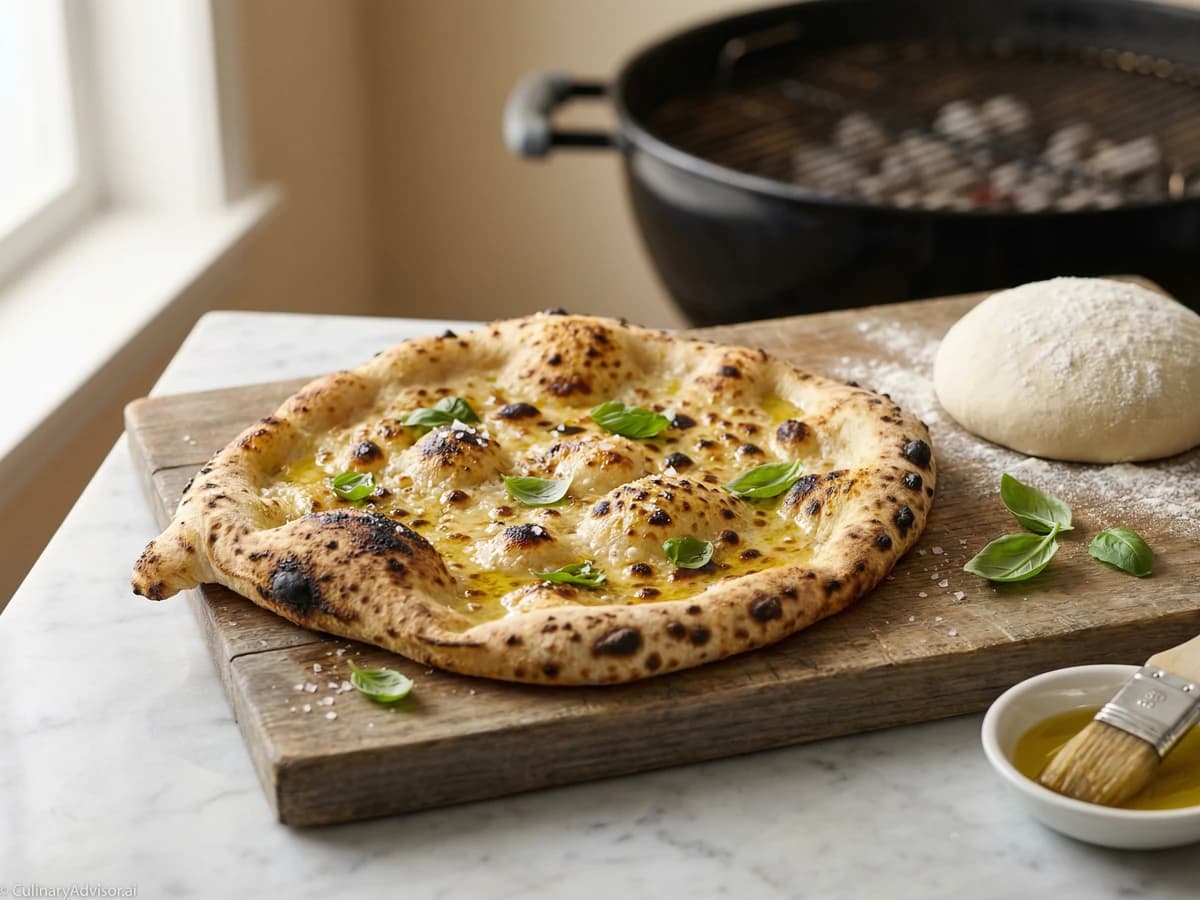
Supple, high-hydration dough stretched thin and kissed by live fire, producing the leopard-spotted char and smoky complexity that no kitchen oven can replicate. This is summer pizza.

Chef Dean
The iconic Italian slipper bread with a shattering golden crust and an interior so open and airy you could lose your car keys in there. High-hydration dough rewards patience with results no bakery can match.

Chef Ally
Four ingredients, twenty-four hours, and a willingness to let time do most of the work. This is dough the way Naples has made it for generations, simple and alive with flavor.