
Chef Lupita
Aporreadillo Michoacano con Huevo
Michoacán's Tierra Caliente almuerzo, where salted beef is softened, pounded, fried in lard, folded with egg and chile perón salsa, then served beside morisqueta like a proper working table.
A cooking platform built around craft, culture, and the stories behind what we eat.
Created by
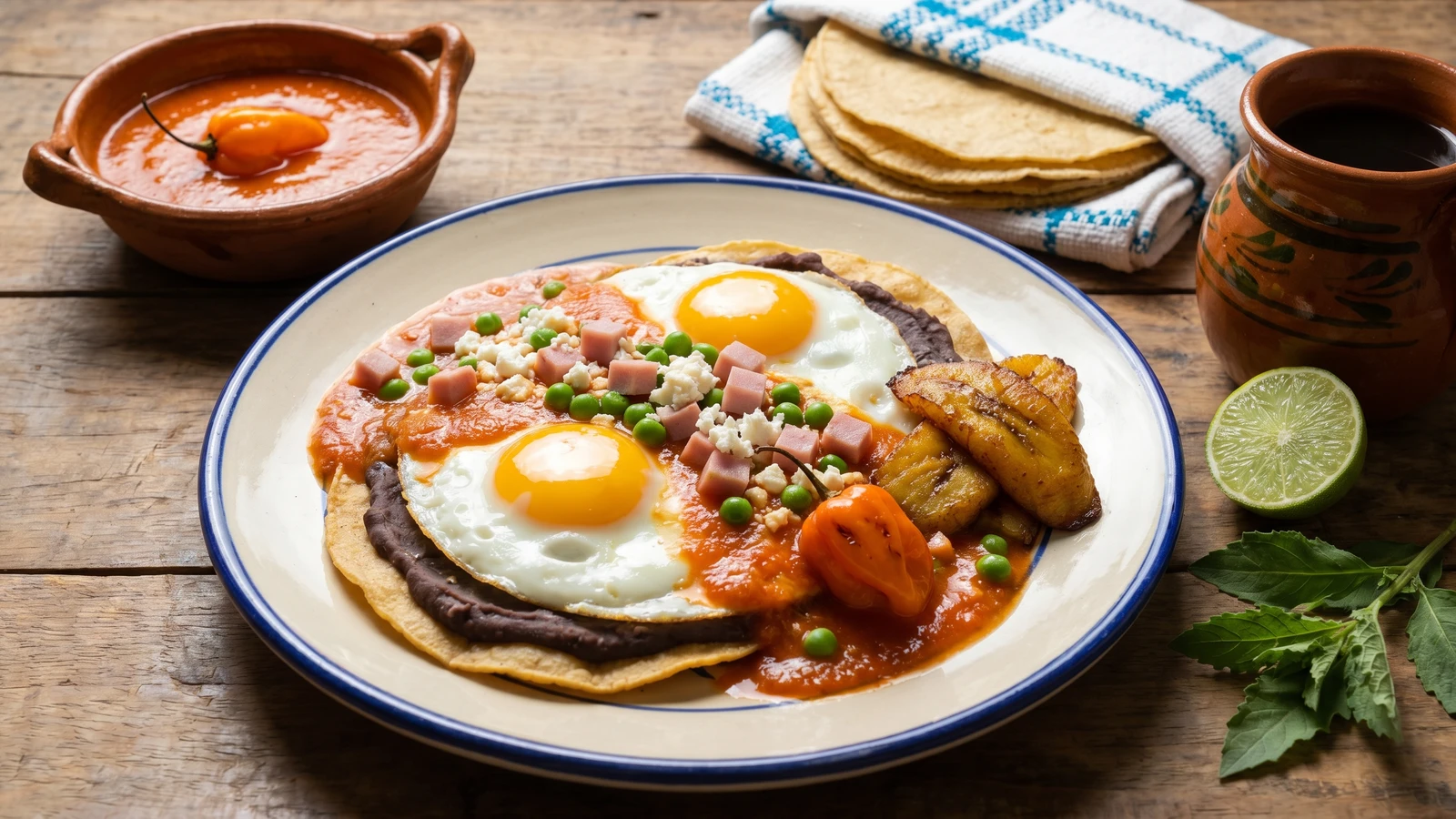
Yucatán's most ambitious breakfast, built layer by layer in the town of Motul: a fried tortilla under strained black beans, fried eggs, chiltomate, peas, ham, and sweet fried plantain.
This is from Motul. A small town in the henequen country of Yucatán, about forty kilometers east of Mérida, where in the 1920s a cook named Jorge Siqueff put a plate together for the politicians who passed through his restaurant in the town's central market. The dish carried the name of his town and never let it go. Huevos motuleños is Motul's. It is not generic Mexican breakfast. It is yucateco, and within yucateco, it is motuleño.
The dish is layered for a reason. You build it. A fried tortilla on the bottom for structure. Frijol colado, black beans strained smooth and cooked with epazote, spread across it. Two fried eggs with yolks that run. Chiltomate, the yucateco roasted tomato salsa with the whole habanero perfuming it from inside, ladled around the eggs. Peas and diced ham scattered across the top. Sweet fried plantain on the side, almost too ripe, the kind that turns custardy in the pan. Every component does specific work. Remove one and the architecture collapses.
The Yucatán is not the rest of Mexico. The Mayan kitchen tradition runs underneath everything cooked there, and the trade routes through the Gulf brought ham, peas, and Dutch cheese into the regional pantry centuries ago. That is why this breakfast has European supermarket items on a Mayan base, and why it works. Esto no es comida de un solo Mexico. Cada estado, su propia cocina, and Yucatán has one of the most distinct kitchens of all of them.
My notebook from the Mérida trip has a page from a senora named Doña Olga who ran a fonda near the Mercado Lucas de Gálvez. She told me the dish has to be assembled in order or it is not motuleños, it is just breakfast. She said it twice so I would not forget. I did not forget. Recetas probadas y garantizadas.
Huevos motuleños were created in the 1920s in the town of Motul, Yucatán, in a restaurant run by Jorge Siqueff Manzur, son of Lebanese immigrants, who reportedly assembled the dish for then-governor Felipe Carrillo Puerto. The presence of green peas, ham, and Dutch cheese reflects Yucatán's centuries-long Gulf trade with Europe and the Caribbean, which operated more directly than its overland connection to central Mexico and gave the peninsula a pantry distinct from the rest of the country. The dish's foundation, frijol colado strained with epazote and chiltomate built around a whole habanero, is pure Mayan-yucateco technique, predating the colonial layer entirely and grounding what looks like a hybrid invention in pre-Columbian cooking practice.
Quantity
2 cups
frijoles negros, ideally cooked with epazote
Quantity
1
half finely chopped, half left whole
Quantity
2
1 whole, 1 finely chopped
Quantity
1 sprig
Quantity
4 tablespoons
divided
Quantity
1 pound
Quantity
1
left whole and unbroken
Quantity
1/2 teaspoon, plus more to taste
Quantity
1
yellow with heavy black spots, peeled and sliced on the diagonal 1/2-inch thick
Quantity
1 cup
Quantity
4 ounces
diced small
Quantity
4
day-old preferred
Quantity
for frying tortillas and plantains
Quantity
8
Quantity
1/4 cup
for finishing
Quantity
to taste
| Ingredient | Quantity |
|---|---|
| cooked black beans with their cooking liquidfrijoles negros, ideally cooked with epazote | 2 cups |
| small white onionhalf finely chopped, half left whole | 1 |
| garlic cloves1 whole, 1 finely chopped | 2 |
| fresh epazote | 1 sprig |
| manteca de cerdo (pork lard)divided | 4 tablespoons |
| ripe Roma tomatoes | 1 pound |
| fresh chile habaneroleft whole and unbroken | 1 |
| kosher salt | 1/2 teaspoon, plus more to taste |
| ripe maduro plantainyellow with heavy black spots, peeled and sliced on the diagonal 1/2-inch thick | 1 |
| fresh or frozen peas | 1 cup |
| good-quality cooked ham (jamón de pierna)diced small | 4 ounces |
| corn tortillasday-old preferred | 4 |
| neutral oil or additional lard | for frying tortillas and plantains |
| large eggs | 8 |
| crumbled queso fresco or aged queso de bola Holandésfor finishing | 1/4 cup |
| sea salt and freshly ground black pepper | to taste |
In a heavy skillet, melt 1 tablespoon of the lard over medium heat. Add the finely chopped half of the onion and the chopped garlic. Cook until soft and translucent, about four minutes. Add the cooked black beans with their liquid and the sprig of epazote. Simmer for ten minutes so the flavors marry. Remove the epazote. Transfer everything to a blender and puree until completely smooth. Strain through a fine-mesh sieve back into the skillet, pressing on the solids. This is frijol colado, strained black bean puree, and it is the foundation of the dish. It should be thick enough to hold its shape on a tortilla, looser than refried beans. Keep warm.
Heat a dry comal or heavy skillet over medium-high. Roast the tomatoes, turning every couple of minutes, until the skins are blistered and blackened in patches, about eight to ten minutes. At the same time, roast the whole half of the onion and the whole garlic clove on the comal until charred at the edges and softened inside. Transfer everything to a blender. Add the whole habanero, unbroken, and the salt. Pulse just until you have a chunky sauce. Do not puree it smooth. Chiltomate has texture.
Heat 1 tablespoon of lard in a small skillet over medium heat. Pour in the blended tomato mixture. It will sputter. Cook for eight to ten minutes, stirring, until the sauce darkens slightly and the raw tomato taste cooks out. Taste for salt. The chiltomate should be bright, tomato-forward, with a quiet hum of habanero in the background. If you broke the habanero by accident, fish it out before serving. Keep warm.
Heat 2 tablespoons of oil or lard in a skillet over medium heat. The plantain must be ripe, yellow with heavy black spots, almost too soft to slice cleanly. Green plantain has no business in this dish. Fry the slices for two to three minutes per side, until the edges turn dark caramel and the centers go custardy. Drain on a paper towel. The sweetness of the plantain is what balances the entire plate. Without it, huevos motuleños is just eggs on a tortilla.
In the same skillet, add the remaining tablespoon of lard. Add the diced ham and cook for two minutes, until the edges start to brown and the fat renders. Add the peas and cook for two minutes more, just until the peas are warmed through and bright green. Season with a pinch of salt. Pull off the heat and keep warm. This little mound of peas and ham is the surprise of the dish, sweet, salty, and savory at once.
Pour enough oil or lard into a small skillet to come up half an inch. Heat over medium-high until shimmering. Slide in one tortilla at a time and fry for about 30 seconds per side, until it stiffens and turns light gold. You are not making a tostada that snaps in half. You want a tortilla that holds its shape under the weight of beans and eggs but still has some give. Drain on paper towels. Day-old tortillas fry up cleaner than fresh ones, which is why every cook in Motul saves yesterday's stack for breakfast.
In a wide skillet, heat a generous tablespoon of lard over medium heat. Crack the eggs into the pan, two at a time so they have room. Yucatecan style is sunny side up with a set white and a runny yolk. Cook for about three minutes, until the whites are fully opaque and the edges turn lacy and golden, while the yolks stay liquid. Season with a small pinch of salt and pepper. The yolk has to run when the fork breaks it. That is the sauce that ties everything together.
This dish is architecture and the order is the recipe. Place one fried tortilla in the center of a wide plate. Spread a generous layer of warm frijol colado across the tortilla, all the way to the edges. Lay two fried eggs on top of the beans. Spoon warm chiltomate over and around the eggs, leaving the yolks exposed. Scatter the peas and ham across the top. Tuck two or three slices of fried plantain along the side, where they touch the chiltomate but do not sit in it. Crumble queso fresco over the eggs. Serve immediately. Eat with a fork in one hand and a piece of soft tortilla in the other to chase what the fork misses. Saber cocinar es saber vivir.
1 serving (about 450g)
Culinary guides, cultural storytelling, and the editorial depth that makes cooking meaningful.
Discover Culinary ExplorerChef Lupita
Michoacán's Tierra Caliente almuerzo, where salted beef is softened, pounded, fried in lard, folded with egg and chile perón salsa, then served beside morisqueta like a proper working table.

Chef Lupita
Guerrero's Costa Grande aporreado is salted cecina pounded soft, scrambled with egg, and finished in a red guajillo and chile de árbol salsa loud with garlic and cilantro.

Chef Lupita
Los Altos de Chiapas turns two-night fermented white corn into a tart-sweet atole, cooked with canela and piloncillo, then poured hot into jícaras for desayuno.

Chef Lupita
Oaxaca's Mixteca region ferments nixtamalized masa for days until it turns tart and alive, then simmers it with piloncillo and canela into a thick, warm atole served at first light in clay.