
Chef Lupita
Aporreadillo Michoacano con Huevo
Michoacán's Tierra Caliente almuerzo, where salted beef is softened, pounded, fried in lard, folded with egg and chile perón salsa, then served beside morisqueta like a proper working table.
A cooking platform built around craft, culture, and the stories behind what we eat.
Created by
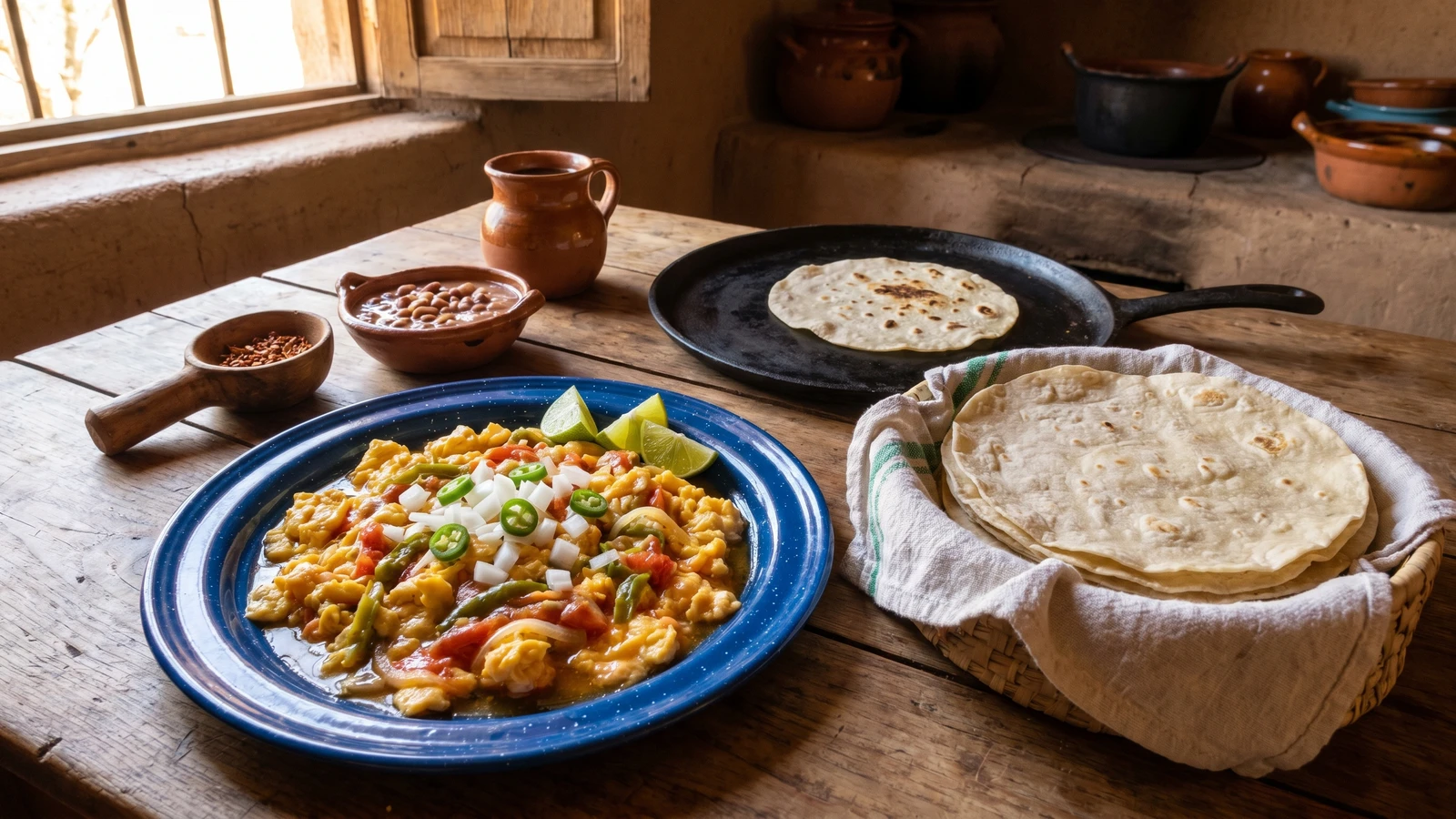
Sonora's morning plate: eggs scrambled with tomato, white onion and chile serrano in pork lard, scooped into paper-thin sobaqueras instead of corn tortillas. The flag in a frying pan, the way they eat it on the rancho.
This is a noroeste breakfast. Specifically Sonora, where the wheat grows and the cattle grazes and the flour tortilla, not the corn tortilla, sits at the center of the table. Huevos a la mexicana exists across the country, but in Sonora it is paired with sobaqueras, the wide, paper-thin flour tortillas pressed and stretched over the back of the cook's forearm, and that pairing is what makes it a Sonoran plate and not a generic Mexican one.
The name tells you what to do. Tomato, white onion, chile serrano. Red, white, green. The flag. Equal proportions of tomato and onion, a smaller share of chile, and eggs to bind them. No cheese. No bell pepper. No cream. The dish is honest and the ingredients are cheap, which is why it has fed ranch families and city families and working families for generations. Saber cocinar es saber vivir, and a cook who masters this plate has the whole logic of Mexican breakfast figured out.
The fat matters. In a Sonoran kitchen the eggs go into manteca de cerdo, not vegetable oil. The lard rounds out the tomato's acidity and carries the chile heat the way oil cannot. And the sobaquera matters. A corn tortilla here would be wrong, and I will say it plainly: in noroeste, flour is where it belongs. The sobaquera is large enough to wrap the entire breakfast, thin enough to disappear into the eggs, and made by women in Hermosillo and Caborca who have stretched dough over their forearms since they were twelve years old. No me vengas con atajos. Buy them from a tortilleria sonorense if you can find one, or learn to make them. There is no good substitute.
Huevos a la mexicana takes its name and its color scheme from the Mexican flag, formalized in 1821 after independence, and the dish itself entered the national breakfast repertoire in the 19th century as tomato cultivation spread inland from the coasts. The sobaquera, also called tortilla de agua, is a Sonoran specialty whose name comes from sobaco (armpit), referencing the way cooks stretch the dough across the forearm and over the shoulder area to achieve the tortilla's characteristic translucence and 16-to-20-inch diameter. Sonora's wheat-based tortilla tradition dates to the late 17th century, when Jesuit missionaries introduced wheat cultivation to the Yaqui and Mayo valleys, and the region's dry climate and cattle ranching economy cemented flour as the staple grain over corn — the only Mexican region where this is true.
Quantity
8
Quantity
2 medium
finely diced
Quantity
1/2 medium
finely diced
Quantity
2
finely chopped, seeds and all
Quantity
2 tablespoons
Quantity
1 teaspoon, plus more to taste
Quantity
to taste
Quantity
4 to 6
Quantity
for serving
Quantity
for serving
Quantity
for serving
| Ingredient | Quantity |
|---|---|
| large eggs | 8 |
| ripe Roma tomatoesfinely diced | 2 medium |
| white onionfinely diced | 1/2 medium |
| fresh chile serranofinely chopped, seeds and all | 2 |
| manteca de cerdo | 2 tablespoons |
| kosher salt | 1 teaspoon, plus more to taste |
| freshly ground black pepper | to taste |
| sobaqueras (Sonoran flour tortillas) | 4 to 6 |
| frijoles puercos or refried pinto beans (optional) | for serving |
| salsa de chiltepín (optional) | for serving |
| lime wedges (optional) | for serving |
Dice the tomato, white onion, and chile serrano fine and keep them in three small piles on the cutting board. The proportions are what matter. You want roughly equal volumes of tomato and onion and a smaller pile of serrano. This is the bandera, the three colors of the flag, and that is where the dish gets its name. Do not seed the chile. The seeds belong here.
Crack the eggs into a bowl. Add half a teaspoon of salt and a few grinds of black pepper. Beat them with a fork until the yolks and whites are completely combined and the surface foams a little. No milk, no cream, no water. Eggs scrambled with dairy turn rubbery and that is not what you are making.
Melt the manteca in a heavy skillet over medium heat. La manteca es el sabor, and in noroeste kitchens it is what makes a plate of eggs taste like a Sonoran rancho and not a hotel buffet. Add the onion and chile serrano with a pinch of salt. Cook for two minutes, stirring, until the onion turns translucent at the edges but still has bite. Do not brown it. You want the onion sweet and forward, not caramelized.
Add the diced tomato. Raise the heat slightly and cook for two to three minutes, stirring, until the tomato softens and most of its water cooks off. The mixture should look glossy, not soupy. If there is liquid pooling in the pan, keep cooking. Wet tomato will steam the eggs instead of folding into them.
While the tomato cooks down, set a dry comal over medium heat. Lay the sobaqueras on the comal one or two at a time, about 20 seconds per side, just until they soften and pick up a few light brown freckles. Stack them in a cloth-lined basket and cover. Sobaqueras are paper-thin and will go from pliable to brittle if you walk away from them. Keep an eye on the comal, not your phone.
Lower the heat under the skillet to medium-low. Pour the beaten eggs over the tomato and onion. Wait ten seconds, then start dragging a wooden spoon or silicone spatula through the eggs in slow folds, lifting from the bottom and pulling toward the center. Do not whip them. You want soft, large curds streaked with red and green, not a uniform yellow paste. Pull the pan off the heat while the eggs still look slightly wet on top. Carryover heat will finish them on the way to the table.
Spoon the eggs onto warm plates next to a generous scoop of frijoles puercos. Set the basket of sobaqueras and a wooden chiltepinero of crushed chiltepín on the table. In Sonora, the eggs go inside the sobaquera as a burrito, not on top of it with a fork. Tear a piece of tortilla, scoop a bite, top with chiltepín or salsa, eat. Asi se hace y punto.
1 serving (about 375g)
Culinary guides, cultural storytelling, and the editorial depth that makes cooking meaningful.
Discover Culinary ExplorerChef Lupita
Michoacán's Tierra Caliente almuerzo, where salted beef is softened, pounded, fried in lard, folded with egg and chile perón salsa, then served beside morisqueta like a proper working table.

Chef Lupita
Guerrero's Costa Grande aporreado is salted cecina pounded soft, scrambled with egg, and finished in a red guajillo and chile de árbol salsa loud with garlic and cilantro.

Chef Lupita
Los Altos de Chiapas turns two-night fermented white corn into a tart-sweet atole, cooked with canela and piloncillo, then poured hot into jícaras for desayuno.

Chef Lupita
Oaxaca's Mixteca region ferments nixtamalized masa for days until it turns tart and alive, then simmers it with piloncillo and canela into a thick, warm atole served at first light in clay.