
Chef Zohra
Adss (عدس)
Brown lentils cooked down with tomato, garlic, cumin, and paprika until spoon-thick, then finished with olive oil and coriander. This is weekday Moroccan comfort, made for bread and one more bowl.
A cooking platform built around craft, culture, and the stories behind what we eat.
Created by
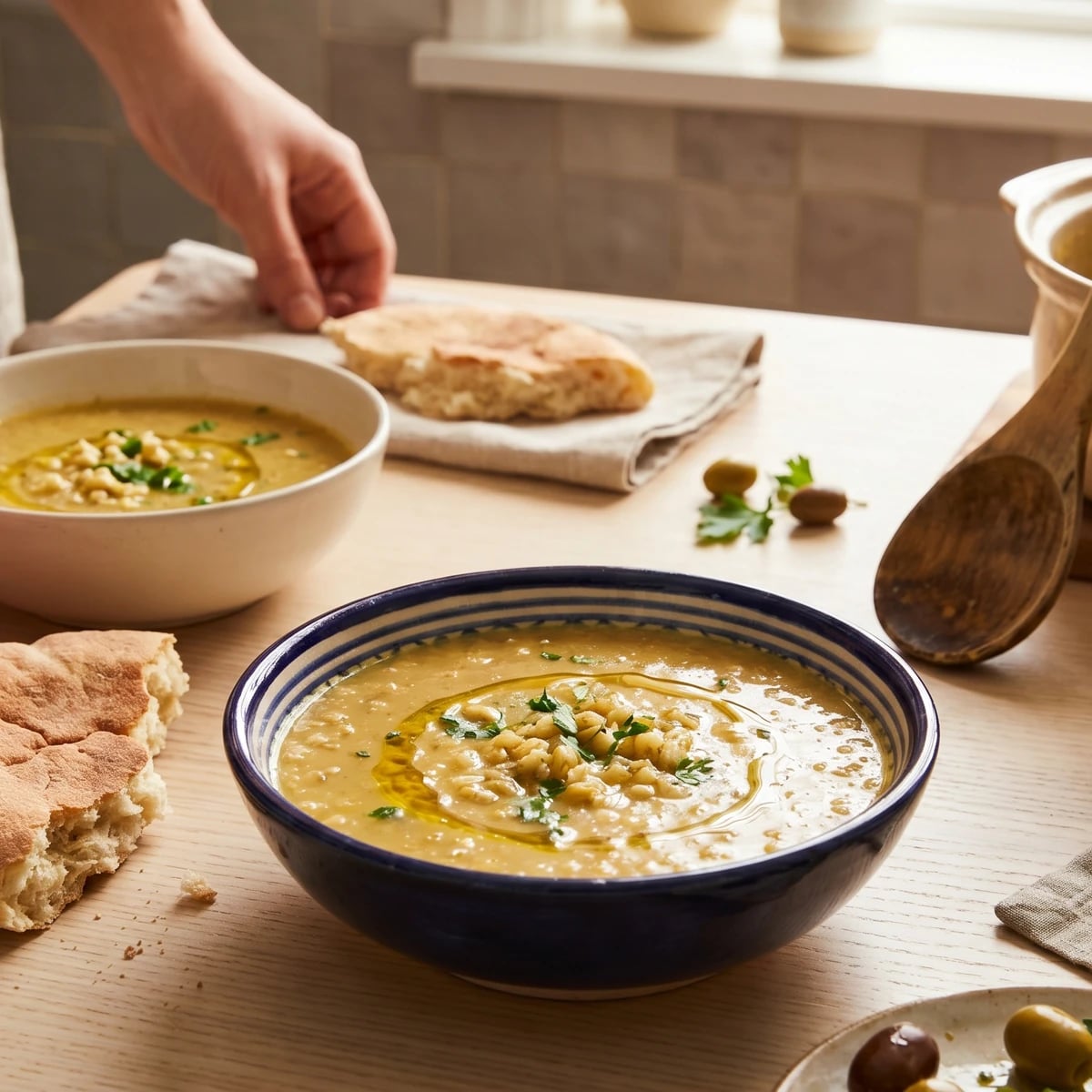
Cracked barley simmered until soft and giving, with tomato, herbs, cumin, and olive oil. This is the mountain bowl you eat at dawn when the cold has teeth.
The barley is the whole lesson here. Belboula, cracked barley, needs time to swell and soften until the broth turns cloudy and generous around it. Rush it and the grain stays hard at the heart. Let it simmer slowly, and it gives the soup its body without asking for meat, flour, or any grand gesture.
This is winter cooking from the Amazigh mountains and the cold inland towns, the kind of bowl eaten early when the house is still quiet and the day has not warmed its hands. Tomato gives a little acidity, cumin gives warmth, parsley and coriander wake it at the end. Some families finish it with milk, some leave it clear with olive oil. Both are Moroccan. Il n'y a pas une cuisine marocaine, mais des cuisines marocaines.
Stir often once the barley begins to thicken. That is the one rule that decides the pot: barley settles and catches if you abandon it. Keep it moving now and then, and it will turn soft, round, and comforting. Make enough for the person who says they only want a small bowl. They will come back.
Barley is one of the oldest grains cultivated in North Africa, present in Amazigh foodways long before wheat became the prestige grain of cities such as Fez and Marrakech. Hssoua belboula belongs especially to the Atlas and other cold rural regions, where cracked barley, olive oil, herbs, and sometimes milk made a sustaining winter soup from what the land kept well. Its exact dating is not fixed in written sources, because it lived mostly in household practice, not court manuscripts.
Quantity
200g
rinsed
Quantity
2 tbsp, plus more for serving
Quantity
1 medium
finely grated or minced
Quantity
2
grated, or use 250ml crushed tomato
Quantity
2
minced
Quantity
1 tsp
Quantity
1/2 tsp
Quantity
1/2 tsp
Quantity
1/4 tsp
Quantity
1 1/2 tsp, plus more to taste
Quantity
1.5 liters
Quantity
1 small bunch
chopped
Quantity
1 small bunch
chopped
Quantity
250ml
optional, for a softer hssoua
| Ingredient | Quantity |
|---|---|
| cracked barley (belboula or dchicha)rinsed | 200g |
| olive oil | 2 tbsp, plus more for serving |
| onionfinely grated or minced | 1 medium |
| ripe tomatoesgrated, or use 250ml crushed tomato | 2 |
| garlic clovesminced | 2 |
| ground cumin | 1 tsp |
| sweet paprika | 1/2 tsp |
| ground ginger | 1/2 tsp |
| black pepper | 1/4 tsp |
| sea salt | 1 1/2 tsp, plus more to taste |
| water or light vegetable broth | 1.5 liters |
| fresh corianderchopped | 1 small bunch |
| fresh parsleychopped | 1 small bunch |
| whole milk (optional)optional, for a softer hssoua | 250ml |
Put the cracked barley in a bowl and rinse it through two or three changes of water, rubbing it lightly between your fingers. Drain well. You are washing off dust, not washing away character; the barley still needs its starch because that is what gives the soup its body.
Warm the olive oil in a heavy pot over medium heat. Add the onion with a pinch of salt and cook until it softens and smells sweet, 5 to 7 minutes. Add the garlic, grated tomato, cumin, paprika, ginger, black pepper, and salt, then cook until the tomato darkens a little and the oil shows at the edges.
Add the drained barley and stir so every grain is coated in the tomato and spice. Pour in the water or light broth, bring it to a boil, then lower the heat so the pot murmurs steadily. Cook uncovered for 35 to 45 minutes, stirring often once it thickens. That stirring matters: barley settles at the bottom and catches if you forget it.
Taste the barley. It should be soft all the way through, with a little chew left, not chalky. Stir in the parsley and coriander. If you want the milky version, lower the heat and add the milk now, then warm it gently for 5 minutes without boiling hard, so it stays smooth.
Ladle the hssoua into bowls and finish each one with a thin thread of olive oil. Put round khobz on the table and keep the pot close. This is la cuisine du lien, the cooking of connection: a bowl for the cold, and one more waiting.
1 serving (about 330g)
Culinary guides, cultural storytelling, and the editorial depth that makes cooking meaningful.
Discover Culinary Explorer
Chef Zohra
Brown lentils cooked down with tomato, garlic, cumin, and paprika until spoon-thick, then finished with olive oil and coriander. This is weekday Moroccan comfort, made for bread and one more bowl.

Chef Zohra
Berkoukes is Oujda's feast bowl for Mawlid and winter evenings: hand-rolled semolina pearls, bigger than couscous, swelling in a tomato-red broth with lamb, chickpeas, saffron, and ras el hanout.

Chef Zohra
The north's fava purée, thick and generous, filmed with olive oil and ringed with cumin and paprika. Eat it hot with torn khobz, the way cold mornings are answered.

Chef Zohra
A lighter Moroccan soup for an ordinary night: clear broth, a little lamb, vegetables cut small, herbs, and fine vermicelli added late so the bowl stays lively.