
Chef Zohra
Berkoukes d'Oujda (بركوكس)
Berkoukes is Oujda's feast bowl for Mawlid and winter evenings: hand-rolled semolina pearls, bigger than couscous, swelling in a tomato-red broth with lamb, chickpeas, saffron, and ras el hanout.
A cooking platform built around craft, culture, and the stories behind what we eat.
Created by
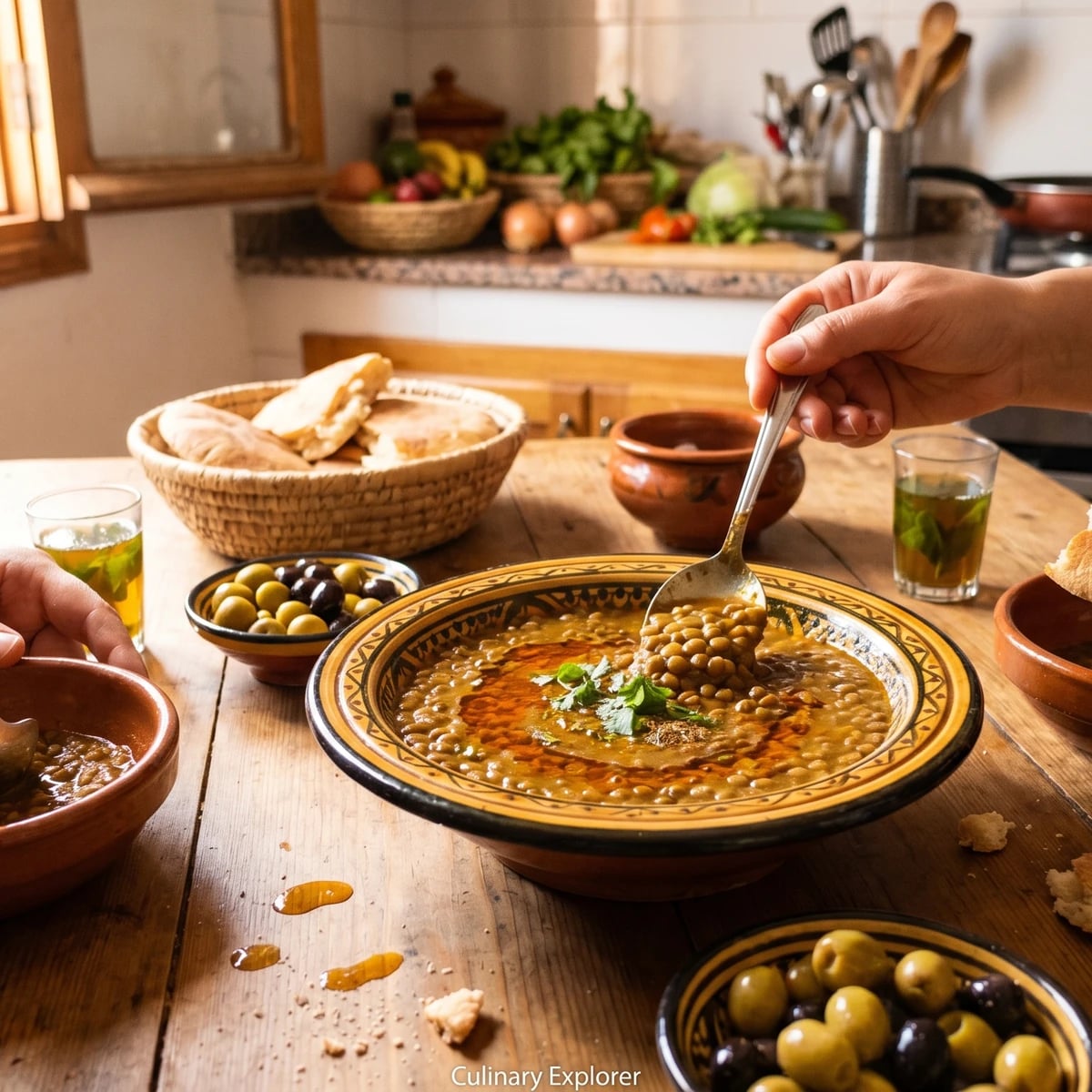
Brown lentils cooked down with tomato, garlic, cumin, and paprika until spoon-thick, then finished with olive oil and coriander. This is weekday Moroccan comfort, made for bread and one more bowl.
When the evenings turn cold, adss is the pot I want on the stove: brown lentils, tomato, garlic, cumin, and paprika settling into a stew thick enough for bread. It doesn't ask for ceremony. It asks that you look at the lentils, smell the cumin when it wakes in the oil, and let the tomatoes cook until their raw edge is gone.
The important gesture comes before the water. Cook the onion, garlic, spices, and tomato paste until the oil takes on a red gloss, then the lentils go in. If you pour water too early, the stew stays thin and sharp. Give the base its time, and the lentils will carry the flavor all the way through.
This is weeknight food, budget food, winter food, and it still deserves your full hand. Serve it in a shared bowl with khobz torn around it, a little coriander on top, a thread of olive oil. Make enough for the person who says they only came for tea. Une table, c'est une porte qu'on laisse ouverte (a table is a door you leave open).
Lentils were cultivated across the Mediterranean and North Africa in antiquity, and medieval Arabic agronomic texts from al-Andalus and the Maghreb describe pulses as ordinary field crops long before tomatoes colored the pot. The tomato-red adss cooked in Moroccan homes today took its present profile after tomatoes and paprika arrived from the Americas through Iberian and Mediterranean trade after the 16th century. Because it belongs to household and street-stall cooking rather than palace records, no single city can claim a birth certificate; Oujda eastern, Atlantic, Amazigh, and Fassi kitchens all season it by their own hand.
Quantity
300g
rinsed and picked over
Quantity
3 tbsp, plus more for finishing
Quantity
1 large
finely chopped
Quantity
4
pounded or minced
Quantity
2
grated, or use 200g crushed canned tomatoes
Quantity
1 tbsp
Quantity
1 1/2 tsp, plus a pinch for finishing
Quantity
1 tsp
Quantity
1/2 tsp
Quantity
1/2 tsp
Quantity
1/4 tsp
Quantity
1 small pinch or 1 chile
Quantity
1 small bunch
finely chopped, divided
Quantity
1.2L, plus more as needed
Quantity
1 1/2 tsp, or to taste
Quantity
for serving
| Ingredient | Quantity |
|---|---|
| brown or green lentilsrinsed and picked over | 300g |
| olive oil | 3 tbsp, plus more for finishing |
| yellow onionfinely chopped | 1 large |
| garlic clovespounded or minced | 4 |
| ripe tomatoesgrated, or use 200g crushed canned tomatoes | 2 |
| tomato paste | 1 tbsp |
| ground cumin | 1 1/2 tsp, plus a pinch for finishing |
| sweet paprika | 1 tsp |
| ground turmeric | 1/2 tsp |
| ground ginger | 1/2 tsp |
| black pepper | 1/4 tsp |
| cayenne or small dried chile (optional) | 1 small pinch or 1 chile |
| fresh coriander and parsleyfinely chopped, divided | 1 small bunch |
| water | 1.2L, plus more as needed |
| sea salt | 1 1/2 tsp, or to taste |
| round khobz | for serving |
Pour the lentils onto a tray or wide plate and look through them with your fingers, removing any small stones or broken bits. Rinse them until the water runs mostly clear. They don't need soaking if they are fresh, but if they look very dry and old, give them 30 minutes in warm water and expect a little more patience at the stove.
Warm the olive oil in a heavy pot over medium heat. Add the onion with a pinch of salt and cook for 8 to 10 minutes, stirring often, until it turns soft and sweet-smelling with pale gold edges. Add the garlic and cook for another minute, just until it rises to your nose.
Stir in the tomato paste, grated tomato or crushed canned tomato, cumin, paprika, turmeric, ginger, black pepper, and cayenne if using. Cook for 5 to 7 minutes, stirring, until the tomato thickens and the oil shines red around the edges. This is the part that decides the dish: cook the tomato-spice base before the water, or the stew will taste thin and sharp.
Add the rinsed lentils, half the chopped herbs, and 1.2L water. Bring to a lively simmer, then lower the heat, cover the pot partway, and cook for 35 to 45 minutes. Stir now and then so nothing catches at the bottom. The lentils should become tender but not vanish completely.
Add the salt, then press a ladleful of lentils against the side of the pot and stir them back in. Simmer uncovered for 8 to 10 minutes, until the broth and lentils become one thick stew. If it tightens too much, add a splash of water; if it runs, let it cook a little longer. La balance est dans les yeux (the scale is in the eyes).
Turn off the heat and stir in most of the remaining herbs. Rest the pot for 10 minutes so the lentils settle and the sauce rounds out. Serve in a shared bowl with a thread of olive oil, a pinch of cumin, the last coriander scattered over, and warm khobz for scooping.
1 serving (about 345g)
Culinary guides, cultural storytelling, and the editorial depth that makes cooking meaningful.
Discover Culinary Explorer
Chef Zohra
Berkoukes is Oujda's feast bowl for Mawlid and winter evenings: hand-rolled semolina pearls, bigger than couscous, swelling in a tomato-red broth with lamb, chickpeas, saffron, and ras el hanout.

Chef Zohra
The north's fava purée, thick and generous, filmed with olive oil and ringed with cumin and paprika. Eat it hot with torn khobz, the way cold mornings are answered.

Chef Zohra
A lighter Moroccan soup for an ordinary night: clear broth, a little lamb, vegetables cut small, herbs, and fine vermicelli added late so the bowl stays lively.

Chef Zohra
Not bissara, not a puree: whole fava beans held tender in a garlicky red sauce, with cumin, paprika, olive oil, and enough khobz for every hand at the table.