
Chef Zohra
Adss (عدس)
Brown lentils cooked down with tomato, garlic, cumin, and paprika until spoon-thick, then finished with olive oil and coriander. This is weekday Moroccan comfort, made for bread and one more bowl.
A cooking platform built around craft, culture, and the stories behind what we eat.
Created by
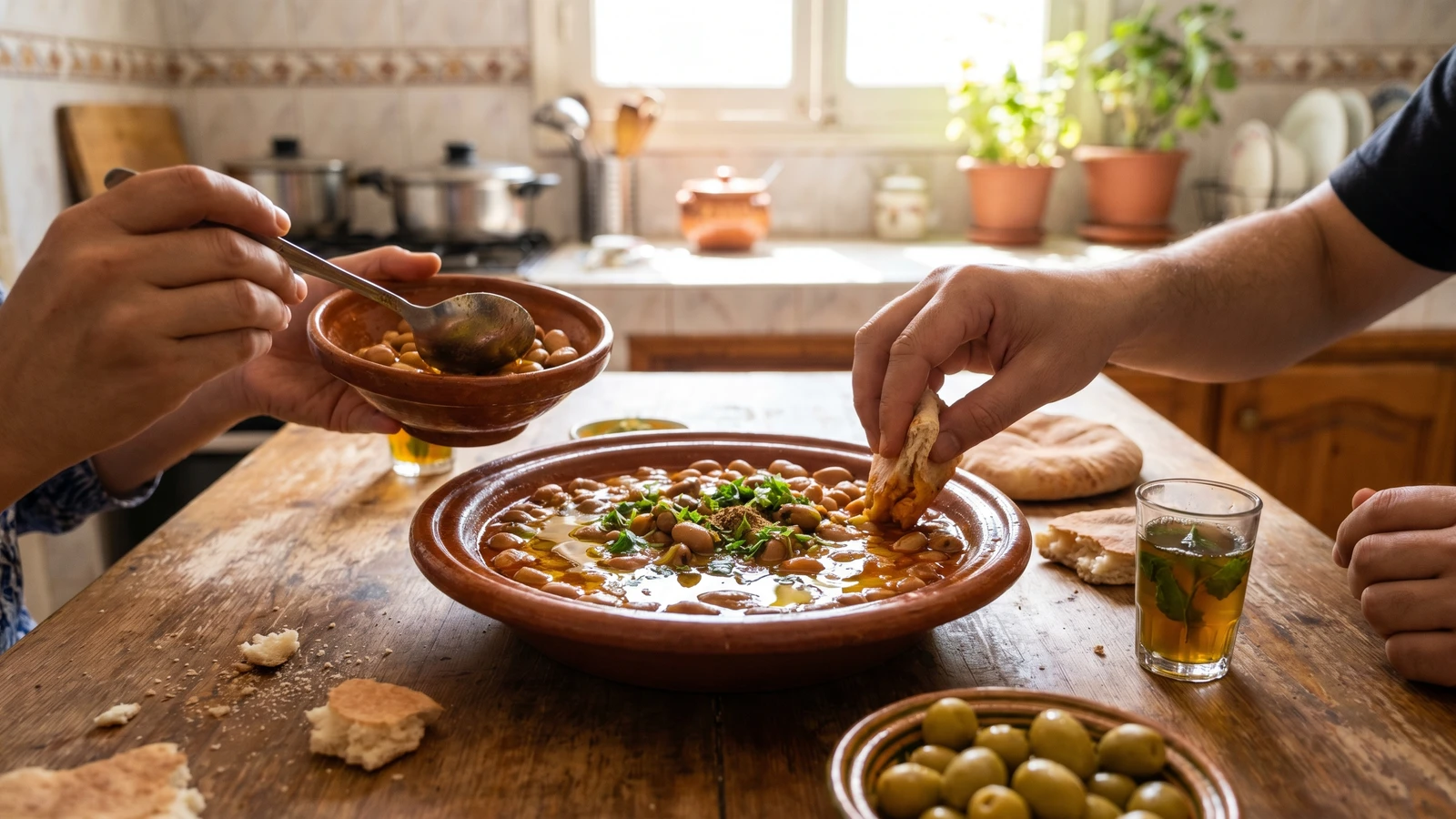
Not bissara, not a puree: whole fava beans held tender in a garlicky red sauce, with cumin, paprika, olive oil, and enough khobz for every hand at the table.
Don't mistake this for bissara. Bissara is crushed smooth and spooned like a thick soup; foul mankoub keeps the bean whole, tender under the tooth, sitting in its own garlicky sauce. That is the difference, and you protect it from the beginning.
Soak the dried favas well, then cook them gently. A violent boil breaks the skins and muddies the pot before the beans have had time to soften. Let them swell, let the garlic sweeten, let the paprika stain the oil red. The sauce should be loose enough for bread to travel through it, not so thin that the beans look lost.
This is winter food, market food, the kind you eat when the evening is cold and the loaf of khobz is still warm. It's budget cooking, yes, but never careless. La balance est dans les yeux, the scale is in the eyes: add water when the beans ask, salt when they are tender, olive oil when the dish is ready to shine. Put the bowl in the middle. A table is a door you leave open.
Fava beans have been grown across North Africa since antiquity, long before the Arab dynasties shaped Moroccan city cooking, and they remain central in Amazigh mountain kitchens, eastern Moroccan markets, and working-class stalls from Fez to Oujda. Foul mankoub belongs to the family of whole-bean stews, distinct from bissara, which is usually made from split favas or peas and cooked down into a puree. The exact dating of the name is not fixed in written sources; the technique is older than the record, carried through markets and home kitchens rather than court manuscripts.
Quantity
400g
soaked overnight
Quantity
1 small
finely grated
Quantity
5
grated or crushed
Quantity
3 tbsp, plus more for serving
Quantity
2 tsp
Quantity
1 tsp, plus more for serving
Quantity
1/4 tsp
Quantity
1
Quantity
1.5 litres, plus more as needed
Quantity
1 1/2 tsp
added after the beans soften
Quantity
2 tbsp
chopped
Quantity
1 tbsp
chopped
Quantity
1
cut into wedges for serving
Quantity
for serving
| Ingredient | Quantity |
|---|---|
| dried whole fava beanssoaked overnight | 400g |
| onionfinely grated | 1 small |
| garlic clovesgrated or crushed | 5 |
| olive oil | 3 tbsp, plus more for serving |
| sweet paprika | 2 tsp |
| ground cumin | 1 tsp, plus more for serving |
| cayenne or hot paprika (optional) | 1/4 tsp |
| bay leaf | 1 |
| water | 1.5 litres, plus more as needed |
| fine sea saltadded after the beans soften | 1 1/2 tsp |
| fresh corianderchopped | 2 tbsp |
| fresh parsleychopped | 1 tbsp |
| lemoncut into wedges for serving | 1 |
| round khobz | for serving |
Rinse the dried fava beans well, then cover them with plenty of cold water and leave them overnight, 8 to 12 hours. They should swell and look alive again. Discard any beans that float with no weight to them, then drain and rinse.
Warm the olive oil in a heavy pot over medium heat. Add the grated onion and cook until it softens and loses its raw smell, about 5 minutes. Stir in the garlic, paprika, cumin, and cayenne if using, just until the oil turns red and fragrant. Don't burn the paprika; it turns bitter fast.
Add the drained beans, bay leaf, and water. Bring the pot just to a boil, then lower it to a gentle simmer and cover it partly. Cook until the beans are tender but still whole, usually 1 1/4 to 1 3/4 hours, adding hot water when the level drops below the beans. The slow simmer matters: hard boiling breaks the skins before the inside is tender.
When the beans are tender, add the salt and simmer uncovered for 10 to 15 minutes so the sauce thickens around them. Stir with a soft hand. You want beans that hold their shape, with a red-gold sauce loose enough to scoop with bread.
Remove the bay leaf. Stir in most of the coriander and parsley, then taste. Add a little more cumin if the pot asks for it, a thread of olive oil over the top, and lemon wedges at the table. Serve hot in a shared bowl with khobz, and let people tear bread straight into the sauce.
1 serving (about 420g)
Culinary guides, cultural storytelling, and the editorial depth that makes cooking meaningful.
Discover Culinary ExplorerChef Zohra
Brown lentils cooked down with tomato, garlic, cumin, and paprika until spoon-thick, then finished with olive oil and coriander. This is weekday Moroccan comfort, made for bread and one more bowl.

Chef Zohra
Brown lentils cooked down until thick and glossy, with garlic, tomato, cumin, paprika, and good olive oil. This is weeknight Moroccan comfort, made for bread and one more bowl.

Chef Zohra
Berkoukes is Oujda's feast bowl for Mawlid and winter evenings: hand-rolled semolina pearls, bigger than couscous, swelling in a tomato-red broth with lamb, chickpeas, saffron, and ras el hanout.

Chef Zohra
My frontier's Mawlid bowl: large hand-rolled semolina pearls swelling in a tomato-lamb broth, scented with saffron and ras el hanout, made to feed one more guest.