
Chef Lupita
Aporreadillo Michoacano con Huevo
Michoacán's Tierra Caliente almuerzo, where salted beef is softened, pounded, fried in lard, folded with egg and chile perón salsa, then served beside morisqueta like a proper working table.
A cooking platform built around craft, culture, and the stories behind what we eat.
Created by
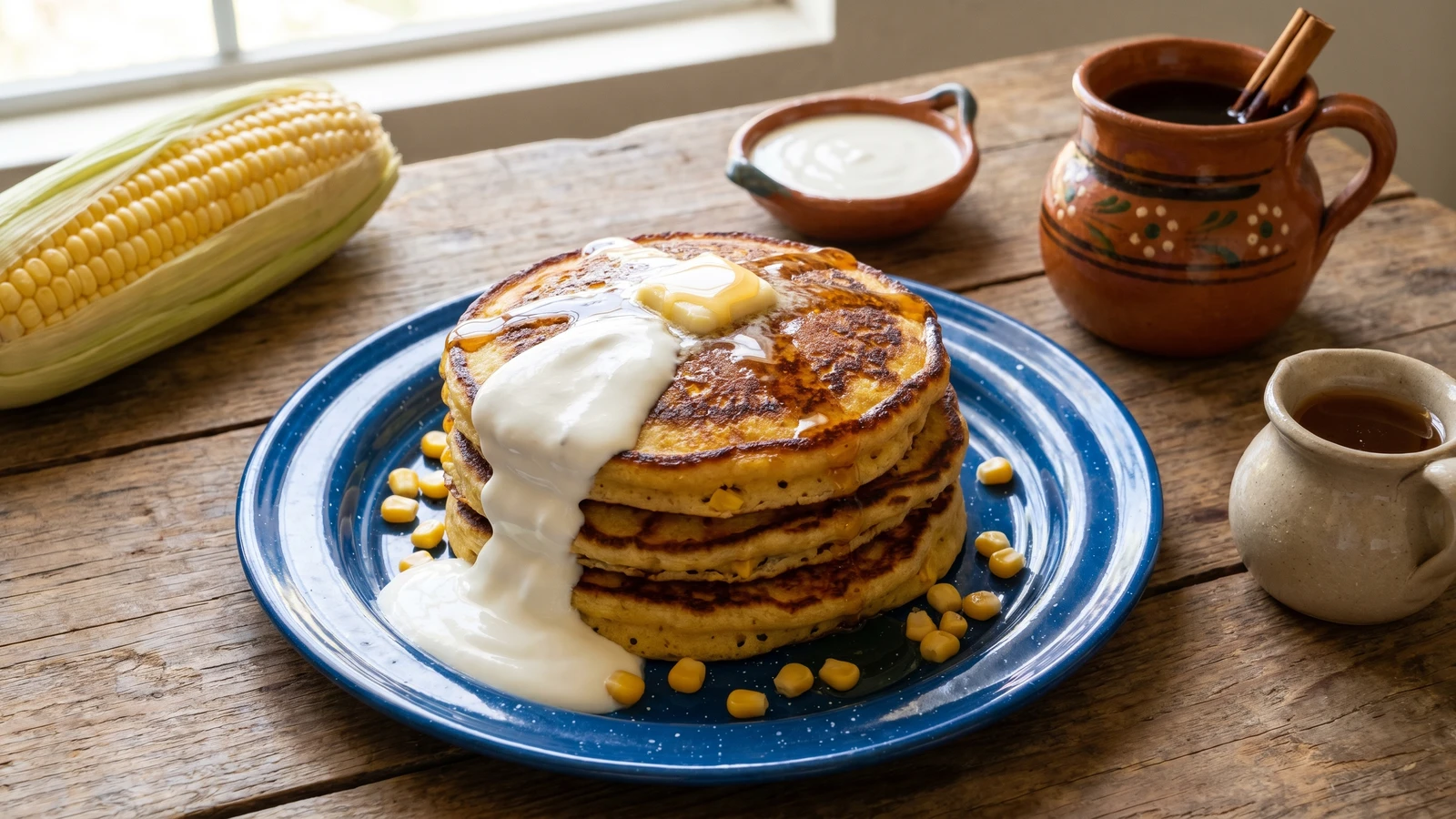
Baja California's Valle de Guadalupe breakfast hotcake. Sweet corn ground with masa and milk, griddled thick on the comal, served with crema fresca, miel and a pour of cafe de olla.
These hotcakes are from Baja California. Specifically from the Valle de Guadalupe, the wine country valley north of Ensenada, where Dona Esthela Martinez Bujanda runs the rancho-style restaurant that made this dish famous outside the region. People drive from San Diego and Tijuana for her breakfast. The hotcakes de elote are why.
This is not an American pancake with corn in it. The base is fresh sweet corn blended with whole milk and eggs, bound with masa harina and a small amount of flour, enriched with butter and manteca de cerdo. The masa is what makes it Mexican. Without it, you have a corn pancake. With it, you have a hotcake de elote, with the faint nixtamal flavor of the masa underneath the sweetness of the corn. La manteca es el sabor. The butter gives you the brown edge. The manteca gives you the depth.
Baja is a misunderstood culinary region. People think of fish tacos and not much else. The Valle de Guadalupe has been quietly building a serious ranch-and-vineyard cuisine for two generations now, with cooks like Dona Esthela working from what the valley grows: stone fruit, almonds, sweet corn from the small farms, dairy from the local goats and cows. This dish is summer corn and fresh dairy on a comal. Saber cocinar es saber vivir, and this is what breakfast looks like when a region knows what it grows.
My mother never made these. She was from Jalisco and her hotcakes were the simpler kind, flour-based, served with cajeta. I learned this version standing in Dona Esthela's kitchen in 2014, watching her ladle batter onto a comal the size of a wagon wheel. She told me the secret was not to fuss. Cada estado, su propia cocina, and Baja's is generous, sweet, and unhurried.
Hotcakes de elote belong to a broader Mexican tradition of corn cakes that includes the pre-Columbian tlaxcalli and the colonial-era pan de elote, both built on the principle of using fresh corn as both starch and sugar. The Valle de Guadalupe version is a 20th-century rancho-kitchen development, shaped by the dairy and grain agriculture that European immigrant communities, particularly Russian Molokans who settled near Guadalupe in 1905, brought to Baja California. Dona Esthela Martinez Bujanda's restaurant La Cocina de Dona Esthela, opened in the early 2000s, codified the now-iconic Valle version with its signature crema and miel topping, and was named the best breakfast in the world by Foodie Hub in 2014, an accolade that put Baja's ranch breakfast tradition on the international map.
Quantity
4 cups
from about 5 to 6 ears
Quantity
1 cup
Quantity
1/2 cup
Quantity
1/2 cup
Quantity
1/3 cup
Quantity
3
Quantity
1/4 cup
plus more for the comal
Quantity
2 tablespoons
melted
Quantity
1 teaspoon
Quantity
1/2 teaspoon
Quantity
1 teaspoon
Quantity
for serving
Quantity
for serving
Quantity
for serving
| Ingredient | Quantity |
|---|---|
| fresh sweet corn kernelsfrom about 5 to 6 ears | 4 cups |
| whole milk | 1 cup |
| masa harina (Maseca or Minsa) | 1/2 cup |
| all-purpose flour | 1/2 cup |
| granulated sugar | 1/3 cup |
| large eggs | 3 |
| melted butterplus more for the comal | 1/4 cup |
| manteca de cerdomelted | 2 tablespoons |
| baking powder | 1 teaspoon |
| kosher salt | 1/2 teaspoon |
| Mexican vanilla extract | 1 teaspoon |
| crema fresca (optional) | for serving |
| miel de abeja or piloncillo syrup (optional) | for serving |
| cafe de olla (optional) | for serving |
Stand each ear in a wide bowl and run a sharp knife straight down to release the kernels. After the kernels come off, run the back of the knife down the cob to scrape out the milky liquid trapped at the base. That liquid is sweetness and body. Do not skip it. The cobs in Valle de Guadalupe in late summer are pale yellow, almost white, and tender, that is the corn this dish was built around.
Place 3 cups of the corn kernels and all the scraped milk into a blender with the whole milk, eggs, and vanilla. Blend on high for about 45 seconds. You want a thick pale yellow batter with visible flecks of corn, not a smooth puree. The texture is what makes a hotcake de elote different from a pancake. Reserve the remaining 1 cup of kernels whole.
In a wide bowl, whisk together the masa harina, flour, sugar, baking powder, and salt. Pour the blended corn mixture over the dry ingredients. Add the melted butter and melted manteca. Stir with a wooden spoon until just combined. Fold in the reserved whole kernels. The batter will be thick, somewhere between a pancake batter and a soft cake batter. La manteca es el sabor. The butter alone makes a fine hotcake. The butter with manteca makes the one Dona Esthela serves.
Let the batter sit for 10 minutes. The masa harina needs time to hydrate and the baking powder needs a moment to wake up. If you skip this, the hotcakes turn out dense in the center. Asi se hace y punto.
Set a heavy cast iron comal or a wide skillet over medium-low heat. Take your time here. A comal that is too hot will color the outside before the inside sets, and a hotcake de elote needs interior cook time. Brush the surface lightly with butter. The butter should foam, not brown.
Ladle about 1/3 cup of batter per hotcake onto the comal. Do not crowd. The batter is thick, so use the back of the spoon to coax each one into a round about 4 inches across and a generous half inch thick. Cook for 3 to 4 minutes on the first side, until the edges look set and small bubbles break across the surface but do not close back up. Flip carefully. Cook 2 to 3 minutes on the second side, until the center springs back when you press it. The outside should be deep golden, the inside soft and yellow with the texture of a tender corn cake.
Stack three hotcakes on each plate. Spoon a generous pour of crema fresca over the top so it slides down the stack. Drizzle with miel de abeja or piloncillo syrup. Serve with cafe de olla. Eat them immediately. These hotcakes do not hold. The corn loses its bright sweetness as they sit, and the cake firms up. Recetas probadas y garantizadas, but only if you eat them while they are warm.
1 serving (about 320g)
Culinary guides, cultural storytelling, and the editorial depth that makes cooking meaningful.
Discover Culinary ExplorerChef Lupita
Michoacán's Tierra Caliente almuerzo, where salted beef is softened, pounded, fried in lard, folded with egg and chile perón salsa, then served beside morisqueta like a proper working table.

Chef Lupita
Guerrero's Costa Grande aporreado is salted cecina pounded soft, scrambled with egg, and finished in a red guajillo and chile de árbol salsa loud with garlic and cilantro.

Chef Lupita
Los Altos de Chiapas turns two-night fermented white corn into a tart-sweet atole, cooked with canela and piloncillo, then poured hot into jícaras for desayuno.

Chef Lupita
Oaxaca's Mixteca region ferments nixtamalized masa for days until it turns tart and alive, then simmers it with piloncillo and canela into a thick, warm atole served at first light in clay.