
Chef Dean
Amish White Bread
Pillowy soft sandwich bread from Pennsylvania Dutch kitchens, where generations of home bakers perfected the art of tender, slightly sweet loaves that slice clean and toast golden.
A cooking platform built around craft, culture, and the stories behind what we eat.
Created by
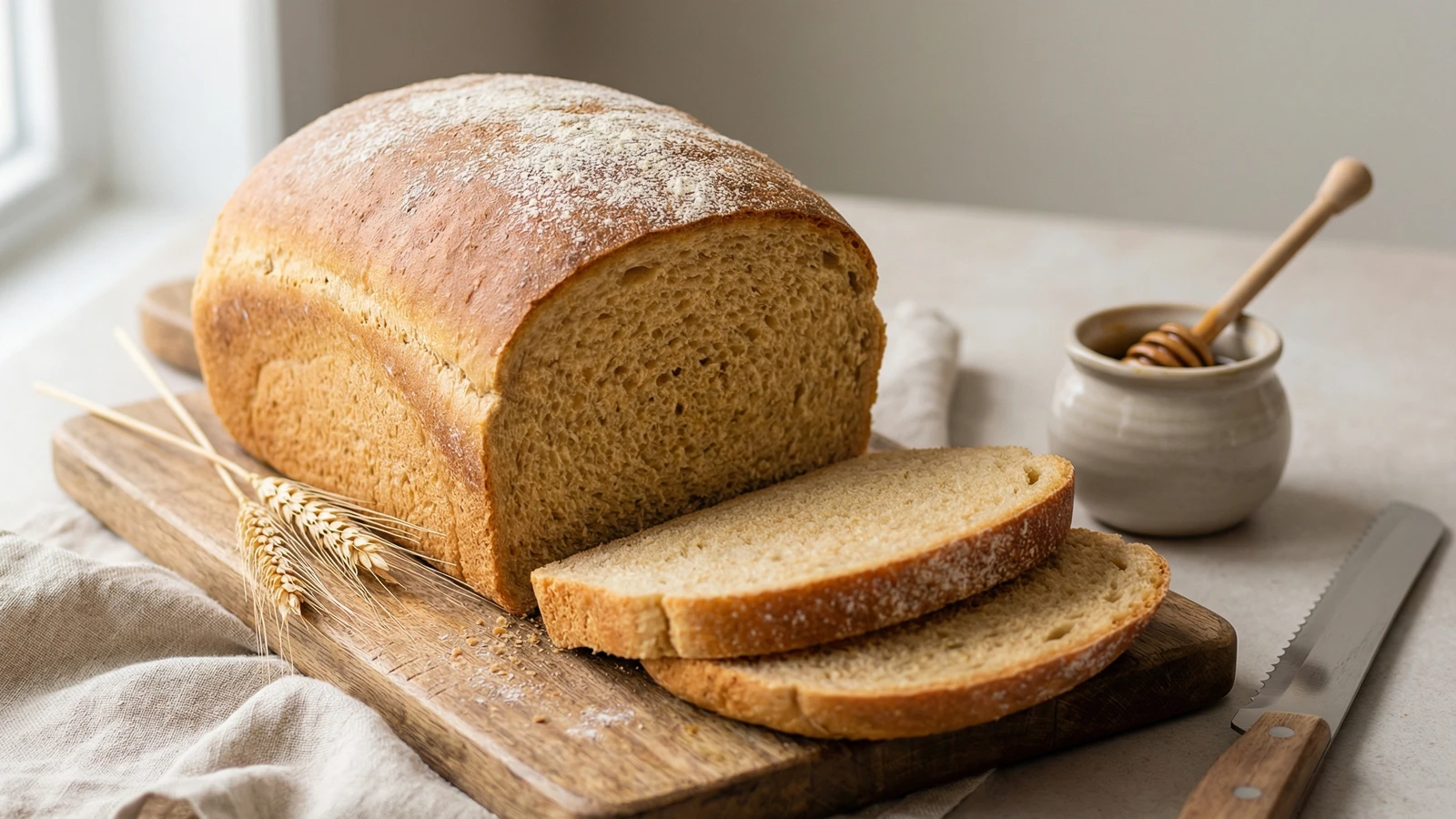
A golden-crusted whole wheat loaf with the gentle sweetness of honey, yielding tender slices perfect for sandwiches or toast. This is the bread your kitchen was meant to make.
Whole wheat bread has suffered from a reputation problem. Too often it arrives dense, dry, and tasting of obligation rather than pleasure. This recipe corrects that injustice. The crumb is tender. The crust shatters gently under a knife. The honey rounds out the wheat's natural bitterness without turning the loaf into cake.
The secret lies in hydration and patience. Whole wheat flour is thirsty. It absorbs more liquid than white flour and needs time to do so. Rush the process and you'll produce a brick. Give it the hours it requires and you'll wonder why anyone bothers with store-bought bread at all.
I've taught this loaf to nervous first-time bakers and seasoned home cooks alike. Both groups arrive with the same misconception: that bread requires mysterious skill. It doesn't. It requires attention. You'll learn to recognize when the dough has developed enough gluten by how it pulls back when stretched. You'll know the rise is complete when your finger leaves an impression that springs back slowly, reluctantly. These are skills your hands will learn, and they'll serve you for every loaf you ever make.
This bread belongs on your weekly rotation. Toast it for breakfast with butter melting into the crumb. Build sandwiches that hold together without compressing into paste. Slice it thick for French toast on Sunday morning. Good bread transforms ordinary meals into something worth sitting down for.
Quantity
300g (2 1/4 cups)
Quantity
150g (1 1/4 cups)
Quantity
7g (2 1/4 teaspoons)
Quantity
8g (1 1/2 teaspoons)
Quantity
280ml (1 1/4 cups)
Quantity
60g (3 tablespoons)
Quantity
30g (2 tablespoons)
softened
Quantity
1 tablespoon
for bowl
| Ingredient | Quantity |
|---|---|
| whole wheat flour | 300g (2 1/4 cups) |
| bread flour | 150g (1 1/4 cups) |
| instant yeast | 7g (2 1/4 teaspoons) |
| fine sea salt | 8g (1 1/2 teaspoons) |
| warm water, 100-110°F | 280ml (1 1/4 cups) |
| honey | 60g (3 tablespoons) |
| unsalted buttersoftened | 30g (2 tablespoons) |
| olive oilfor bowl | 1 tablespoon |
In a large mixing bowl, stir together the warm water and honey until the honey dissolves completely. The water should feel pleasantly warm on your wrist, like bathwater for a child. Too hot and you'll kill the yeast before it has a chance to work. Sprinkle the instant yeast over the surface and let it sit for two minutes. You don't need to wait for bubbles with instant yeast, but this brief rest helps it hydrate evenly.
Add both flours and the salt to the wet ingredients. Using a wooden spoon or Danish dough whisk, stir until a shaggy mass forms and no dry flour remains visible. The dough will look rough and uneven. This is correct. Cover the bowl with a clean kitchen towel and let it rest for 20 minutes. This autolyse period allows the flour to fully hydrate and begins gluten development without any effort from you.
Add the softened butter to the rested dough. Squeeze and fold the dough to incorporate the butter, which will feel messy and slippery at first. Once the butter disappears into the dough, turn it onto a clean work surface. Knead for 8 to 10 minutes using the heel of your hand to push the dough away, then fold it back over itself. The dough will transform from rough and sticky to smooth and elastic. It should pass the windowpane test: stretch a small piece thin enough to see light through without tearing.
Coat a clean bowl with the olive oil. Shape the dough into a ball by tucking the edges underneath and place it seam-side down in the oiled bowl. Turn once to coat the surface. Cover tightly with plastic wrap or a damp towel and set in a warm spot, around 75°F. Let rise until doubled in size, which takes 1 to 1 1/2 hours depending on your kitchen's temperature. The dough is ready when you press a floured finger half an inch into the surface and the indentation fills back slowly, leaving a slight depression.
Grease a 9x5-inch loaf pan with butter or cooking spray. Turn the risen dough onto a lightly floured surface and press gently to deflate. Pat it into a rough rectangle about 8 inches wide. Starting from the short end, roll the dough into a tight cylinder, pinching the seam with your fingers as you go. Pinch the ends closed and tuck them underneath. Place the shaped loaf seam-side down in the prepared pan. The dough should fill the pan by about two-thirds.
Cover the pan loosely with oiled plastic wrap or a damp towel. Let rise in a warm spot until the dough crowns about one inch above the rim of the pan, usually 45 minutes to 1 hour. The surface should look puffy and feel pillowy when touched gently. About 20 minutes before the rise completes, position a rack in the center of your oven and preheat to 375°F.
Remove the covering and place the pan in the center of the preheated oven. Bake for 30 to 35 minutes, rotating the pan halfway through for even browning. The loaf is done when the top is deeply golden brown and an instant-read thermometer inserted into the center reads 190°F. The crust should sound hollow when you tap it with your knuckle. If the top browns too quickly, tent loosely with foil for the final 10 minutes.
Remove the bread from the oven and let it rest in the pan for 5 minutes. Turn the loaf out onto a wire rack and let it cool completely before slicing, at least 1 hour. This is difficult. Your kitchen will smell extraordinary and every instinct will tell you to cut into it immediately. Resist. The interior continues cooking as it cools, and cutting too soon releases steam that should stay trapped in the crumb. Patient bread rewards patient bakers.
1 serving (about 190g)
Culinary guides, cultural storytelling, and the editorial depth that makes cooking meaningful.
Discover Culinary ExplorerChef Dean
Pillowy soft sandwich bread from Pennsylvania Dutch kitchens, where generations of home bakers perfected the art of tender, slightly sweet loaves that slice clean and toast golden.

Chef Dean
Sky-high muffins bursting with juicy blueberries beneath a shatteringly crisp butter streusel, baked golden brown with that coveted bakery dome your family will wake up early for.

Chef Dean
Pillowy enriched dough wrapped around jammy wild blueberries and fragrant lemon zest, then crowned with a tangy cream cheese glaze that pools into every golden crevice. Summer morning baking at its finest.

Chef Dean
Golden, buttery buns with a tender crumb that cradles your burger without surrendering to the juices. This is the bun that makes a backyard cookout feel like an occasion worth remembering.