Chef Thomas
Anchovy Sauce
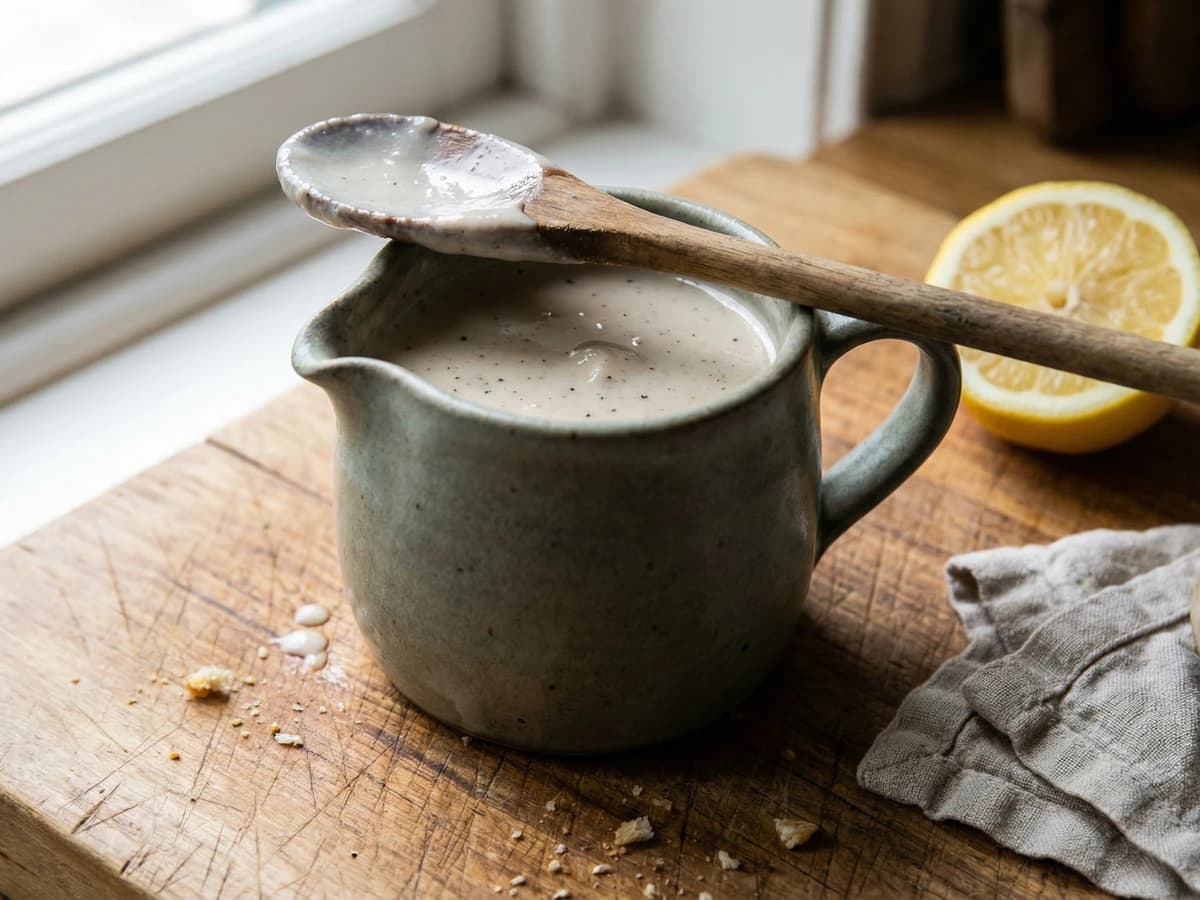
A proper white sauce sharpened with pounded anchovy, the old Georgian trick for waking up a piece of poached fish or a slice of roast lamb on a Sunday in spring.
A cooking platform built around craft, culture, and the stories behind what we eat.

Created by Chef Thomas
A jar of honey and mustard dressing, made in the time it takes the kettle to boil, ready for whatever the salad bowl is asking for tonight.
There's a jam jar at the back of my fridge that almost always has some version of this dressing in it. Not always the same. Sometimes more honey, sometimes more vinegar, sometimes a smashed clove of garlic in the bottom because I felt like it. A dressing is a conversation, not a contract, and this one has been going on for years.
It belongs to summer, mostly. The first proper salad days, when the leaves at the market have started to look like something worth buying again and the goat's cheese in the fridge is asking for company. Toasted walnuts, a few slices of pear if it's later in the year, a handful of bitter leaves, this dressing poured over the top. We're only making dinner. But there are few better dinners on a warm evening than a bowl of leaves dressed properly and some bread to mop up what's left at the bottom.
The trick, if there is one, is the mustard. Wholegrain for texture, a little Dijon for sharpness and to help the oil and vinegar hold hands. Runny honey, not set, because set honey clumps and sulks. Good cider vinegar with some character to it. And olive oil that you'd happily drink from the bottle, because you can taste it in every mouthful. Five ingredients. A jar. Thirty seconds of shaking. I wrote it down in the notebook a long time ago and have never needed to write it down again.
Quantity
2 teaspoons
Quantity
1 teaspoon
Quantity
1 tablespoon
Quantity
2 tablespoons
Quantity
6 tablespoons
Quantity
to taste
Quantity
to taste
| Ingredient | Quantity |
|---|---|
| wholegrain mustard | 2 teaspoons |
| Dijon mustard | 1 teaspoon |
| runny honey | 1 tablespoon |
| cider vinegar | 2 tablespoons |
| extra virgin olive oil | 6 tablespoons |
| fine sea salt | to taste |
| freshly ground black pepper | to taste |
Spoon both mustards into a small bowl or, better still, a clean jam jar with a lid. Add the honey. Stir them together with a fork or a small whisk until you have a thick, golden paste flecked with the dark seeds of the wholegrain. It should look glossy and smell sharp and sweet at the same time. This is the engine of the dressing. Get this part right and the rest looks after itself.
Pour in the cider vinegar and stir again until everything loosens into a thin, cloudy liquid. It will smell properly sharp at this stage, almost too sharp. Don't worry. The oil and the honey are about to soften it. Add a generous pinch of salt and a few good grinds of pepper now, while there's vinegar to dissolve them.
Pour the olive oil in a slow, steady stream, whisking as you go, or, if you're using a jar, drop the oil in, screw the lid on tight, and shake it like you mean it. The dressing will turn pale and creamy and slightly thickened. It should coat the back of the spoon and slide off slowly. If it looks thin and watery, shake or whisk a little harder. The mustard does the emulsifying for you.
Dip a leaf of lettuce or the tip of a teaspoon into the dressing and taste it. It should be balanced: bright and sharp from the vinegar, rounded and warm from the honey, with the mustard humming underneath. If it tastes too sharp, add a tiny bit more honey. Too sweet, a few more drops of vinegar. Not enough seasoning, more salt. Trust your tongue. A dressing is the easiest thing in the kitchen to fix and the easiest to ignore.
1 serving (about 37g)
Culinary guides, cultural storytelling, and the editorial depth that makes cooking meaningful.
Discover Culinary ExplorerChef Thomas
A proper white sauce sharpened with pounded anchovy, the old Georgian trick for waking up a piece of poached fish or a slice of roast lamb on a Sunday in spring.

Chef Thomas
A spiced autumn chutney made from a glut of apples and a quiet afternoon, simmered down until the kitchen smells of October and the jars line up on the counter like a small, useful insurance policy.
Chef Thomas
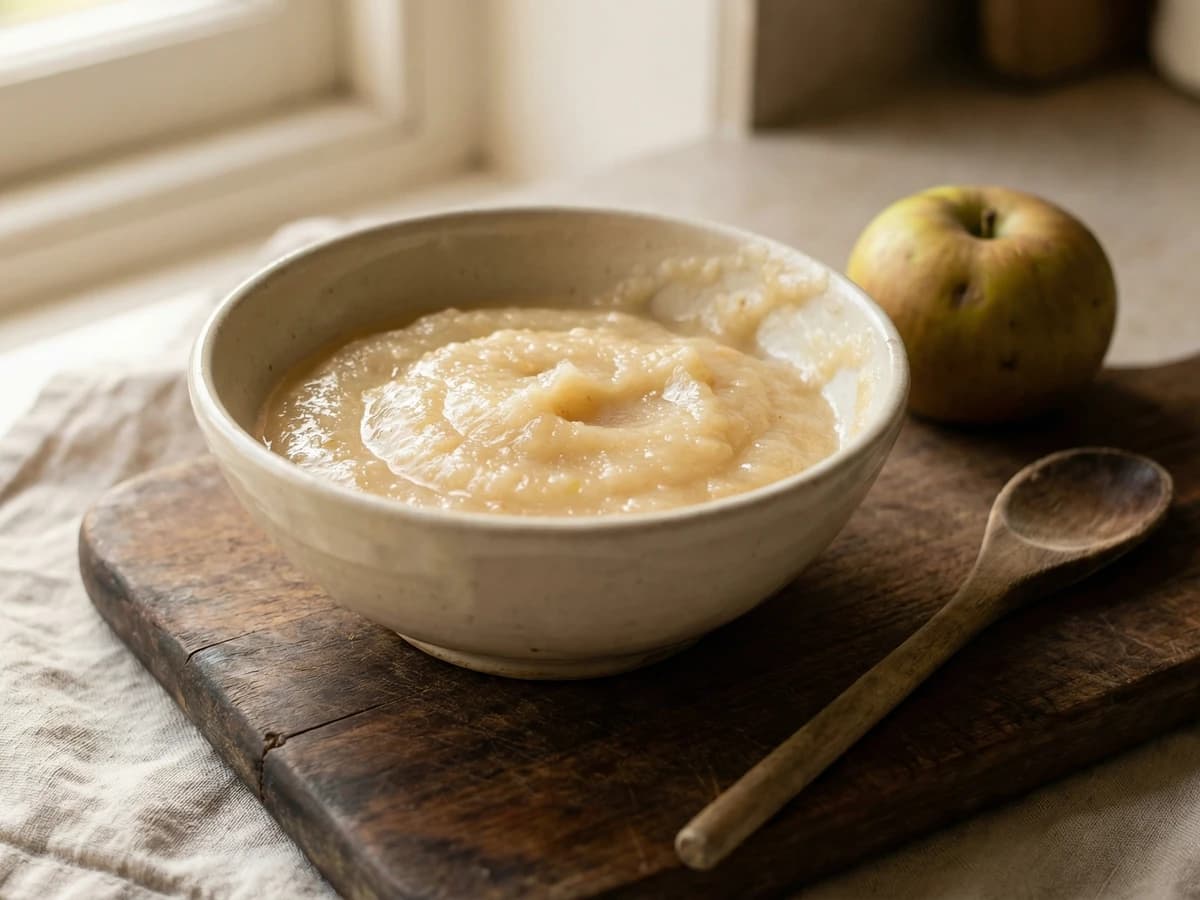
A bowl of sharp, fluffy Bramley apple sauce, made in the time it takes to carve the pork, the kind of small condiment that quietly makes the whole meal make sense.
Chef Thomas
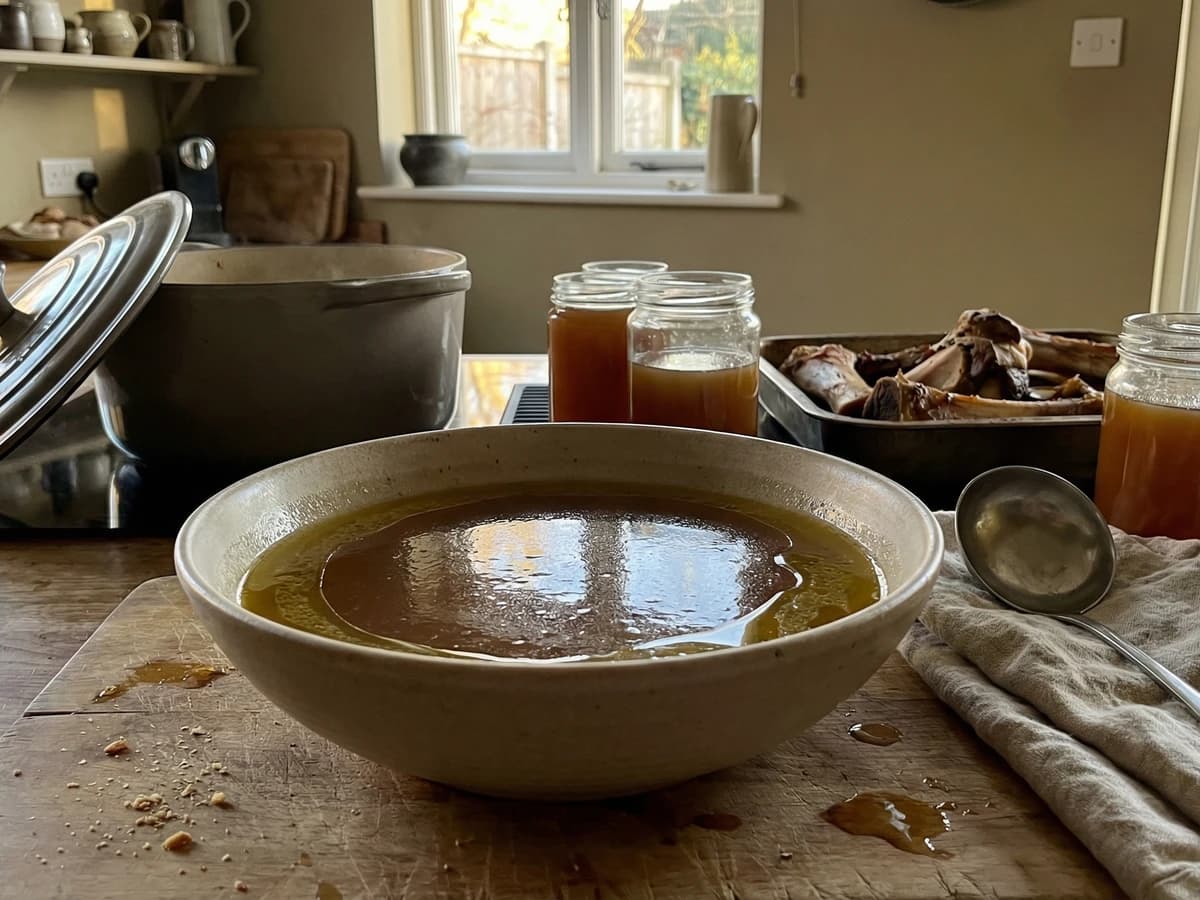
Beef bones roasted until dark, then coaxed for a long afternoon into a deep amber stock, the foundation of every good gravy, every braise, every bowl of winter soup worth the trouble.