
Chef Zohra
Adss (عدس)
Brown lentils cooked down with tomato, garlic, cumin, and paprika until spoon-thick, then finished with olive oil and coriander. This is weekday Moroccan comfort, made for bread and one more bowl.
A cooking platform built around craft, culture, and the stories behind what we eat.
Created by
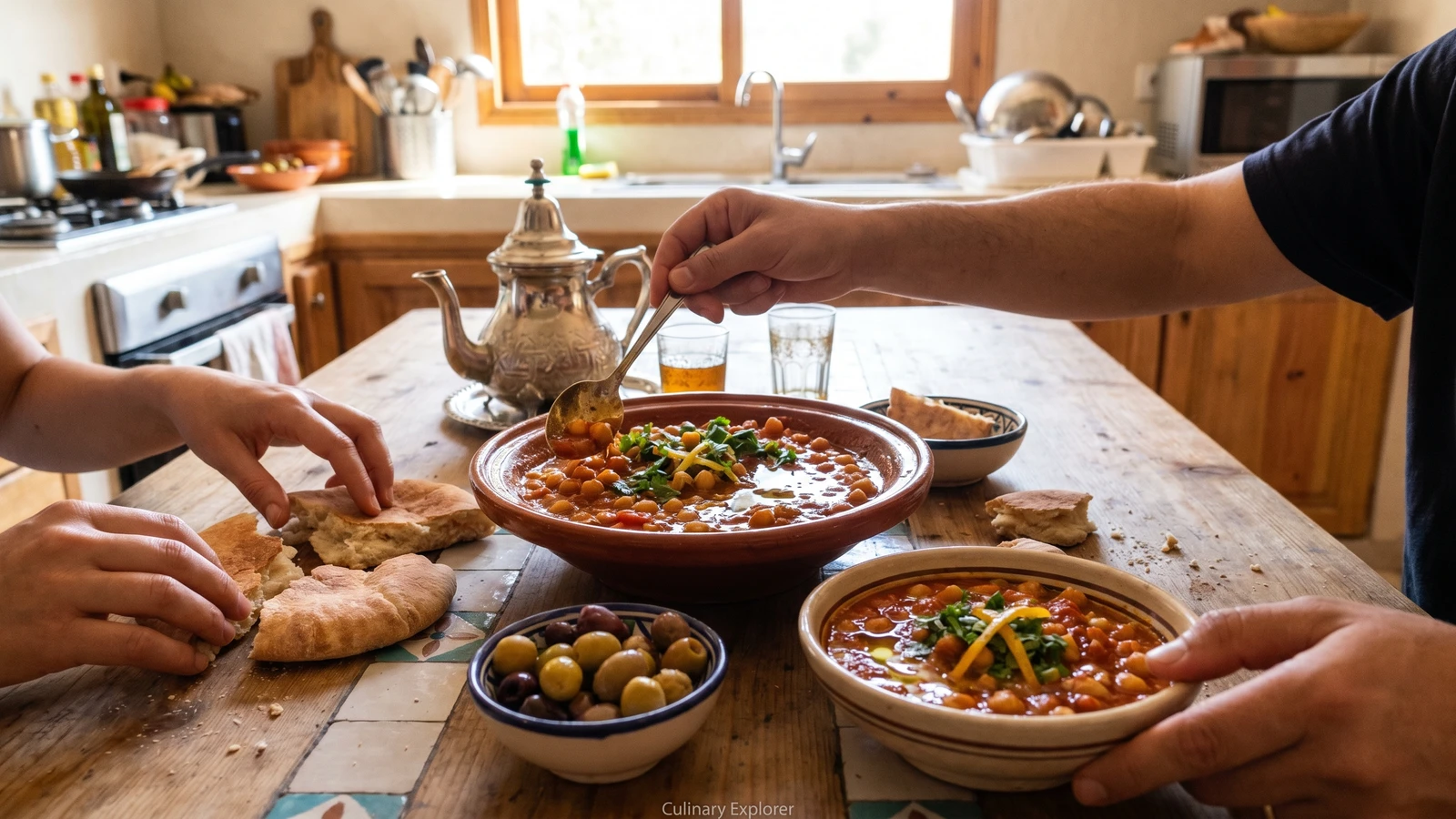
Chickpeas cooked until creamy in a cumin-scented tomato sauce, finished with olive oil and herbs. The legume harira borrows, here given its own generous bowl.
The chickpea does not need meat to make a meal. Give it time, garlic, cumin, tomato, and a good thread of olive oil, and it becomes the kind of bowl that calls for bread before it calls for a spoon.
The one rule is this: cook the chickpeas tender before the tomato goes in. Acid tightens the skins, and a chickpea with a hard heart will stay stubborn no matter how long you scold it. Soak them well, simmer them gently, then let the sauce gather around them until it turns red, glossy, and thick enough for khobz to drag through.
This is everyday Moroccan cooking, budget food, weeknight food, la cuisine du lien (the cooking of connection) because it stretches without looking stretched. Put the pot in the middle, tear the bread, and leave room for one more hand at the table.
Chickpeas have been grown across North Africa since antiquity and moved through Moroccan kitchens by way of Amazigh agriculture, Mediterranean trade, and later Andalusi urban cooking. In Morocco they appear in harira, couscous, market snacks, and small stews like this homs, with cumin and tomato becoming common after tomatoes entered Moroccan cooking through early modern Atlantic and Mediterranean exchange. The exact dating of this tomato-based version is not fixed, but its place is clear: an everyday dish shared across des cuisines marocaines (Moroccan cuisines), especially in home kitchens where bread finishes the sauce.
Quantity
300g
soaked overnight
Quantity
3 tbsp, plus more for finishing
Quantity
1 medium
finely chopped
Quantity
4
minced
Quantity
2 ripe tomatoes or 250g
grated
Quantity
1 tbsp
Quantity
1 1/2 tsp
Quantity
1 tsp
Quantity
1/2 tsp
Quantity
1/4 tsp
Quantity
1 small pinch
Quantity
1 tsp, plus more to taste
Quantity
1/2 tsp
Quantity
1 small bunch
chopped
Quantity
1
finely chopped
Quantity
1.2 liters
| Ingredient | Quantity |
|---|---|
| dried chickpeassoaked overnight | 300g |
| olive oil | 3 tbsp, plus more for finishing |
| onionfinely chopped | 1 medium |
| garlic clovesminced | 4 |
| ripe tomatoes or crushed tomatoesgrated | 2 ripe tomatoes or 250g |
| tomato paste | 1 tbsp |
| ground cumin | 1 1/2 tsp |
| sweet paprika | 1 tsp |
| ground ginger | 1/2 tsp |
| ground turmeric | 1/4 tsp |
| cayenne or harissa (optional) | 1 small pinch |
| sea salt | 1 tsp, plus more to taste |
| black pepper | 1/2 tsp |
| coriander and parsleychopped | 1 small bunch |
| preserved lemon rind (optional)finely chopped | 1 |
| water or unsalted chickpea cooking liquid | 1.2 liters |
Put the dried chickpeas in a large bowl and cover them with plenty of cold water. Leave them overnight, then drain and rinse. They should look swollen and round, not wrinkled, because the soaking gives them a head start before the pot asks anything of them.
Put the soaked chickpeas in a pot with fresh water to cover by 5 cm. Bring to a boil, skim the foam, then lower the heat and simmer until the chickpeas are tender but not falling apart, about 60 to 75 minutes. Taste one. If the center is chalky, keep going.
Warm the olive oil in a heavy pot. Add the onion and cook until soft and pale gold, then add the garlic, cumin, paprika, ginger, turmeric, black pepper, and cayenne if using. Stir until the spices smell warm and awake, about 1 minute. Add the grated tomatoes and tomato paste, and cook until the oil begins to show at the edges.
Add the drained chickpeas to the sauce with 1.2 liters of water or unsalted chickpea cooking liquid. Salt lightly, bring to a gentle simmer, and cook uncovered for 30 to 40 minutes, until the sauce thickens and the chickpeas sit in it like they belong there.
Stir in most of the coriander and parsley, and the preserved lemon rind if using. Simmer 5 minutes more. Taste for salt and cumin. The scale is in the eyes, la balance est dans les yeux, but the mouth must agree.
Spoon the homs into a warm beldi bowl, finish with a thread of olive oil and the remaining herbs, and bring it to the table with round khobz. The sauce should be thick enough to scoop, not thin like soup.
1 serving (about 300g)
Culinary guides, cultural storytelling, and the editorial depth that makes cooking meaningful.
Discover Culinary ExplorerChef Zohra
Brown lentils cooked down with tomato, garlic, cumin, and paprika until spoon-thick, then finished with olive oil and coriander. This is weekday Moroccan comfort, made for bread and one more bowl.

Chef Zohra
Brown lentils cooked down until thick and glossy, with garlic, tomato, cumin, paprika, and good olive oil. This is weeknight Moroccan comfort, made for bread and one more bowl.

Chef Zohra
Berkoukes is Oujda's feast bowl for Mawlid and winter evenings: hand-rolled semolina pearls, bigger than couscous, swelling in a tomato-red broth with lamb, chickpeas, saffron, and ras el hanout.

Chef Zohra
My frontier's Mawlid bowl: large hand-rolled semolina pearls swelling in a tomato-lamb broth, scented with saffron and ras el hanout, made to feed one more guest.