
Chef Dean
Apple Cinnamon Pancakes
Tender buttermilk pancakes folded with butter-glazed apple pieces and warm cinnamon, stacked high and drowning in maple syrup. This is Sunday morning the way it ought to be.
A cooking platform built around craft, culture, and the stories behind what we eat.
Created by
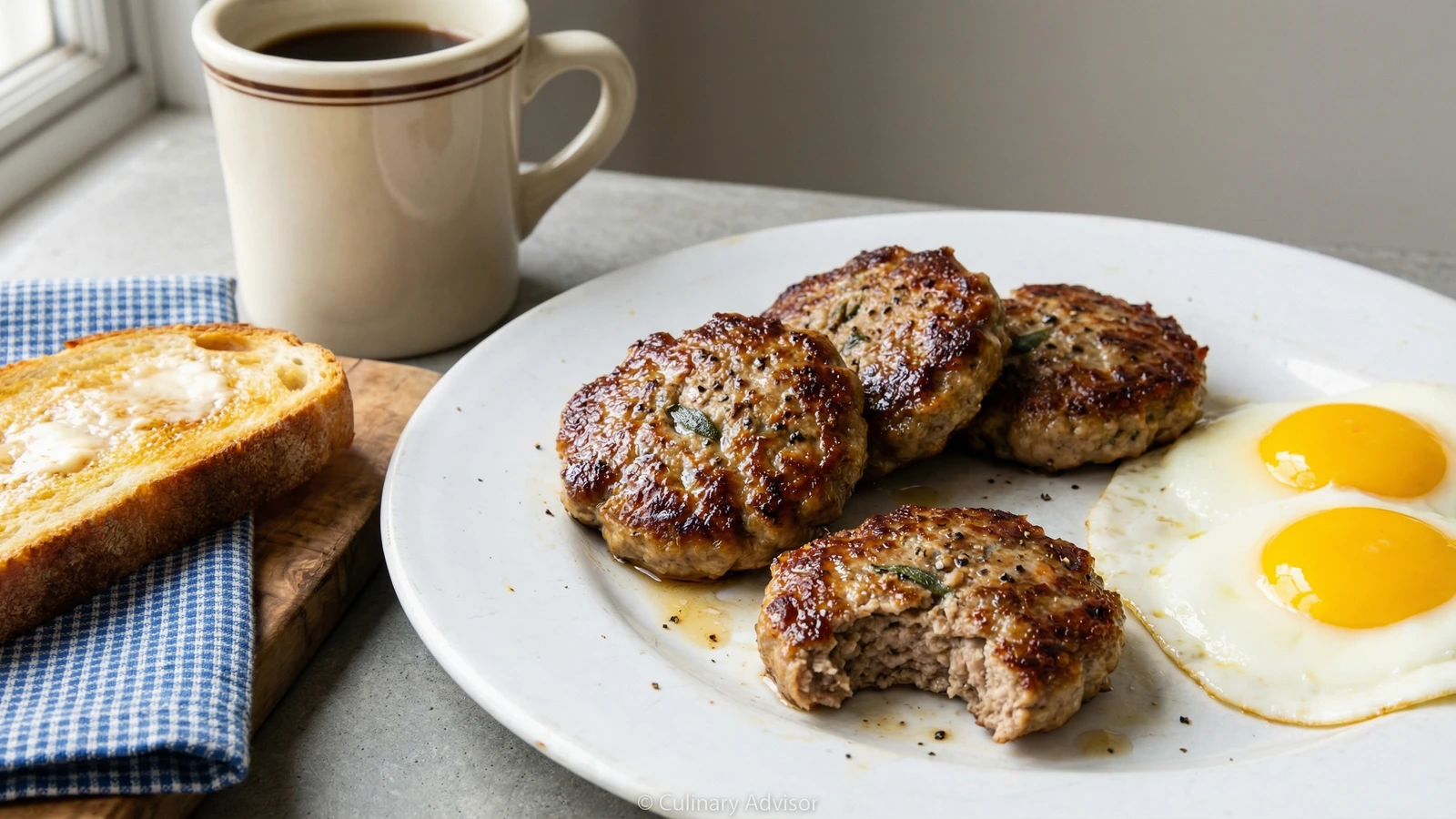
Fresh pork sausage seasoned the way your great-grandmother made it, with sage, thyme, and real maple syrup, shaped by hand and fried to a golden crust in cast iron. Once you make your own, the plastic-wrapped tubes at the supermarket will never tempt you again.
There was a time when every farm wife knew how to make sausage. The hog would be butchered in late fall, and nothing went to waste. The shoulder and trimmings became breakfast sausage, seasoned with sage from the kitchen garden, sweetened with whatever was on hand. This knowledge passed from mother to daughter without written recipes, adjusted by taste and taught by example.
Commercial sausage cannot compare. The industrial product relies on fillers, preservatives, and artificial smoke flavor to approximate what fresh pork and honest spices achieve naturally. Making your own takes twenty minutes of work and transforms your Saturday morning.
The technique is simple. Ground pork, fat and all, mixed with aromatics that define the American breakfast table: sage, thyme, a whisper of maple. The proportions I give you come from years of testing, but they're meant as a starting point. Taste your mixture before you shape the patties. Adjust until it tastes right to you. This is how cooks have always worked.
Quantity
2 pounds
not lean, 70-80% lean ideal
Quantity
2 tablespoons
Quantity
2 teaspoons
Quantity
1 teaspoon
minced
Quantity
1 1/2 teaspoons
Quantity
1 teaspoon
freshly ground
Quantity
1/2 teaspoon
Quantity
1/4 teaspoon
Quantity
1/4 teaspoon
Quantity
1 tablespoon
Quantity
1 tablespoon
for cooking
| Ingredient | Quantity |
|---|---|
| ground porknot lean, 70-80% lean ideal | 2 pounds |
| pure maple syrup | 2 tablespoons |
| rubbed sage | 2 teaspoons |
| fresh thyme leavesminced | 1 teaspoon |
| kosher salt | 1 1/2 teaspoons |
| black pepperfreshly ground | 1 teaspoon |
| garlic powder | 1/2 teaspoon |
| ground nutmeg | 1/4 teaspoon |
| cayenne pepper | 1/4 teaspoon |
| cold water | 1 tablespoon |
| neutral oilfor cooking | 1 tablespoon |
In a small bowl, stir together the maple syrup, sage, thyme, salt, pepper, garlic powder, nutmeg, cayenne, and cold water until the salt begins to dissolve. This slurry distributes seasonings more evenly than sprinkling dry spices over meat. Your grandmother may not have known the science, but she knew the result.
Place the ground pork in a large bowl. Pour the seasoning mixture over it. Using your hands, work the seasonings into the meat with a folding motion, turning the mass over itself repeatedly. Mix until the spices are evenly distributed and the meat looks uniform in color, about two minutes. The mixture will feel slightly tacky. This is correct.
Pinch off a small piece of the mixture, about the size of a quarter. Flatten it and cook in a small skillet over medium heat until cooked through, about a minute per side. Taste. Adjust the salt, pepper, or sage in the remaining mixture if needed. This is the most important step. Never trust a recipe more than you trust your own tongue.
Divide the mixture into twelve equal portions, about two and a half ounces each. Roll each portion into a ball, then flatten between your palms into patties about three inches across and half an inch thick. Make a slight depression in the center with your thumb. This prevents the patties from puffing into domes as they cook.
Arrange the patties in a single layer on a parchment-lined sheet pan. Refrigerate uncovered for at least thirty minutes, or up to overnight. This rest allows the salt to penetrate the meat, the flavors to marry, and the surface to dry slightly. A dry surface browns better. Patience here pays dividends at the stove.
Heat a large cast iron skillet or heavy-bottomed pan over medium heat. Add just enough oil to coat the bottom. When the oil shimmers and a tiny piece of sausage sizzles on contact, add patties in a single layer without crowding. You should hear a steady, assertive sizzle. Cook undisturbed for four to five minutes until the bottom develops a deep golden-brown crust.
Turn the patties with a spatula. The cooked side should be richly caramelized, not merely pale. Cook another three to four minutes until the second side matches and the center is cooked through. The internal temperature should reach 160°F. Transfer to a paper towel-lined plate and let rest for two minutes before serving.
Arrange the patties on a warm platter. These are best eaten straight from the pan, alongside eggs cooked however you like them, buttered toast, and strong coffee. The aroma alone will bring everyone to the table without being called.
1 serving (about 57g, 3 patties)
Culinary guides, cultural storytelling, and the editorial depth that makes cooking meaningful.
Discover Culinary ExplorerChef Dean
Tender buttermilk pancakes folded with butter-glazed apple pieces and warm cinnamon, stacked high and drowning in maple syrup. This is Sunday morning the way it ought to be.

Chef Dean
Individual breakfast packages of farm eggs nestled in smoky ham, blanketed with melted sharp cheddar, ready for Sunday morning or make-ahead weekday fuel that tastes like someone who loves you made it.

Chef Ally
Oats softened overnight in yogurt and orchard cider, then crowned with whatever fruit the morning and the season bring to your table. A breakfast that asks almost nothing of you and gives back everything.

Chef Dean
Golden, shatteringly crisp potatoes mingled with sweet roasted peppers and caramelized onions, crowned with eggs whose yolks run like liquid sunshine when you break them open.