
Chef Dean
American Goulash
A Midwestern one-pot supper of seasoned ground beef, tender elbow macaroni, and tomatoes simmered into a thick, soul-satisfying stew. This is the dish that fed factory workers and farm families alike.
A cooking platform built around craft, culture, and the stories behind what we eat.
Created by
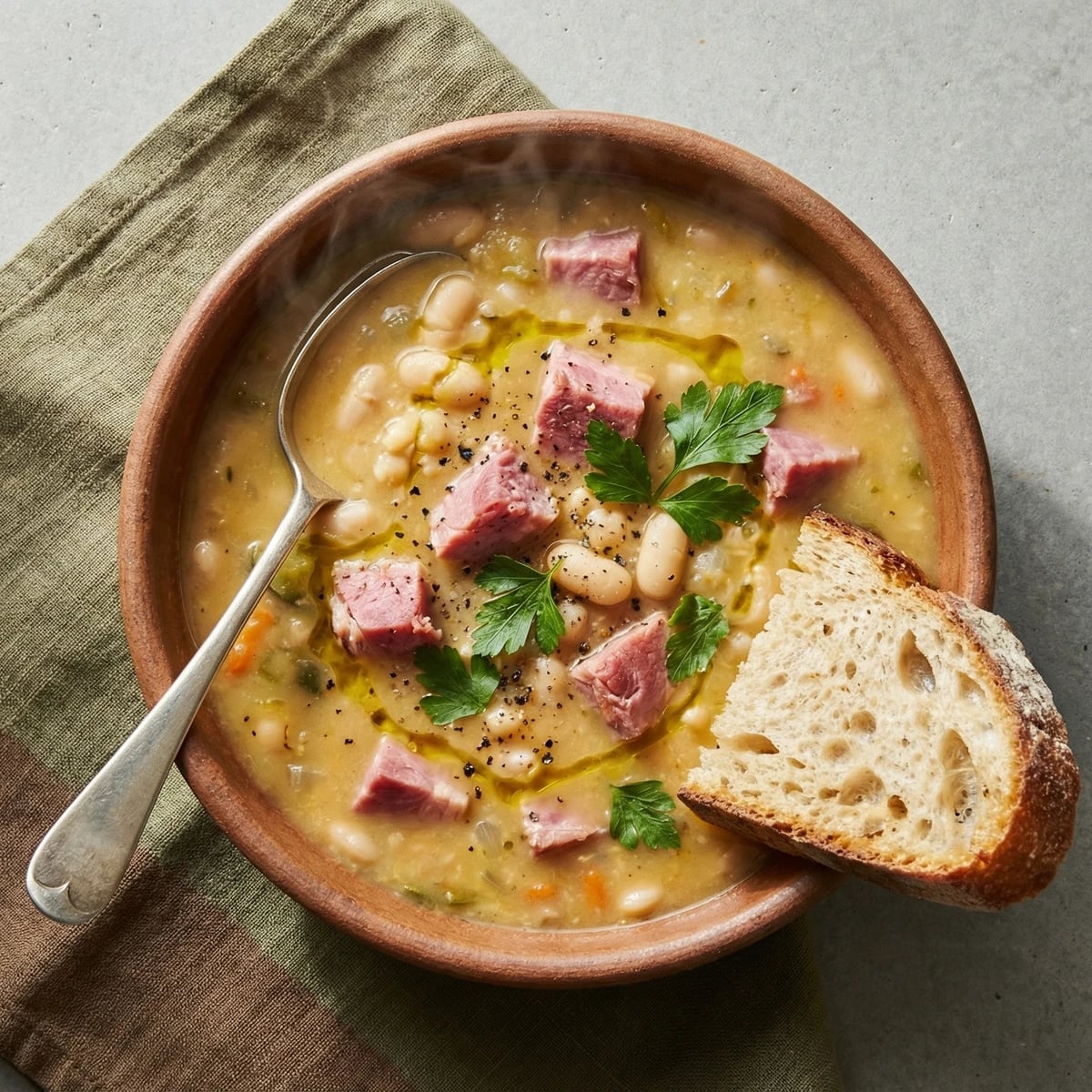
A smoky, creamy potful of white beans simmered with ham bone until the meat falls apart and the broth turns silky. This is poverty cooking at its finest, the kind that makes you grateful for scraps.
Every culture has its version of bean soup. The French have cassoulet, the Italians their pasta e fagioli, the Brazilians feijoada. But this American rendition, born from necessity in farmhouse kitchens across the South and Midwest, holds its own against any of them. It asks only for what you already have: the ham bone from Sunday dinner, a bag of dried beans from the pantry, and the patience to let time do most of the work.
The magic happens slowly. Over several hours, the collagen in that ham bone dissolves into the cooking liquid, transforming plain water into something rich and unctuous. The beans absorb this smokiness as they soften, turning creamy at the edges while holding their shape. By the time you ladle it into bowls, you've created a meal that cost almost nothing but tastes like real abundance.
I've made this soup dozens of times, and it never fails to remind me that the best American cooking comes from resourcefulness. Our grandmothers didn't waste ham bones. They understood that scraps and trimmings, treated with respect, become the foundation of something greater than their parts. This is honest food. The kind that feeds a family for days and somehow tastes better each time you reheat it.
Quantity
1 bone (about 2 pounds) or 2 hocks
Quantity
1 pound
Quantity
2 tablespoons
Quantity
1 large
diced
Quantity
3
diced
Quantity
2 medium
diced
Quantity
4 cloves
minced
Quantity
8 cups
Quantity
2
Quantity
4 sprigs
Quantity
1 teaspoon
Quantity
to taste
Quantity
2 tablespoons
Quantity
for serving
chopped
Quantity
for serving
| Ingredient | Quantity |
|---|---|
| meaty ham bone or smoked ham hocks | 1 bone (about 2 pounds) or 2 hocks |
| dried navy beans or great northern beans | 1 pound |
| unsalted butter | 2 tablespoons |
| yellow oniondiced | 1 large |
| celery stalksdiced | 3 |
| carrotsdiced | 2 medium |
| garlicminced | 4 cloves |
| water or low-sodium chicken stock | 8 cups |
| bay leaves | 2 |
| fresh thyme | 4 sprigs |
| freshly ground black pepper | 1 teaspoon |
| kosher salt | to taste |
| apple cider vinegar | 2 tablespoons |
| fresh parsley (optional)chopped | for serving |
| hot sauce (optional) | for serving |
Spread the dried beans on a baking sheet and pick through them carefully, discarding any small stones or shriveled beans. Rinse under cold water and set aside. There's no need to soak them overnight. The long cooking time with the ham bone will soften them completely, and unsoaked beans absorb more of that smoky pork flavor as they hydrate.
Melt the butter in a large Dutch oven or heavy-bottomed pot over medium heat. Add the onion, celery, and carrots. Cook, stirring occasionally, until the vegetables soften and the onion turns translucent, about 8 minutes. You want them tender but not browned. Add the garlic and cook until fragrant, another minute or so. The kitchen should smell like the beginning of something good.
Add the rinsed beans to the pot along with the ham bone, bay leaves, thyme sprigs, and black pepper. Pour in the water or stock. The liquid should cover everything by about two inches. If it doesn't, add more water. Bring to a boil over high heat, then immediately reduce to a gentle simmer. You want lazy bubbles breaking the surface, not a rolling boil.
Cover the pot with the lid slightly ajar and let the soup simmer for 2 to 2½ hours. Stir every 30 minutes or so, scraping the bottom to prevent sticking. The beans are ready when they're completely tender and some have begun to break apart, naturally thickening the broth. The meat on the ham bone should be falling off. If the soup gets too thick during cooking, add water in half-cup increments.
Carefully remove the ham bone to a cutting board. Let it cool for a few minutes until you can handle it. Pull the meat from the bone, discarding the bone, skin, and any large pieces of fat. Shred or chop the ham into bite-sized pieces and return it to the pot. Fish out and discard the bay leaves and thyme stems.
For a thicker, creamier soup, use the back of a wooden spoon to mash some of the beans against the side of the pot, then stir them back in. This releases their starch and creates body without adding cream. Taste the broth now. Add salt as needed (start with half a teaspoon and adjust) and stir in the apple cider vinegar. The vinegar brightens everything, cutting through the richness without calling attention to itself.
Let the soup rest off heat for 10 minutes before serving. This allows the flavors to settle and the beans to absorb a bit more liquid. Ladle into deep bowls, scatter fresh parsley over each portion, and offer hot sauce at the table for those who want heat. Serve with crusty bread or cornbread for sopping up the last drops.
1 serving (about 385g)
Culinary guides, cultural storytelling, and the editorial depth that makes cooking meaningful.
Discover Culinary Explorer
Chef Dean
A Midwestern one-pot supper of seasoned ground beef, tender elbow macaroni, and tomatoes simmered into a thick, soul-satisfying stew. This is the dish that fed factory workers and farm families alike.

Chef Dean
Golden-crusted chicken cutlets blanketed in robust marinara and stretchy mozzarella, baked until the cheese bubbles and browns at the edges. This is the dish that made Italian-American cooking famous.

Chef Dean
A golden-crusted casserole of tender elbow macaroni swaddled in velvety cheese sauce, this is the macaroni and cheese that defines American comfort cooking. No boxed shortcuts. No apologies.

Chef Dean
Ridged ziti tubes cradling a slow-simmered meat sauce, layered with creamy ricotta and buried under a blanket of molten mozzarella that blisters golden in the oven. This is the dish that ends arguments and fills bellies.