
Chef Klaus
Apfelschorle
Cloudy apple juice, sharp mineral water, and no sugar bowl: the German Schorle that belongs in school bags, beer gardens, picnic baskets, and the table when supper is quick.
A cooking platform built around craft, culture, and the stories behind what we eat.
Created by
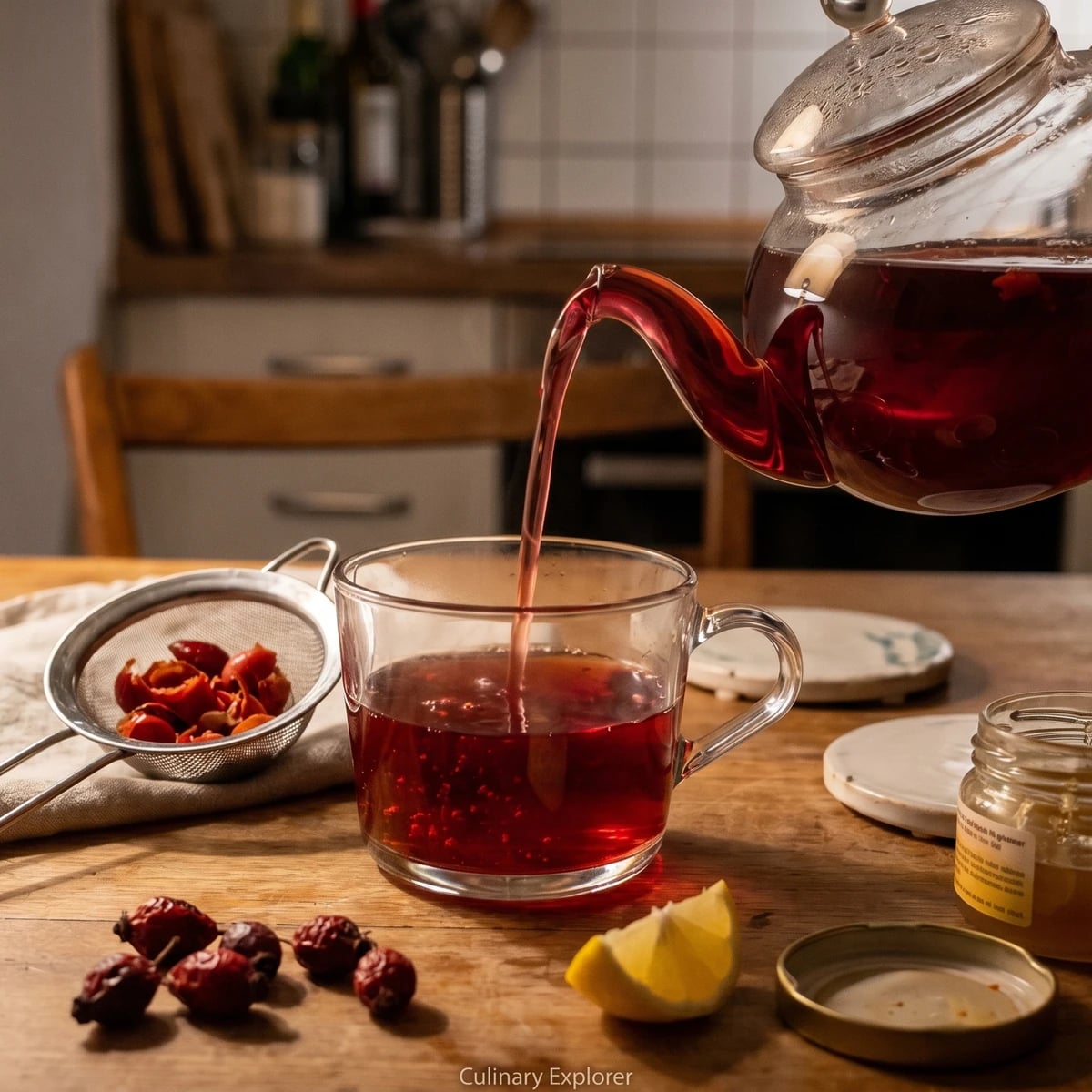
The deep-red winter tea from the hedgerow, dried rosehips simmered gently and covered so the cup tastes of tart fruit, not dust from a packet.
Hagebuttentee is winter table and sickbed table, the deep red cup Germans know from kitchens, thermos flasks, and old cupboards where dried rosehips waited for cold months. It belongs wherever the hedgerows give hips after the first frost, especially in the south and east where people also turn them into Hiffenmark or Hagebuttenmark, rosehip jam. In the north you'll often meet it as a plain fruit tea; further south someone may sweeten it harder or sharpen it with lemon. Im Norden anders, im Süden anders.
The argument is simple: bag or hips. The tea bag gives colour quickly and often not much else. Nicht aus dem Glas, and not from a perfumed packet if you can avoid it. Cut dried rosehip shells give you tart fruit, a little body, and that clear ruby colour that tells you the larder did its work.
The technique is the quiet simmer. Start the hips cold, bring them up slowly, then keep the pot barely moving and covered. Dried rosehip skin is tough; it needs time to soften and release flavour, but a hard boil roughens the cup and drives off the fresh edge. Das braucht seine Zeit, only not much of it.
Strain it fine and sweeten after tasting. A good Hagebuttentee should wake the mouth a little, not taste like red sugar water. Schön ist, was schmeckt.
Rosehips entered the German winter larder as a hedgerow fruit gathered after frost, then dried for tea or cooked into Hagebuttenmark, especially in Franconia, Swabia, and Thuringia. During the 20th century, rosehip preparations were promoted across central Europe as a winter source of vitamin C, though the vitamin is heat-sensitive and survives best when the fruit is handled gently. The regional split still shows at the table: some households brew it plain and tart as a Hausmittel, a home remedy, while southern cooks often know the same fruit first as jam for doughnuts and pastries.
Quantity
40g
cut shells, without hairs
Quantity
1 litre
Quantity
1 tablespoon
Quantity
1 teaspoon
| Ingredient | Quantity |
|---|---|
| dried rosehipscut shells, without hairs | 40g |
| cold water | 1 litre |
| honey or sugar (optional) | 1 tablespoon |
| lemon juice (optional) | 1 teaspoon |
Put the dried rosehips in a fine sieve and rinse them quickly under cold water. This takes off dust from drying, and with cut hips it also helps catch any stray seed hairs, which are scratchy and don't belong in the cup.
Put the rosehips and cold water in a small pot and let them sit 10 minutes before heating. Starting cold gives the leathery skins time to soften, so the tea draws deep red instead of tasting thin and woody.
Bring the pot just to a simmer, then runter mit der Temperatur, down with the temperature, and keep it barely moving for 12 to 15 minutes with the lid on. A hard boil roughens the fruit and wastes aroma; a quiet simmer pulls colour, tartness, and body from the hips without beating them flat.
Take the pot off the heat and leave it covered for 5 minutes, because the last steep rounds the sour edge and lets the fine fruit pulp settle. Strain through a fine sieve or cloth; don't press hard on seedy hips, or you push bitterness and hairs into the tea.
Taste before sweetening. Add honey, sugar, or a few drops of lemon only after straining, because sweetness should balance the tart fruit, not hide it. Würzen, Fett, Salz zum Schluss has its drink version too: finish after you know what you've made.
1 serving (about 250g)
Culinary guides, cultural storytelling, and the editorial depth that makes cooking meaningful.
Discover Culinary Explorer
Chef Klaus
Cloudy apple juice, sharp mineral water, and no sugar bowl: the German Schorle that belongs in school bags, beer gardens, picnic baskets, and the table when supper is quick.

Chef Klaus
Frankfurt's long drink for a warm table: dry Apfelwein, cold mineral water, and the ribbed Geripptes glass that tells you where you are.

Chef Klaus
Berlin's summer glass: sharp, pale Berliner Weisse softened with a red raspberry or green woodruff Schuss, cold enough to bead the glass and never from bottled syrup.

Chef Klaus
The Easter bottle from yolks, sugar, cream, and good spirit, beaten warm just enough to thicken, then cooled into a yellow liqueur for cake, coffee, and small glasses.