Chef Jeong-sun
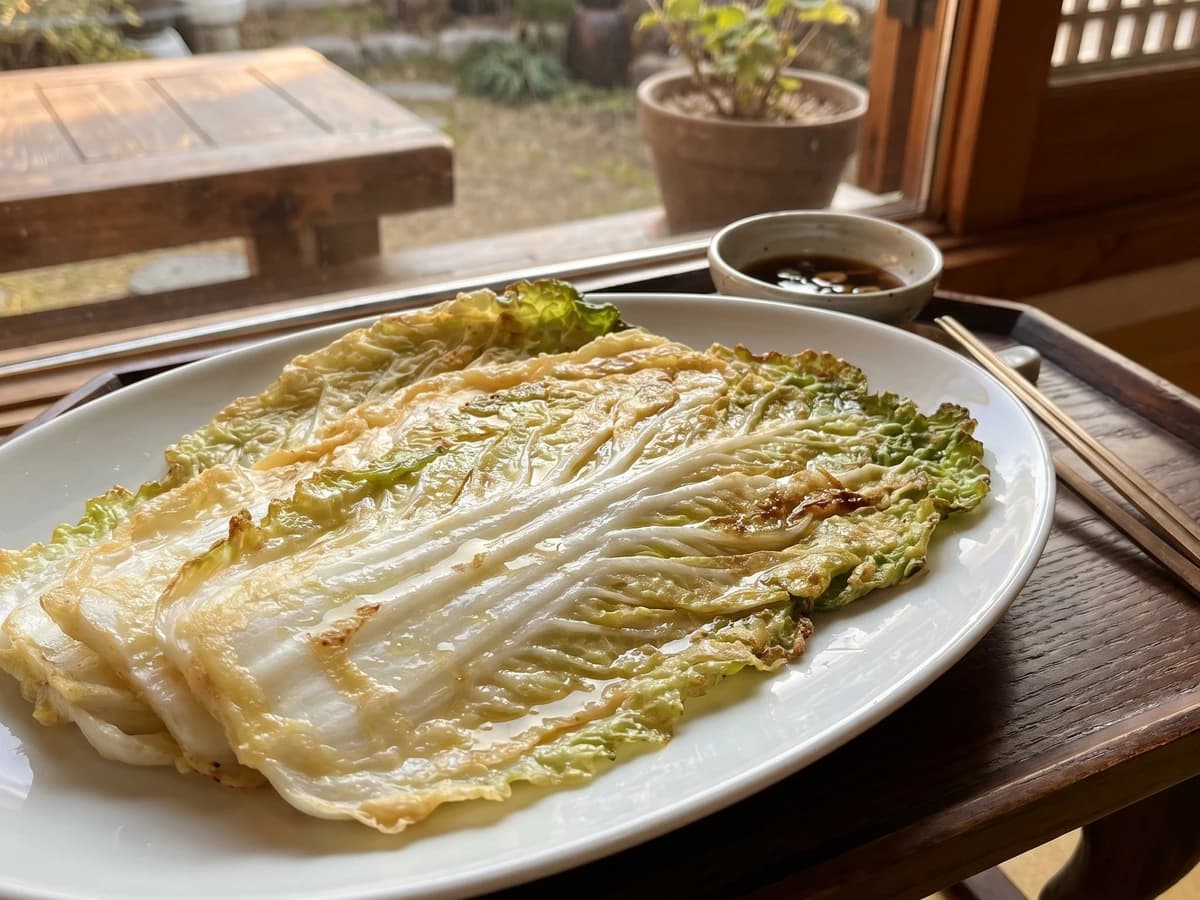
Baechu-jeon (배추전, Napa Cabbage Pancake)
A Gyeongsang home pancake made from one whole napa cabbage leaf at a time, flattened at the rib, brushed in thin salted batter, and fried until sweet, tender, and quietly crisp at the edges.
A cooking platform built around craft, culture, and the stories behind what we eat.
Created by
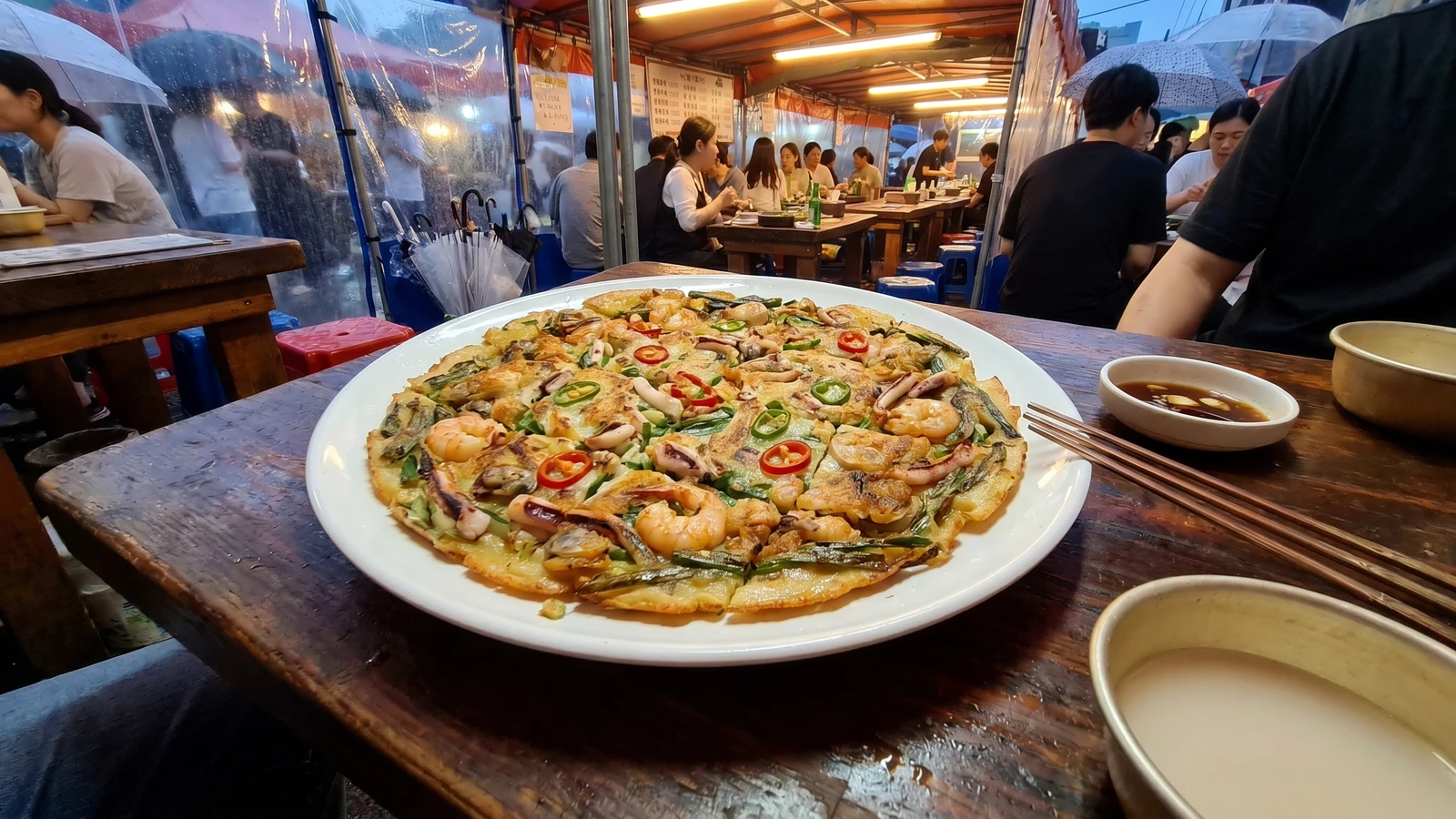
A rainy-day scallion pancake loaded with squid, shrimp, and clams, fried crisp at the edges and tender inside, then finished with egg and a sharp soy vinegar dipping sauce.
Haemul-pajeon is not a seafood omelet with scallions hiding in it. The scallions are the spine, long and green, and the seafood rides in the batter around them. When rain starts against the window, Korean tables think of pajeon and makgeolli, but the pan does not care about romance. It asks for dry seafood, cold batter, enough oil, and patience before you flip.
Master Seong-nyeo made me blot squid until the towel stayed nearly clean. I thought she was being severe. She was saving the pancake. Wet seafood turns the batter loose, the center heavy, and the bottom pale before you get a chance to do it properly. Notebook 41 says: 340 grams seafood to about 180 grams scallion for two large pancakes. More than that and you are not being generous, you are making the cook fight the pan.
Tonight you will cut the scallions to fit the skillet, split the thick whites, mix the batter only until it comes together, and cook with more oil than a timid hand wants. The egg goes over the top near the end, not into the batter at the beginning, so it sets in golden patches and lets the seafood still read as itself. 손맛 is real; I measure it anyway, because the first good rainy-day pancake should not be the last one you can repeat.
Jeon is the broad Korean family of foods coated or bound with flour and egg and pan-fried, recorded in Joseon culinary writing under names such as jeonyueo and jeonya. Haemul-pajeon is closely tied to the southern coast, especially Dongnae in Busan, where long scallions and local seafood made Dongnae-pajeon a named regional specialty rather than a plain flour pancake. The rainy-day pairing with makgeolli is a modern tavern and home habit, helped by the skillet's crisp sound resembling rainfall enough that Koreans joke the weather orders the dish.
Quantity
12 to 14, about 180g
roots trimmed, cut to fit a 10-inch skillet, thick whites split lengthwise
Quantity
120g
cut into 1/4-inch rings or 2-inch strips
Quantity
120g
peeled, deveined, cut into 1/2-inch pieces
Quantity
100g
drained and roughly chopped
Quantity
1 tablespoon
Quantity
3/4 teaspoon, divided
1/4 teaspoon for seafood, 1/2 teaspoon for batter
Quantity
1/8 teaspoon
Quantity
1 cup (125g)
Quantity
1/4 cup (35g)
Quantity
2 tablespoons
Quantity
1/4 teaspoon
Quantity
1 cup plus 2 tablespoons
Quantity
2
one cracked over each pancake near the end
Quantity
1
thinly sliced
Quantity
1
thinly sliced
Quantity
6 to 8 tablespoons
divided
Quantity
3 tablespoons
Quantity
1 tablespoon
Quantity
1 tablespoon
Quantity
1 teaspoon
Quantity
1 teaspoon
Quantity
1/2 teaspoon
Quantity
1/4 teaspoon
| Ingredient | Quantity |
|---|---|
| thin scallionsroots trimmed, cut to fit a 10-inch skillet, thick whites split lengthwise | 12 to 14, about 180g |
| cleaned squidcut into 1/4-inch rings or 2-inch strips | 120g |
| shrimppeeled, deveined, cut into 1/2-inch pieces | 120g |
| shucked clamsdrained and roughly chopped | 100g |
| rice wine or soju | 1 tablespoon |
| fine sea salt1/4 teaspoon for seafood, 1/2 teaspoon for batter | 3/4 teaspoon, divided |
| ground black pepper | 1/8 teaspoon |
| all-purpose flour | 1 cup (125g) |
| rice flour or potato starch | 1/4 cup (35g) |
| potato starch or cornstarch | 2 tablespoons |
| baking powder | 1/4 teaspoon |
| ice-cold water | 1 cup plus 2 tablespoons |
| large eggsone cracked over each pancake near the end | 2 |
| red chilithinly sliced | 1 |
| green chili (optional)thinly sliced | 1 |
| neutral oildivided | 6 to 8 tablespoons |
| soy sauce | 3 tablespoons |
| rice vinegar | 1 tablespoon |
| water | 1 tablespoon |
| toasted sesame seeds | 1 teaspoon |
| finely chopped scallion | 1 teaspoon |
| gochugaru (Korean chili flakes) (optional) | 1/2 teaspoon |
| sugar (optional) | 1/4 teaspoon |
Stir together the soy sauce, rice vinegar, water, sesame seeds, chopped scallion, gochugaru, and sugar if using. Taste it once. It should be sharper than it is salty, because the pancake is fried and needs that clean edge. Set it aside while you cook.
Spread the squid, shrimp, and clams on a clean towel and blot them dry. Toss them with the rice wine or soju, 1/4 teaspoon of the salt, and the black pepper, rest 5 minutes, then blot again. Wet seafood is the quickest way to ruin haemul-pajeon; it loosens the batter, weighs down the center, and makes the bottom pale before the pan can crisp it.
Trim the scallions to fit your skillet, about 8 to 9 inches long for a 10-inch pan. Split any thick white ends lengthwise so they cook at the same pace as the greens. Keep the scallions long. A pajeon is built around them; chop them small and you have made a different pancake.
Whisk the flour, rice flour or potato starch, the extra 2 tablespoons starch, baking powder, and remaining 1/2 teaspoon salt in a bowl. Pour in the ice-cold water and stir 15 to 20 strokes, just until no dry pockets remain. Small lumps are fine. The batter should coat a spoon and run off in a ribbon; if it mounds heavily, add 1 tablespoon cold water. If it looks thin as milk, add 1 tablespoon flour. Do not beat it smooth, because overworked flour fries tough.
Heat a 10-inch heavy skillet over medium-high heat and add 3 tablespoons oil. When a drop of batter sizzles at once, coat half the scallions lightly in batter and lay them in the pan in one flat raft, whites and greens alternating. Scatter half the seafood and half the chili slices over the scallions, then drizzle 3 to 4 tablespoons batter over the top to bind it. The batter is glue, not a blanket. You should still see scallion and seafood clearly.
Cook 4 to 5 minutes, pressing the center gently once or twice so it meets the pan. The edges should brown and the underside should turn deep golden before you move it. Rotate the skillet if one side browns faster. If the pan looks dry, spoon 1 tablespoon oil around the edge; a dry pajeon turns leathery instead of crisp.
Slide two wide spatulas under the pancake and flip it in one confident motion. Cook the second side 2 to 3 minutes, until the shrimp is opaque and the squid and clams no longer look raw. Crack one egg over the top, break the yolk with chopsticks, and spread it thinly over the surface. Let it cling for 20 to 30 seconds, then flip the pancake egg-side down and cook 60 to 90 seconds to set. Turn it back egg-side up onto a board or platter. The egg should sit in golden patches, not hide the seafood.
Wipe out only burnt bits, add fresh oil, and cook the second pancake the same way. Cut the pajeon with kitchen scissors into rough squares and serve immediately with the dipping sauce. For a potluck or game-day table, hold the pieces uncovered on a rack in a 200°F or 95°C oven for up to 20 minutes. Cover them and they soften. Serve first, explain later.
1 serving (about 260g)
Culinary guides, cultural storytelling, and the editorial depth that makes cooking meaningful.
Discover Culinary ExplorerChef Jeong-sun
A Gyeongsang home pancake made from one whole napa cabbage leaf at a time, flattened at the rib, brushed in thin salted batter, and fried until sweet, tender, and quietly crisp at the edges.

Chef Jeong-sun
A holiday jeon of fresh shiitake or oyster mushrooms, salted lightly, dusted thinly, and carried through egg in a quiet pan until the mushroom stays earthy and the coating stays tender.

Chef Jeong-sun
Soaked mung beans ground coarse, folded with pork, bracken, sprouts, and kimchi, then fried thick until the edges crisp and the center stays tender enough for a shared table.

Chef Jeong-sun
A summer garlic chive pancake fried thin, crisp at the edges and chewy in the center, with just enough batter to hold the green pile together and a sharp soy-vinegar dip.