
Chef Remy
Alligator Sauce Piquante
Chunks of tender gator swimming in a brick-red tomato sauce with enough heat to make you reach for your sweet tea, spooned over rice the way the old Cajun trappers ate it after a long day on the bayou.
A cooking platform built around craft, culture, and the stories behind what we eat.
Created by Chef Remy
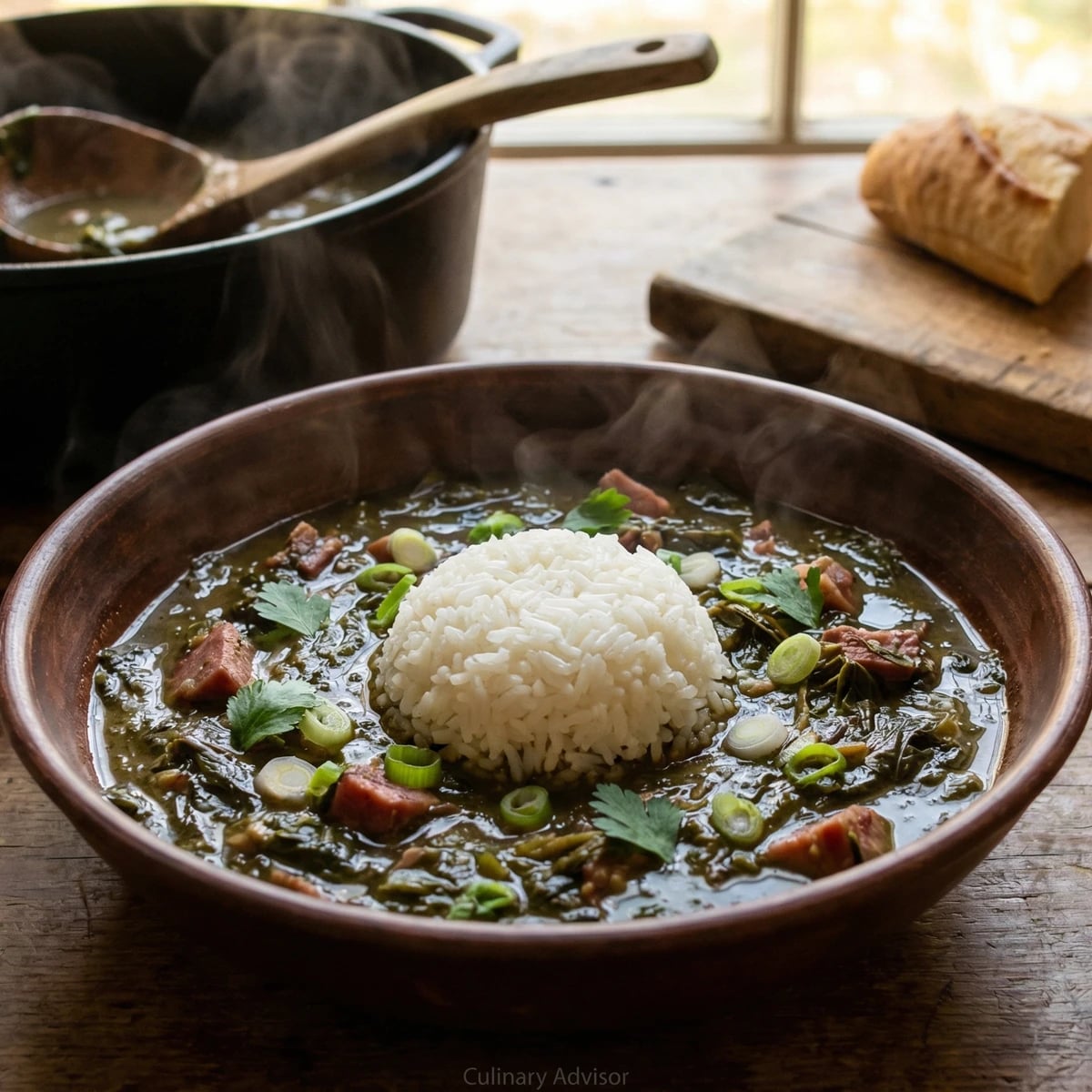
A pot of nine different greens cooked down with a chocolate-dark roux and smoky ham hock, the traditional Good Friday gumbo that feeds the soul while honoring the season of sacrifice.
This is the gumbo of Lent. When the bayou Catholics gave up meat on Fridays, they turned to the garden and made something extraordinary from greens alone. The tradition says you must use an odd number of greens, at least seven, and for every different green in the pot, you'll make a new friend in the coming year. My grandmother Evangeline put nine greens in hers and she never met a stranger.
Now, let me tell you something important: this is not a light, healthy soup. That dark roux, the smoked ham hock simmering for hours, the butter finishing each bowl. This is Lenten food that reminds you what you're missing. The greens cook down to almost nothing, concentrating into a deep, complex flavor that surprises people who think they know what greens taste like. At Lagniappe, we serve this every Good Friday, and people line up around the block.
The technique here is everything. You blanch the greens separately to remove bitterness and control the texture. You build a dark roux, darker than you'd use for seafood gumbo, because it needs to stand up to all those assertive greens. The ham hock goes in early, perfuming the whole pot with smoke. And you taste, taste, taste as you go, adjusting the salt and pepper until the greens sing.
This gumbo takes time. The prep alone, washing and stemming all those greens, is a labor of love. But that's the point. On Good Friday, you're supposed to slow down, reflect, appreciate. There's no better meditation than standing at the stove, stirring your roux, watching it transform from pale to peanut butter to chocolate while the greens simmer behind you.
Quantity
1 large bunch (about 1 pound)
stems removed
Quantity
1 large bunch (about 1 pound)
stems removed
Quantity
1 large bunch (about 1 pound)
stems removed
Quantity
1 pound
stems removed
Quantity
1/2 medium head
cored and roughly chopped
Quantity
1 bunch (about 8 ounces)
stems removed
Quantity
1 bunch (about 4 ounces)
thick stems removed
Quantity
1 bunch
white and green parts separated
Quantity
1 cup
packed
Quantity
1 (about 1 1/2 pounds)
Quantity
4 quarts
divided
Quantity
3/4 cup
Quantity
3/4 cup
Quantity
2 cups
diced
Quantity
1 cup
diced
Quantity
1 cup
diced
Quantity
8 cloves
minced
Quantity
2
Quantity
1 teaspoon
Quantity
1/2 teaspoon, or to taste
Quantity
1 tablespoon, plus more to taste
Quantity
1 teaspoon
freshly ground
Quantity
1/2 teaspoon
Quantity
2 tablespoons
Quantity
1 tablespoon
Quantity
for serving
hot cooked
Quantity
for serving
| Ingredient | Quantity |
|---|---|
| collard greensstems removed | 1 large bunch (about 1 pound) |
| mustard greensstems removed | 1 large bunch (about 1 pound) |
| turnip greensstems removed | 1 large bunch (about 1 pound) |
| fresh spinachstems removed | 1 pound |
| green cabbagecored and roughly chopped | 1/2 medium head |
| curly kalestems removed | 1 bunch (about 8 ounces) |
| watercressthick stems removed | 1 bunch (about 4 ounces) |
| green onionswhite and green parts separated | 1 bunch |
| fresh flat-leaf parsleypacked | 1 cup |
| smoked ham hock | 1 (about 1 1/2 pounds) |
| waterdivided | 4 quarts |
| vegetable oil | 3/4 cup |
| all-purpose flour | 3/4 cup |
| yellow oniondiced | 2 cups |
| celerydiced | 1 cup |
| green bell pepperdiced | 1 cup |
| garlicminced | 8 cloves |
| bay leaves | 2 |
| dried thyme | 1 teaspoon |
| cayenne pepper | 1/2 teaspoon, or to taste |
| kosher salt | 1 tablespoon, plus more to taste |
| black pepperfreshly ground | 1 teaspoon |
| white pepper | 1/2 teaspoon |
| unsalted butter | 2 tablespoons |
| apple cider vinegar | 1 tablespoon |
| white ricehot cooked | for serving |
| hot sauce (optional) | for serving |
Place the smoked ham hock in a large pot with 2 quarts of water. Bring to a boil over high heat, then reduce to a gentle simmer. Cook uncovered for 1 hour while you prepare the greens. The ham hock needs this head start to become tender and release its smoky essence into the liquid. You'll use this flavorful stock as your gumbo base.
Fill your sink with cold water and submerge each type of green, swishing vigorously to release sand and grit. Lift the greens out (don't drain the sink or the grit goes right back on them), empty the dirty water, and repeat until no sand remains at the bottom. This may take three or four washings for field greens. Sandy gumbo ruins everything. Tear or roughly chop the greens into 2-inch pieces, keeping them separated by type for now.
Bring a large pot of salted water to a rolling boil. Working in batches, blanch the collards, mustard greens, turnip greens, cabbage, and kale for 3 to 4 minutes each until wilted but still bright green. Transfer to a colander with a slotted spoon and let drain. The blanching removes bitterness and ensures the heartier greens will be tender in the final gumbo. Reserve 2 cups of the blanching liquid.
Add the spinach and watercress to the same boiling water and blanch for just 30 seconds. These delicate greens cook down to almost nothing if overcooked. Transfer immediately to the colander. Once all greens are cool enough to handle, squeeze out excess water in handfuls, then roughly chop everything together. You should have about 6 cups of cooked greens.
Heat the vegetable oil in a large heavy-bottomed pot or Dutch oven over medium heat until shimmering. Whisk in the flour and keep whisking constantly. I mean constantly. Don't answer the phone, don't check your messages, don't walk away for even thirty seconds. The roux will go from white to blond to peanut butter to brick red to chocolate brown over about 45 minutes. You want that deep chocolate color, the color of dark coffee, with a nutty smell that fills your kitchen.
The moment your roux reaches that chocolate color, add the diced onion, celery, bell pepper, and the white parts of the green onions all at once. The roux will seize and sizzle violently. This is right. Keep stirring continuously as the vegetables soften and the sizzling calms down, about 5 minutes. The vegetables will release moisture that stops the roux from cooking further.
Stir in the minced garlic and cook until fragrant, about 1 minute. Add the bay leaves, thyme, cayenne, salt, black pepper, and white pepper. Stir everything together so the spices bloom in the residual heat. Your kitchen should smell like Louisiana right now.
Carefully transfer the ham hock and all its cooking liquid to the pot with the roux. Add the reserved blanching liquid and enough additional water to make about 3 quarts total. Stir well to incorporate the roux completely, scraping up any bits from the bottom. The liquid will look muddy at first, then smooth out as the roux dissolves.
Stir in all the chopped blanched greens along with the parsley. The pot will seem impossibly full. Don't worry. Push them down, stir them in, and they will settle as they simmer. Bring to a boil, then reduce heat to maintain a gentle simmer. Cook uncovered for 1 1/2 to 2 hours, stirring occasionally, until the greens are completely tender and the flavors have married into something greater than the sum of their parts.
Remove the ham hock to a cutting board. When cool enough to handle, pull the meat from the bone, discarding the skin, fat, and bone. Chop or shred the meat into bite-sized pieces and return it to the pot. There won't be as much meat as you expect from that big hock, but what's there is precious, concentrated pork flavor.
Stir in the butter and apple cider vinegar. The butter adds richness, the vinegar brightens all those earthy greens. Now taste. Really taste. Adjust the salt, add more cayenne if you want heat, more black pepper if it needs bite. The gumbo should taste deeply savory with a whisper of smoke and a long, complex finish from the greens. Remove the bay leaves.
Ladle generous portions over mounds of hot white rice in deep bowls. Scatter the sliced green onion tops over each serving. Set out the hot sauce for those who want extra heat. This is food for contemplation, for gathering, for gratitude. Take your time with it.
1 serving (about 300g)
Culinary guides, cultural storytelling, and the editorial depth that makes cooking meaningful.
Discover Culinary Explorer
Chef Remy
Chunks of tender gator swimming in a brick-red tomato sauce with enough heat to make you reach for your sweet tea, spooned over rice the way the old Cajun trappers ate it after a long day on the bayou.

Chef Remy
Briny Gulf oysters swimming in a silky cream broth perfumed with celery and green onions, the kind of refined Creole cooking that made New Orleans famous, where simplicity becomes sophistication.

Chef Remy
Fork-tender beef chunks swimming in a dark roux gravy with potatoes and carrots, seasoned bold the way we do it in Louisiana, the kind of stew that makes you close your eyes and forget your troubles.

Chef Remy
Humble butter beans transformed by smoky tasso ham, the holy trinity, and patient simmering into a velvety stew that warms you from the inside out, the kind of bowl that makes you want seconds before you've finished firsts.