
Chef Lupita
Aporreadillo Michoacano con Huevo
Michoacán's Tierra Caliente almuerzo, where salted beef is softened, pounded, fried in lard, folded with egg and chile perón salsa, then served beside morisqueta like a proper working table.
A cooking platform built around craft, culture, and the stories behind what we eat.
Created by
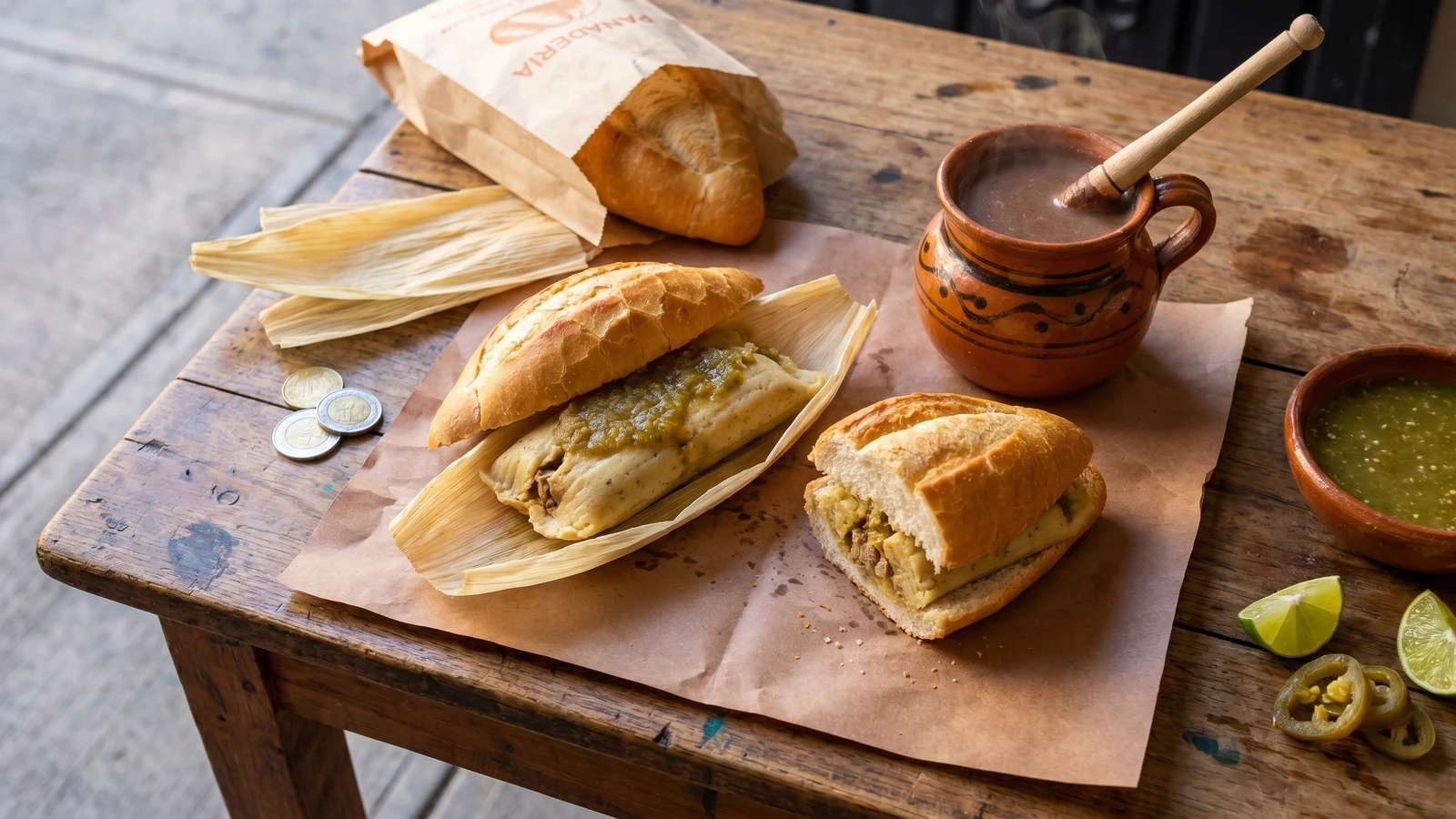
Ciudad de Mexico's commuter breakfast: a whole steamed tamal de salsa verde shoved inside a split bolillo, hot in your hand at the metro entrance, washed down with atole before the day swallows you.
This is a Ciudad de Mexico dish. Not from Puebla, not from Veracruz, not from anywhere else. The guajolota lives in the chilango streets, sold from carts and tricycle stands at the mouths of metro stations and outside the secondary schools at 7 in the morning. You will not find it in fancy restaurants. You will find it where working people eat before they go to work.
The name is a joke. Guajolote means turkey in Nahuatl, and a guajolota is feminine, oversized, ridiculous. Carbohydrate inside carbohydrate. A tamal, already a meal, stuffed into a bolillo, also a meal. Nobody pretended this was elegant. It was invented for people who had a long commute, twenty pesos in their pocket, and no time to sit down. It is the breakfast of bus drivers, of construction workers, of students with morning classes, of the women who clean offices in Polanco and live two hours away.
The tamal inside can be salsa verde with chicken, salsa roja with pork, rajas with cheese, or mole. The bolillo is non-negotiable. Not a telera, not a baguette, not any other bread. A bolillo from a Mexican panaderia, baked that morning, with a crust that crackles when you press it and a crumb that gives way around the tamal. My mother thought guajolotas were absurd, a Jaliscience would never, but I used to eat them on the way to UNAM and I still buy one when I am running late through the Centro. Saber cocinar es saber vivir, but sometimes saber comer en la calle is the same thing.
Make the tamales from scratch and you will have leftovers to freeze. Each morning that week, steam one, split a bolillo, build a guajolota. That is how the city eats.
The guajolota emerged in the working-class streets of Ciudad de Mexico in the mid-20th century, as the post-revolutionary capital grew and an industrial workforce needed cheap, portable, calorie-dense food before dawn shifts. The pairing of tamal and bolillo combines two distinct food histories: the tamal, a pre-Columbian masa preparation documented in Sahagun's 16th-century Florentine Codex as a daily food of the Mexica, and the bolillo, a Mexican adaptation of French baguette technique brought during the brief Second Mexican Empire of Maximilian (1864-1867) and naturalized into Mexican baking through the late 19th century. The compound name 'guajolota' draws from the Nahuatl 'huexolotl,' meaning male turkey, used here as ironic exaggeration for the dish's improbable size and the gendered diminutive that signals affection rather than the bird itself.
Quantity
8
day-old is even better
Quantity
30
plus extra for tearing into ties
Quantity
2 cups
at room temperature
Quantity
2 pounds
coarser grind than tortilla masa
Quantity
2 cups, plus more as needed
Quantity
1 tablespoon
Quantity
1 teaspoon
Quantity
1 pound
husked and rinsed
Quantity
4
stemmed
Quantity
2
stemmed
Quantity
1/2 medium
Quantity
3
peeled
Quantity
1 cup, packed
Quantity
2 sprigs
Quantity
2 cups
poached in salted water with onion and garlic
Quantity
2 tablespoons
Quantity
to taste
Quantity
for serving
| Ingredient | Quantity |
|---|---|
| fresh bolillosday-old is even better | 8 |
| dried corn husks (hojas de maiz)plus extra for tearing into ties | 30 |
| manteca de cerdo (pork lard)at room temperature | 2 cups |
| masa fresca para tamalcoarser grind than tortilla masa | 2 pounds |
| warm chicken broth | 2 cups, plus more as needed |
| kosher salt | 1 tablespoon |
| baking powder | 1 teaspoon |
| tomatilloshusked and rinsed | 1 pound |
| fresh chile serranostemmed | 4 |
| fresh chile jalapenostemmed | 2 |
| white onion | 1/2 medium |
| garlic clovespeeled | 3 |
| fresh cilantro leaves and tender stems | 1 cup, packed |
| fresh epazote | 2 sprigs |
| cooked shredded chickenpoached in salted water with onion and garlic | 2 cups |
| lard (for frying the salsa) | 2 tablespoons |
| kosher salt | to taste |
| atole de masa or champurrado (optional) | for serving |
Place the dried corn husks in a deep bowl or sink and cover with hot tap water. Weight them down with a plate so they stay submerged. They need at least 30 minutes to soften and become pliable. Stiff husks crack when you fold them. Patient husks bend like cloth. While they soak, tear a few extra husks into long thin strips to use as ties.
Bring a small pot of water to a boil. Drop in the tomatillos, serranos, jalapenos, and onion. Boil for about 8 minutes, until the tomatillos turn from bright green to a muted olive and feel soft when poked. Drain. Transfer to a blender with the raw garlic, cilantro, epazote, and a teaspoon of salt. Blend until smooth but not pureed to nothing. You want some body left.
Heat 2 tablespoons of lard in a wide skillet over medium-high. When it shimmers, pour in the blended salsa. It will sputter aggressively. Step back. Fry for about 6 minutes, stirring constantly, until the color deepens and the salsa thickens enough to coat the back of a spoon. This step cooks the raw garlic and the chile, and concentrates the flavor. Salsa verde for tamales must be fried. Raw salsa makes a watery, sour filling. Stir in the shredded chicken, taste, adjust salt, and pull off the heat. Let it cool to room temperature before you fill the tamales.
In a stand mixer with the paddle, beat the lard alone on medium-high for 5 to 7 minutes, until it turns pale and almost fluffy. This is not optional. Whipped lard is what makes a tamal light. La manteca es el sabor, pero la manteca batida es la textura. Add the salt and baking powder. Begin adding the masa in handfuls, alternating with splashes of warm broth, until the masa is fully incorporated. Keep beating for another 5 minutes. Test by dropping a pea-sized ball into a glass of cold water. If it floats, the masa is ready. If it sinks, beat in another tablespoon of lard and try again.
Take a softened husk and shake off the water. Lay it on your palm with the wide end toward your wrist and the pointed end toward your fingers. Spread about 3 tablespoons of masa across the center, leaving a clean border of two fingers at the wide end and a longer tail at the narrow end. Spoon a tablespoon of the chicken in salsa verde down the center of the masa. Fold the long sides of the husk over each other so the masa wraps around the filling. Fold the pointed tail up against the back. Tie with a strip of husk if you want extra insurance. Stack the tamales upright, open end up, in a tamalera or large stockpot fitted with a steamer rack.
Pour water into the bottom of the pot, below the steamer rack. Drop a coin into the water. When you stop hearing the coin rattle, the pot has run dry and you need to add more. Cover the tamales with a layer of extra husks and a clean kitchen cloth, then the lid. Steam over medium heat for 1 hour and 15 minutes. Do not lift the lid in the first 45 minutes. The masa needs uninterrupted heat to set. After 1 hour and 15 minutes, pull one tamal out, let it rest for 2 minutes, then unwrap. If the masa pulls away from the husk cleanly and holds together, they are done. If it sticks, give them another 15 minutes.
While the tamales rest, split each bolillo lengthwise without cutting all the way through, like a hinged book. Pull out a little of the soft crumb from each half to make room for the tamal. Heat a dry comal over medium and toast the bolillos cut side down for 30 to 45 seconds, just to crisp the inner surface. The bolillo has to fight back a little when you bite it. A soggy guajolota is a defeated guajolota.
Unwrap a hot tamal. Lay it whole inside the bolillo, husk discarded, masa and filling intact. Press the bread closed around it so the crust holds everything in place. That is the guajolota. There is no other assembly. Eat it standing up with a clay jarro of atole or champurrado in the other hand, the way they sell it from carts at the entrance of Metro Pino Suarez at 7 in the morning. Asi se hace y punto.
1 serving (about 215g)
Culinary guides, cultural storytelling, and the editorial depth that makes cooking meaningful.
Discover Culinary ExplorerChef Lupita
Michoacán's Tierra Caliente almuerzo, where salted beef is softened, pounded, fried in lard, folded with egg and chile perón salsa, then served beside morisqueta like a proper working table.

Chef Lupita
Guerrero's Costa Grande aporreado is salted cecina pounded soft, scrambled with egg, and finished in a red guajillo and chile de árbol salsa loud with garlic and cilantro.

Chef Lupita
Los Altos de Chiapas turns two-night fermented white corn into a tart-sweet atole, cooked with canela and piloncillo, then poured hot into jícaras for desayuno.

Chef Lupita
Oaxaca's Mixteca region ferments nixtamalized masa for days until it turns tart and alive, then simmers it with piloncillo and canela into a thick, warm atole served at first light in clay.