
Chef Lupita
Aporreadillo Michoacano con Huevo
Michoacán's Tierra Caliente almuerzo, where salted beef is softened, pounded, fried in lard, folded with egg and chile perón salsa, then served beside morisqueta like a proper working table.
A cooking platform built around craft, culture, and the stories behind what we eat.
Created by
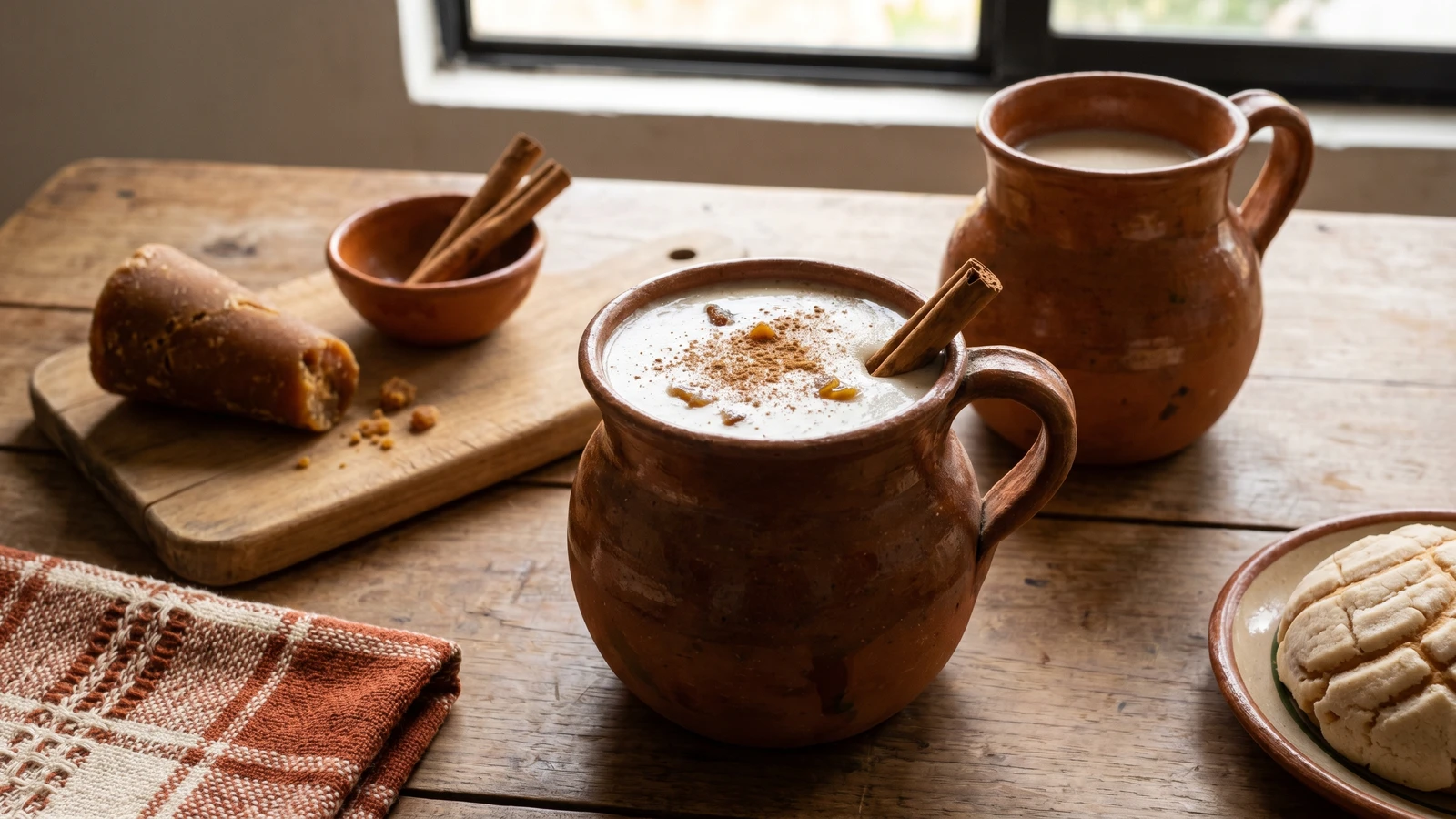
The everyday morning atole of central Mexico. Oats toasted dark, simmered with whole milk, raja de canela, and piloncillo until thick enough to coat a spoon, poured into a clay jarro.
This is a central Mexico breakfast. From Ciudad de México to Puebla, Tlaxcala, Hidalgo, Estado de México, this is what the kitchen smells like on a cold morning. Atole is older than Mexico the country. The Mexica drank atoles of corn masa long before milk and oats arrived. The version with oats, milk, piloncillo, and canela is what the kitchens of central Mexico made of those colonial ingredients, and it has been the everyday breakfast of working families for generations.
Get two things right and the rest follows. First, toast the oats dry before the liquid goes in. This is the step most recipes skip and the reason most homemade atoles taste like wallpaper paste. Toasted oats give body, color, and that nutty depth that makes you understand why this is the breakfast of an entire region. Second, use piloncillo, not white sugar. Piloncillo is unrefined cane sugar pressed into cones, and it carries molasses, minerals, and the flavor of the Veracruz and Michoacán mills where it has been made for four centuries. White sugar gives sweetness. Piloncillo gives flavor.
My mother kept a notebook of recipes from Jalisco, but the atole de avena she made on cold mornings in Colonia Roma was capitalino through and through. She used the canela de Ceilán she bought from a vendor at La Merced who knew the difference between true Mexican canela and the harsh cassia bark people sell as cinnamon in supermarkets. She drank hers from a clay jarro from Tonalá that lived on a shelf above the stove for as long as I remember. Atole is poured into barro. Glass and porcelain steal the heat too fast. The clay holds it. Así se hace y punto.
This is comida de diario, everyday food. It costs almost nothing, feeds four people, and warms a house on a morning when nothing else will. Saber cocinar es saber vivir.
Atole derives from the Nahuatl 'atolli,' meaning watered down, and pre-Columbian atoles were made from corn masa thinned with water and flavored with chile, honey, vanilla, or cacao. The introduction of milk, cane sugar, and Old World grains after the Spanish conquest opened a second category of atoles, including those made with rice, wheat, and oats, that flourished in central Mexico's home kitchens. Piloncillo, called panela in other parts of Latin America, has been produced in trapiches across Veracruz, Michoacán, and Morelos since the 16th century, and its mineral-rich molasses character is what gives Mexican sweet atoles their distinctive caramel depth, a flavor that refined white sugar cannot replicate.
Quantity
4 cups
Quantity
2 cups
Quantity
3/4 cup
Quantity
1 cone (about 4 ounces)
chopped, or substitute 1/2 cup packed dark brown sugar
Quantity
1 stick, about 3 inches
Quantity
1 strip, about 2 inches
Quantity
1/4 teaspoon
Quantity
1 teaspoon
Quantity
for serving
| Ingredient | Quantity |
|---|---|
| whole milk | 4 cups |
| water | 2 cups |
| rolled oats (avena en hojuelas) | 3/4 cup |
| piloncillochopped, or substitute 1/2 cup packed dark brown sugar | 1 cone (about 4 ounces) |
| raja de canela (Mexican cinnamon stick, canela de Ceilán) | 1 stick, about 3 inches |
| orange peel (optional) | 1 strip, about 2 inches |
| kosher salt | 1/4 teaspoon |
| Mexican vanilla extract | 1 teaspoon |
| ground canela (optional) | for serving |
Set a heavy saucepan over medium heat. Add the rolled oats dry, no fat, and stir constantly for two to three minutes until the kitchen smells nutty and the oats turn a shade darker. This step is what separates atole de avena from the sad, gluey breakfast cereal people make when they skip it. Toasted oats give the atole body and a roasted depth that raw oats cannot.
Pour the water into the saucepan with the toasted oats. Add the raja de canela, the orange peel if using, and the salt. Bring to a gentle simmer over medium heat and cook for about eight minutes, stirring often with a wooden spoon, until the oats soften and the water turns cloudy. The canela needs the water to open up. Add the milk now and it locks the spice in cold.
Pour in the whole milk and add the chopped piloncillo. Stir until the piloncillo dissolves completely. This takes patience. Real piloncillo from Veracruz or Michoacán is rock hard and it surrenders slowly. Keep the heat at medium-low. Milk that boils hard will scorch on the bottom and the whole pot will taste burned.
Cook at a low simmer, stirring constantly with a wooden spoon and reaching the bottom and corners of the pot, for twelve to fifteen minutes. The atole is ready when it coats the back of the spoon and a line drawn through it with your finger holds for a moment before closing. Atole de avena is thickened, not a thin smoothie. If you can see through it, keep going.
Pull the pot off the heat. Fish out the canela and the orange peel. Stir in the vanilla. Taste it. If the piloncillo was small, you may want a little more sweetness. Add a pinch more chopped piloncillo and stir until it melts. Pour into clay jarros, not glass mugs. The barro keeps the atole hot and gives it the earthen taste that a porcelain cup will never give. Dust with a little ground canela on top if you like. Drink it while it is still hot enough to warm your hands through the clay.
1 serving (about 360g)
Culinary guides, cultural storytelling, and the editorial depth that makes cooking meaningful.
Discover Culinary ExplorerChef Lupita
Michoacán's Tierra Caliente almuerzo, where salted beef is softened, pounded, fried in lard, folded with egg and chile perón salsa, then served beside morisqueta like a proper working table.

Chef Lupita
Guerrero's Costa Grande aporreado is salted cecina pounded soft, scrambled with egg, and finished in a red guajillo and chile de árbol salsa loud with garlic and cilantro.

Chef Lupita
Los Altos de Chiapas turns two-night fermented white corn into a tart-sweet atole, cooked with canela and piloncillo, then poured hot into jícaras for desayuno.

Chef Lupita
Oaxaca's Mixteca region ferments nixtamalized masa for days until it turns tart and alive, then simmers it with piloncillo and canela into a thick, warm atole served at first light in clay.