
Chef Graziella
Besciamella all'Italiana
The mother sauce of Italian baked pastas, transformed from simple butter, flour, and milk into silk through patient whisking and the essential warmth of nutmeg.
A cooking platform built around craft, culture, and the stories behind what we eat.

Created by
The honest Italian way to preserve garden vegetables: crisp cauliflower, carrots, celery, and peppers in a clean wine vinegar brine. Not the oil-drenched Chicago version.
Giardiniera means 'from the gardener,' and this is exactly what it is: vegetables from the garden, preserved at their peak so you can eat them through the winter. Every Italian household kept jars of these pickled vegetables in the cellar. They appeared on antipasto platters, alongside cured meats and cheeses, or eaten straight from the jar when you wanted something bright and sharp.
The American version you find in Chicago, soaked in oil and loaded with hot peppers, is a different creature entirely. It has its place, but it is not what Italian grandmothers made. True giardiniera sott'aceto is light, acidic, and allows each vegetable to taste like itself. The vinegar preserves without overwhelming.
What you keep out matters. No oregano. No red pepper flakes. No olive oil in the jar. These additions mask the clean vegetable flavors that should shine through. The brine is simple: good wine vinegar, water, salt, a touch of sugar to balance the acid, and a few whole spices. The vegetables do the rest.
Italian households have preserved summer vegetables in vinegar since Roman times, when acetum was the universal preservative. The term 'sott'aceto' (under vinegar) distinguished these bright, acidic preparations from 'sott'olio' (under oil), which produced richer, more concentrated results. Giardiniera became particularly associated with Piedmont and Lombardy, where it anchored the antipasto course.
Quantity
1 small head (about 1 pound)
cut into small florets
Quantity
3 medium
peeled and sliced 1/4-inch thick on the diagonal
Quantity
4
sliced 1/4-inch thick on the diagonal
Quantity
2
cut into 1-inch squares
Quantity
1
cut into 1-inch squares
Quantity
8 ounces
peeled
Quantity
3 cups
Quantity
2 cups
Quantity
3 tablespoons
Quantity
2 tablespoons
Quantity
2
Quantity
1 teaspoon
Quantity
1/2 teaspoon
Quantity
4 small sprigs
| Ingredient | Quantity |
|---|---|
| cauliflowercut into small florets | 1 small head (about 1 pound) |
| carrotspeeled and sliced 1/4-inch thick on the diagonal | 3 medium |
| celery stalkssliced 1/4-inch thick on the diagonal | 4 |
| red bell pepperscut into 1-inch squares | 2 |
| yellow bell peppercut into 1-inch squares | 1 |
| pearl onionspeeled | 8 ounces |
| white wine vinegar | 3 cups |
| water | 2 cups |
| kosher salt | 3 tablespoons |
| granulated sugar | 2 tablespoons |
| bay leaves | 2 |
| whole black peppercorns | 1 teaspoon |
| whole coriander seeds | 1/2 teaspoon |
| fresh thyme | 4 small sprigs |
Cut all vegetables into uniform pieces. This is not decoration. It is function. Uniform pieces pickle at the same rate, giving you consistent texture throughout. The diagonal cuts on carrots and celery are traditional and increase surface area for the brine to penetrate. Each floret of cauliflower should be no larger than a walnut.
Bring a large pot of water to a boil. Blanch the cauliflower, carrots, and pearl onions for exactly two minutes. They should remain crisp, not soft. Transfer immediately to a bowl of ice water to stop the cooking. The celery and peppers do not need blanching. Drain all vegetables thoroughly and pat dry with clean towels.
In a nonreactive saucepan, combine the white wine vinegar, water, salt, and sugar. Add the bay leaves, peppercorns, and coriander seeds. Bring to a boil over high heat, stirring until the salt and sugar dissolve completely. Reduce heat and simmer for five minutes to allow the aromatics to infuse.
Distribute the vegetables among clean pint jars, mixing the colors and types throughout each jar. Pack them firmly but do not crush them. The vegetables should fit snugly without being forced. Place one thyme sprig in each jar, tucking it along the inside where it will be visible.
Ladle the hot brine over the vegetables, leaving one-half inch of headspace at the top of each jar. Use a chopstick or thin knife to release any air bubbles trapped between the vegetables. Add more brine if needed to maintain proper headspace. The vegetables must be completely submerged.
Wipe the jar rims clean with a damp cloth. Apply the lids and rings, tightening until just finger-tight. For refrigerator storage, let the jars cool to room temperature before refrigerating. For shelf-stable preservation, process in a boiling water bath for ten minutes. Let the jars rest undisturbed for 24 hours. The giardiniera improves after one week and reaches its best flavor at three weeks.
1 serving (about 85g)
Culinary guides, cultural storytelling, and the editorial depth that makes cooking meaningful.
Discover Culinary ExplorerChef Graziella
The mother sauce of Italian baked pastas, transformed from simple butter, flour, and milk into silk through patient whisking and the essential warmth of nutmeg.

Chef Graziella
The foundation of Italian cooking, made as it has been made for generations: a whole chicken, honest vegetables, cold water, and three hours of patient simmering. This is where flavor begins.

Chef Graziella
Three ingredients. No garlic. No dried oregano. No sugar. This is what Italians actually put on their salads, and it requires nothing more than quality and balance.
Chef Graziella
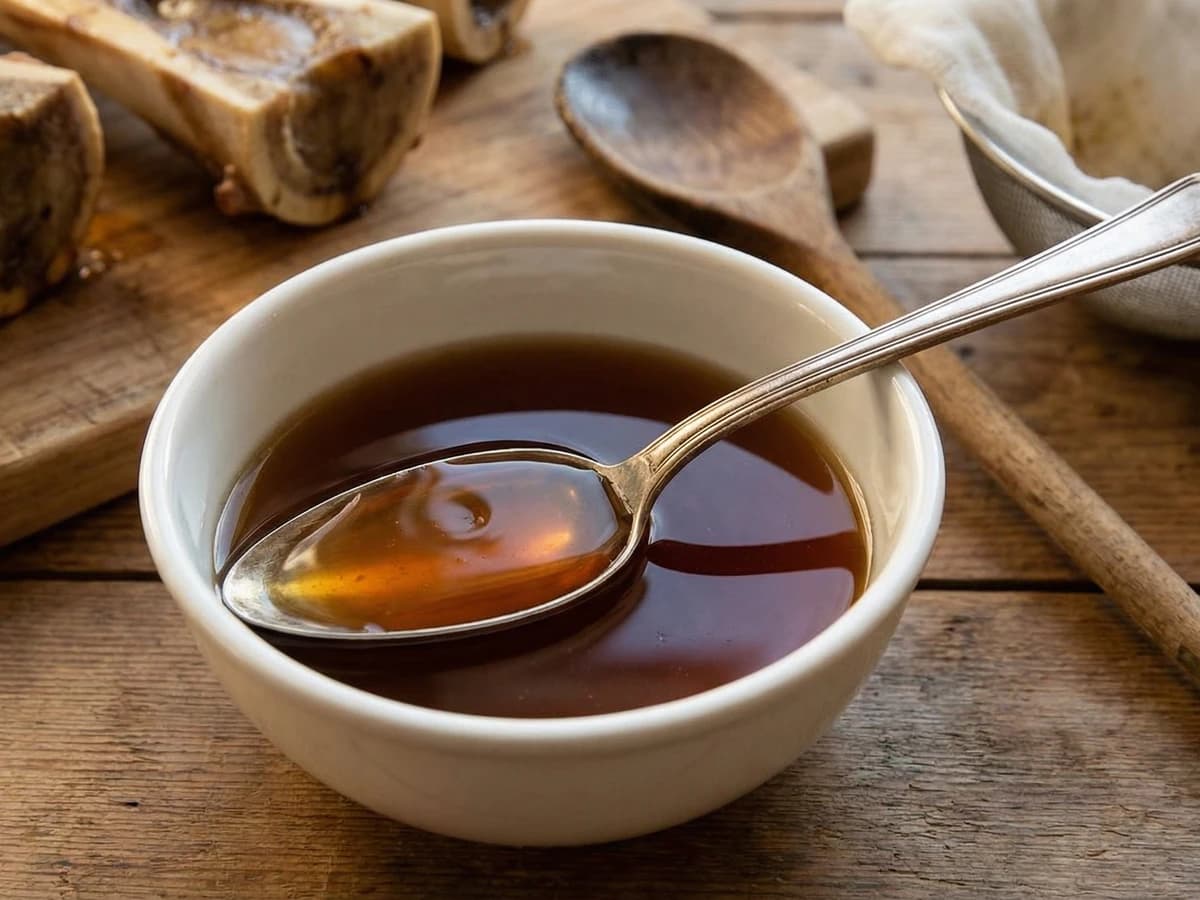
The brown stock that forms the backbone of Italian meat cookery. Hours of roasting and simmering extract every trace of flavor from bone and sinew, creating liquid gold that transforms ordinary sauces into extraordinary ones.