Chef Freja
Aebleflaesk
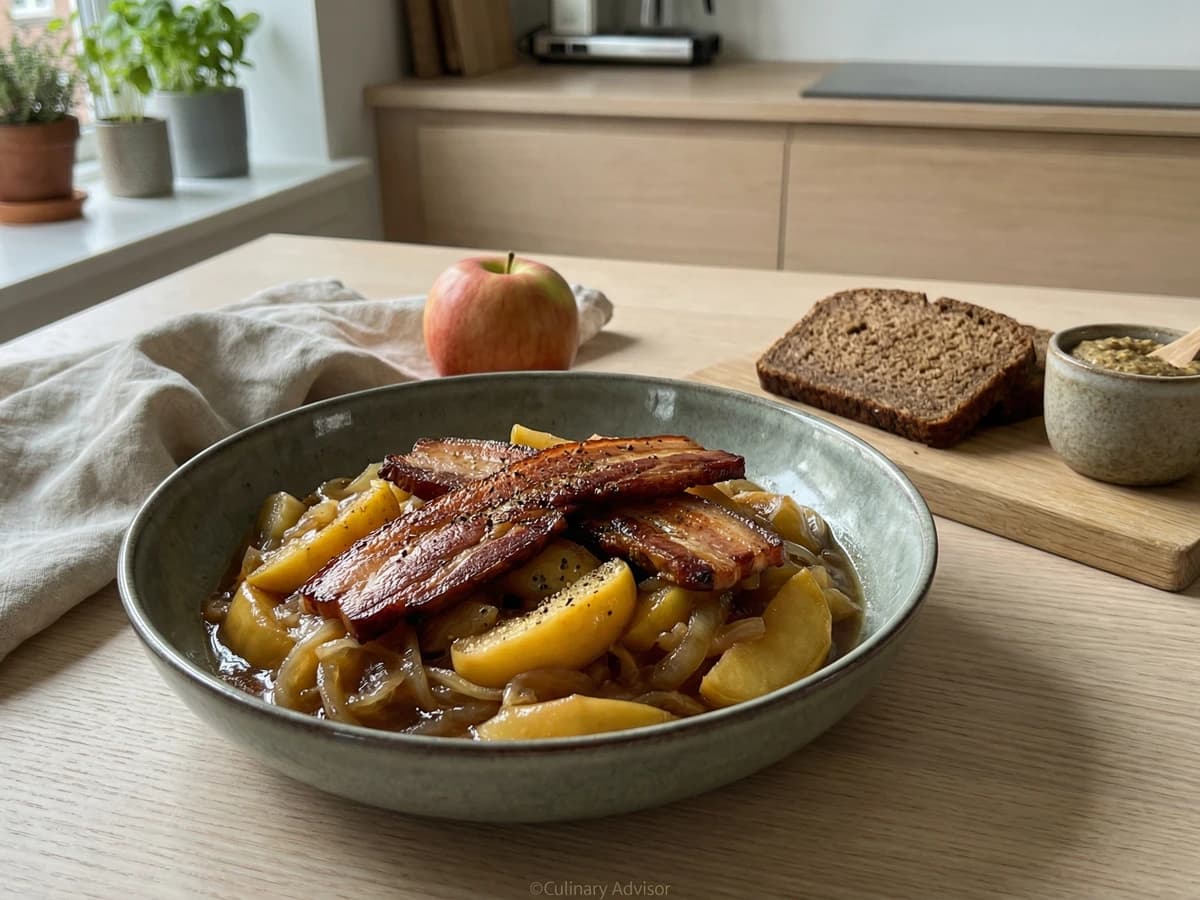
The Fyn autumn supper where thick pork belly renders slowly into its own fat, then meets apples and onions that cook down into a deep amber tangle. Sweet, salt, and the oldest pairing in the Danish larder.
A cooking platform built around craft, culture, and the stories behind what we eat.
Created by Chef Freja
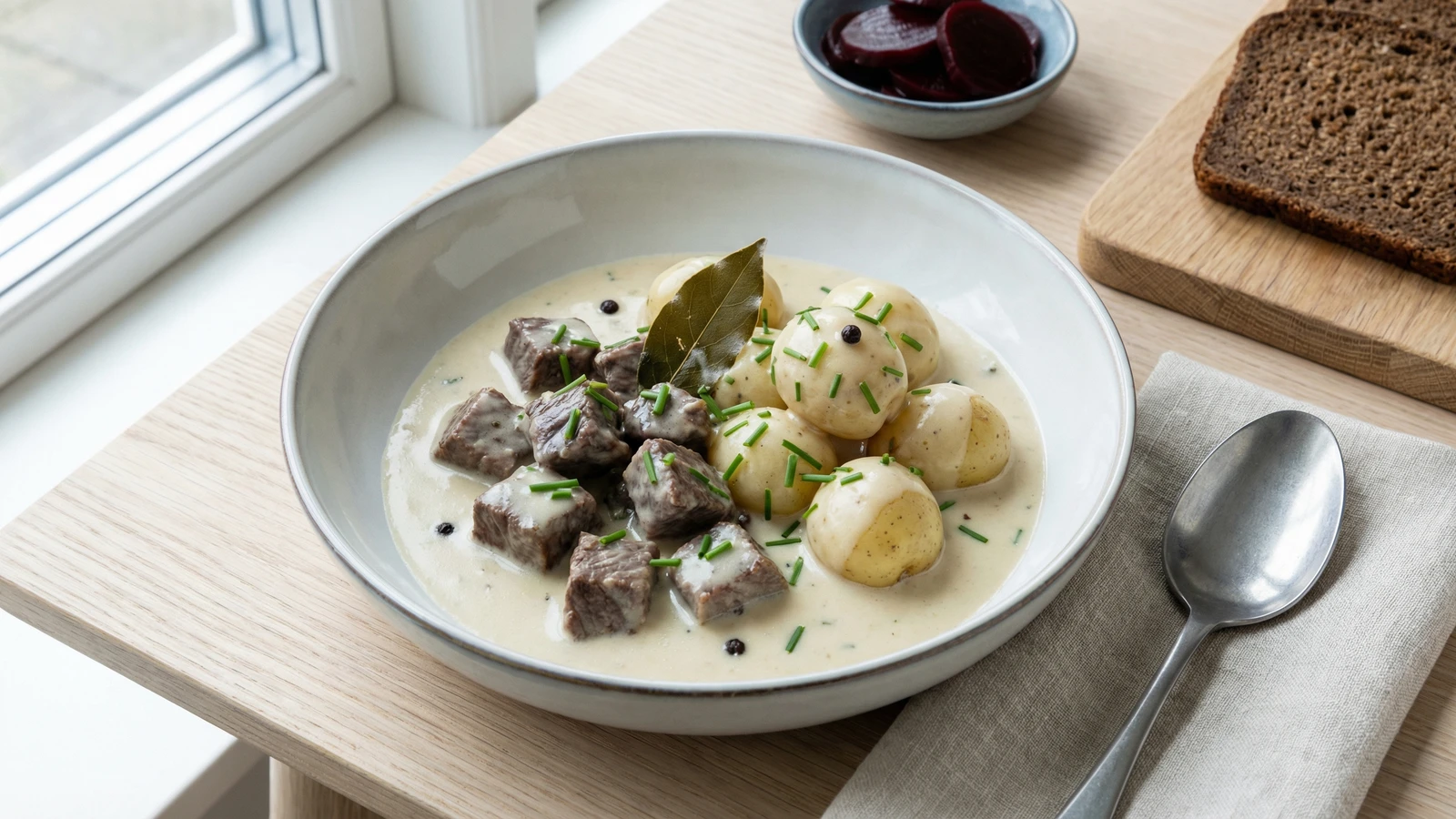
Old-fashioned Danish beef stewed gently in a creamy white sauce with bay leaves and peppercorns. A winter bowl that tastes of Danish grandmothers, boiled potatoes, and pickled beetroot on the side.
February in Denmark is the month that tests you. The light is thin, the wind comes in off the sound, and you start looking for food that answers the weather rather than fighting it. This is when gammeldags oksestuvning comes out of the pot. Old-fashioned creamed beef stew, the dish my grandmother's generation made on ordinary Tuesdays because it was cheap and warming and the kind of thing that made the whole flat smell like dinner.
Gammeldags means old-fashioned, and the word matters. This isn't the dark brown stew that came to Denmark with French influence in the nineteenth century. This is the older dish, the white stuvning, where beef is simmered slowly in water with bay and peppercorns until it's completely tender, and then bathed in a pale, pale sauce made from its own broth, butter, flour, and milk. It is the quieter cousin of the brown stew, and in many Danish households it's the more loved one. It belongs to faellesspisning, the shared meal, the kind of food that draws people to the table without needing to announce itself.
Two things matter most and I want you to watch for them. The first is the skimming at the start. Cold water, slow heat, patient skimming: that's how you get a clear broth, and the clear broth is what gives the sauce its quiet clean taste. The second is the roux. Keep it pale. The moment it turns golden you've made a different dish. You'll know when it's right because the sauce will be the color of fresh cream with the faintest warmth behind it, and the beef will sit in it like it belongs there. Cooked with love, this is the stew that makes a Danish winter feel chosen rather than endured.
The white stuvninger of Danish cooking predate the brown ones by at least a century. Before French cuisine arrived in Copenhagen kitchens in the mid-1800s and brought with it the dark roux, Danish home cooks thickened stews the way country cooks across northern Europe had done for generations: with a pale butter-and-flour roux loosened with milk and broth. Gammeldags oksestuvning survived the French fashion because it belonged to the weekday kitchen rather than the dinner party, and the weekday kitchen is always the slowest to change. It's one of the few dishes where the word gammeldags was added later, as a way of distinguishing the old way from the brown stews that had come to dominate restaurant menus. In most Danish homes it's still simply called oksestuvning, and everyone knows which one you mean.
Quantity
800g
trimmed and cut into 3cm cubes
Quantity
1 medium
peeled and halved
Quantity
2
Quantity
10
Quantity
1 teaspoon, plus more to taste
Quantity
about 1.5 litres
Quantity
60g
Quantity
60g
Quantity
400ml
Quantity
100ml
Quantity
to taste
Quantity
a pinch
Quantity
800g
to serve
Quantity
small bunch
snipped
Quantity
to serve
| Ingredient | Quantity |
|---|---|
| beef chucktrimmed and cut into 3cm cubes | 800g |
| yellow onionpeeled and halved | 1 medium |
| fresh bay leaves | 2 |
| whole black peppercorns | 10 |
| fine sea salt | 1 teaspoon, plus more to taste |
| cold water | about 1.5 litres |
| unsalted butter | 60g |
| plain flour | 60g |
| whole milk | 400ml |
| double cream | 100ml |
| white pepper | to taste |
| freshly grated nutmeg | a pinch |
| small waxy potatoesto serve | 800g |
| chivessnipped | small bunch |
| pickled beetroot (optional) | to serve |
Place the cubed beef in a heavy pot and cover with the cold water. Bring it slowly to a simmer. As the water heats, grey foam will rise to the surface. Skim it off patiently with a spoon for the first five minutes. This is the proteins coagulating, and if you leave them in, your sauce will be cloudy and tasting of metal. Clear broth is the whole point of starting in cold water rather than hot.
Once the broth has been skimmed clear, add the onion halves, bay leaves, peppercorns, and the teaspoon of salt. Partially cover the pot and let it simmer gently for an hour and a half to two hours. The beef is ready when a knife slides through a cube with no resistance at all. Chuck is the right cut here because it has enough connective tissue to melt down into silk over that long quiet cook. Leaner cuts stay dry no matter what you do.
Lift the beef out with a slotted spoon and set it aside in a warm bowl. Strain the broth through a fine sieve into a jug and discard the onion, bay, and peppercorns. You should have about a litre of clear, pale broth. This is the foundation of the sauce, so taste it. It should be savory and gently seasoned. If it tastes flat, it needs salt. If it tastes thin, you can reduce it by a third over high heat before you use it.
Wipe the pot clean and return it to medium heat. Melt the butter and, once it is foaming but not coloring, sprinkle in the flour all at once. Whisk it into a pale paste and let it cook for two full minutes, whisking constantly. This is the opboldning, the Danish word for thickening, and the cooking time matters. Two minutes takes the raw floury taste away without browning the roux. For gammeldags oksestuvning you want the roux to stay pale gold, almost the color of fresh butter. A dark roux belongs to brun stuvning, the brown stew, which is a different dish entirely.
Pour in the reserved beef broth in a slow, steady stream while whisking constantly. The sauce will thicken as you go. Keep whisking until every lump has dissolved. Add the milk in the same patient way, then the cream last. Let the sauce come to a gentle simmer and cook for ten minutes, stirring often. You'll know it's right when it coats the back of a wooden spoon and holds a clean line when you draw a finger through it.
Season the sauce with white pepper, the pinch of nutmeg, and more salt if it needs it. White pepper is traditional here because black specks would show in the pale sauce and Danish grandmothers cared about how the bowl looked. Nutmeg is the quiet note that makes the whole thing taste finished. Return the beef to the sauce and warm it through for five minutes. Do not let it boil hard now. You're just bringing the meat back up to temperature and letting it take on the sauce.
While the beef finishes, boil the small waxy potatoes in well-salted water until a knife passes through them easily, about fifteen minutes. Drain them and leave them whole. The potatoes are the plate here. They soak up the sauce and turn each bite into the thing you actually remember.
Spoon the potatoes into warm deep bowls and ladle the creamed beef over the top. Scatter with snipped chives and bring the pickled beetroot to the table in a small dish alongside. The beetroot is not decoration. It's the sharp counterpoint the cream needs, and without it the dish feels heavier than it should. Eat slowly. Tak for mad.
1 serving (about 530g)
Culinary guides, cultural storytelling, and the editorial depth that makes cooking meaningful.
Discover Culinary ExplorerChef Freja
The Fyn autumn supper where thick pork belly renders slowly into its own fat, then meets apples and onions that cook down into a deep amber tangle. Sweet, salt, and the oldest pairing in the Danish larder.

Chef Freja
Warm Danish apple soup for the first cool evenings of autumn. Tart apples simmered with cinnamon and lemon peel, thickened to a soft gloss, and served with cold cream and buttery toasted oats.

Chef Freja
Danish white asparagus velouté with tiny veal meatballs, flour dumplings, and bright green tips scattered on the surface. The Easter soup of Copenhagen, built from five small pans of spring.
Chef Freja
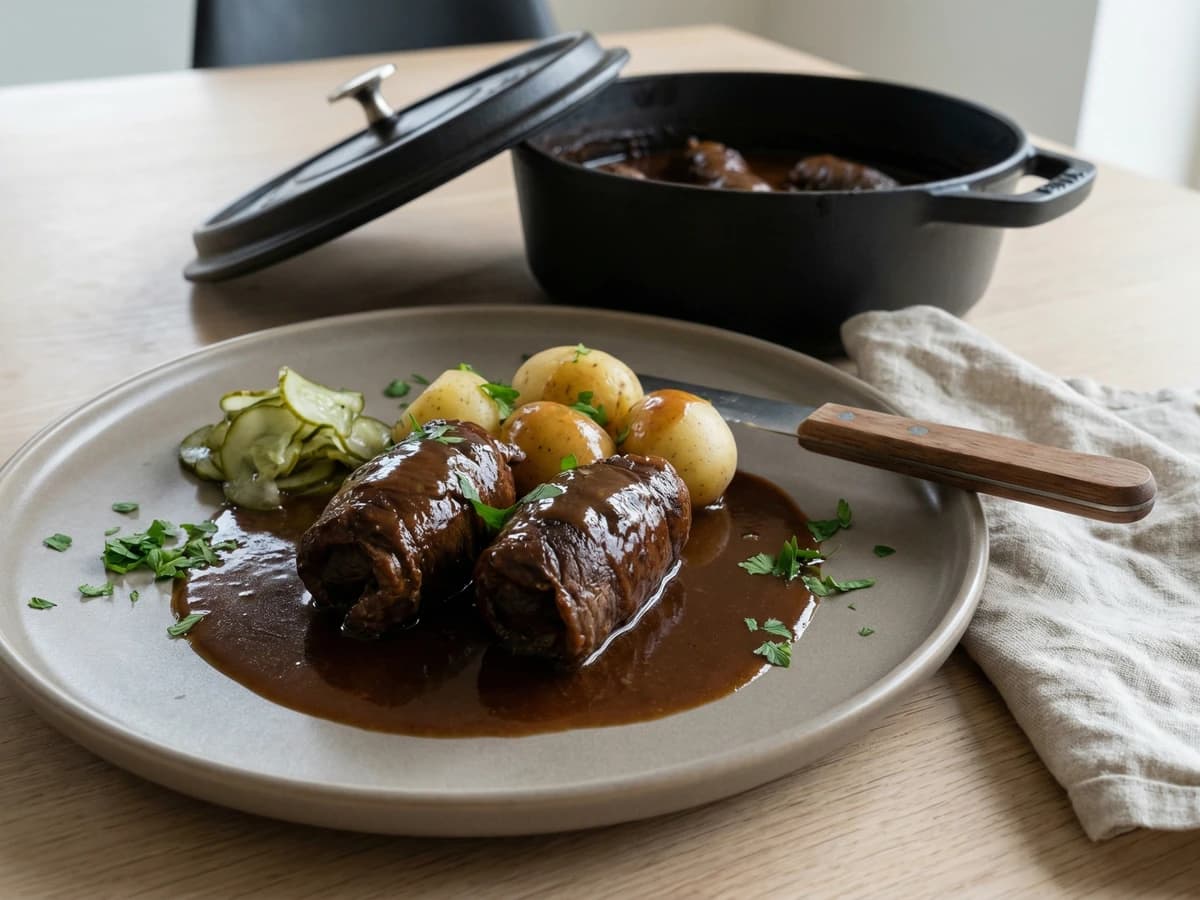
Thin beef slices rolled around bacon and onion, tied with string, and braised slowly in a dark glossy gravy finished with cream and redcurrant jelly. Danish Sunday dinner at its most comforting.