
Chef Lupita
Buñuelos Bajío con Miel de Piloncillo
Guanajuato's holiday buñuelos, thin wheat dough rested with tomatillo husks and canela milk, fried crisp and finished with a dark miel de piloncillo.
A cooking platform built around craft, culture, and the stories behind what we eat.
Created by
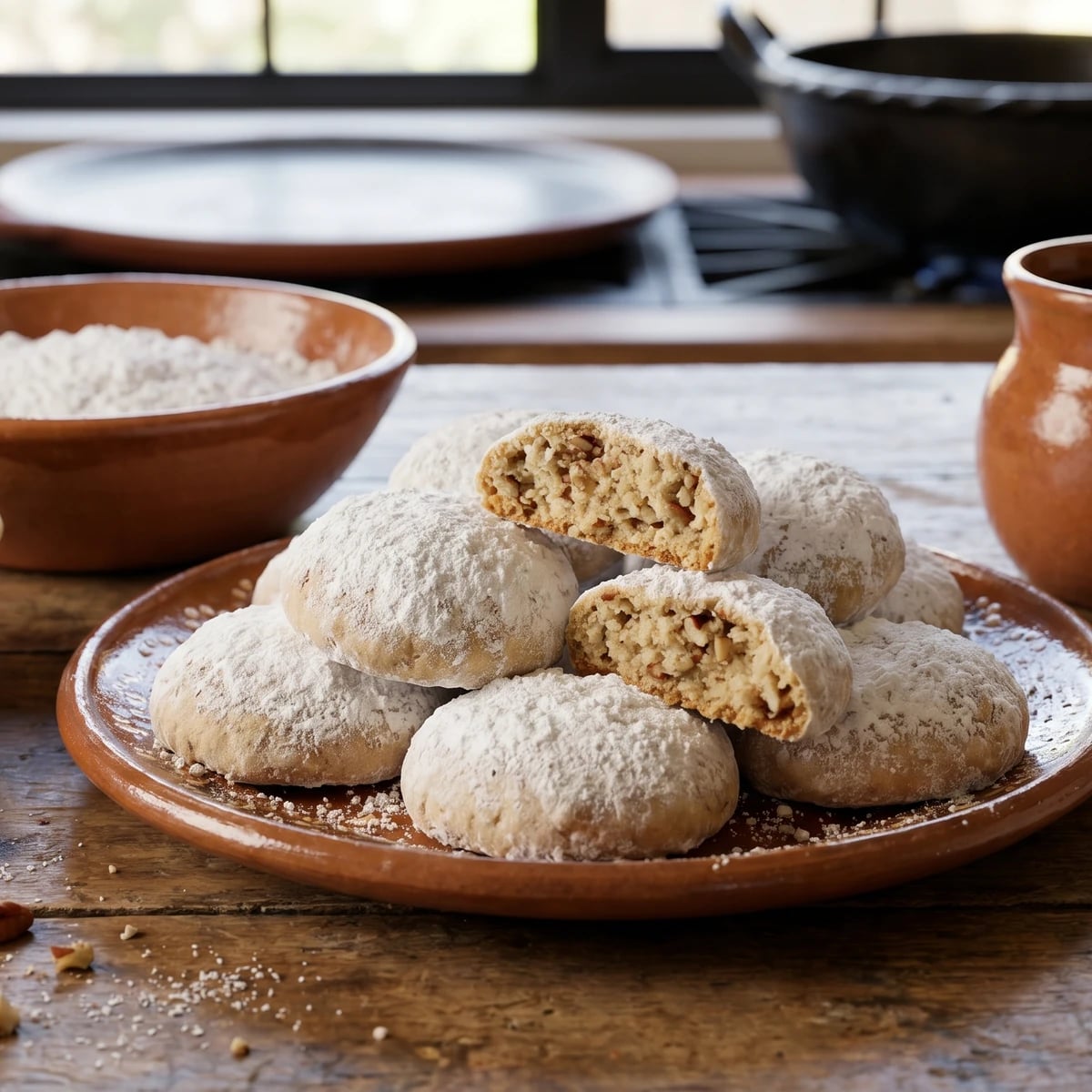
Querétaro's Sierra Gorda galleta de nuez, built on toasted pecans, butter, and patient hands, rolled warm through powdered sugar until each fragile ball melts into coffee.
Querétaro, the Sierra Gorda, especially Pinal de Amoles and Jalpan de Serra. That is where these galletas live: mountain roads, cool mornings, patron-saint tables, and coffee poured strong enough to wake the house.
The defining ingredient is nuez pecana, toasted until the oil comes forward, then ground fine enough to disappear into the dough but not so fine that it turns greasy. This is a short dough, flour, butter, powdered sugar, pecan, and patience. No chile. No decoration. Not all Mexican food needs to shout. Some of it is quiet enough to crumble in your hand and still tell you exactly where it comes from.
I learned this style from a señora near Jalpan who shaped the dough smaller than I thought necessary. She was right. A large galleta breaks ugly. A small one bakes evenly, rolls cleanly in azúcar glass, and melts before you have time to talk too much. My mother used to say that the smallest sweets show the cook's discipline. She was right too.
Use butter here. Manteca de cerdo has its own place in Mexican baking, but this Sierra Gorda cookie wants the clean richness of mantequilla and the oil of the toasted pecan. If your pecans smell stale, do not bake. Pregúntale a las señoras del mercado. If the nut is tired, the cookie is tired.
Galletas de nuez belong to Mexico's colonial wheat-and-sugar baking tradition, adapted in home kitchens across the Bajío and the Sierra Gorda after Spanish wheat, butter, and refined sugar entered central Mexico in the 16th century. The Sierra Gorda missions of Querétaro, including Jalpan, Landa, Tancoyol, Tilaco, and Concá, were built in the 18th century along routes that moved flour, sugar, nuts, and household techniques through the mountains. The pecan, Carya illinoinensis, is native to northern Mexico and the south-central United States, but Mexican markets carried it widely by the 19th and 20th centuries, making it a practical holiday nut far beyond the northern states.
Quantity
1 1/4 cups
toasted and cooled
Quantity
2 cups
spooned and leveled
Quantity
1/4 teaspoon
Quantity
1/4 teaspoon
Quantity
1 cup
cool room temperature
Quantity
1/2 cup
sifted, for the dough
Quantity
1 teaspoon
Quantity
1 1/2 cups
sifted, for rolling
| Ingredient | Quantity |
|---|---|
| nuez pecana, pecanstoasted and cooled | 1 1/4 cups |
| all-purpose flourspooned and leveled | 2 cups |
| fine sea salt | 1/4 teaspoon |
| ground Mexican canela | 1/4 teaspoon |
| unsalted buttercool room temperature | 1 cup |
| powdered sugarsifted, for the dough | 1/2 cup |
| Mexican vanilla extract | 1 teaspoon |
| powdered sugarsifted, for rolling | 1 1/2 cups |
Heat a dry comal or heavy skillet over medium-low heat. Add the nuez pecana and toast for 6 to 8 minutes, moving the nuts often, until they smell deep and sweet and the cut sides turn golden. Do not walk away. Burned pecan turns bitter and that bitterness will sit in the whole cookie. Let the pecans cool completely before grinding.
Put the cooled pecans in a food processor with 2 tablespoons of the measured flour. Pulse until the nuts are fine but not oily. You want sandy crumbs with a few tiny pieces, not pecan paste. The flour keeps the oil from running out too fast. Before food processors, women did this with patience, a knife, and a board. The point is the same: small, even pieces so the cookie breaks clean under your teeth.
Whisk the remaining flour with the salt, canela, and ground pecans. The canela should be quiet, not bossy. These are galletas de nuez, not cinnamon cookies. Cada estado, su propia cocina, and Querétaro's Sierra Gorda version keeps the nut in front.
Beat the butter and the 1/2 cup powdered sugar until smooth and pale, about 2 minutes by mixer or 4 minutes by hand with a wooden spoon. Add the Mexican vanilla and beat just until it disappears into the butter. Use butter. Not oil, not margarine. This cookie needs the milk fat and the clean break of short dough. No me vengas con atajos.
Add the flour and pecan mixture to the butter in two additions. Mix on low speed or with a wooden spoon until the dough looks crumbly, then keep pressing gently until it gathers. Do not knead it like bread. Squeeze a spoonful in your palm; if it holds together without smearing grease, it is ready. If the kitchen is cold, let the bowl sit for 5 minutes so the butter can soften enough to bind the flour.
Cover the dough and chill it for 30 minutes. This rest matters. The flour hydrates, the butter firms, and the cookies keep their round shape in the oven. A rushed dough spreads into little puddles and then people blame the recipe. The recipe is fine. The cook was impatient.
Heat the oven to 350F. Line two sheet pans with parchment. Roll the dough into small balls, about 1 tablespoon or 18 grams each, and set them 1 inch apart. Bake for 15 to 18 minutes, rotating the pans once, until the bottoms are pale gold and the tops stay light. They should not brown like pan dulce. These galletas are fragile, pale, and rich.
Let the cookies rest on the pan for 5 minutes. While they are still warm but not falling apart, roll them gently in the sifted powdered sugar. Set them on a rack and let them cool completely. Roll them a second time in powdered sugar so the coating is thick and white. That double roll is not decoration. The first coat melts into the butter. The second coat gives the dry, snowy finish that belongs to the cookie.
Let the cookies sit at least 1 hour before serving. The texture settles as they cool, and the pecan flavor opens. Serve them piled on a clay plate with coffee or atole, not lined up like museum pieces. La cocina no es decoración, es trabajo. Recetas probadas y garantizadas.
1 serving (about 26g)
Culinary guides, cultural storytelling, and the editorial depth that makes cooking meaningful.
Discover Culinary Explorer
Chef Lupita
Guanajuato's holiday buñuelos, thin wheat dough rested with tomatillo husks and canela milk, fried crisp and finished with a dark miel de piloncillo.

Chef Lupita
Santa María del Río's brittle glazed campechanas, built from wheat dough, manteca de cerdo, patient folds, and a sugar crust that cracks under your teeth.

Chef Lupita
Guanajuato and Aguascalientes feria churros, piped fresh into hot manteca, crisp at the ridges, tender inside, and finished with piloncillo and Mexican canela.

Chef Lupita
Guanajuato's Bajío pastry of lard-flaked wheat dough folded around thick Celaya cajeta, baked until golden, then rolled in canela sugar for the merienda table beside café de olla.