Chef Jeong-sun
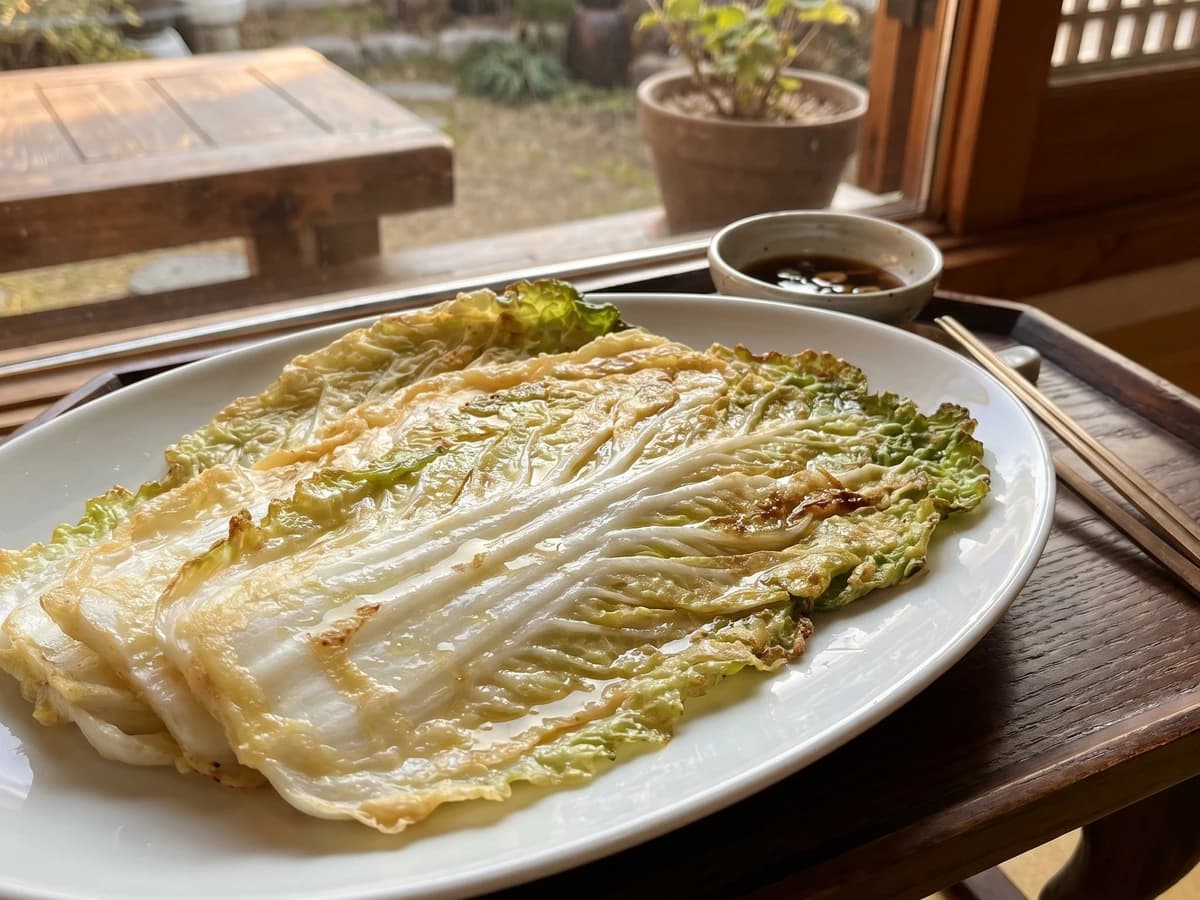
Baechu-jeon (배추전, Napa Cabbage Pancake)
A Gyeongsang home pancake made from one whole napa cabbage leaf at a time, flattened at the rib, brushed in thin salted batter, and fried until sweet, tender, and quietly crisp at the edges.
A cooking platform built around craft, culture, and the stories behind what we eat.
Created by
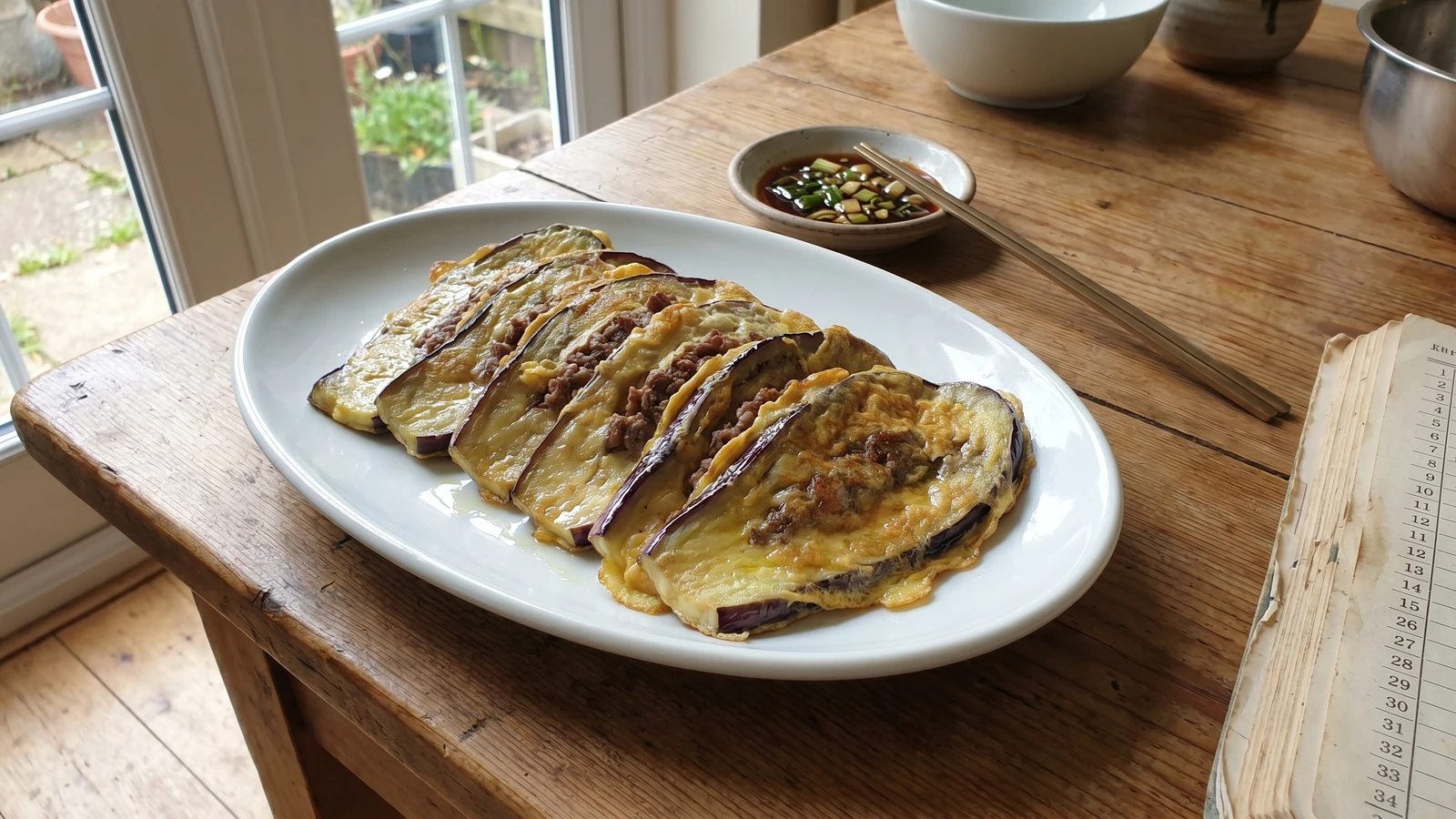
Late-summer eggplant slit into a fan, salted firm, filled with restrained soy-sesame beef, then dipped in flour and egg for the Chuseok jeon platter where quiet dishes often go first.
At the late-summer market, choose eggplants that feel firm and light, with tight purple skin and pale flesh inside. Gaji-jeon belongs to that small season and to the holiday frying tray, especially Chuseok, when families make many kinds of jeon (pan-fried battered foods) and stack them between paper towels until the table is ready. It is not the loud dish. It disappears anyway.
The dish lives by the knife. Slit the eggplant into a fan but keep the hinge intact, salt it long enough to firm the flesh, then fill each pocket thinly. Notebook 41 says 18 to 20 grams of beef filling for one 2-inch piece of eggplant. More looks generous and cooks badly; the egg browns before the meat is done.
My teacher would tap the stuffed piece flat on the tray before it ever touched flour. 눈동냥, 귀동냥, borrowing with the eyes and ears. I watched first, then learned why: a flat filling cooks evenly, a dry surface holds the egg coat, and moderate heat turns the eggplant soft without turning the coating dark. Tonight this asks for patient hands, not clever hands. That is a fair bargain.
Jeon (pan-fried foods coated in flour and egg) has been part of Korean holiday and ancestral-rite tables since the Joseon period; the late nineteenth-century cookbook Siuijeonseo records many jeon made from fish, meat, and vegetables. Stuffed vegetable jeon, including peppers, perilla leaves, and eggplant, follows the same home-table technique: modest ingredients filled with seasoned minced meat and fried for Seollal, Chuseok, and jesa. Eggplant is a summer-to-early-autumn vegetable in Korea, so gaji-jeon is especially at home when the last good eggplants meet the Chuseok frying tray.
Quantity
4, about 450g total
Quantity
1 teaspoon, divided
Quantity
220g
finely minced if coarse
Quantity
2 tablespoons
finely minced
Quantity
1 tablespoon
finely grated
Quantity
2 teaspoons
Quantity
1 teaspoon
Quantity
1 teaspoon
minced
Quantity
1 teaspoon
lightly crushed
Quantity
1/2 teaspoon
Quantity
1 teaspoon
Quantity
1/8 teaspoon
Quantity
1/2 cup
for dredging
Quantity
3
Quantity
3 to 4 tablespoons, plus more as needed
Quantity
2 tablespoons
for dipping sauce
Quantity
1 tablespoon
for dipping sauce
Quantity
1 tablespoon
for dipping sauce
Quantity
1 teaspoon
finely chopped, for dipping sauce
Quantity
1/2 teaspoon
for dipping sauce
Quantity
1/4 teaspoon
for dipping sauce
| Ingredient | Quantity |
|---|---|
| slender Korean eggplants or Japanese eggplants | 4, about 450g total |
| fine sea salt | 1 teaspoon, divided |
| ground beef, preferably sirloin or chuckfinely minced if coarse | 220g |
| scallionfinely minced | 2 tablespoons |
| onionfinely grated | 1 tablespoon |
| soy sauce | 2 teaspoons |
| toasted sesame oil | 1 teaspoon |
| garlicminced | 1 teaspoon |
| toasted sesame seedslightly crushed | 1 teaspoon |
| sugar | 1/2 teaspoon |
| potato starch or all-purpose flour | 1 teaspoon |
| freshly ground black pepper | 1/8 teaspoon |
| all-purpose flourfor dredging | 1/2 cup |
| large eggs | 3 |
| neutral oil, such as grapeseed or canola | 3 to 4 tablespoons, plus more as needed |
| soy saucefor dipping sauce | 2 tablespoons |
| rice vinegarfor dipping sauce | 1 tablespoon |
| waterfor dipping sauce | 1 tablespoon |
| scallionfinely chopped, for dipping sauce | 1 teaspoon |
| toasted sesame seedsfor dipping sauce | 1/2 teaspoon |
| gochugaru (optional)for dipping sauce | 1/4 teaspoon |
Trim the eggplants and cut each one crosswise into 2-inch pieces. Lay one piece on the board and make 2 lengthwise slits through the flesh, stopping about 1/4 inch before the far end so the piece opens into 3 attached leaves like a small fan. Keep the hinge strong. If you cut through, it becomes loose slices and the filling will fall out.
Sprinkle the eggplant pieces inside the slits and over the cut surfaces with 3/4 teaspoon of the salt. Set them on a tray for 20 minutes, then blot very dry with a clean towel. This salting is not for bitterness. It firms the eggplant and pulls away surface water, so the flour and egg can cling instead of sliding off.
In a bowl, combine the beef, scallion, grated onion, soy sauce, sesame oil, garlic, crushed sesame seeds, sugar, potato starch, black pepper, and the remaining 1/4 teaspoon salt. Mix in one direction with your hand or chopsticks for about 1 minute, until the filling turns tacky and holds together. That stickiness is what keeps the beef in the fan while it fries.
Stir together the dipping sauce: soy sauce, rice vinegar, water, chopped scallion, sesame seeds, and gochugaru if using. Keep it light. The jeon is already seasoned, and the sauce should sharpen one bite, not soak the whole plate.
Open each eggplant fan gently and press 18 to 20 grams, about 1 level tablespoon, of beef filling into the slits. Flatten the exposed filling with your fingers so it sits even with the eggplant, not mounded. A thin filling cooks through at the same pace as the eggplant softens.
Put the 1/2 cup flour in a shallow dish. Dredge each stuffed eggplant piece all over, including the filled side, then tap off the extra. Flour should leave a dry veil, not a paste. Too much flour makes the egg coating thick and dull.
Beat the eggs in a shallow bowl until no streaks of white remain. Dip each floured piece into the egg, turning it gently so the coating reaches the sides and the filled face. Let the excess drip back into the bowl. Jeon should wear egg like a thin jacket, not a blanket.
Heat 2 tablespoons oil in a wide nonstick or well-seasoned skillet over medium-low heat. Lay the pieces filling-side down first and cook 3 to 4 minutes, pressing lightly for the first 10 seconds so the filling sets flat. Turn and cook the other sides 2 to 3 minutes each, adding a little oil as needed. The coating should be pale gold, the eggplant soft when pressed with chopsticks, and the beef fully cooked with no pink at the center, 160°F or 71°C if you check with a thermometer.
Move the jeon to a rack or a paper towel-lined tray and let it settle 5 minutes. Serve warm or at room temperature with the dipping sauce. On a holiday table, gaji-jeon can wait better than most fried foods because it is meant to be tender, not crisp.
1 serving (about 185g)
Culinary guides, cultural storytelling, and the editorial depth that makes cooking meaningful.
Discover Culinary ExplorerChef Jeong-sun
A Gyeongsang home pancake made from one whole napa cabbage leaf at a time, flattened at the rib, brushed in thin salted batter, and fried until sweet, tender, and quietly crisp at the edges.

Chef Jeong-sun
A holiday jeon of fresh shiitake or oyster mushrooms, salted lightly, dusted thinly, and carried through egg in a quiet pan until the mushroom stays earthy and the coating stays tender.

Chef Jeong-sun
Soaked mung beans ground coarse, folded with pork, bracken, sprouts, and kimchi, then fried thick until the edges crisp and the center stays tender enough for a shared table.

Chef Jeong-sun
A summer garlic chive pancake fried thin, crisp at the edges and chewy in the center, with just enough batter to hold the green pile together and a sharp soy-vinegar dip.