
Chef Lupita
Arroz a la Oaxaqueña
Oaxaca's red rice, stained with tomato and fried in lard, steamed with carrots, ejotes, black beans, and epazote. The side that anchors a Oaxacan family meal and earns its place beside the main.
A cooking platform built around craft, culture, and the stories behind what we eat.

Created by
Yucatán's refried black beans, slow-cooked with whole epazote and habanero, then fried hard in pork lard with white onion until they pull away from the pan in a dark, glossy sheet.
These are Yucatecan refritos. Black beans, not pinto. Manteca de cerdo, not vegetable oil. Epazote, not bay leaf. If any of those words feel like a suggestion, this is not the right recipe for you yet.
The Peninsula, Yucatán, Campeche, and Quintana Roo, cooks frijol negro almost exclusively. The black bean is what grew there, what the Maya cultivated for centuries, and what the Peninsula kitchen still puts on the table at almost every meal. The northern half of Mexico cooks pintos and bayos. The Peninsula does not. If you are making refritos with pinto beans, you are making frijoles refritos del norte, not yucatecos. Both are real. They are not the same dish.
The other thing the Peninsula does, and this confuses people who learned Mexican beans somewhere else, is keep these refritos with texture. They are not silky. Silky is frijol colado, the strained black bean puree that anchors panuchos and huevos motuleños. Frijol colado is its own dish, born of the same beans but pushed through a sieve until it looks like dark cream. Refritos are the texture before the sieve: mashed but still rough, glossy with lard, holding the shape of the spoon for a second before they slump.
My mother was from Jalisco and she fried beans in lard. But the first time I ate true Yucatecan refritos was in a tiny fonda in Valladolid in 2009, on a plate next to a panucho, with a smear of habanero salsa on the side. The woman who served me, doña Esperanza, told me her secret without my asking: 'Mucha manteca y la rama entera de epazote.' Plenty of lard and the whole epazote branch. I wrote it in the margin of my notebook. Recetas probadas y garantizadas.
The black bean (Phaseolus vulgaris in its black-seeded form) was domesticated in Mesoamerica more than 7,000 years ago, and on the Yucatán Peninsula it became one of the three pillars of the Maya milpa system alongside corn and squash. The technique of frying cooked beans in rendered pork fat, however, is a colonial-era development; pork itself arrived with the Spanish in the 16th century and slowly displaced earlier rendering practices that had used turkey, peccary, or vegetal fats. The Yucatecan habit of finishing refritos with grated queso de bola (Edam) is a 19th-century inheritance from the Peninsula's deep trade ties with Holland and Belgium, when the port of Sisal moved hard wax-rind cheeses inland and Mérida's cooks adopted them as a regional signature.
Quantity
1 pound
picked over and rinsed
Quantity
1 medium
half left whole, half finely chopped
Quantity
4
peeled and lightly smashed
Quantity
2 large sprigs, plus 1 sprig for the fry
Quantity
1 tablespoon, plus more to taste
Quantity
1/2 cup
Quantity
1
left whole and uncut
Quantity
for serving
Quantity
for serving
| Ingredient | Quantity |
|---|---|
| dried black beans (frijol negro)picked over and rinsed | 1 pound |
| white onionhalf left whole, half finely chopped | 1 medium |
| garlic clovespeeled and lightly smashed | 4 |
| fresh epazote | 2 large sprigs, plus 1 sprig for the fry |
| kosher salt | 1 tablespoon, plus more to taste |
| pork lard (manteca de cerdo) | 1/2 cup |
| fresh chile habanero (optional)left whole and uncut | 1 |
| crumbled queso fresco or grated queso de bola (optional) | for serving |
| totopos or hand-pressed corn tortillas (optional) | for serving |
Spread the dried black beans on a sheet pan and pick through them. Pull out any small stones, broken beans, or shriveled ones. Rinse under cold water. You can soak them overnight in cold water or skip the soak. Yucatecan cooks I know do both. Soaking shortens the cook by about an hour. Not soaking gives you a slightly firmer bean that holds up better to the fry. Choose your trade.
Place the beans in a heavy pot or clay olla and cover with cold water by three inches. Add the whole half onion, the smashed garlic, the two large sprigs of epazote, and the whole habanero if you are using it. Do not cut the habanero. You want its aroma in the broth, not its heat in your mouth. Bring to a gentle simmer over medium heat. Lower the heat until the surface barely moves. Cover partially and cook for 1 1/2 to 2 hours, until the beans are completely tender and crush easily between two fingers. Add salt only in the last 20 minutes, never at the start. Salt at the start toughens the skin and the beans never soften the way they should.
Fish out the spent onion half, the garlic cloves, the cooked epazote sprigs, and the habanero. Discard them. Ladle out and reserve at least 2 cups of the dark, almost-black cooking liquid. This is the caldo de frijol and it is the seasoning of the dish. Drain the beans, keeping that reserved liquid close. Do not throw the caldo away. That is the broth that will bring the refritos back to life when they tighten in the pan.
In a wide heavy skillet, ideally a 12-inch cast iron pan or a clay cazuela, melt the 1/2 cup of lard over medium heat until it shimmers. Add the finely chopped white onion and a small pinch of salt. Fry slowly for 8 to 10 minutes, stirring often, until the onion is soft, sweet, and golden at the edges. This is the base. Do not rush it. La manteca es el sabor.
Add the drained beans to the lard and onion. Tear the remaining sprig of epazote and drop it in. Stir to coat every bean in the fat. The smell will change. The kitchen will smell like a Mérida kitchen at lunchtime, sharp green epazote, sweet onion, and the meaty depth of the lard. Pour in about 1/2 cup of the reserved bean broth and stir.
Lower the heat to medium-low. Mash the beans directly in the pan with a wooden bean masher or the back of a heavy spoon. Yucatecan refritos are not silky. That is frijol colado, which is the strained Peninsula puree, a different dish entirely. These should still have texture. Mash until most of the beans are broken but a few stay whole. Now begin the real work. Cook, stirring constantly, adding splashes of the reserved bean broth whenever the beans threaten to go dry. You want them to bubble and spit and slowly tighten over 15 to 20 minutes. They will go from loose and wet to dense and glossy.
The beans are ready when they pull away from the bottom of the pan in one dark, almost-black sheet as you stir. The lard will glisten on the surface. The color will be deep and uniform. Drag a wooden spoon across the bottom; the line should hold for a full second before the beans slump back. That is the texture. Taste for salt. Adjust now, not at the table. Remove the spent epazote sprig and discard it. Así se hace y punto.
Spoon onto a warm plate or platter. Yucatecan kitchens serve refritos as a thick mound, sometimes shaped into a fat oval with a spoon. Top with crumbled queso fresco or, more Yucateco still, grated queso de bola, the hard Edam-style cheese that came to the Peninsula through 19th-century Dutch trade and stayed. Serve with hot corn tortillas or totopos. Eat them with panuchos, with huevos motuleños, with cochinita pibil, or simply with a spoon. Saber cocinar es saber vivir.
1 serving (about 230g)
Culinary guides, cultural storytelling, and the editorial depth that makes cooking meaningful.
Discover Culinary ExplorerChef Lupita
Oaxaca's red rice, stained with tomato and fried in lard, steamed with carrots, ejotes, black beans, and epazote. The side that anchors a Oaxacan family meal and earns its place beside the main.
Chef Lupita
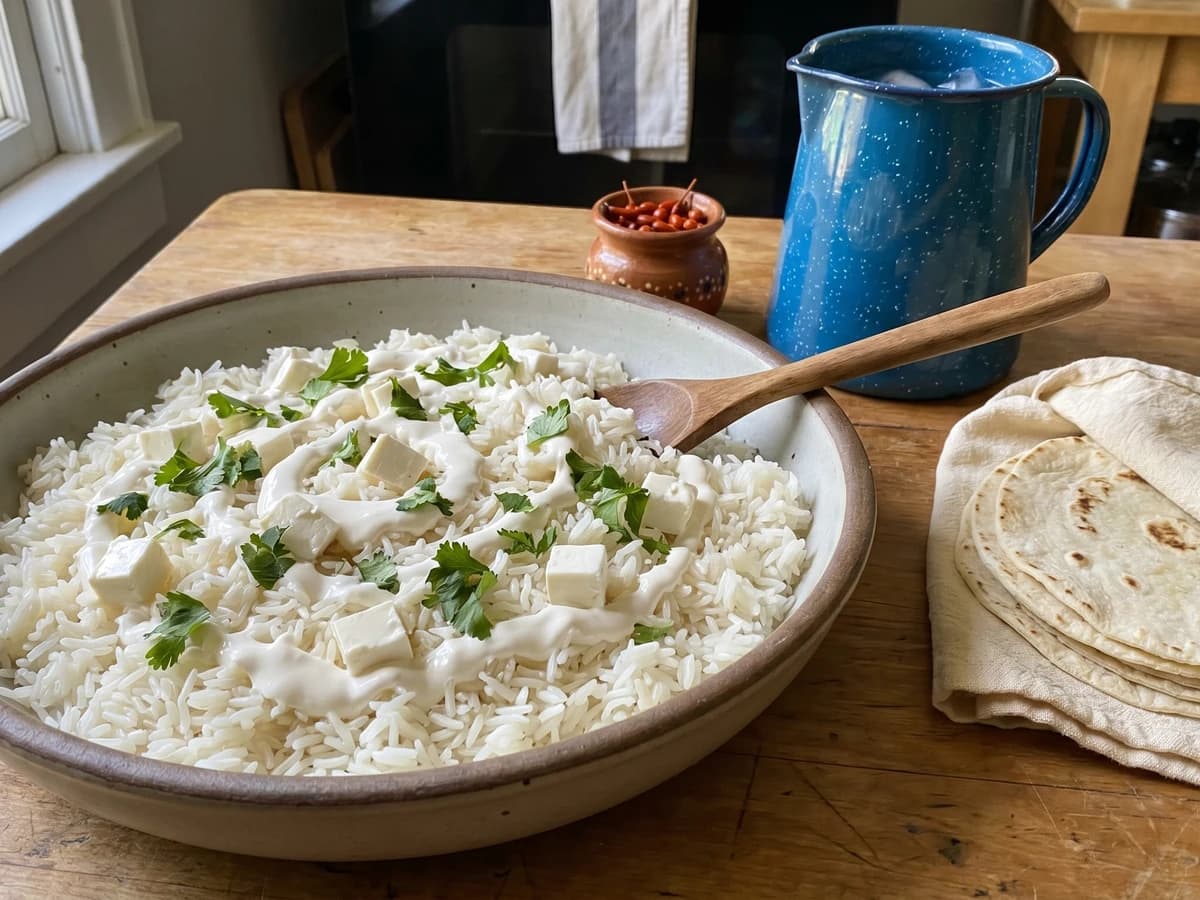
Sinaloa's home-cook white rice topped with cold cubes of cream cheese that soften into the warm grain, finished with crema and a sprinkle of chiltepin at the table. The trick that makes a side dish feel like a small luxury.
Chef Lupita
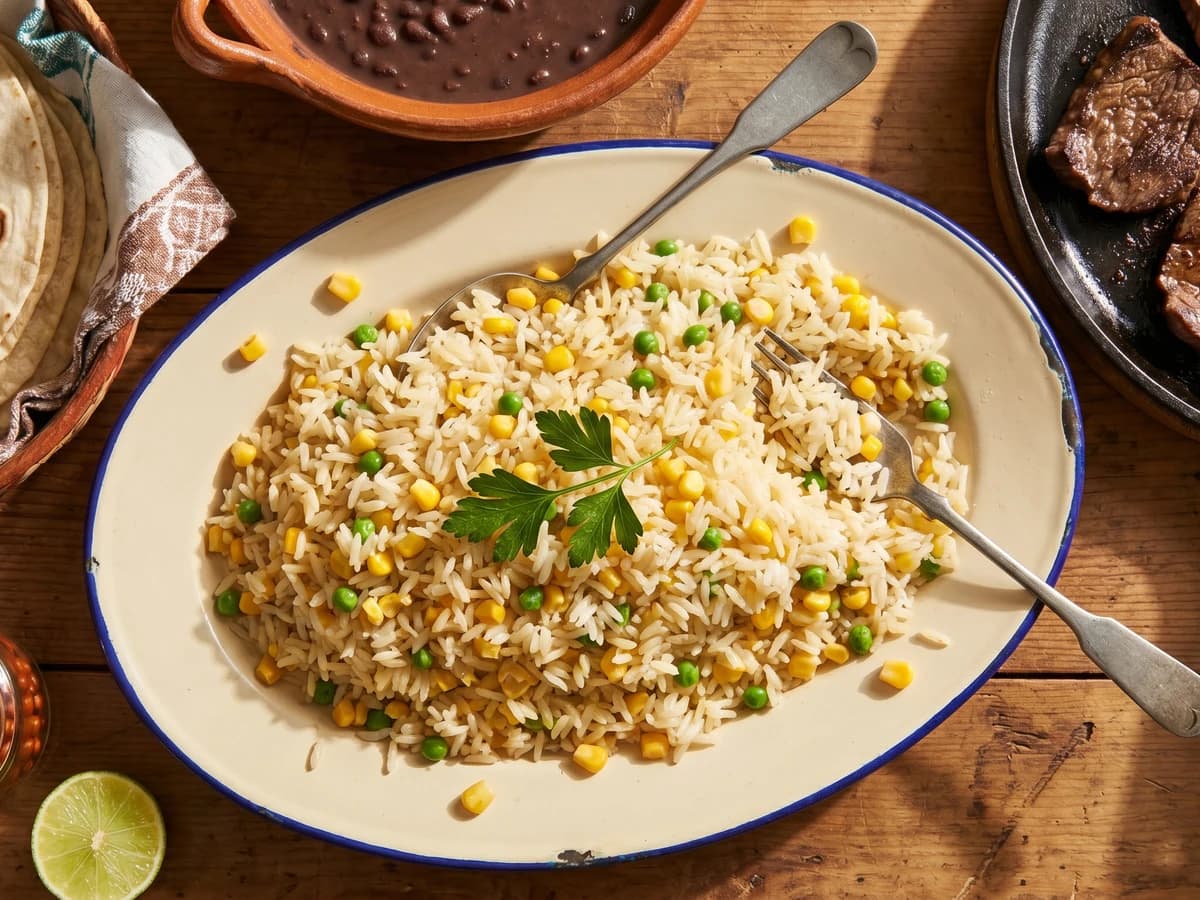
Sonora's white rice, toasted in butter and steamed with sweet corn and tender peas. The clean, quiet partner to a plate of carne asada, not the red rice of central Mexico.

Chef Lupita
Yucatán's white rice with sweet corn kernels, toasted in lard with garlic and onion. The quiet base that holds up against the peninsula's bold achiote-stained stews.