Culinary Explorer

A cooking platform built around craft, culture, and the stories behind what we eat.
Discover Culinary Explorer
Frijoles Puercos Sinaloenses

Frijoles Puercos Sinaloenses

Created by

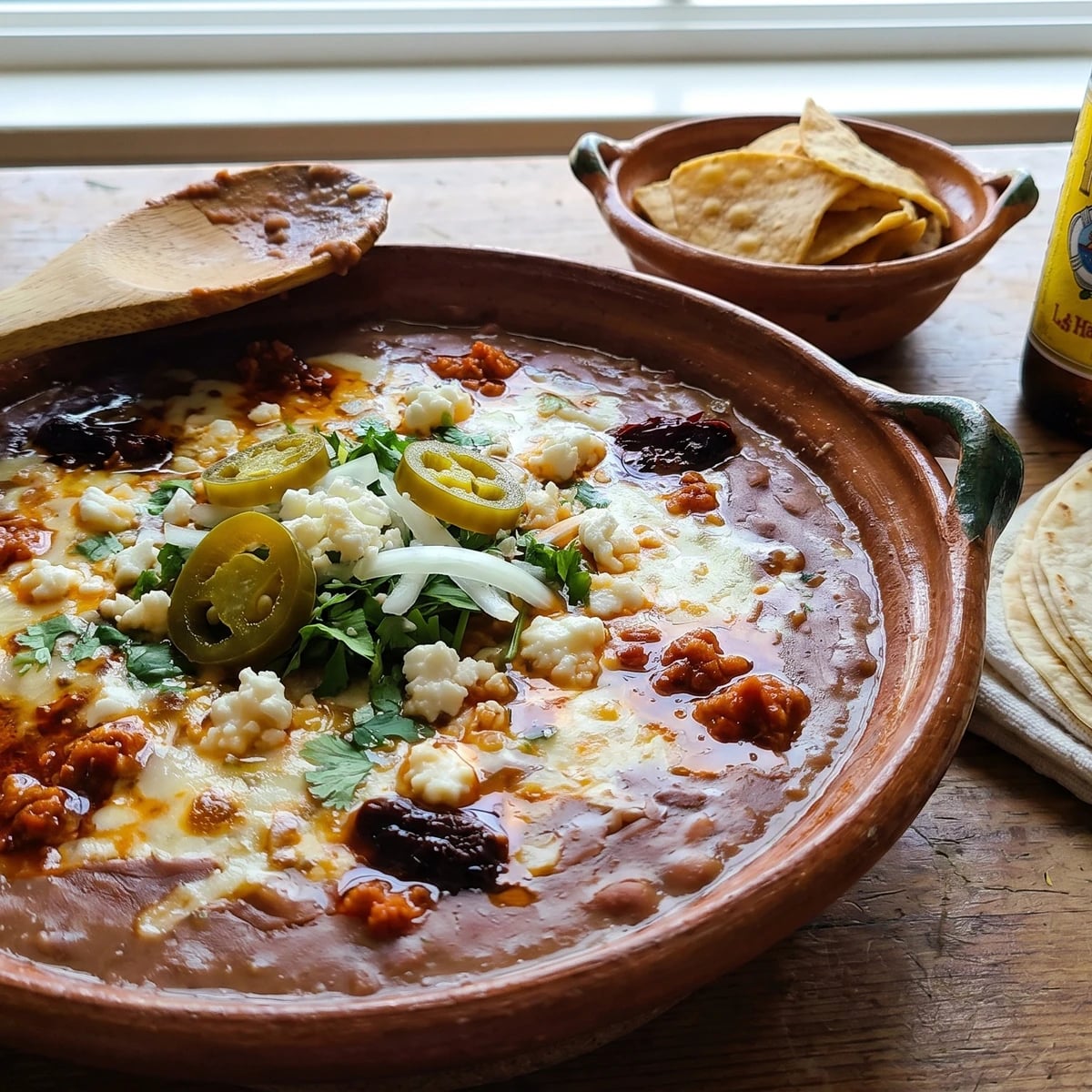
Sinaloa's party-table cazuela of pinto beans mashed into chorizo and lard, crowned with melted Chihuahua cheese, pickled jalapenos, and a stack of warm flour tortillas to scoop the whole thing up.

Appetizers & Snacks
Mexican
Game Day
Potluck
Comfort Food
20 min
Active Time
2 hr 30 min cook2 hr 50 min total
Yield10 to 12 servings as a botana

This is from Sinaloa. Specifically from the norteno table where flour tortillas are the daily bread, where dried beans get cooked by the kilo, and where any reunion of more than four people will produce a cazuela of frijoles puercos before the beer is opened.

Do not let the name confuse you. There is no pork in the bean itself. The puercos refers to the lard and the chorizo that turn humble pinto beans into a botana rich enough to anchor a Sunday gathering. La manteca es el sabor, and in Sinaloa it is also the structure. Strip the lard out of this dish and you have refried beans with chorizo, which is something else entirely. The fat is what gives frijoles puercos that glossy weight, that quality of falling slowly off the spoon, that way of clinging to a flour tortilla without sliding off.

The northern signature is everywhere here. Flour tortillas, not corn. Chihuahua cheese, the meltable norteno workhorse, not Oaxaca string cheese from the south. Pickled jalapenos en escabeche, the kind that come in jars at every Sinaloa abarrotes. Pinto beans, not black beans, not bayos. Cada estado, su propia cocina, and Sinaloa's kitchen looks north before it looks south.

My mother was from Jalisco and she did not make this. I learned it from a senora named Dona Yolanda in Culiacan who served it at a backyard gathering in 2009 from a cazuela the size of a hubcap. She told me her secret was the brine from the pickled chiles, two spoonfuls stirred in at the end, and that her husband would know if she forgot it. I wrote it down in the back of my notebook that night. Recetas probadas y garantizadas.

Frijoles puercos belongs to the family of fat-enriched bean dishes that emerged across northern Mexico in the 19th and early 20th centuries, when Sinaloa's growing pork industry and the daily availability of lard turned pinto beans, the everyday staple, into festive food. The dish shares roots with Sonora's frijoles maneados and Nayarit's frijoles puercos but distinguishes itself through the Sinaloa insistence on chipotle morita and pickled jalapeno escabeche, both pantry items tied to the state's preserving traditions. The pairing with flour tortillas rather than corn reflects the wheat-growing economy of the Sinaloa-Sonora corridor, where wheat displaced corn as the dominant grain after Jesuit missionaries introduced it in the 17th century.

The technique, the tradition, and the story behind every dish.

Discover Culinary Explorer

Ingredients

dried pinto beans

Quantity

1 pound

picked over and rinsed

white onion

Quantity

1 medium

half left whole, half finely diced

garlic cloves

Quantity

6

3 left whole, 3 minced

fresh epazote

Quantity

2 sprigs

kosher salt

Quantity

1 tablespoon, plus more to taste

pork lard (manteca de cerdo)

Quantity

1/2 cup, plus 2 tablespoons

Mexican pork chorizo

Quantity

8 ounces

casing removed

dried chile chipotle morita

Quantity

4

stemmed

dried chile ancho

Quantity

2

stemmed and seeded

pickled jalapenos (en escabeche)

Quantity

1/2 cup

drained and chopped, plus 2 tablespoons of the brine

Chihuahua cheese

Quantity

8 ounces

shredded

queso fresco

Quantity

4 ounces

crumbled

totopos (thick fried corn tortilla chips) (optional)

Quantity

for serving

flour tortillas (optional)

Quantity

for serving

warmed

sliced pickled jalapenos (optional)

Quantity

for garnish

crumbled queso fresco (for garnish) (optional)

Quantity

for garnish

chopped fresh cilantro (optional)

Quantity

for garnish

Equipment Needed

  • Heavy 6-quart pot for cooking the beans
  • 12-inch clay cazuela or heavy cast iron skillet
  • Cast iron comal for toasting chiles
  • High-powered blender
  • Potato masher or sturdy wooden spoon
  • Fine-mesh strainer

Instructions

  1. 1

    Cook the pinto beans

    Place the pinto beans in a heavy pot and cover with cold water by three inches. Add the half onion left whole, the three whole garlic cloves, and the epazote. Bring to a boil, then drop to a low simmer. Cook uncovered for two hours, until the beans are completely tender and crush easily between your fingers. Add the salt only in the last 15 minutes. Salt early and the skins toughen and never soften right.

    Do not skip the epazote. It is not decoration. It carries a flavor that pinto beans need and it settles the pot in a way no other herb does. Find it dried if you cannot find it fresh, but find it.
  2. 2

    Toast and soak the chiles

    While the beans cook, heat a dry comal or heavy skillet over medium. Toast the chipotle morita and chile ancho separately, about 20 seconds per side. The morita is small and burns fast, watch it. The ancho will puff and turn fragrant. Move them to a heatproof bowl and cover with hot tap water. Hot water, not boiling. Let them soften for 15 minutes, then drain.

  3. 3

    Render the chorizo

    In a wide cazuela or heavy 12-inch skillet, heat 2 tablespoons of the lard over medium. Add the chorizo and break it up with a wooden spoon. Cook for 8 to 10 minutes, until the chorizo has rendered its red-orange fat and the meat has darkened and crisped at the edges. Do not drain the fat. The fat is the recipe. La manteca es el sabor and chorizo grease is its own kind of manteca.

  4. 4

    Build the bean base

    Add the diced onion and minced garlic to the chorizo and its rendered fat. Cook for 4 minutes, until the onion turns translucent and the kitchen smells unmistakably Sinaloan. Scoop the toasted, soaked chiles into a blender with one cup of bean cooking liquid. Blend until completely smooth. Pour the chile puree into the cazuela through a fine-mesh strainer, pressing on the solids. It will sputter when it hits the hot fat. That is correct.

  5. 5

    Fry the chile and add the lard

    Cook the chile puree with the chorizo and aromatics for 5 minutes, stirring, until the puree darkens and the fat starts to separate at the edges. Add the remaining 1/2 cup of lard. Yes, that much. This is not bean dip. This is frijoles puercos and the puerco part means pork fat to the pound. Let the lard melt completely into the chile and chorizo before the next step.

  6. 6

    Mash the beans into the pot

    Lift the cooked beans out of their pot with a slotted spoon, leaving the cooking liquid behind for now. Add them to the cazuela in batches, mashing with a potato masher or the back of a wooden spoon as you go. The texture should be rough, not silky. You want some whole beans visible, some broken, some smashed into a paste. Add bean cooking liquid by the half cup as needed to keep it loose. The mixture should fall slowly off the spoon, not hold its shape.

    Do not put the beans in a blender. Frijoles puercos is not a puree. The texture is the dish, broken and uneven, with the chorizo flecks visible and the fat catching the light.
  7. 7

    Fold in the pickled jalapenos and cheese

    Stir in the chopped pickled jalapenos and the 2 tablespoons of escabeche brine. The brine cuts through the richness and is the signature Sinaloa twist. Add half of the shredded Chihuahua cheese and stir until it melts into the beans. Taste for salt now. The chorizo and the brine are already salty, so adjust carefully.

  8. 8

    Top with cheese and finish

    Smooth the top of the beans with a spoon. Scatter the remaining Chihuahua cheese over the surface and let it melt from the residual heat of the cazuela, or run the cazuela briefly under a hot broiler if you want the cheese browned in spots. Crumble the queso fresco over the melted cheese. Top with sliced pickled jalapenos and chopped cilantro. Serve hot, in the cazuela, with totopos and warm flour tortillas. Asi se hace y punto.

Chef Tips

  • Cook the beans from dry. Canned pintos will not give you the body or the bean liquid you need to control the texture. If you must use canned, use four cans of pinto beans drained, and use unsalted chicken broth in place of the bean liquid. It is a compromise, not an upgrade.
  • Mexican chorizo means the soft, raw, red-orange one sold in casings, not Spanish chorizo. They are not interchangeable. Spanish chorizo is cured and firm and will not render the way you need it to. If your supermarket only carries the wrong kind, find a Mexican carniceria.
  • Chihuahua cheese is the right melter for this dish. If you cannot find it, Monterey Jack or asadero will work. Do not use cheddar. Yellow cheese on Mexican food is a Tex-Mex marker and frijoles puercos has nothing to do with Tex-Mex.
  • Make this in the cazuela you will serve it in. The dish is rustic and abundant and serving it from the cooking vessel is part of the presentation. Do not transfer it to a fancy bowl.

Advance Preparation

  • The beans can be cooked one day ahead and refrigerated in their cooking liquid. They will absorb seasoning overnight and be even better when you build the dish.
  • The full frijoles puercos can be made one day ahead, refrigerated, and reheated in the cazuela over low heat with a splash of bean liquid or water to loosen. Add fresh cheese on top before reheating.
  • Do not freeze. The texture of the lard and beans separates when thawed and the dish never quite returns to itself.

Frequently Asked Questions

Nutrition Information

1 serving (about 190g)

Calories
470 calories
Total Fat
28 g
Saturated Fat
9 g
Trans Fat
0 g
Unsaturated Fat
17 g
Cholesterol
55 mg
Sodium
990 mg
Total Carbohydrates
28 g
Dietary Fiber
7 g
Sugars
2 g
Protein
20 g

Note: Chef personas and recipes are created with AI assistance. Cook with care: follow safe food-handling practices, check doneness with a thermometer when needed, and adapt for allergies and your kitchen.

Where cooking meets culture.

Culinary guides, cultural storytelling, and the editorial depth that makes cooking meaningful.

Discover Culinary Explorer

More from Noroeste Appetizers & Snacks

Browse the full collection