
Chef Lupita
Caldo de Camarón con Chepil
A Lenten caldo from Oaxaca's Valles Centrales built on dried shrimp and chile costeño, thickened with a whisper of masa, and finished with chepil leaves that taste like nothing outside that state.
A cooking platform built around craft, culture, and the stories behind what we eat.
Created by
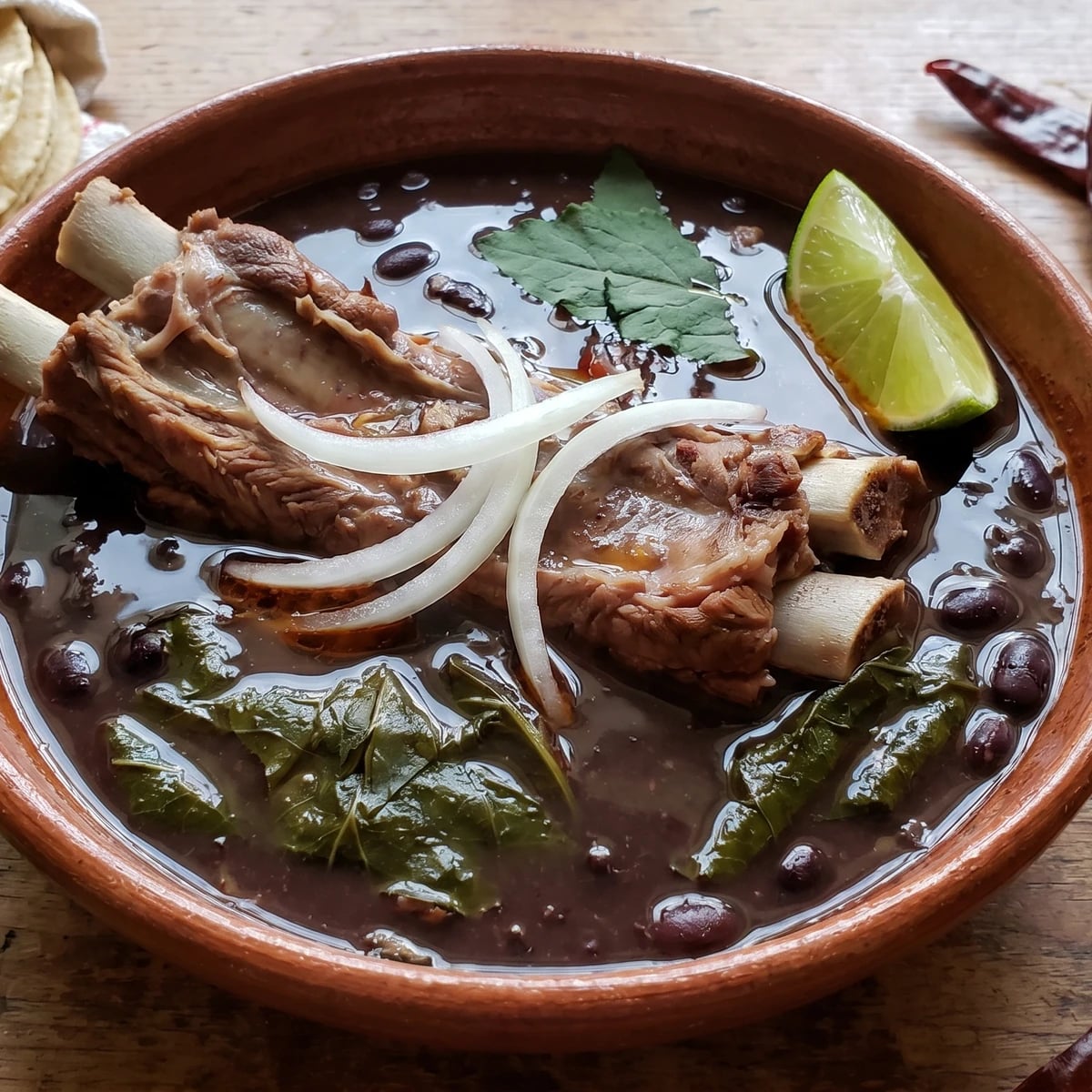
Sierra Norte's black bean and pork-spine stew, slow-simmered with toasted chile guajillo, fried in manteca, and finished with torn hierba santa leaves that perfume the whole pot with anise and green pepper.
This dish is from the Sierra Norte de Oaxaca, from the mountain kitchens of Zapotec and Chinantec towns where the fog sits on the ridgeline and the cooking is slow. Frijoles con espinazo is not a recipe you find in Mexico City restaurants. It's a recipe you find in a clay olla on a wood-burning stove in Ixtlan de Juarez or Guelatao, the kind of pot a senora puts on in the morning and serves in the afternoon.
The espinazo, pork spine, is the cheapest cut at the carniceria. Bones, cartilage, marrow, a little meat clinging to the vertebrae. That is the point. The marrow dissolves into the bean broth over three hours and gives it a body and richness that no boneless cut can replicate. You are not paying for meat here. You are paying for what the bones release. This is the economy of cooks who waste nothing and know that the best flavors hide in the parts other people throw away.
Hierba santa is what makes this version Oaxacan. Not epazote. Hierba santa. They are not the same plant, not the same flavor, not interchangeable. Hierba santa, hoja santa, Piper auritum, whatever you call it, has a deep anise note with green pepper underneath, almost like a cross between basil and black licorice. Epazote is sharp and medicinal. If someone tells you to swap one for the other, they haven't cooked with either. The leaves go in torn, at the end, so the heat pulls out the oils without cooking away the fragrance. That last ten minutes changes everything.
My mother didn't make this dish. She was jalisciense and her beans were pintos with chile de arbol. But I ate this for the first time in a market fonda in Ixtlan on my Sierra Norte trip, from a woman who served it in a clay bowl with a stack of tortillas and said nothing except the price. One spoonful and I understood why the cooks up there guard their recipes. I wrote it down that afternoon. Saber cocinar es saber vivir.
Black bean cookery in southern Mexico predates the conquest by millennia, and the Zapotec communities of Oaxaca's Sierra Norte developed bean-and-bone stews as a practical response to the region's cool mountain climate and limited access to prime cuts of meat. Pork espinazo entered the dish after the Spanish introduction of pigs in the 16th century, replacing or supplementing indigenous game and turkey bones as the collagen source for the broth. Hierba santa (Piper auritum), a member of the pepper family native to Mesoamerica, was documented in Aztec and Zapotec herbalism as both a medicinal and culinary plant; its Nahuatl name, tlanepa, appears in pre-colonial botanical records, and its persistent use in Sierra Norte bean dishes represents one of the least-altered indigenous flavor traditions in Mexican cooking.
Quantity
1 pound
sorted and rinsed
Quantity
2 pounds
cut into 2-inch sections
Quantity
1
divided: half whole for the pot, quarter chopped for the chile blend, remaining sliced for serving
Quantity
4
divided: 3 whole for the pot, 1 chopped for the chile blend
Quantity
2
Quantity
1 sprig
Quantity
6
stemmed and seeded
Quantity
2
stemmed and seeded
Quantity
2 tablespoons
Quantity
6 large
thick center rib removed, torn into large pieces
Quantity
to taste
Quantity
for serving
Quantity
for serving
| Ingredient | Quantity |
|---|---|
| dried black beans (frijol negro)sorted and rinsed | 1 pound |
| pork spine (espinazo de cerdo)cut into 2-inch sections | 2 pounds |
| white oniondivided: half whole for the pot, quarter chopped for the chile blend, remaining sliced for serving | 1 |
| garlic clovesdivided: 3 whole for the pot, 1 chopped for the chile blend | 4 |
| bay leaves | 2 |
| fresh epazote | 1 sprig |
| dried chile guajillostemmed and seeded | 6 |
| dried chile costeño rojostemmed and seeded | 2 |
| manteca de cerdo (lard) | 2 tablespoons |
| fresh hierba santa leaves (hoja santa)thick center rib removed, torn into large pieces | 6 large |
| kosher salt | to taste |
| warm hand-pressed corn tortillas (optional) | for serving |
| lime wedges (optional) | for serving |
Place the sorted black beans and the pork spine sections in a large heavy pot. Cover with cold water by three inches. You need that extra water because the beans absorb as they cook and you want broth at the end, not paste. Add the half onion, the three whole garlic cloves, the bay leaves, and the epazote sprig. Set over medium heat and bring to a gentle simmer. Do not add salt yet. Salt tightens the bean skins early and they'll never get creamy. Salt comes at the end.
In the first fifteen minutes, a gray foam will rise to the surface. Skim it off with a ladle. This is protein from the pork and from the beans, and leaving it clouds the broth. Once the foam stops coming, reduce the heat until the pot barely moves. Lazy bubbles, one every few seconds. Cover partially, leaving a crack for the steam to escape, and let it go for two and a half to three hours. Check the water level every forty-five minutes and add hot water if the beans start to show above the surface. The beans are done when you can crush one between your fingers with no resistance and the espinazo meat is pulling away from the vertebrae.
While the beans simmer, heat a dry comal or cast iron skillet over medium. Toast the guajillo and costeño chiles separately, pressing them flat against the hot surface with a spatula, about 20 to 30 seconds per side. The guajillo will puff and turn a shade darker. The costeño is smaller and thinner and burns faster, so watch it. The kitchen should smell warm and slightly smoky. That smell is the oils opening up. If a chile blackens, throw it away. Burned chile is bitter chile and there is no fixing it.
Place the toasted chiles in a heatproof bowl and cover with hot tap water. Not boiling. Hot water softens the flesh and lets the flavor come through clean. Boiling water cooks the skin and makes the salsa bitter. Let them soak for twenty minutes until they are soft and pliable. Drain the chiles and transfer to a blender with the quarter onion, the remaining garlic clove, and one cup of the bean cooking liquid. Blend on high until completely smooth. You want a puree with no chunks, no skin fragments. If the blender struggles, add another quarter cup of cooking liquid to get it moving.
In a small heavy skillet, melt the manteca de cerdo over medium heat. When the lard shimmers, pour in the blended chile puree. It will sputter and pop, so stand back. Cook for five to seven minutes, stirring constantly with a wooden spoon, until the puree darkens from bright red to a deeper brick color and the fat begins to separate around the edges. La manteca es el sabor. This step concentrates the chile flavor and removes the raw taste. You'll smell the difference: raw chile smells sharp and vegetal, fried chile smells round and deep. That transformation is the whole point.
Scrape the fried chile paste directly into the bean pot. Stir it through the broth until the whole pot turns a dark garnet. The beans will absorb the chile color over the next twenty minutes. Remove and discard the spent onion half, the bay leaves, and the epazote sprig if it hasn't already dissolved. Now add salt. Start with one tablespoon of kosher salt, stir, taste, and adjust. The broth should taste assertive because the tortillas you eat alongside will absorb flavor and dilute the perception of salt. Simmer uncovered for twenty minutes to let everything marry.
Drop the torn hierba santa leaves into the pot. Push them down into the broth so they are submerged. Cover and cook for ten more minutes. No longer. The heat pulls the anise oils out of the leaves and perfumes the entire pot. If you cook them too long, the fragrance cooks off and you are left with limp leaves that taste like nothing. Ten minutes is enough. When you lift the lid, the smell should hit you immediately: black beans, pork marrow, chile, and that unmistakable green anise. That is the Sierra Norte in a pot.
Ladle the beans and broth into deep bowls, making sure each serving gets a section or two of espinazo with the bone, a generous share of beans, and some hierba santa leaves. Set warm corn tortillas on the table, wrapped in a cloth. Put the lime wedges and sliced raw onion alongside. The diner tears the meat from the bone at the table, squeezes lime over the bowl, and eats with tortillas torn and dipped into the broth. There is no elegant way to eat espinazo. That is the beauty of it. Recetas probadas y garantizadas.
1 serving (about 400g)
Culinary guides, cultural storytelling, and the editorial depth that makes cooking meaningful.
Discover Culinary Explorer
Chef Lupita
A Lenten caldo from Oaxaca's Valles Centrales built on dried shrimp and chile costeño, thickened with a whisper of masa, and finished with chepil leaves that taste like nothing outside that state.

Chef Lupita
The Valles Centrales milpa soup, built from squash vines, fresh corn, calabacitas, and squash blossoms, with chochoyote dumplings and the perfume of chepil and hierba santa. A rainy-season pot that costs almost nothing and feeds the whole family.

Chef Lupita
Oaxaca's Pacific coast seafood caldo, built on toasted chile costeño and guajillo with charred tomato and garlic, loaded with shrimp, octopus, huachinango, and clams. Fishing-town food that feeds the whole table.

Chef Lupita
Northern Oaxaca's oldest cooking technique: raw fish, shrimp, tomato, chile de agua, and epazote brought to a boil in a gourd bowl by white-hot river stones pulled straight from the fire.