
Chef Lupita
Arroz a la Oaxaqueña
Oaxaca's red rice, stained with tomato and fried in lard, steamed with carrots, ejotes, black beans, and epazote. The side that anchors a Oaxacan family meal and earns its place beside the main.
A cooking platform built around craft, culture, and the stories behind what we eat.

Created by
Yucatan's everyday pot of black beans simmered with chaya, epazote, and a whole unsplit habanero, finished with lard bloomed in onion and garlic at the very end.
This is from Yucatan. Not the generic Mexican beans you see in cookbooks that call themselves authentic. The peninsula cooks its beans differently from the rest of the country, and chaya is the reason.
Chaya is the Maya tree spinach. It grows in dooryards across Yucatan, Campeche, and Quintana Roo, a thick-leaved green that the Maya have eaten for more than a thousand years. The leaves are higher in protein and calcium than any cultivated green, and they cook down into something deeper and more mineral than spinach ever could. You will not find chaya at a supermarket outside the peninsula. You will find it at Yucatecan mercados, at the homes of families with Maya roots, and increasingly frozen at specialty importers. If you cannot get it, use spinach, but understand you are making a cousin of this dish, not the dish itself.
The habanero stays whole. Do not pierce it. The Yucatecan kitchen uses habanero the way Italians use a clove of garlic in a tomato sauce: for perfume, not heat. Pierce the chile and you have lost the technique. The seriously hot heat in Yucatecan food lives in the xnipec on the table, not in the pot itself. This is the correction I make most often when teaching this dish. People assume Yucatecan means furiously spicy. It does not. Yucatecan means precise.
My mother did not cook Yucatecan food. She was from Jalisco. I learned this pot from a senora named Dona Marisol in Merida, who let me sit in her kitchen for three afternoons while she explained the difference between a Yucatecan bean and any other bean in Mexico. She would not let me write anything down until I had tasted three pots. Saber cocinar es saber vivir, and saber probar comes first.
Chaya (Cnidoscolus aconitifolius) was cultivated by the Maya for at least a thousand years before the Spanish conquest and remains one of the defining green vegetables of the Yucatan peninsula, where it is grown in nearly every household dooryard as a perennial shrub. The plant's leaves must be cooked before consumption to neutralize trace hydrocyanic glycosides, a fact recorded in colonial-era Yucatecan ethnobotanical accounts and reinforced by Maya oral tradition. Black beans paired with chaya represent one of the oldest documented food combinations in the peninsula's milpa system, the polyculture of corn, beans, squash, and chaya that has fed Maya families since pre-Columbian times and that UNESCO recognized in 2010 as a core component of Traditional Mexican Cuisine.
Quantity
1 pound
picked over and rinsed
Quantity
10 cups, plus more as needed
Quantity
1 medium
half left whole, half finely diced
Quantity
6
4 left whole, 2 finely minced
Quantity
1 whole
left intact, do not pierce
Quantity
1 large bunch (about 20 to 25 leaves)
stems removed
Quantity
1 small bunch (about 6 sprigs)
Quantity
2 tablespoons
Quantity
2 teaspoons, plus more to taste
Quantity
for serving
warmed
Quantity
for serving
Quantity
for serving
Quantity
for serving
| Ingredient | Quantity |
|---|---|
| dried black beans (frijol negro)picked over and rinsed | 1 pound |
| cold water | 10 cups, plus more as needed |
| white onionhalf left whole, half finely diced | 1 medium |
| garlic cloves4 left whole, 2 finely minced | 6 |
| fresh chile habaneroleft intact, do not pierce | 1 whole |
| fresh chaya leavesstems removed | 1 large bunch (about 20 to 25 leaves) |
| fresh epazote | 1 small bunch (about 6 sprigs) |
| manteca de cerdo (pork lard) | 2 tablespoons |
| kosher salt | 2 teaspoons, plus more to taste |
| hand-pressed corn tortillas (optional)warmed | for serving |
| crumbled queso fresco (optional) | for serving |
| salsa xnipec (habanero and sour orange) (optional) | for serving |
| lime wedges (optional) | for serving |
Spread the dried black beans on a sheet pan and pick out any small stones, broken pieces, or shriveled beans. Yucatecan black beans are smaller and rounder than the beans from the Bajio, and they cook faster, so this matters. Rinse them under cold water and drain. Do not soak them. In Yucatan, the beans go straight into the pot. Soaking softens the skin too much and the bean falls apart before it has time to take on flavor.
Put the beans in a heavy 6-quart pot or a clay olla if you have one. Cover with 10 cups of cold water. Add the half onion left whole, the four whole garlic cloves, and the whole habanero. The habanero stays intact. Do not pierce it, do not slice it, do not crush it. It perfumes the pot without making the beans hot. Pierce it and you have made a different dish. Bring to a gentle simmer over medium heat.
Reduce the heat until the pot bubbles lazily, every couple of seconds. Cover partially and cook for about 1 hour and 30 minutes, until the beans are tender but still holding their shape. Check the water level every 30 minutes and add more hot water if the beans start to peek above the surface. No salt yet. Salt added too early toughens the skins and the beans will never get creamy. La sal al final. Always.
While the beans simmer, work on the chaya. Chaya is the Maya tree spinach, the green that grows in every Yucatecan dooryard and feeds families for free. The leaves contain a small amount of hydrocyanic compound that cooks off completely with heat, but you do not eat chaya raw. Pull the leaves from the tough center stem. Stack them, roll them, and slice them into wide ribbons. You should have about three cups loosely packed.
Once the beans are tender, fish out the spent onion half and the whole habanero. Leave the habanero in the pot if you want a stronger perfume, but pull it before it splits. A split habanero turns the pot into something else entirely. Add the chaya ribbons and the epazote sprigs. Stir gently and simmer for another 20 minutes. The chaya softens and turns dark green, and the broth thickens slightly as the beans give up a little more starch.
In a small skillet, melt the manteca de cerdo over medium heat. Add the diced onion and cook until translucent, about 4 minutes. Add the minced garlic and cook one more minute, until fragrant. Do not brown the garlic. Burned garlic in this pot will ruin two and a half hours of work. Pour the lard, onion, and garlic directly into the bean pot. La manteca es el sabor, and it goes in at the end so the fat carries the aroma through the broth without breaking down over hours of heat.
Add the salt now. Stir gently and taste the broth. It should taste of the bean first, then the herb, then the faint floral heat of the habanero in the background. Adjust the salt. Simmer 5 more minutes for the salt to integrate, then turn off the heat and let the pot rest 10 minutes before serving. The beans drink some of the broth back as they cool. This is how they should be: brothy, not soupy, with the chaya visible in every spoonful.
Ladle into deep bowls. Top each with crumbled queso fresco. Serve with warm hand-pressed corn tortillas, a small dish of xnipec on the side, and lime wedges. Some families spoon the beans over white rice. Some scoop them with tortilla. Both ways are correct. Cada estado, su propia cocina, and this one belongs to Yucatan.
1 serving (about 220g)
Culinary guides, cultural storytelling, and the editorial depth that makes cooking meaningful.
Discover Culinary ExplorerChef Lupita
Oaxaca's red rice, stained with tomato and fried in lard, steamed with carrots, ejotes, black beans, and epazote. The side that anchors a Oaxacan family meal and earns its place beside the main.
Chef Lupita
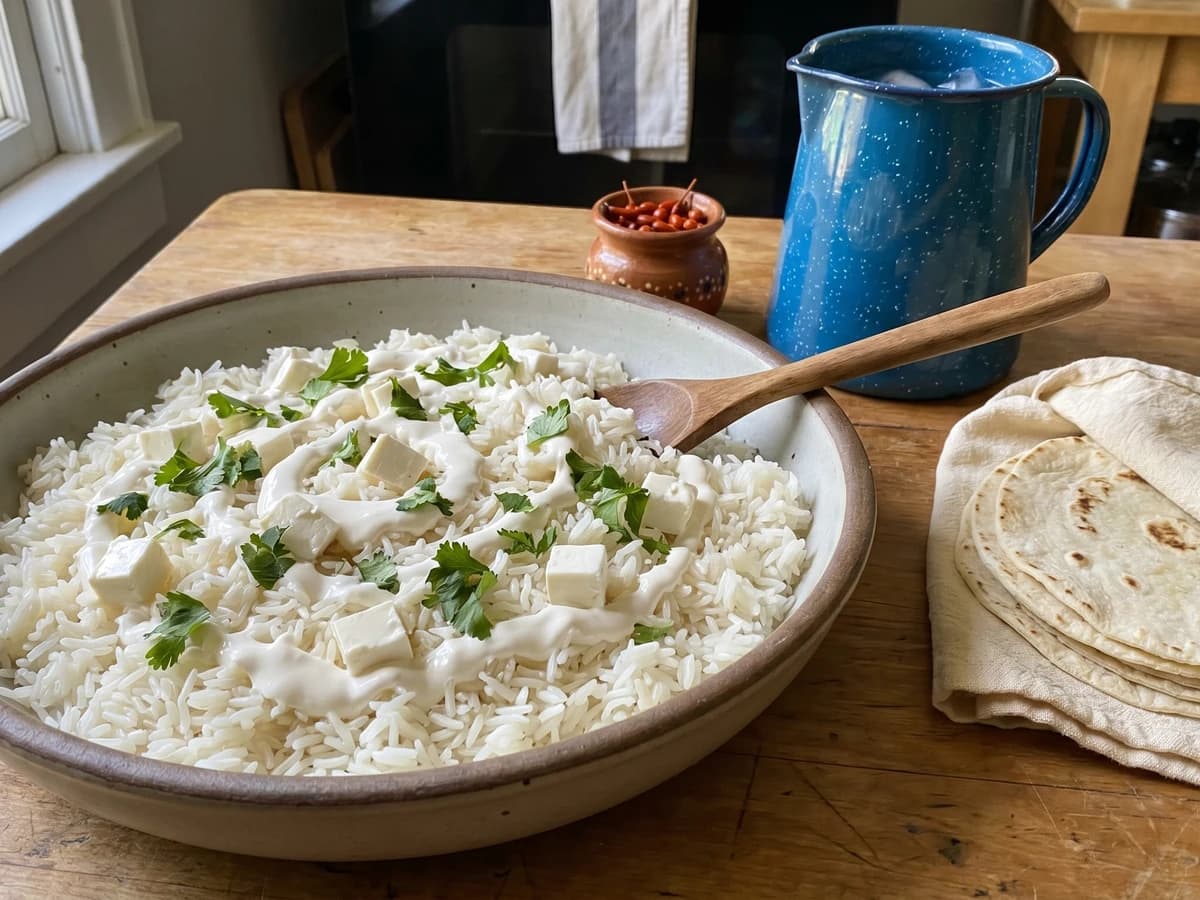
Sinaloa's home-cook white rice topped with cold cubes of cream cheese that soften into the warm grain, finished with crema and a sprinkle of chiltepin at the table. The trick that makes a side dish feel like a small luxury.
Chef Lupita
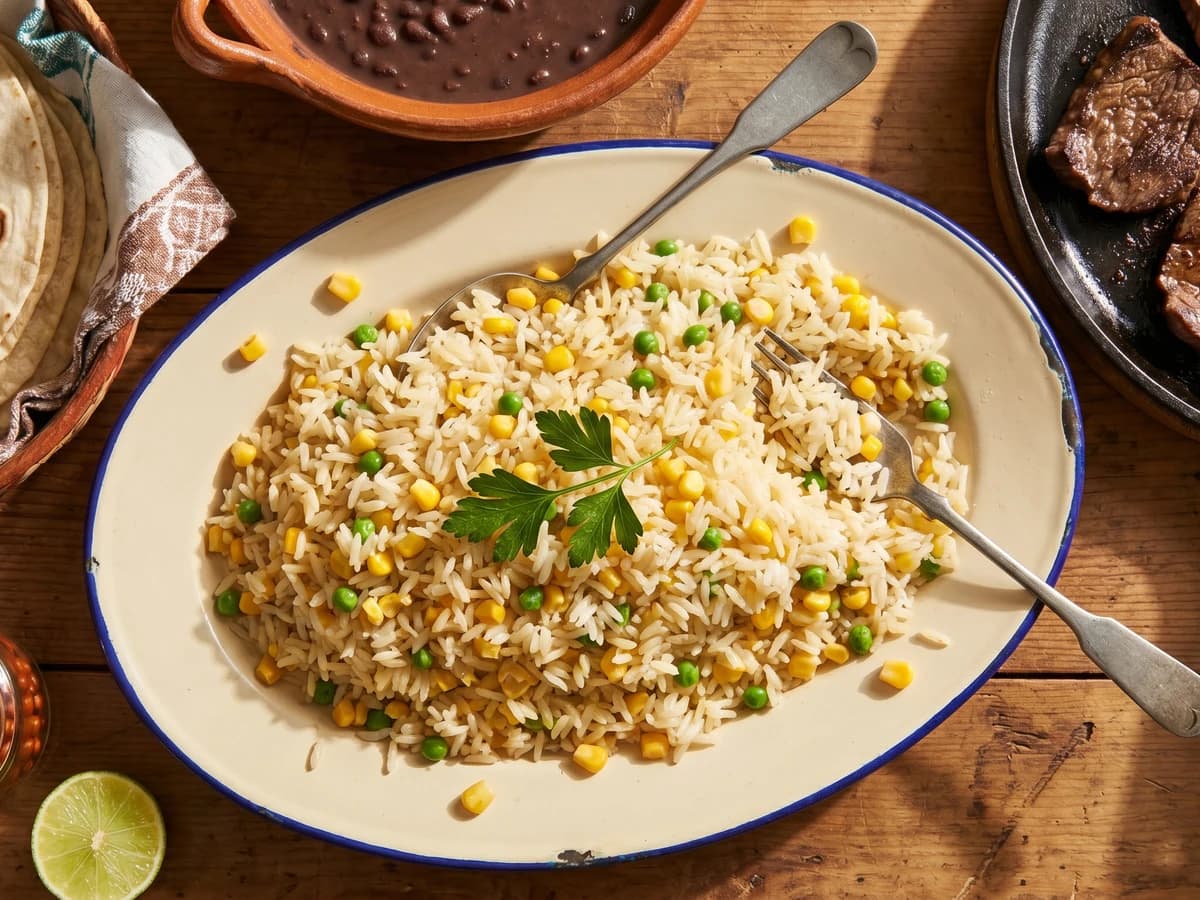
Sonora's white rice, toasted in butter and steamed with sweet corn and tender peas. The clean, quiet partner to a plate of carne asada, not the red rice of central Mexico.

Chef Lupita
Yucatán's white rice with sweet corn kernels, toasted in lard with garlic and onion. The quiet base that holds up against the peninsula's bold achiote-stained stews.