Chef Freja
Aebleflaesk
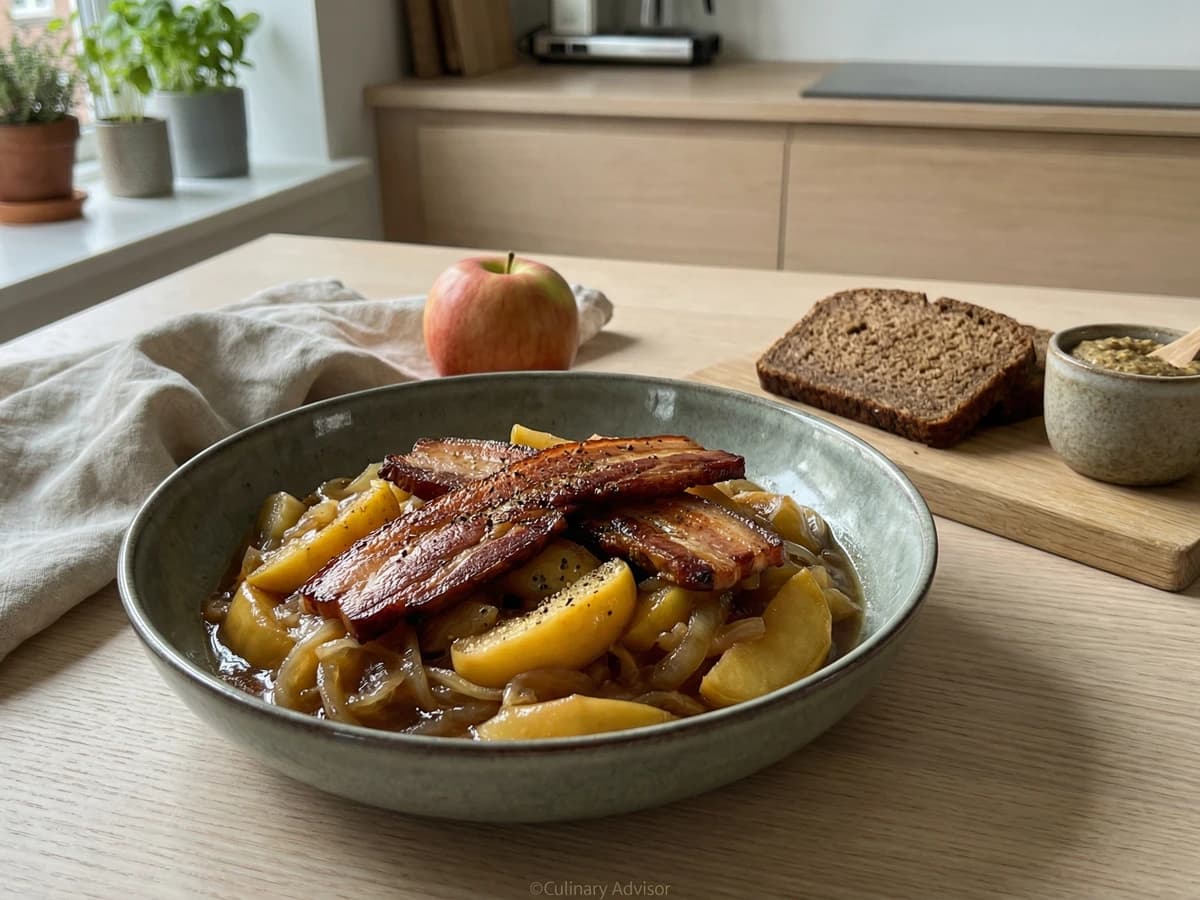
The Fyn autumn supper where thick pork belly renders slowly into its own fat, then meets apples and onions that cook down into a deep amber tangle. Sweet, salt, and the oldest pairing in the Danish larder.
A cooking platform built around craft, culture, and the stories behind what we eat.
Created by Chef Freja
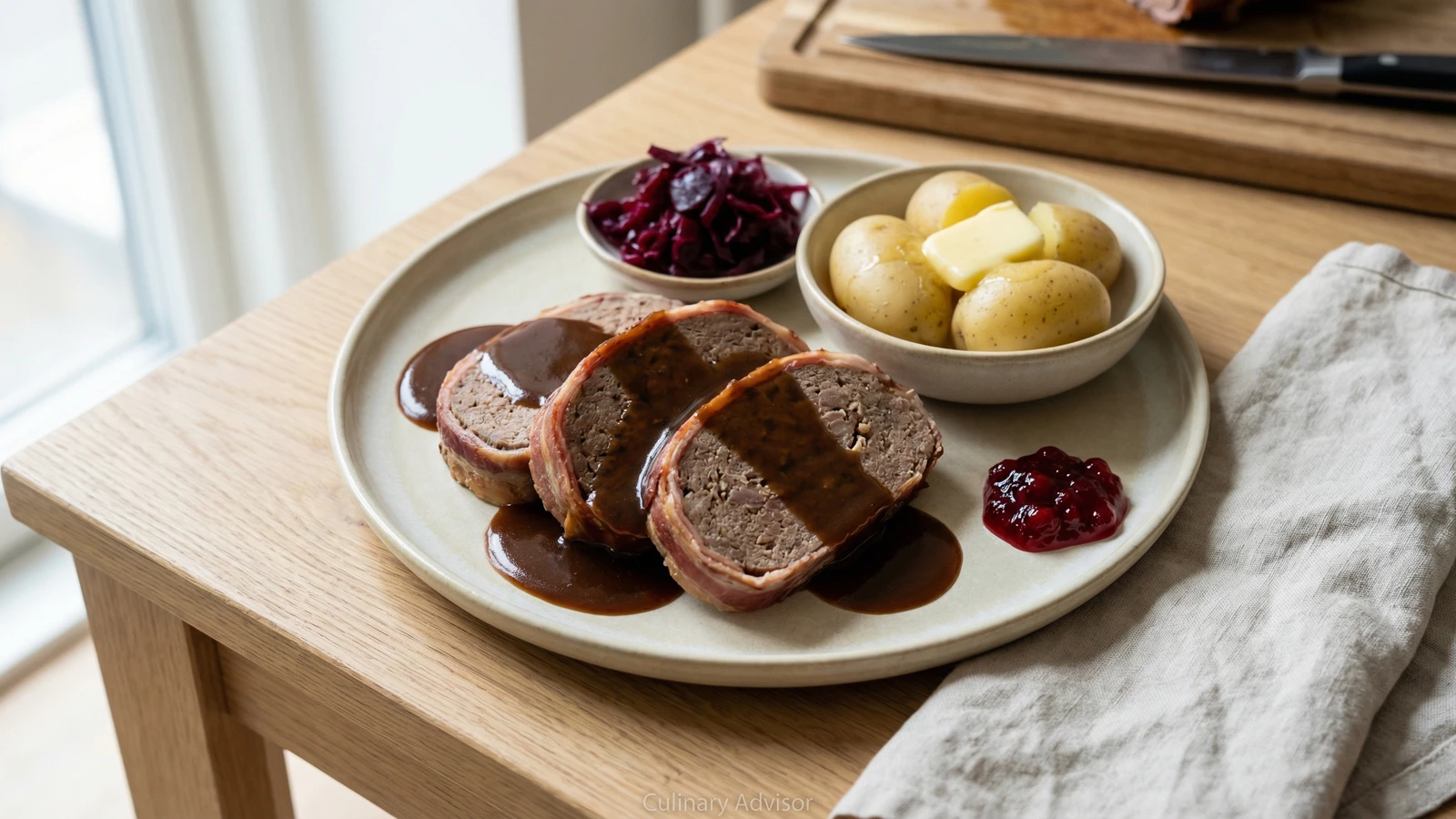
Danish mock hare, a pork and beef loaf wrapped in bacon, braised until tender, served with a dark brun sovs from its own pan juices. The frugal tradition that outlasted its origins.
November turns the light in Copenhagen into something you can see through but not quite into. The trees along the lakes let go of the last of their leaves, and the butchers' windows fill with game. This is the month when forloren hare returns to the Danish kitchen, the dish whose name means mock hare, made for every household that could not afford the real thing and kept by every household that could.
Forloren hare is pork and beef seasoned with allspice, shaped into an oval loaf that echoes the saddle of a roasting hare, wrapped tightly in streaky bacon, and braised slowly in the oven until the meat is tender and the pan holds a dark, savory stock that becomes the gravy. Brun sovs, the brown gravy of the Danish Sunday table. It goes to the plate with boiled potatoes, pickled red cabbage, and a spoonful of redcurrant jelly that cuts the richness the way only fruit can.
I want you to pay attention to two things. First, the bacon. Don't skimp on it. Wrap the loaf so completely that nothing pale shows, because the bacon is both flavor and armor. Without it, the meat dries and the whole point is lost. Second, the pan juices. Don't throw anything away. Every brown speck on the bottom of the roasting tin is gravy waiting to happen. You'll know when it's right when the sauce tastes of the meat it came from, dark and deep and a little sweet. This is a dish cooked with love, and it has been made this way in Danish kitchens for well over a century.
Forloren hare appears in Danish cookbooks from the middle of the nineteenth century, when a rising middle class wanted to eat as their wealthier neighbors did without the expense of real game. The name borrows the old Danish word forloren, meaning false or lost, from the German verloren, and the dish was designed explicitly to mimic the dark, rich flavor of roasted hare using humble pork and beef wrapped in bacon to imitate the lardons that hunters used to baste lean game. What began as a substitute outlasted its original purpose. By the twentieth century, forloren hare had become a beloved Sunday dinner in its own right, served in homes that could easily have afforded real game but chose this instead. The tradition is a small reminder that in Danish food, necessity often becomes identity.
Quantity
500g
Quantity
500g
Quantity
1 medium
finely grated
Quantity
1 large
Quantity
100ml
Quantity
4 tablespoons
Quantity
1 teaspoon
Quantity
1/2 teaspoon
freshly ground
Quantity
1/2 teaspoon
Quantity
200g
thinly sliced
Quantity
30g, plus 30g for the gravy
Quantity
500ml
Quantity
30g
Quantity
200ml
Quantity
1 tablespoon, plus extra to serve
Quantity
a few drops
Quantity
to serve
Quantity
to serve
| Ingredient | Quantity |
|---|---|
| minced pork | 500g |
| minced beef or veal | 500g |
| onionfinely grated | 1 medium |
| egg | 1 large |
| whole milk | 100ml |
| fine dry breadcrumbs | 4 tablespoons |
| fine sea salt | 1 teaspoon |
| black pepperfreshly ground | 1/2 teaspoon |
| ground allspice | 1/2 teaspoon |
| streaky baconthinly sliced | 200g |
| unsalted butter | 30g, plus 30g for the gravy |
| beef or veal stock | 500ml |
| plain flour | 30g |
| whipping cream | 200ml |
| redcurrant jelly | 1 tablespoon, plus extra to serve |
| kulor (Danish gravy browning) (optional) | a few drops |
| boiled new potatoes | to serve |
| pickled red cabbage | to serve |
Combine the minced pork and beef in a large bowl. Add the grated onion, egg, milk, breadcrumbs, salt, pepper, and allspice. Work the mixture with your hands until it is uniform and holds together when pressed, about two minutes. The milk and breadcrumbs are what keep the loaf tender; without them, the meat cooks into a dense brick. The allspice is the Danish note in this dish, quiet but unmistakable, and the thing that separates forloren hare from an ordinary meatloaf.
Turn the mixture out into a roasting tin and shape it into an oval loaf about 25cm long and 10cm wide, slightly domed on top. The shape matters. Forloren hare is meant to echo the saddle of a roasting hare, and the oval form is part of the tradition. Flatter than a bread loaf, rounded at the ends, higher in the middle than at the edges.
Lay the streaky bacon strips crosswise over the top of the loaf, slightly overlapping each piece like roof tiles, and tuck the ends underneath. Cover the loaf completely so no pale meat shows through. The bacon bastes the meat as its fat renders, keeps it from drying in the heat, and turns into a dark crisp crust by the time the braise is done. This is not decoration. The bacon is the dish.
Heat the oven to 200C. Dot the 30g of butter in small pieces around the loaf in the roasting tin. Pour the stock in around the base of the loaf, not over the top, so the bacon stays dry and has a chance to crisp. Slide the tin into the oven and set a timer for fifteen minutes. The high heat at the start gives the bacon its first kiss of color before the long slow cook begins.
After the first fifteen minutes, lower the oven to 175C and continue to cook for another hour, basting the loaf with the pan juices every twenty minutes. The basting builds the flavor of both the meat and the gravy. Each spoonful of liquid you draw over the bacon collects meat juices and returns them to the pan, and the stock slowly concentrates into something dark and savory. The loaf is done when a skewer pushed into the centre comes out with clear juices, and the bacon is deep mahogany, crisp in places and yielding in others.
Lift the loaf carefully onto a warm plate and cover it loosely with foil. Let it rest for at least ten minutes while you make the gravy. Don't skip this step. If you slice a hot loaf straight from the oven, the juices run out onto the board and the meat goes dry within minutes. Ten minutes of rest is the difference between a good slice and a great one. The juices settle back into the meat where they belong.
Pour the pan juices through a sieve into a measuring jug. You should have around 400ml. If there is a thick cap of fat on top, spoon most of it off but leave a tablespoon or two for flavor. Melt the remaining 30g of butter in a saucepan and whisk in the flour. Cook this light roux gently for two minutes until it smells nutty, because raw flour tastes of paste and nothing else. Whisk in the pan juices in three stages, letting each addition come together before adding the next, then pour in the cream and let it come to a gentle simmer. It will thicken as it goes. Season with salt and pepper, add a few drops of kulor if you want the classic deep color of the Danish Sunday gravy, and stir in a spoonful of redcurrant jelly at the end. Taste it. It should be dark, savory, and a little sweet on the finish. That is brun sovs.
Carve the loaf into thick slices, about two centimetres each, so you can see the pale meat surrounded by the dark bacon crust. Lay the slices on warm plates and spoon the gravy generously over and around them. Serve with boiled new potatoes, pickled red cabbage, and a small pool of redcurrant jelly on the side. The jelly is not a garnish. The sweet-sharp fruit is the counterpoint that cuts the richness of the meat and the sauce, and it is the reason this dish has stayed on Danish tables for as long as it has. Tak for mad.
1 serving (about 315g)
Culinary guides, cultural storytelling, and the editorial depth that makes cooking meaningful.
Discover Culinary ExplorerChef Freja
The Fyn autumn supper where thick pork belly renders slowly into its own fat, then meets apples and onions that cook down into a deep amber tangle. Sweet, salt, and the oldest pairing in the Danish larder.

Chef Freja
Warm Danish apple soup for the first cool evenings of autumn. Tart apples simmered with cinnamon and lemon peel, thickened to a soft gloss, and served with cold cream and buttery toasted oats.

Chef Freja
Danish white asparagus velouté with tiny veal meatballs, flour dumplings, and bright green tips scattered on the surface. The Easter soup of Copenhagen, built from five small pans of spring.
Chef Freja
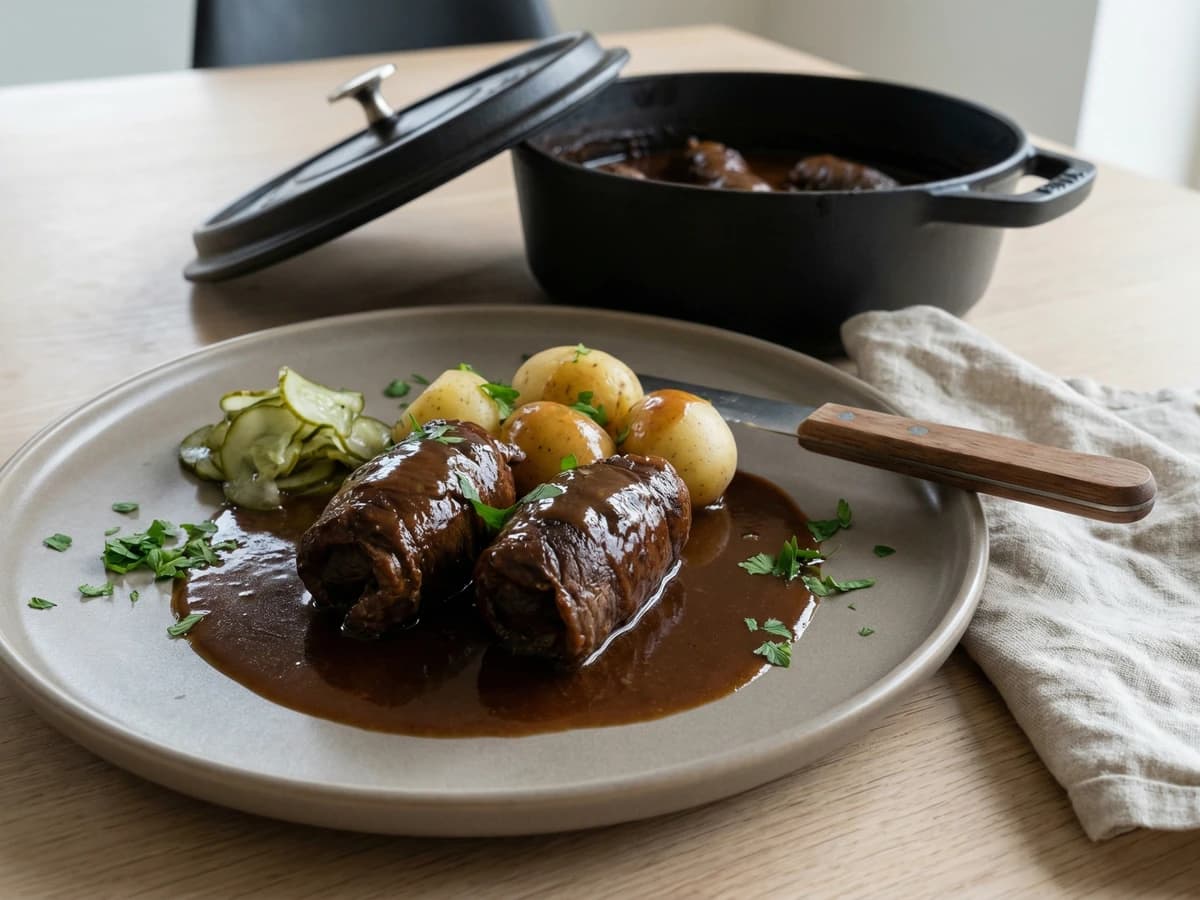
Thin beef slices rolled around bacon and onion, tied with string, and braised slowly in a dark glossy gravy finished with cream and redcurrant jelly. Danish Sunday dinner at its most comforting.