Chef Thomas
Anchovy Sauce
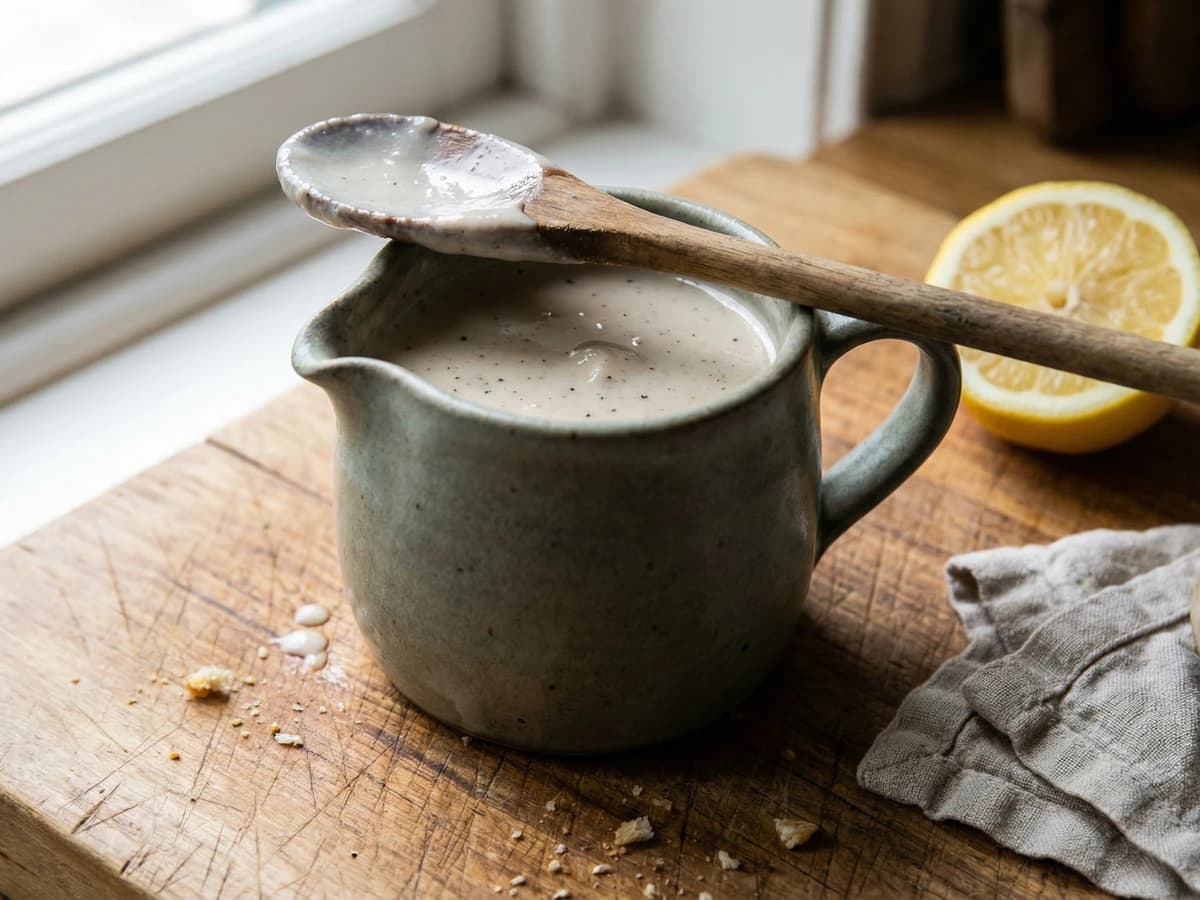
A proper white sauce sharpened with pounded anchovy, the old Georgian trick for waking up a piece of poached fish or a slice of roast lamb on a Sunday in spring.
A cooking platform built around craft, culture, and the stories behind what we eat.

Created by Chef Thomas
A quick, clean-tasting fish stock built from white fish bones and a handful of aromatics, thirty minutes on the hob, and the foundation of every fish pie or chowder worth the name.
The fishmonger at the Saturday market saves me the bones. Not out of generosity, exactly: he knows I'll be back next week, and the week after. A handful of flat-fish frames wrapped in damp paper, the smell clean and briny, the kind of smell that belongs to a cold morning by the coast even when you're miles from the sea.
Fish stock isn't like chicken stock. It doesn't want hours. Thirty minutes is the outer edge of what you should give it, and past that it turns sullen and bitter, metallic at the back of your mouth. This is a stock for people in a hurry, which is most of us, most of the time. You make it in the afternoon for the evening's pie, and the kitchen fills with something clean and sea-washed and quietly promising.
Only white fish. Sole, plaice, turbot, brill, cod. Nothing oily, nothing dark-fleshed, no salmon or mackerel. They'll turn the whole pot rancid and your chowder will taste of things you don't want. Ask the fishmonger. Tell him what you're making. He'll put the right bones aside and charge you next to nothing for them. I wrote it down in the notebook years ago: bones, cold water, twenty-five minutes, done. It's still the only note I need.
Quantity
1kg
sole, plaice, turbot, brill, or cod; gills removed and rinsed well
Quantity
30g
Quantity
1
white and pale green part only, sliced
Quantity
1 small
sliced
Quantity
1
sliced
Quantity
half a small bulb
sliced (or 1 teaspoon fennel seeds)
Quantity
1
Quantity
small handful
Quantity
6
Quantity
1 thin slice
Quantity
150ml
Quantity
1.5 litres
| Ingredient | Quantity |
|---|---|
| white fish bones and headssole, plaice, turbot, brill, or cod; gills removed and rinsed well | 1kg |
| unsalted butter | 30g |
| leekwhite and pale green part only, sliced | 1 |
| onionsliced | 1 small |
| celery sticksliced | 1 |
| fennel bulb (optional)sliced (or 1 teaspoon fennel seeds) | half a small bulb |
| bay leaf | 1 |
| parsley stalks | small handful |
| black peppercorns | 6 |
| lemon | 1 thin slice |
| dry white wine | 150ml |
| cold water | 1.5 litres |
Rinse the fish bones and heads well under cold running water. If any gills are still attached, cut them out and throw them away. They hold blood and will make the stock cloudy and bitter. Chop the larger frames into a few pieces so they fit the pot. The bones should smell clean and briny, like a morning by the sea. If they smell of anything sharper or sourer than that, take them back.
Melt the butter in a large heavy-bottomed pan over a gentle heat. Add the leek, onion, celery, and fennel. A pinch of salt. Stir to coat, then put the lid on and let them sweat for five minutes or so. You want them soft and translucent, not coloured. Colour means heat, and heat means bitterness in a fish stock. Keep it gentle.
Add the fish bones to the pan and stir them through the softened vegetables. Pour in the white wine and let it bubble away for a minute to lose its edge. Add the cold water, the bay leaf, the parsley stalks, the peppercorns, and the lemon slice. The water should just cover the bones. If it doesn't quite, top up with a splash more.
Bring the pot slowly to a bare simmer. As it comes up to temperature, a pale grey foam will gather on the surface. Skim it off with a spoon and discard. Keep the heat low enough that the stock only just trembles: a few lazy bubbles breaking the surface, nothing more. A hard boil will turn it cloudy and bitter. Let it simmer for twenty-five minutes. Not longer. Fish stock turns sullen if you push it past half an hour, and there is no coming back from that.
Set a fine sieve over a large bowl or a clean pan. If you want the clearest possible stock, line the sieve with a piece of damp muslin or a clean tea towel. Ladle the stock through, leaving the last half-inch in the pot because that's where the grit settles. The finished stock should be pale gold, almost clear, and smell sweetly of the sea. Taste it. It shouldn't be salty yet, you'll season whatever you cook with it later, but the flavour should be clean and present. Cool quickly, uncovered, then refrigerate or freeze.
1 serving (about 240g)
Culinary guides, cultural storytelling, and the editorial depth that makes cooking meaningful.
Discover Culinary ExplorerChef Thomas
A proper white sauce sharpened with pounded anchovy, the old Georgian trick for waking up a piece of poached fish or a slice of roast lamb on a Sunday in spring.

Chef Thomas
A spiced autumn chutney made from a glut of apples and a quiet afternoon, simmered down until the kitchen smells of October and the jars line up on the counter like a small, useful insurance policy.
Chef Thomas
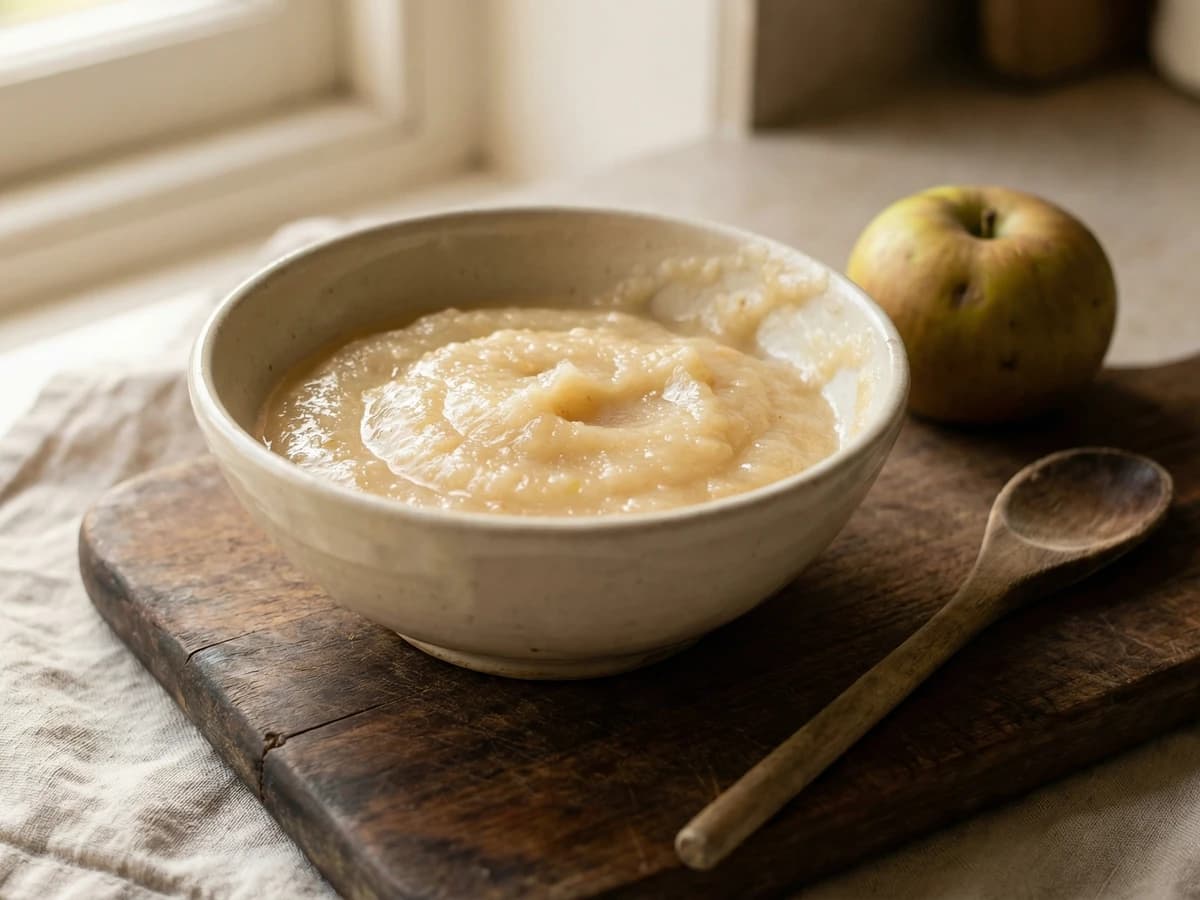
A bowl of sharp, fluffy Bramley apple sauce, made in the time it takes to carve the pork, the kind of small condiment that quietly makes the whole meal make sense.
Chef Thomas
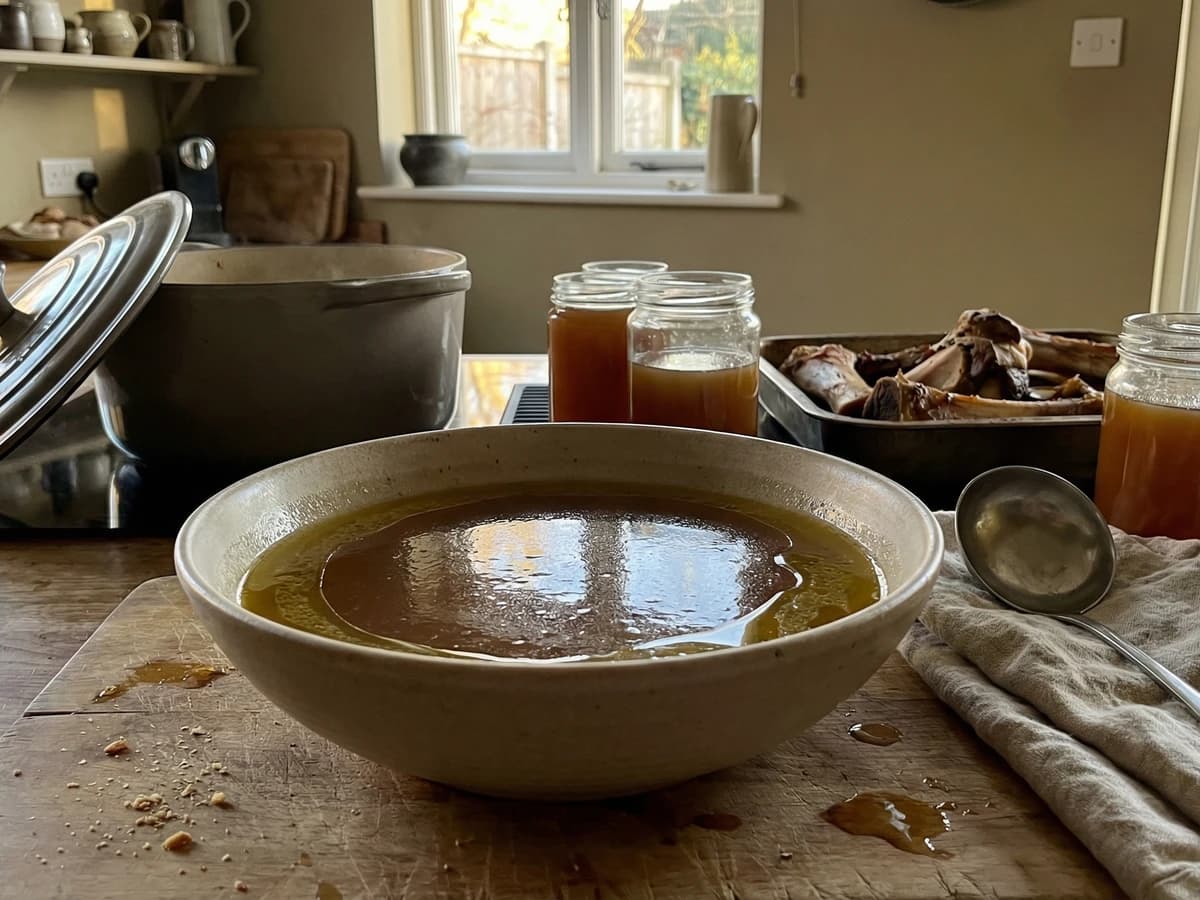
Beef bones roasted until dark, then coaxed for a long afternoon into a deep amber stock, the foundation of every good gravy, every braise, every bowl of winter soup worth the trouble.