
Chef Graziella
Asparagi al Forno con Parmigiano
Roasted asparagus finished with aged Parmigiano-Reggiano from the same region that grows the best spears. Four ingredients. No complications. Nothing to hide behind.
A cooking platform built around craft, culture, and the stories behind what we eat.
Created by
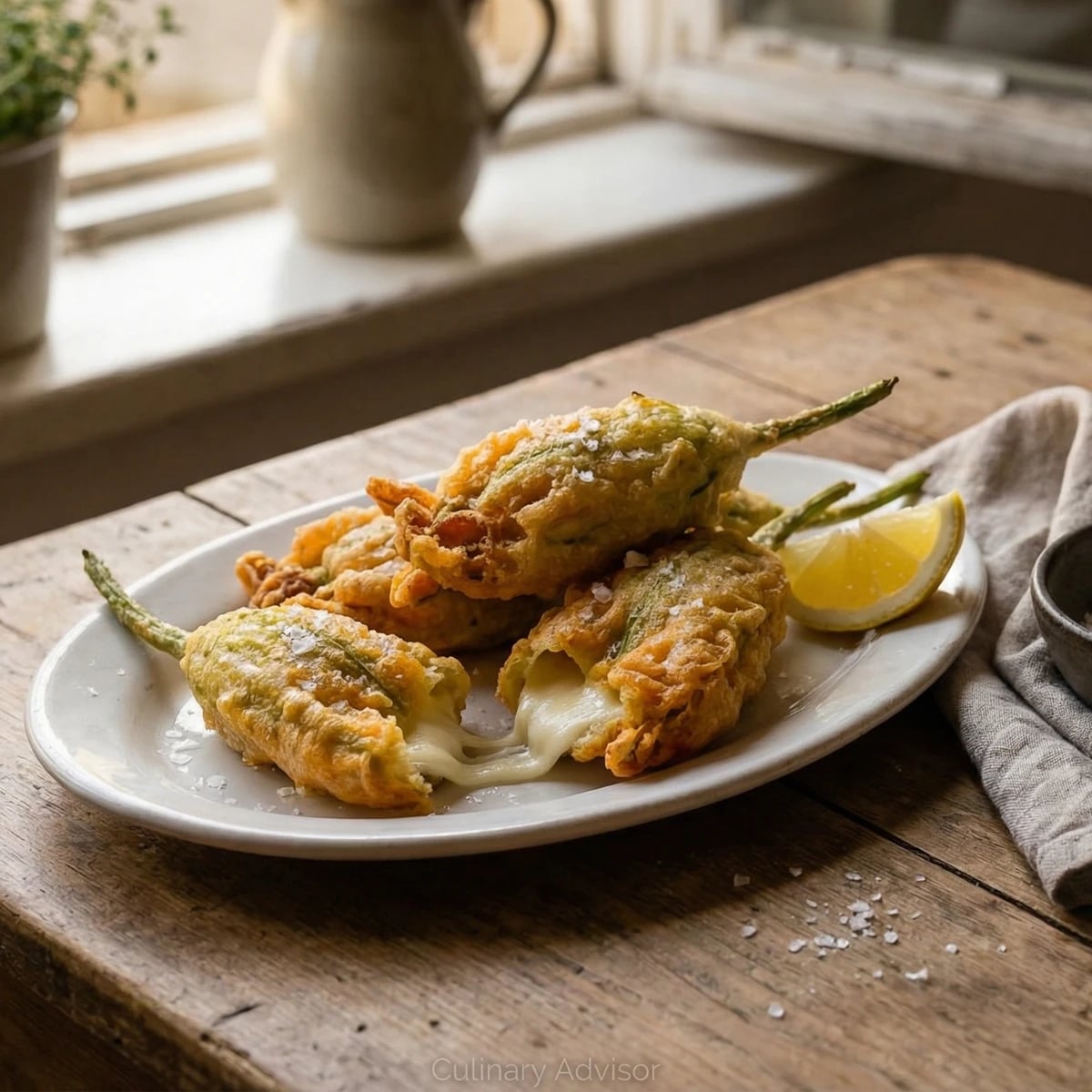
Roman street food at its most fleeting: zucchini blossoms stuffed with mozzarella and anchovy, dipped in a batter of ice water and flour, fried until golden and shatteringly crisp.
In Rome, when the summer heat presses down on the city and sensible people stay indoors until evening, vendors in the Campo de' Fiori and the old Ghetto sell these golden flowers from trays still glistening with oil. You eat them standing up, burning your fingers, the molten mozzarella stretching as you bite through the shattering crust.
The batter is barely there. It should crackle and dissolve on the tongue, leaving only a whisper of crispness. This is not tempura, not Southern fried anything, not beer-battered pub food. It is a Roman preparation that depends on restraint: flour, water, salt. The carbonation in the water provides lift. The ice-cold temperature prevents gluten from developing. The result is transparency.
What you keep out is as significant as what you put in. No eggs, which make batter heavy. No baking powder, which tastes of chemicals. No herbs in the filling, which would compete with the delicate flavor of the blossom itself. The anchovy provides salt and a depth that most people cannot identify. They taste only that something is profoundly right.
Fiori di zucca fritti emerged from the Jewish kitchens of Rome's Ghetto, where cooks developed a tradition of frying vegetables in the lightest possible batters. The dish spread through the city's street vendors and trattorias in the 19th century. Today it remains inseparable from Roman summer, appearing on menus only when the blossoms are in season, from late spring through early autumn.
Quantity
12
stems attached
Quantity
4 ounces
cut into 12 small batons
Quantity
6
oil-packed, halved lengthwise
Quantity
1 cup
Quantity
1 cup
ice-cold
Quantity
1/2 teaspoon
Quantity
about 3 cups
for frying
Quantity
for finishing
| Ingredient | Quantity |
|---|---|
| fresh zucchini blossomsstems attached | 12 |
| fresh mozzarellacut into 12 small batons | 4 ounces |
| anchovy filletsoil-packed, halved lengthwise | 6 |
| all-purpose flour | 1 cup |
| sparkling waterice-cold | 1 cup |
| fine sea salt | 1/2 teaspoon |
| vegetable oil or light olive oilfor frying | about 3 cups |
| flaky sea salt | for finishing |
Handle the blossoms with care. They are fragile and bruise easily. Gently open each flower and peer inside. Remove the pistil, that stiff yellow spike at the center. It is bitter and serves no purpose here. Leave the stem attached. Check for insects. Shake gently, do not rinse. Water destroys the delicate petals and prevents the batter from adhering.
Take one baton of mozzarella and one half-anchovy. Tuck them together inside the blossom, pushing gently toward the base. The petals should close around the filling naturally. Twist the tips of the petals together to seal, or leave them slightly open. Either is traditional. The filling must not fall out during frying, so be certain it is secured. Repeat with the remaining blossoms.
Put the flour in a bowl. Add the salt. Pour in the ice-cold sparkling water all at once and whisk briefly, no more than ten seconds. The batter should be thin, like heavy cream, with lumps remaining. Do not whisk until smooth. Overworking develops gluten and creates a heavy, bready coating. The lumps disappear during frying. The cold temperature and carbonation create the characteristic lightness. Make the batter immediately before frying.
Pour oil into a heavy pot or deep skillet to a depth of at least two inches. Heat over medium-high until the temperature reaches 350 degrees Fahrenheit. If you lack a thermometer, drop a small bit of batter into the oil. It should sizzle immediately and rise to the surface within two seconds. If it sinks and sits, the oil is too cold. If it browns instantly, too hot. Maintain this temperature throughout frying.
Working in batches of three or four, hold each stuffed blossom by the stem and dip it into the batter, coating completely. Let excess drip for two seconds. Lower gently into the hot oil, laying away from yourself to prevent splashing. Fry until golden and crisp, turning once with a slotted spoon, about two minutes total. The blossoms should be the color of pale straw, not dark brown. Remove to a rack set over a baking sheet. Do not drain on paper towels. The blossoms will steam and become soggy.
Scatter flaky salt over the blossoms while they are still hot. The salt will not adhere once they cool. Serve at once, within two or three minutes of frying. There is no reheating, no holding, no making ahead. The blossom is at its peak for perhaps five minutes before the batter softens. Your guests must be seated and ready. This is not food that waits.
1 serving (about 160g)
Culinary guides, cultural storytelling, and the editorial depth that makes cooking meaningful.
Discover Culinary Explorer
Chef Graziella
Roasted asparagus finished with aged Parmigiano-Reggiano from the same region that grows the best spears. Four ingredients. No complications. Nothing to hide behind.

Chef Graziella
Swiss chard from the kitchens of Emilia-Romagna, wilted in butter until tender, then showered with Parmigiano-Reggiano that melts into the warm greens. Three ingredients. Nothing more.

Chef Graziella
Tuscan white beans warmed gently with fried sage leaves and a whisper of garlic. This is the contorno that proves restraint is a virtue, not a limitation.

Chef Graziella
Sicily's celebrated sweet-sour eggplant, where Arab agrodolce tradition meets the island's capers, olives, and pine nuts. Make it today. Serve it tomorrow.