Chef Lupita
Acúmara Tatemada al Comal
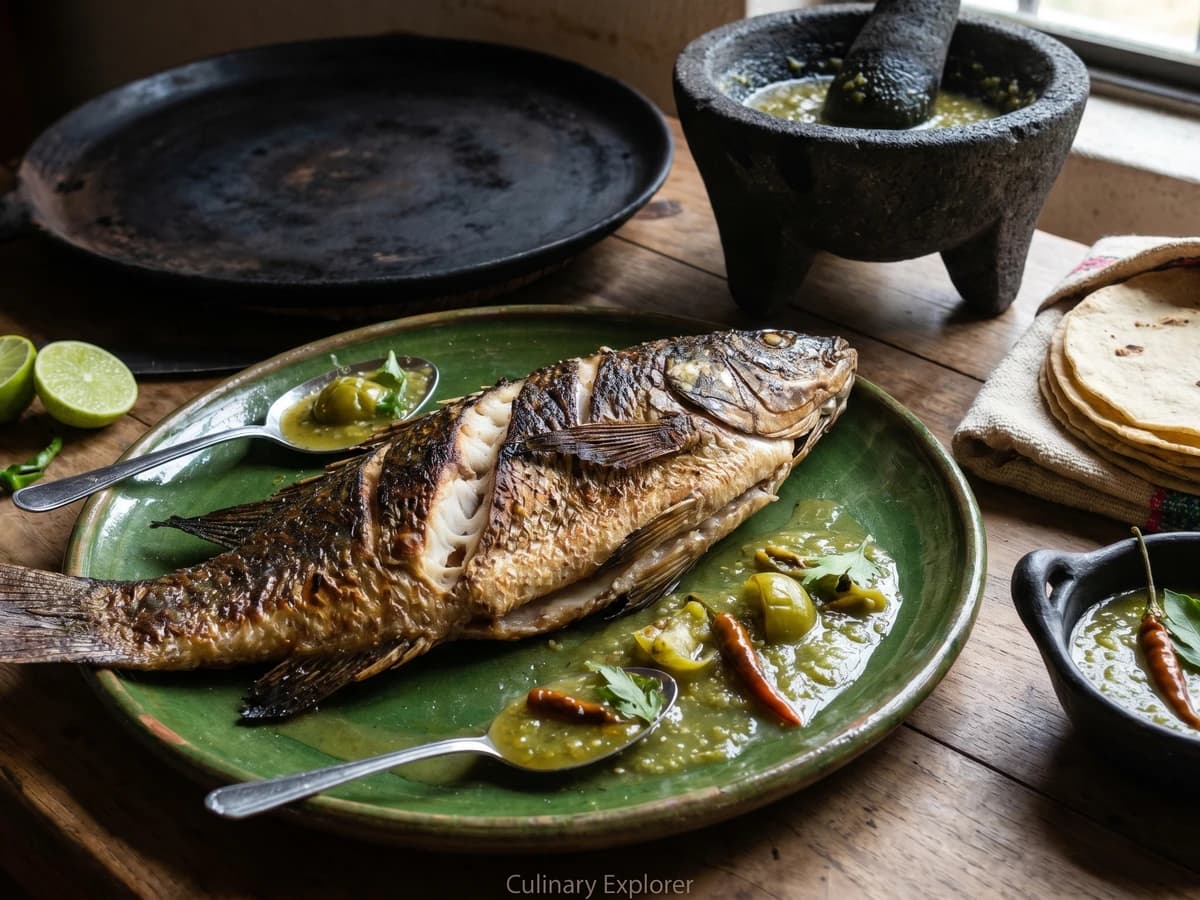
Michoacán's Lake Pátzcuaro acúmara, a whole kurucha from the lago tatemada on a comal de leña and served with chile perón atápakua, corn tortillas, and P'urhépecha discipline.
A cooking platform built around craft, culture, and the stories behind what we eat.

Created by
Baja California's wine country steak. Beef tenderloin seared dark, finished in a reduction of Valle de Guadalupe red wine and shallots, eaten with a flour tortilla from Tecate and a pinch of Pacific sea salt.
This is a Baja California dish. Specifically from the Valle de Guadalupe, the strip of inland valley between Tecate and Ensenada where Mexico has been making serious wine for two centuries and where the cooks of the region have built a cuisine on top of the vineyards.
Do not call this French food. The Valle de Guadalupe is its own place. Mediterranean climate, Pacific salt in the air, parrilla culture from the cattle ranches of northern Baja, flour tortillas instead of corn because this is the north and the north is wheat country. The dish is filete de res, a piece of beef tenderloin seared hard on a cast iron and finished in a reduction of local red wine, shallots, and a single chile de arbol so you remember whose country you are in. The wine has to be from the Valle. Casa Madero, Monte Xanic, Adobe Guadalupe, L.A. Cetto. If you cannot find one of these, find a serious Mexican red. Cooking this with grocery store cabernet from somewhere else is a waste of a beautiful piece of meat.
Flour tortillas from Tecate, made by hand with manteca and rolled paper thin, are the right bread for this dish. Not corn. Cada estado, su propia cocina, and Baja's tortilla is wheat. Tear off a piece of the seared meat, drag it through the wine sauce, fold it into a warm tortilla, finish it with a pinch of salt from Guerrero Negro. That is how the cooks of Ensenada eat their own beef. Saber cocinar es saber vivir.
Wine has been made in Baja California since 1791, when the Dominican mission of Santo Tomas de Aquino planted the first vineyards south of the modern Valle de Guadalupe, but the region's modern wine identity dates to the 1980s when a generation of vintners, led by Hugo D'Acosta and others, established Mexico as a serious New World wine producer. The Valle de Guadalupe now accounts for roughly 70 percent of Mexico's wine production and has given rise to a regional cuisine, sometimes called Baja-Med, that joins Mediterranean technique with Pacific seafood, ranch beef, and the wheat-based tortilla tradition of northern Mexico. Flour tortillas, often dismissed elsewhere in the country as Americanized, are in fact a deeply rooted northern Mexican staple dating to the 17th century, when wheat cultivation took hold in Sonora, Chihuahua, and Baja California where corn was harder to grow.
Quantity
4 (6 to 8 ounces each)
cut 1.5 inches thick, brought to room temperature
Quantity
2 tablespoons, divided
Quantity
1 teaspoon
Quantity
2 tablespoons
or a peppery extra-virgin
Quantity
2 tablespoons, divided
Quantity
6 large
peeled and finely diced
Quantity
4
finely minced
Quantity
1 sprig
Quantity
2 sprigs
Quantity
1
stemmed and lightly crushed
Quantity
1.5 cups
Nebbiolo, Tempranillo, or a Bordeaux-style blend
Quantity
1 cup
Quantity
1 tablespoon
Quantity
1 teaspoon
grated
Quantity
for finishing
Quantity
for serving
Quantity
for serving
warmed
| Ingredient | Quantity |
|---|---|
| beef tenderloin steaks (filete de res)cut 1.5 inches thick, brought to room temperature | 4 (6 to 8 ounces each) |
| kosher salt | 2 tablespoons, divided |
| freshly cracked black pepper | 1 teaspoon |
| olive oil from Valle de Guadalupeor a peppery extra-virgin | 2 tablespoons |
| unsalted butter | 2 tablespoons, divided |
| shallotspeeled and finely diced | 6 large |
| garlic clovesfinely minced | 4 |
| fresh rosemary | 1 sprig |
| fresh thyme | 2 sprigs |
| dried chile de arbolstemmed and lightly crushed | 1 |
| red wine from Valle de GuadalupeNebbiolo, Tempranillo, or a Bordeaux-style blend | 1.5 cups |
| beef stock, unsalted | 1 cup |
| aged balsamic or sherry vinegar | 1 tablespoon |
| dark muscovado or piloncillograted | 1 teaspoon |
| flaky sea salt from Guerrero Negro (optional) | for finishing |
| grilled spring onions (cebollitas) (optional) | for serving |
| hand-pressed flour tortillas from Tecate (optional)warmed | for serving |
Take the steaks out of the refrigerator at least 45 minutes before cooking. Pat them completely dry with a clean towel. Season generously on both sides with one tablespoon of the kosher salt and the cracked black pepper. Cold meat into a hot pan steams instead of sears. Dry meat at room temperature gives you the crust. There is no shortcut here.
Open the bottle of Valle de Guadalupe red and pour yourself a small glass before you start. Taste it. You need to know what is going into the pan. A wine you would not drink is a wine you should not cook with. The Valle has been making serious wine since the Jesuits planted vines in the 18th century, and the modern bottles from Casa Madero, Monte Xanic, or Adobe Guadalupe carry the salt of the Pacific and the heat of the inland valley. Use what speaks to you.
Heat a heavy cast iron skillet over high heat until a drop of water vaporizes on contact. Add the olive oil and one tablespoon of butter. The butter will brown almost immediately. Lay the steaks down without crowding the pan. Do not move them. Three minutes on the first side. Three minutes on the second. The crust should be deep mahogany, almost black at the edges. For the last minute, tilt the pan and spoon the foaming butter and oil over the top. This is how the parrilleros of Ensenada finish a steak even when they are working over wood coals.
Move the steaks to a warm plate, tent loosely with foil, and rest for at least eight minutes while you build the sauce. The juices need to settle back into the meat. Cut into a steak too soon and the plate fills with the flavor that should be in the bite. Pour off all but one tablespoon of the fat from the skillet.
Lower the heat to medium. Add the diced shallots to the same skillet, scraping up the dark fond from the searing. Cook for six to seven minutes, stirring often, until the shallots are soft and translucent and turning gold at the edges. Add the garlic, rosemary, thyme, and the crushed chile de arbol. Cook for one more minute. The kitchen should smell like a Baja parrilla on a Sunday afternoon. The chile de arbol is the only Mexican fingerprint in the sauce and it is small but necessary. This is a wine country dish with a Mexican accent, not a French dish in disguise.
Pour in the red wine and raise the heat to medium-high. Let it bubble hard. Reduce by two-thirds, about eight to ten minutes. The alcohol cooks off and the sugars and tannins concentrate into something glossy and dark. Do not rush this. A wine sauce that has not reduced enough tastes thin and sour. A wine sauce that has reduced properly coats the back of a spoon.
Add the beef stock, vinegar, and grated piloncillo. Reduce again until the sauce coats the back of a spoon, about five minutes. Pull the pan off the heat. Fish out the rosemary, thyme stems, and chile. Swirl in the remaining tablespoon of cold butter. The butter emulsifies into the sauce and gives it the shine that makes the plate look serious. Taste for salt. The reduction has concentrated everything, so adjust carefully.
Place each filete on a warm plate. Pour the wine and shallot sauce over and around the meat, letting it pool at the edge. Finish with a pinch of flaky sea salt from Guerrero Negro, a few grilled spring onions on the side, and a small basket of warm flour tortillas from Tecate. The tortillas are how a Baja cook eats a steak: tear off a piece of meat, drag it through the sauce, fold it into a tortilla. Asi se hace y punto.
1 serving (about 320g)
Culinary guides, cultural storytelling, and the editorial depth that makes cooking meaningful.
Discover Culinary ExplorerChef Lupita
Michoacán's Lake Pátzcuaro acúmara, a whole kurucha from the lago tatemada on a comal de leña and served with chile perón atápakua, corn tortillas, and P'urhépecha discipline.

Chef Lupita
Puebla's weekday adobo of pork shoulder braised in a thick guajillo and ancho sauce sharpened with vinegar, cumin, and clove. The deep red of a market spice stall, the dish a poblana cooks without thinking.

Chef Lupita
Loreto's pit-roasted clams, planted hinge-up in beach sand and tatemadas under a fast fire of dried romerillo brush, the resinous Baja desert shrub that gives this dish its smoke.

Chef Lupita
Oaxaca's eighth mole, the silky, almond-and-cinnamon almendrado, served over poached chicken. Mild, sweet, restrained, and a quiet rebuttal to anyone who thinks Mexican food has to be hot to be Mexican.