Culinary Explorer

A cooking platform built around craft, culture, and the stories behind what we eat.
Discover Culinary Explorer
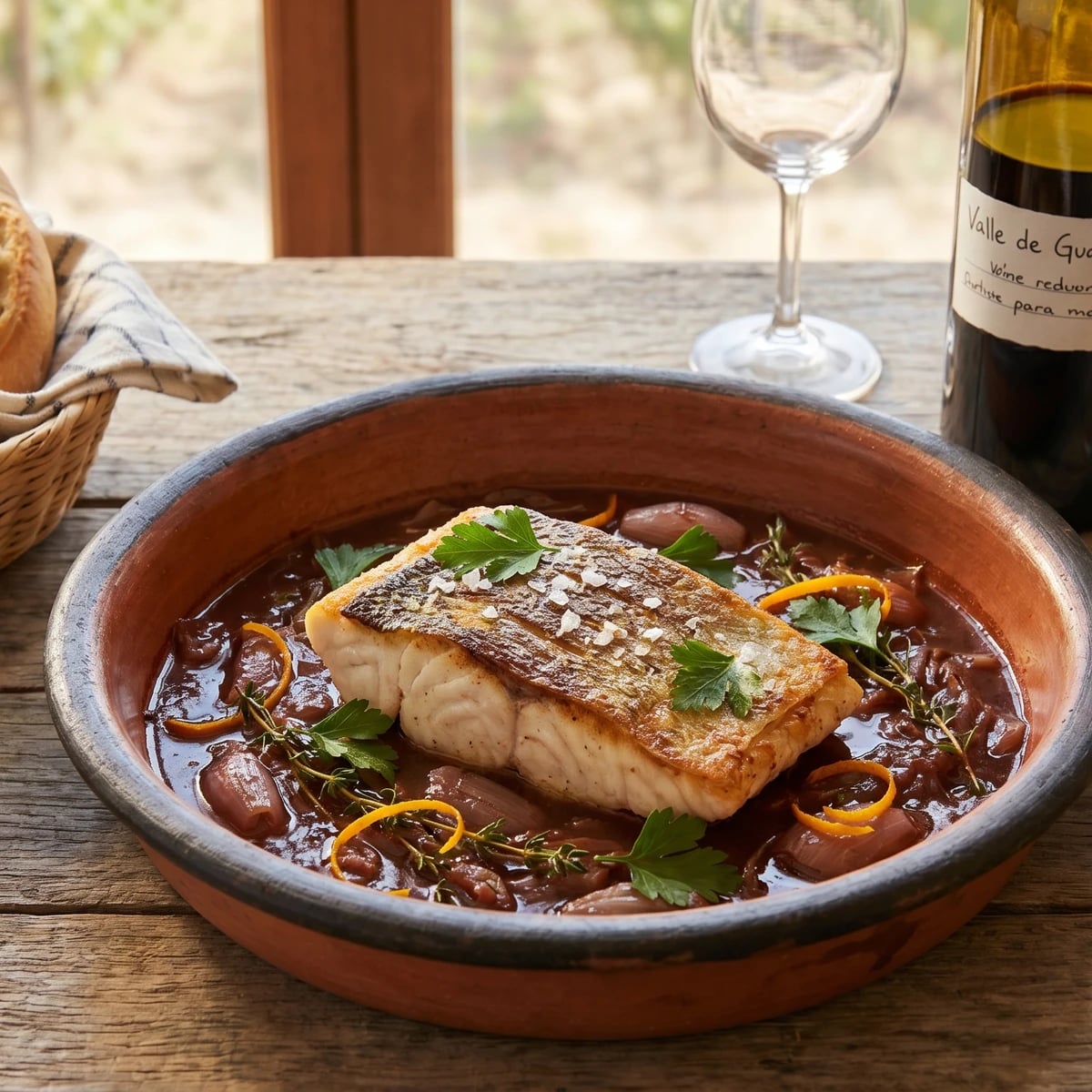
Filete de Pescado al Vino Tinto del Valle de Guadalupe

Filete de Pescado al Vino Tinto del Valle de Guadalupe

Created by

Baja California's wine-country plate from the Valle de Guadalupe, where Pacific snapper meets a reduction of local red wine, shallots, and Mediterranean herbs grown on the same hillsides as the grapes.

Main Dishes
Mexican
Date Night
Special Occasion
Anniversary
20 min
Active Time
35 min cook55 min total
Yield4 servings

This dish is from Baja California. Specifically from the Valle de Guadalupe, the wine country an hour northeast of Ensenada, where the vineyards run down to within sight of the Pacific and the cooks borrow as comfortably from the Mediterranean as they do from the Mexican kitchens of their grandmothers. Cada estado, su propia cocina, and Baja's is one of the youngest and most surprising cuisines in the country.

The geography is the recipe. The Valle is on the same latitude as the Mediterranean, the soil is volcanic, and the cold Pacific current pushes fog up the canyons every morning. Russian and Italian immigrants planted vines here a century ago, and Mexican winemakers have made it the center of a national wine industry that most of the world still does not know exists. The fish comes off the boats at the Mercado Negro in Ensenada at dawn, the wine comes from a cellar twenty minutes inland, the rosemary and thyme grow wild on the hills between them. A cook in the Valle does not have to invent fusion. The land already did the work.

This is not a French sauce in disguise. The guajillo in the reduction, the charred tomato, the orange at the finish, those are the Mexican hands on the dish. Use a Mexican wine if you can find one. L.A. Cetto, Monte Xanic, Casa Madero from Coahuila, any of them. If your local store carries nothing from Mexico, ask why. The country has been making wine since the 16th century. Saber cocinar es saber vivir, and knowing where your wine comes from is part of that.

The Valle de Guadalupe's wine industry traces to 1888, when a community of Russian Molokan religious refugees settled the valley and planted vines alongside the older mission plantings established by Dominican friars in the late 1700s. Mexico is in fact the oldest wine-producing country in the Americas, with Casa Madero in Parras, Coahuila, founded in 1597 and still operating, but Baja California became the modern center of the industry in the late 20th century when winemakers like Hugo D'Acosta and Camillo Magoni began producing wines that could stand against international peers. The Baja Med culinary movement, codified by Ensenada chefs in the early 2000s, formalized what cooks in the region had long practiced: the integration of Mediterranean technique, Pacific seafood, and Mexican ingredients into a coherent regional cuisine distinct from anything else in the country.

The technique, the tradition, and the story behind every dish.

Discover Culinary Explorer

Ingredients

fresh red snapper or white sea bass fillets, skin on

Quantity

4 (6 ounces each)

pin bones removed

sea salt

Quantity

1 1/2 teaspoons, plus more to taste

freshly cracked black pepper

Quantity

to taste

olive oil from Valle de Guadalupe

Quantity

3 tablespoons

unsalted butter

Quantity

2 tablespoons

cold, cut into pieces

shallots

Quantity

4 medium

finely chopped

garlic cloves

Quantity

4

finely chopped

fresh rosemary

Quantity

1 sprig

fresh thyme

Quantity

2 sprigs

fresh bay leaf

Quantity

1

dried chile guajillo

Quantity

1 small

stemmed, seeded, and torn into pieces

dry red wine from Valle de Guadalupe

Quantity

1 1/2 cups

Nebbiolo, Tempranillo, or a Mision-based blend

fish stock or clam juice

Quantity

1/2 cup

plum tomato

Quantity

1

charred on a comal, peeled, and chopped

fresh orange zest

Quantity

1 teaspoon

fresh orange juice

Quantity

1 tablespoon

flaky sea salt from Guerrero Negro (optional)

Quantity

for finishing

fresh flat-leaf parsley (optional)

Quantity

for serving

chopped

warm bolillos or hand-pressed corn tortillas (optional)

Quantity

for serving

Equipment Needed

  • Wide heavy-bottomed cazuela or 12-inch skillet, ideally cast iron
  • Comal or dry skillet for charring the tomato
  • Fish spatula or wide thin metal spatula
  • Sharp pescador's knife for portioning the fish
  • Microplane for the orange zest

Instructions

  1. 1

    Dry and season the fish

    Pat the fillets dry with a clean cotton cloth. Wet fish does not sear, it steams. Season both sides with sea salt and cracked black pepper and let them rest skin side up on a plate while you start the sauce. Twenty minutes at room temperature, no more. Cold fish hitting hot oil curls and seizes.

    Buy the fish whole if you can and ask the pescadero to fillet it for you. The bones and head go into the stock for the sauce. In Ensenada nothing gets thrown away.
  2. 2

    Build the wine base

    Heat 2 tablespoons of the olive oil in a wide cazuela or heavy skillet over medium heat. Add the shallots with a pinch of salt. Cook for 6 to 8 minutes, stirring often, until they turn soft and translucent and begin to take on color at the edges. Add the garlic, the torn guajillo, the rosemary, the thyme, and the bay leaf. Cook for one minute more, until the kitchen smells like the herb garden behind a Valle de Guadalupe winery.

  3. 3

    Reduce the wine

    Pour in the red wine. Raise the heat to medium-high and let it come to a vigorous simmer. Reduce by half, about 8 to 10 minutes. The harsh alcohol cooks off and the wine concentrates into something deep and structured. Add the fish stock and the charred tomato. Simmer 5 minutes more until the sauce coats the back of a spoon. Taste for salt now. The sauce should be assertive because the fish itself is mild.

    Use a wine you would actually drink. Cooking wine is a lie sold to people who do not cook. If the bottle is bad in the glass, it is bad in the pan.
  4. 4

    Sear the fish skin side down

    Push the sauce to one side of the cazuela or transfer it briefly to a bowl. Add the remaining tablespoon of olive oil to the empty side over medium-high heat. When the oil shimmers, lay the fillets down skin side first. Press gently with a spatula for the first 30 seconds so the skin makes full contact. Sear for 3 minutes without moving them. The skin should release on its own when it is ready. If it sticks, it is not done.

  5. 5

    Finish the fish in the sauce

    Spoon the wine sauce back around the fillets, leaving the seared skin proud of the liquid so it stays crisp. Lower the heat to medium-low. Cover loosely and cook for 4 to 6 minutes more, depending on the thickness of the fillets. The flesh is done when it turns opaque and flakes with the gentle press of a fork. Do not overcook. Snapper that has been pushed past tender becomes cotton.

  6. 6

    Mount the sauce and finish

    Lift the fillets onto a warm platter, skin side up. Bring the sauce back to a low simmer. Off the heat, swirl in the cold butter one piece at a time until the sauce turns glossy and clings to the spoon. Stir in the orange zest and orange juice at the very end. The citrus brightens everything and ties the wine to the Pacific. Pour the sauce around the fish, never over the seared skin. Finish with flaky salt and chopped parsley.

  7. 7

    Serve

    Bring the platter to the table with warm bolillos to soak up the sauce. A glass of the same wine you cooked with belongs next to the plate. Eat immediately. This is a dish that does not wait. Recetas probadas y garantizadas.

Chef Tips

  • The fish has to be fresh. This is not a dish to make with frozen fillets that have been sitting in a supermarket case. Go to a real fish counter, smell what they are selling, and accept no fish that smells like anything other than clean salt water. If snapper or sea bass is not good today, ask what came off the boat this morning and use that. The dish bends. The freshness does not.
  • Mexican wine is not a gimmick in this recipe. The local reds from the Valle have a particular structure, drier than a California Cab, with mineral notes from the volcanic soil that carry through the reduction. If you cannot find Mexican, use a dry Tempranillo or Nebbiolo from anywhere. Avoid sweet wines. They turn cloying when you reduce them.
  • The guajillo is not there for heat. It is there to anchor the dish to Mexico. One small chile, torn and added with the herbs, gives the sauce a faint smoky sweetness that tells the eater this is not a French dish. Leave it out and you have lost the regional identity.
  • Olive oil from the Valle de Guadalupe exists and it is excellent. If you find it, use it. Otherwise any good cold-pressed Mexican olive oil from Baja or Sonora will do. The olive groves in northern Mexico are older than most people realize.

Advance Preparation

  • The wine and shallot base, through step 3, can be made up to one day ahead and refrigerated. Reheat gently before adding the fish.
  • The fish should be cooked at the moment of serving. Reheated fish in wine sauce is sad fish in sad sauce.
  • Char the tomato on the comal in the morning if you like, peel it, and hold it covered at room temperature until you build the sauce.

Frequently Asked Questions

Nutrition Information

1 serving (about 270g)

Calories
350 calories
Total Fat
18 g
Saturated Fat
5 g
Trans Fat
0 g
Unsaturated Fat
12 g
Cholesterol
85 mg
Sodium
1100 mg
Total Carbohydrates
10 g
Dietary Fiber
1 g
Sugars
3 g
Protein
35 g

Note: Chef personas and recipes are created with AI assistance. Cook with care: follow safe food-handling practices, check doneness with a thermometer when needed, and adapt for allergies and your kitchen.

Where cooking meets culture.

Culinary guides, cultural storytelling, and the editorial depth that makes cooking meaningful.

Discover Culinary Explorer

More from Noroeste Main Dishes

Browse the full collection