
Chef Klaus
Apfelschorle
Cloudy apple juice, sharp mineral water, and no sugar bowl: the German Schorle that belongs in school bags, beer gardens, picnic baskets, and the table when supper is quick.
A cooking platform built around craft, culture, and the stories behind what we eat.
Created by
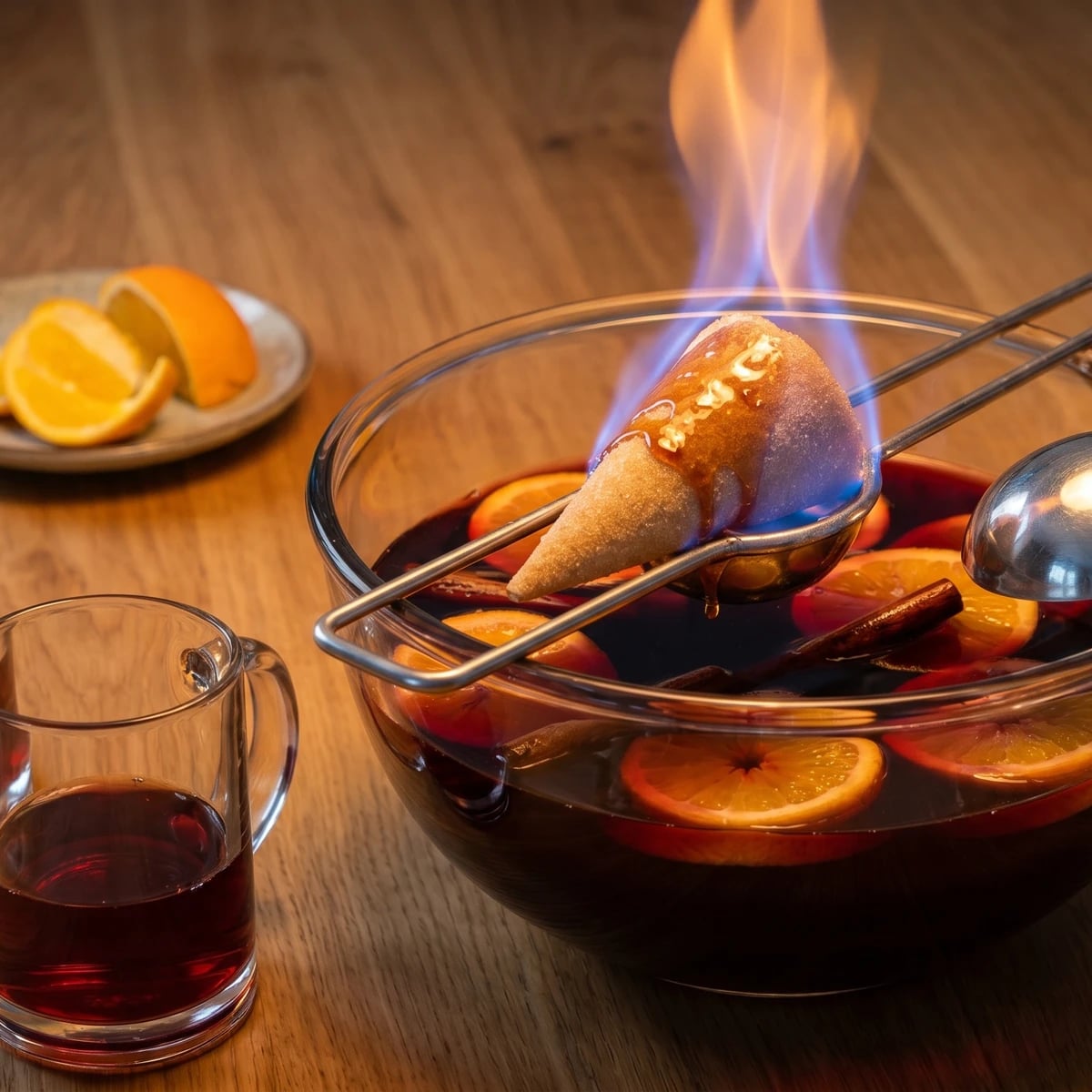
The Silvester punch that is half drink, half table ritual: spiced red wine below, burning rum sugar above, and no supermarket Glühwein carton anywhere near it.
Feuerzangenbowle belongs to winter, to Advent rooms, Christmas markets, and especially the Silvester table when everyone is already standing around the pot pretending not to watch the flame. It isn't Glühwein with theatre added. The burning Zuckerhut, the sugarloaf, drips caramel into the wine and changes the drink while people wait for it. Das braucht seine Zeit.
The strongest tradition is broad German rather than one tidy region, but every table still argues. Some Rhineland cooks want orange and a sweeter bowl, some southern tables keep the spice heavier, and others swear the wine must stay lean because the sugar does the sweetening. Im Norden anders, im Süden anders. The rule I care about is simpler: real red wine, whole spice, real citrus, and rum strong enough to burn. Nicht aus dem Glas, not from the bottle mix.
The technique that decides the whole drink is heat control. Keep the wine hot but below a simmer, because boiling drives off the alcohol, roughens the fruit peel, and makes cheap bitterness where warmth should be. Then soak the sugarloaf with rum and light it over the pot. Never pour rum from the bottle near flame. Use a ladle, feed the sugar slowly, and watch the flame, not the clock.
When the last sugar has melted, stir once and taste. Sweetness, spice, wine, and caramel should sit together, not fight. If it tastes flat, a strip of fresh orange peel fixes more than another spoon of sugar. Erst verstehen, dann kochen.
Feuerzangenbowle grew out of the older German Bowle tradition, a wine-and-punch culture that became fashionable in the nineteenth century as sugarloaves, citrus, rum, and spices were common enough for middle-class festive tables. Its modern fame was fixed by Heinrich Spoerl's 1933 novel Die Feuerzangenbowle and the 1944 film with Heinz Rühmann, which turned the drink into a ritual of school nostalgia, winter evenings, and shared mischief. The name comes from the Feuerzange, the fire tongs or metal grate that holds the sugarloaf above the bowl while burning rum melts it into the wine.
Quantity
2 bottles, 750ml each
Quantity
1
unwaxed, sliced
Quantity
1
unwaxed, sliced
Quantity
2
Quantity
6
Quantity
2
Quantity
1 small strip
white pith removed
Quantity
about 250g
Quantity
350ml
Quantity
to taste
| Ingredient | Quantity |
|---|---|
| dry red wine | 2 bottles, 750ml each |
| orangeunwaxed, sliced | 1 |
| lemonunwaxed, sliced | 1 |
| cinnamon sticks | 2 |
| whole cloves | 6 |
| star anise (optional) | 2 |
| orange peelwhite pith removed | 1 small strip |
| Zuckerhut, sugarloaf | about 250g |
| overproof rum, at least 54% ABV | 350ml |
| fresh orange peel (optional) | to taste |
Pour the red wine into a wide heatproof pot or Feuerzangenbowle bowl and add the orange, lemon, cinnamon, cloves, star anise if using, and the strip of orange peel. Warm it gently until it is hot to the touch but not simmering, about 70C. Boil it and you drive off the alcohol, pull bitterness from the citrus peel, and flatten the wine before the sugar has done its work.
Set the Feuerzange, fire tongs or metal grate, across the bowl and lay the Zuckerhut on top so it sits steady over the hot wine. The sugar must drip into the bowl, not onto the table, and the bowl needs room below it because the caramel falls slowly, drop by drop. This is the drink making itself in front of you.
Warm a little rum in a metal ladle, pour it over the sugarloaf until the surface is wet, then light the sugar with a long match. Use rum of at least 54 percent alcohol, because weaker rum often sulks instead of burning. Keep the bottle away from the flame at all times; refill the ladle away from the bowl, then carry the rum back to the sugar.
As the flame lowers, add more rum by ladle over the sugar, never from the bottle, until the Zuckerhut has melted and the caramel has dripped into the wine. Keep the wine below a simmer the whole time. Runter mit der Temperatur if the surface starts to move hard, because a boiling bowl wastes the wine while the sugar is still working.
When the sugar has melted, remove the grate, stir the bowl once, and taste. If it needs lift, add a fresh strip of orange peel and let it sit two minutes, because fresh peel brings brightness without more sweetness. Ladle into heatproof mugs and serve at once, hot and glossy, with the spices left behind in the bowl.
1 serving (about 245g)
Culinary guides, cultural storytelling, and the editorial depth that makes cooking meaningful.
Discover Culinary Explorer
Chef Klaus
Cloudy apple juice, sharp mineral water, and no sugar bowl: the German Schorle that belongs in school bags, beer gardens, picnic baskets, and the table when supper is quick.

Chef Klaus
Frankfurt's long drink for a warm table: dry Apfelwein, cold mineral water, and the ribbed Geripptes glass that tells you where you are.

Chef Klaus
Berlin's summer glass: sharp, pale Berliner Weisse softened with a red raspberry or green woodruff Schuss, cold enough to bead the glass and never from bottled syrup.

Chef Klaus
The Easter bottle from yolks, sugar, cream, and good spirit, beaten warm just enough to thicken, then cooled into a yellow liqueur for cake, coffee, and small glasses.