
Chef Isabel
Aguaillo de la Sierra de Cadiz
Aguaillo is from the Sierra de Cadiz: cold water, stale bread, garlic, oil and vinegar, closer to a field drink than a bowl of soup, and sharp enough to wake you in the heat.
A cooking platform built around craft, culture, and the stories behind what we eat.
Created by
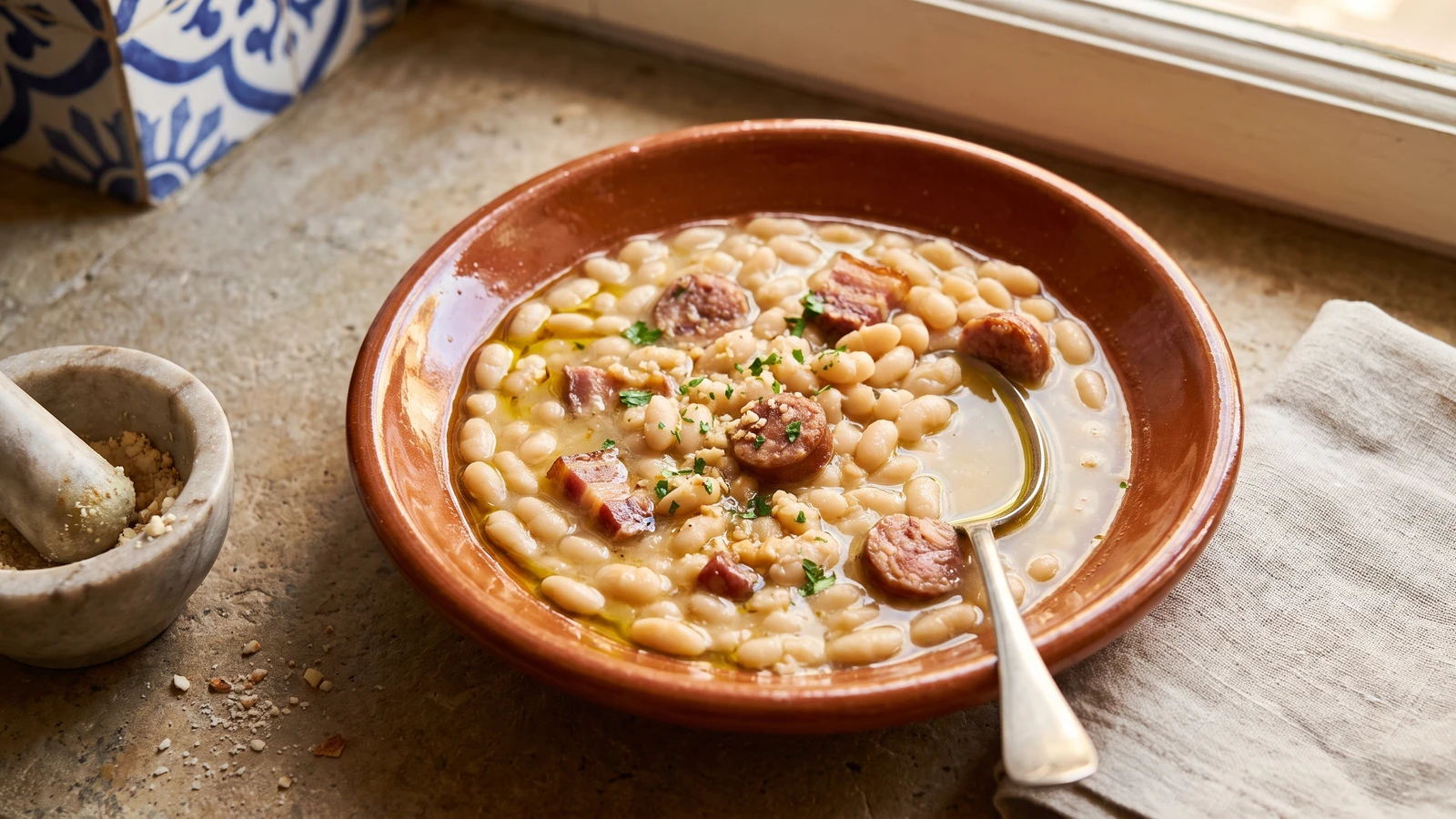
Fesols de Santa Pau are Catalan, from La Garrotxa: tiny volcanic-soil beans with a fine skin, cooked gently until creamy with cansalada, botifarra, sofregit, and patience.
Fesols de Santa Pau belong to La Garrotxa, in inland Catalonia, where the volcanic soil gives a tiny white bean with a fine skin and a soft, almost chestnut-like centre. This is not a big northern bean stew. It is smaller, quieter, and more exact: the beans stay whole, the broth turns creamy, and the pork seasons without bullying them.
The method that decides it is the simmer. Soak the fesols overnight, start them in cold water, and keep them at a low murmur, not a hard boil. Their skin is thin. Treat them roughly and they split before the inside has gone tender. Treat them gently and they give you that proper Catalan spoonful, beans holding their shape in a broth that tastes deeper than the work you put in.
The sofregit, the Catalan slow onion and tomato base, comes after the beans are nearly tender. Cook it low until the onion is dark gold and the tomato has lost its raw edge, then fold it into the pot with the browned cansalada and botifarra. A small picada of garlic, parsley, and toasted almond thickens the finish without making the stew heavy. That's the hand of Catalonia in the pot.
If you can't find DOP Fesols de Santa Pau, use a small dried white bean, navy bean, alubia arrocina, or a small cannellini. It won't have quite the same fine skin or volcanic-soil sweetness, but it will still make a good dish if you don't rush it. No hace falta haber pisado España. Pésalo, no lo adivines, and keep the heat low. Siempre sale, si lo sigues.
Fesols de Santa Pau come from the volcanic land around Santa Pau in La Garrotxa, where the light, porous soil and inland Catalan climate shaped a small bean prized for its thin skin and creamy flesh. The beans are often served with botifarra or cansalada, the cured and fresh pork of the Catalan household larder, and they belong to the same cocina de cuchara, spoon food, that made legumes the centre of a working table. Their protected name is tied to that narrow place, not to Catalonia in general, which is why a true pot begins with the bean and the comarca.
Quantity
400g
soaked overnight
Quantity
1.5 litres, plus more as needed
Quantity
1
Quantity
1
peeled and halved
Quantity
2 tablespoons
Quantity
150g
cut into 2cm pieces
Quantity
300g
Quantity
1
finely chopped
Quantity
2 tomatoes or 200g canned
grated if fresh
Quantity
3 cloves
Quantity
30g
Quantity
15g
Quantity
1 teaspoon
Quantity
to taste
Quantity
to taste
| Ingredient | Quantity |
|---|---|
| dried Fesols de Santa Pausoaked overnight | 400g |
| cold water | 1.5 litres, plus more as needed |
| bay leaf | 1 |
| small onionpeeled and halved | 1 |
| olive oil | 2 tablespoons |
| cansalada or thick-cut pancettacut into 2cm pieces | 150g |
| botifarra fresca or mild fresh pork sausage | 300g |
| medium onionfinely chopped | 1 |
| ripe tomatoes or canned crushed tomatograted if fresh | 2 tomatoes or 200g canned |
| garlic | 3 cloves |
| toasted almonds | 30g |
| flat-leaf parsley | 15g |
| sweet pimentón | 1 teaspoon |
| salt | to taste |
| black pepper | to taste |
Put the dried fesols in a large bowl, cover with plenty of cold water, and leave them overnight, 8 to 12 hours. Drain them before cooking. This soak is not decoration; it lets the small beans cook evenly before their fine skins give way.
Put the drained beans in a heavy pot with 1.5 litres cold water, the bay leaf, and the halved onion. Bring them up slowly over medium heat, then lower the heat until the surface barely trembles. Skim any foam. Cook gently for 45 to 60 minutes, until the beans are almost tender but not collapsing.
While the beans cook, warm the olive oil in a frying pan. Brown the cansalada until its edges take colour and it has given some fat to the pan. Add the botifarra and brown it on all sides, then lift it out and cut it into thick pieces. Keep the fat in the pan; that is flavour you already paid for.
Add the chopped onion to the same pan with a pinch of salt and cook low and slow until dark gold and soft, 15 to 20 minutes. Add the grated tomato and cook until thick, sweet, and almost dry. Stir in the pimentón off the heat so it blooms in the oil without scorching. Rush this and the stew tastes flat; let it go dark and jammy and the beans know what to do with it.
Remove the halved onion from the bean pot. Add the sofregit, cansalada, and sliced botifarra to the beans. Season lightly with salt and black pepper, then simmer at that same low murmur for 25 to 35 minutes, until the beans are creamy inside and the broth has gathered body. Stir by rocking the pot, not by chasing the beans with a spoon.
Crush the garlic, toasted almonds, and parsley to a rough paste, a picada, then loosen it with a spoonful of hot bean broth. Stir it gently into the pot for the last 5 minutes. Taste for salt, take the pot off the heat, and rest it 10 minutes before serving. The rest thickens the broth and settles the pork into the beans.
1 serving (about 390g)
Culinary guides, cultural storytelling, and the editorial depth that makes cooking meaningful.
Discover Culinary ExplorerChef Isabel
Aguaillo is from the Sierra de Cadiz: cold water, stale bread, garlic, oil and vinegar, closer to a field drink than a bowl of soup, and sharp enough to wake you in the heat.

Chef Isabel
Ajilimojili is Jaen's tomato-free cold soup: potato, roasted red pepper, garlic, olive oil, and vinegar pounded into a cool, silky spoonful.

Chef Isabel
Ajo carretero is Soriano, from the pine country of Soria: lamb cooked in a plain garlicky broth, then served the old way, meat first and bread-soaked soup after.

Chef Isabel
Ajoblanco Extremeño is the poor-kitchen cold soup of Extremadura: bread, garlic, oil, egg yolk, vinegar, and icy water, with no almonds. Whisk it slowly and serve it bien fresquito.