Chef Thomas
Anchovy Sauce
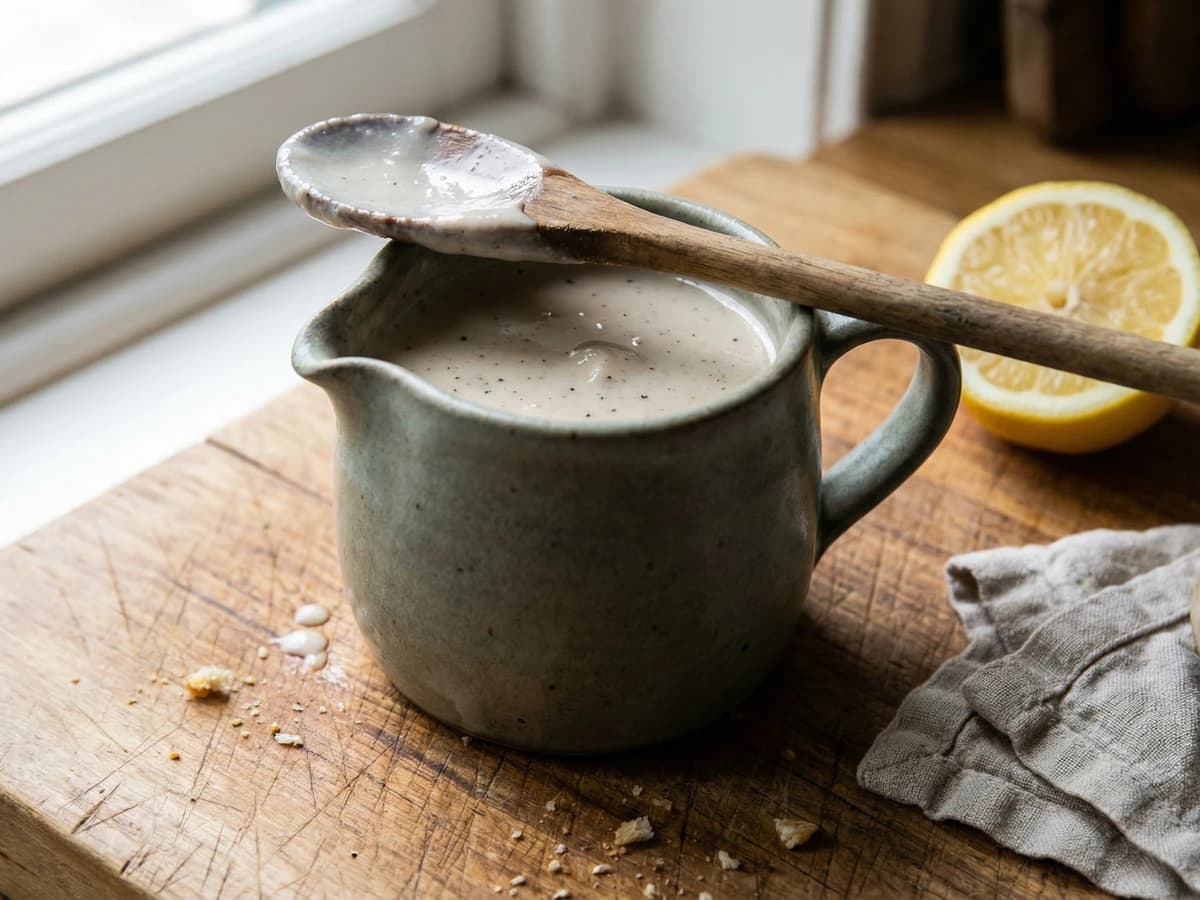
A proper white sauce sharpened with pounded anchovy, the old Georgian trick for waking up a piece of poached fish or a slice of roast lamb on a Sunday in spring.
A cooking platform built around craft, culture, and the stories behind what we eat.

Created by Chef Thomas
A small jug of warm, sharp, creamy mustard sauce, the kind that does quiet but essential work next to a gammon joint on a cold Sunday and asks for nothing more than to be poured generously.
There's a particular Sunday in January when nothing else will do. A gammon joint poaching slowly in the big pot, the windows running with condensation, the dog asleep under the table, and a small jug of mustard sauce waiting on the side to do its sharp, joyful work. This is the sauce I mean.
English mustard is its own thing. Not the mellow, vinegary French sort, not the sweet American kind in plastic bottles. The proper stuff, from the yellow Colman's tin, has a heat that goes straight up the back of your nose and brings tears to your eyes if you've been heavy-handed. Smoothed into a warm cream sauce it becomes something else entirely: rich, savoury, faintly sweet, with a clean fire that cuts through fat the way nothing else quite does. A spoonful next to a slice of pink gammon is one of the more useful things a kitchen can produce.
The trick, and it really is the only trick, is the bloom. You mix the mustard powder with cold water and you walk away for ten minutes. That's where the heat comes from, a small chemical conversation between the powder and the water, and if you skip it or use hot water you'll have made a yellow paste that tastes of dust. Cold water, ten minutes, patience. After that the rest is just a white sauce with somewhere to go.
I wrote it down in the notebook years ago, next to a note about a gammon I'd done for six people on a wet Sunday. Mustard sauce, hot, in the small blue jug. That was all it said. Some things don't need more detail than that.
Quantity
2 tablespoons
Quantity
2 tablespoons
Quantity
25g
Quantity
25g
Quantity
300ml
gently warmed
Quantity
75ml
Quantity
1 teaspoon
Quantity
1 teaspoon
Quantity
1 teaspoon
Quantity
to taste
Quantity
to taste
| Ingredient | Quantity |
|---|---|
| Colman's English mustard powder | 2 tablespoons |
| cold water | 2 tablespoons |
| unsalted butter | 25g |
| plain flour | 25g |
| whole milkgently warmed | 300ml |
| double cream | 75ml |
| cider vinegar | 1 teaspoon |
| caster sugar | 1 teaspoon |
| Colman's English mustard from the jar (optional) | 1 teaspoon |
| fine sea salt | to taste |
| white pepper | to taste |
Spoon the mustard powder into a small bowl and stir in the cold water until you have a smooth, claggy paste the colour of a school jumper. Leave it alone for ten minutes. This is the part nobody tells you about, and it matters more than anything else you'll do. Cold water wakes the heat in English mustard. Hot water kills it. Walk away and let the chemistry happen.
Melt the butter in a small heavy-bottomed saucepan over a gentle heat. When it's foaming, scatter in the flour and stir with a wooden spoon. It will come together into a pale paste almost at once. Cook it for a minute or two, stirring constantly, until it smells faintly biscuity. Don't let it colour. This is a white sauce, not a gravy.
Pour in the warm milk in three or four additions, whisking hard between each one. The first splash will look like a disaster, thick and lumpy and stubborn. Keep going. By the third addition it will loosen into something glossy and obedient. Let it come to a gentle simmer, whisking now and then, until it thickens enough to coat the back of a spoon. Five minutes, give or take.
Take the pan off the heat for a moment, this matters, and scrape in the bloomed mustard paste. Whisk it through. Add the cream, the vinegar, and the sugar. Put it back over a very low heat just to warm through. Don't let it boil now. Boiling sends the heat of the mustard out the window and you'll be left with a beige sauce that tastes of nothing. Trust your nose. It should smell sharp and savoury and faintly sweet, all at once.
Season with salt and white pepper. Taste it. Then taste it again. It should make your eyes water just a little, in a friendly way. Pour into a small warmed jug and bring it straight to the table, alongside whatever it's going on. Gammon, ideally. Boiled beef. A wedge of cold ham on Boxing Day. It does its best work next to something pink and salty.
1 serving (about 95g)
Culinary guides, cultural storytelling, and the editorial depth that makes cooking meaningful.
Discover Culinary ExplorerChef Thomas
A proper white sauce sharpened with pounded anchovy, the old Georgian trick for waking up a piece of poached fish or a slice of roast lamb on a Sunday in spring.

Chef Thomas
A spiced autumn chutney made from a glut of apples and a quiet afternoon, simmered down until the kitchen smells of October and the jars line up on the counter like a small, useful insurance policy.
Chef Thomas
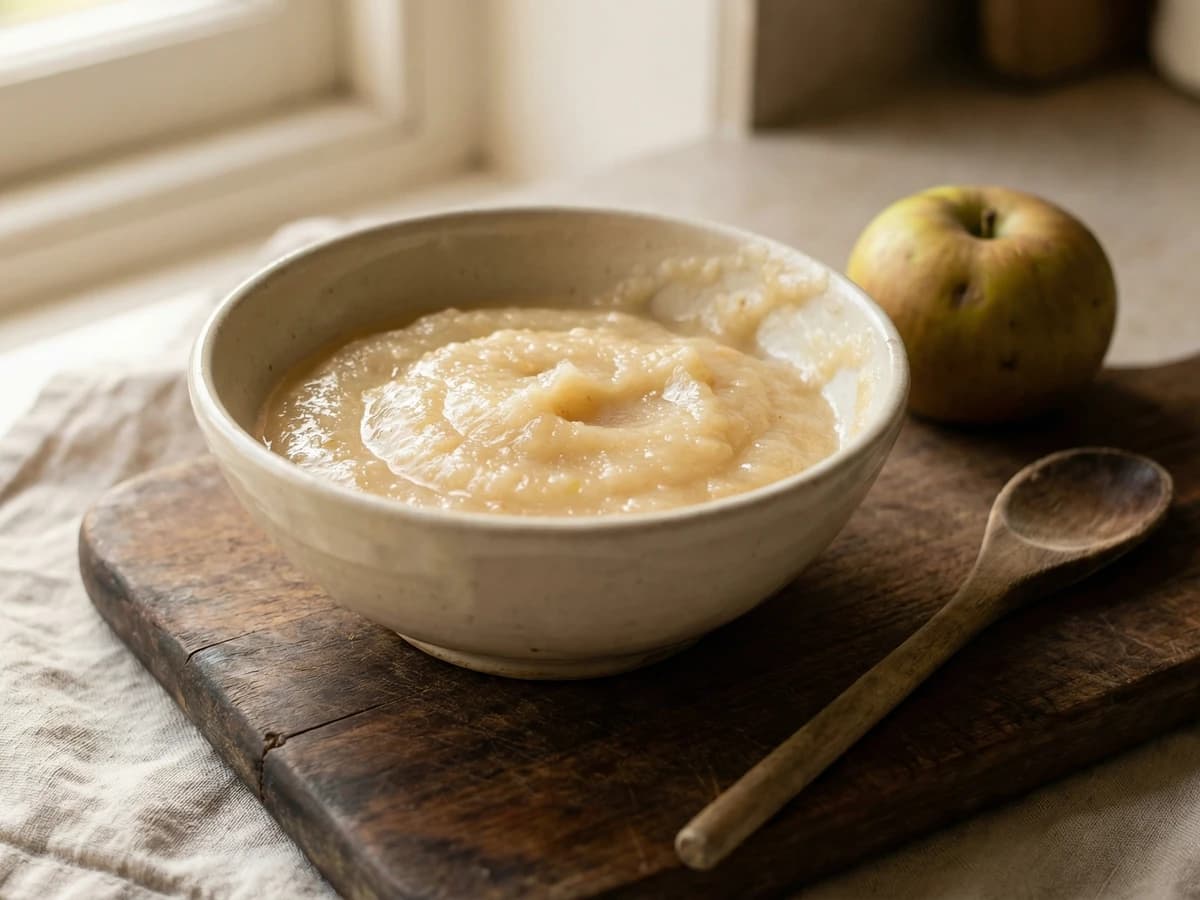
A bowl of sharp, fluffy Bramley apple sauce, made in the time it takes to carve the pork, the kind of small condiment that quietly makes the whole meal make sense.
Chef Thomas
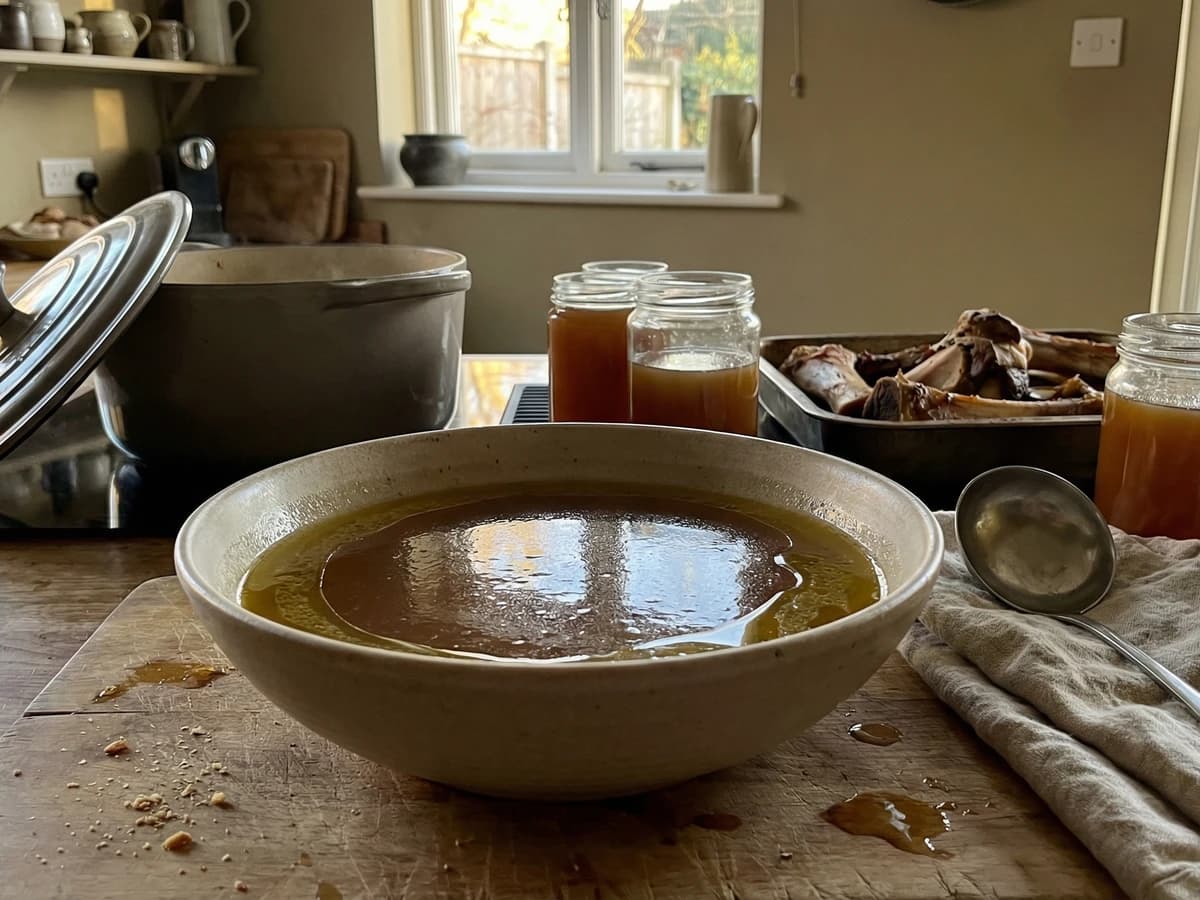
Beef bones roasted until dark, then coaxed for a long afternoon into a deep amber stock, the foundation of every good gravy, every braise, every bowl of winter soup worth the trouble.