
Chef Lupita
Cecina Potosina con Frijoles y Huevo
San Luis Potosí's dry-country breakfast: thin salted beef cured overnight, flashed on the comal, served with frijoles bayos refritos and a lacy-edged huevo estrellado.
A cooking platform built around craft, culture, and the stories behind what we eat.
Created by
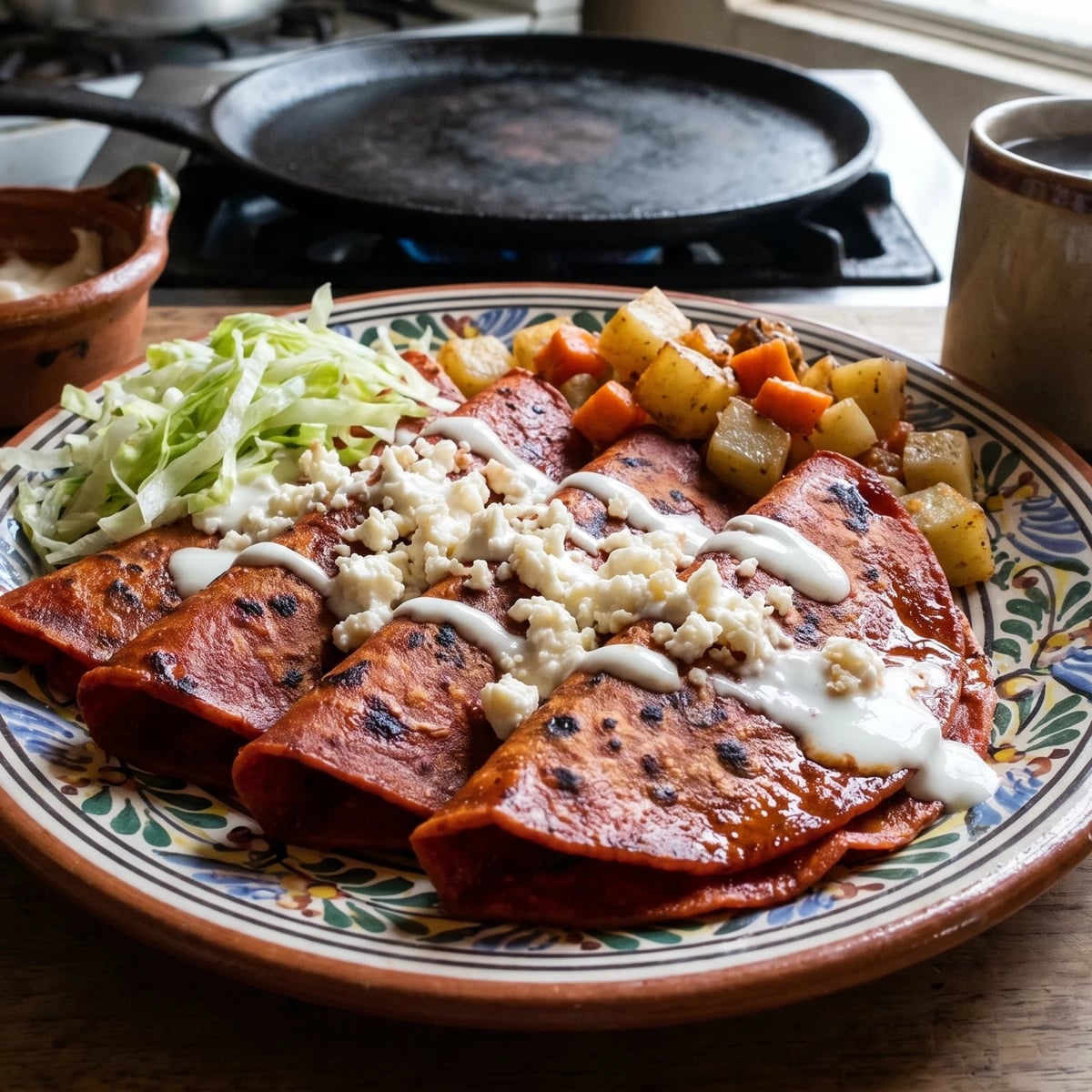
San Luis Potosí's breakfast enchiladas: chile ancho worked into nixtamal masa, queso ranchero folded inside, then comal-sealed and fried in manteca until the red edges blister.
San Luis Potosí makes these in Soledad de Graciano Sánchez, pressed right against the capital, where the Altiplano dries the air and breakfast needs food with backbone. Enchiladas potosinas are not tortillas dipped in red sauce after the fact. The chile ancho goes into the masa before you press it. That is the signature. Cada estado, su propia cocina.
The ancho matters because it gives color, sweetness, and depth without turning the dish into a test of pain. The nixtamal becomes brick-red, the queso ranchero softens inside, and the folded edge crisps in manteca de cerdo. La manteca es el sabor. Use oil if you must for your own kitchen, but understand the compromise.
I learned the proportion from a señora near Mercado Hidalgo in San Luis Potosí. She pressed the masa between plastic, filled each half-moon with ranch cheese and onion, cooked them on a black comal, then fried them only long enough to blister. She did not drown them in salsa. She looked at me and said, 'La masa ya trae el chile.' The masa already carries the chile. That is the lesson.
My mother did not make potosinas in Colonia Roma. She was Jalisco through and through. But in her notebook she wrote one line under San Luis Potosí: 'rojas por dentro, no bañadas.' Red inside, not bathed. Keep that in your hands as you cook. Saber cocinar es saber vivir.
Enchiladas potosinas are tied to Soledad de Graciano Sánchez, the municipality pressed against the capital of San Luis Potosí, and local tradition credits Doña Cristina Jalomo with popularizing them in the early 20th century after chile from a molino stained her nixtamal masa. Unlike sauced enchiladas from central Mexico, this version works chile ancho into the dough before pressing, then folds queso into the raw tortilla and seals it on the comal. The dish became a state emblem because it carries the economy of Potosí kitchens: corn, dried chile, fresh cheese, and enough manteca to make breakfast hold until afternoon.
Quantity
8
stemmed and seeded
Quantity
2
peeled
Quantity
3 cups
for soaking the chiles
Quantity
1 1/2 teaspoons, divided, plus more to taste
Quantity
2 pounds
Quantity
1 1/2 cups
crumbled, for the filling
Quantity
1/2 cup
finely chopped
Quantity
3/4 cup, plus more if needed
for pan-frying
Quantity
2 medium
peeled and cut into 1/2-inch cubes
Quantity
2
sliced into 1/4-inch coins
Quantity
1/2 cup
Quantity
1/2 cup
crumbled, for serving
Quantity
2 cups
thinly shredded
Quantity
for serving
| Ingredient | Quantity |
|---|---|
| dried chile anchostemmed and seeded | 8 |
| garlic clovespeeled | 2 |
| hot waterfor soaking the chiles | 3 cups |
| kosher salt | 1 1/2 teaspoons, divided, plus more to taste |
| fresh nixtamal masa para tortillas | 2 pounds |
| queso rancherocrumbled, for the filling | 1 1/2 cups |
| white onionfinely chopped | 1/2 cup |
| pork lard (manteca de cerdo)for pan-frying | 3/4 cup, plus more if needed |
| waxy potatoes (optional)peeled and cut into 1/2-inch cubes | 2 medium |
| carrots (optional)sliced into 1/4-inch coins | 2 |
| crema fresca (optional) | 1/2 cup |
| queso ranchero (optional)crumbled, for serving | 1/2 cup |
| lechuga orejona or romaine lettuce (optional)thinly shredded | 2 cups |
| salsa verde de tomatillo and chile serrano (optional) | for serving |
Heat a dry comal over medium. Toast the chile ancho one at a time, about 20 seconds per side, until the skin darkens slightly and the chile smells sweet and deep, like raisins and warm earth. Do not let them blacken. Burned ancho turns bitter and then you have to start again. Cover the toasted chiles with hot water and let them soften for 20 minutes.
Drain the chiles, saving the soaking liquid. Blend the softened chiles with the garlic, 1/2 teaspoon salt, and 3/4 cup of the soaking liquid until completely smooth. Strain through a fine-mesh sieve. You should have a thick, clean red paste, not a watery sauce. This paste is going into the masa, so it has to be smooth.
Mix the crumbled queso ranchero with the chopped white onion and 3 tablespoons of the chile ancho paste. Taste before adding salt. Queso ranchero can be gentle or salty depending on who made it. The filling should be damp enough to hold together but never wet. If it drips, it will leak on the comal.
Put the fresh nixtamal masa in a large bowl. Add the remaining chile ancho paste and 1 teaspoon salt. Knead for 5 minutes, pressing the chile through the masa until the color is even brick-red. If the masa cracks when you press a small ball flat, add warm water 1 tablespoon at a time. The texture should be soft, pliable, and clean in your hands. Cover and rest for 15 minutes.
Divide the red masa into 18 balls, about the size of a small lime. Line a tortilla press with two pieces of thin plastic. Press one ball into a 5-inch tortilla, thicker than a taco tortilla. Place 1 tablespoon of the cheese filling on one half. Fold the plastic over to close the tortilla into a half-moon, then press the edges firmly with your fingers. Keep the filled enchiladas covered with a clean towel so the masa does not dry.
Heat the comal over medium. Cook the filled enchiladas in batches, 2 to 3 minutes per side, until the damp red masa turns matte, the edges seal, and small brown freckles appear. This step sets the shape before frying. If you drop raw filled masa straight into fat, it opens and makes a mess. No me vengas con atajos.
Melt the manteca de cerdo in a wide skillet or clay cazuela over medium heat. You want about 1/4 inch of fat. Fry the comal-cooked enchiladas in batches, 1 to 2 minutes per side, until the red surface glistens and the edges crisp. Drain on a wire rack. La manteca es el sabor. Neutral oil will fry them, yes, but it will not give you the San Luis Potosí flavor.
If serving potatoes and carrots, simmer them in salted water until just tender, 8 to 10 minutes, then drain well. After frying the enchiladas, add the potatoes and carrots to the same manteca and brown them for 3 to 4 minutes, until chile-red flecks cling to the edges. That little bit of fat is not waste. It is seasoning.
Serve 3 enchiladas per person with crema fresca, crumbled queso ranchero, shredded lechuga orejona, potatoes, carrots, and salsa verde de tomatillo with chile serrano at the table. These are not drowned in sauce. The chile is already inside the masa. Así se hace y punto.
1 serving (about 350g)
Culinary guides, cultural storytelling, and the editorial depth that makes cooking meaningful.
Discover Culinary Explorer
Chef Lupita
San Luis Potosí's dry-country breakfast: thin salted beef cured overnight, flashed on the comal, served with frijoles bayos refritos and a lacy-edged huevo estrellado.

Chef Lupita
Guanajuato breakfast chilaquiles built on fried corn totopos, salsa roja of chile ancho and guajillo, and the seasoned pork chorizo that Apaseo el Grande claims as its own.

Chef Lupita
Querétaro's Cadereyta chorizo is pork shoulder and back fat seasoned with chile ancho, vinagre, clavo, ajo, and oregano, rested overnight, then browned for almuerzo beside beans and blue corn totopos.

Chef Lupita
Guanajuato's miner's breakfast, corn tortillas stained red with chile guajillo, folded around shredded chicken, and finished with papas y zanahorias browned in manteca de cerdo.