Tabasco's river-lowland empanadas: smoke-roasted pejelagarto pulled from its armored skin, folded into corn masa with tomato recado, then fried in manteca de cerdo until the shell turns crisp.
Appetizers & Snacks
Mexican
Special Occasion
Game Day
Make Ahead
1 hr
Active Time
1 hr 20 min cook•2 hr 20 min total
Yield16 empanadas
Tabasco's Grijalva lowlands own this dish. Villahermosa, the Chontalpa, the river towns where pejelagarto is not a novelty fish but supper, market food, and family food. You see it roasted whole, armored skin blackened, jaws still showing why the name means fish-lizard. That is where these empanadas begin.
The filling is not complicated, but it is exact: smoke-roasted pejelagarto pulled from the bone, onion, garlic, jitomate, chile dulce tabasqueño, epazote, and a little naranja agria. The chile amashito stays in the salsa. I am saying this because people love throwing every chile into everything and calling it regional. No. In Tabasco, that tiny red chile sits at the table and bites when you ask it to.
I learned this version from a señora near the Mercado José María Pino Suárez who pressed the masa thicker than a tortilla and fried the empanadas in manteca de cerdo without blinking. She told me, 'If the shell is thin, it breaks. If the lard is weak, it tastes poor.' She was right. My mother was from Jalisco, so pejelagarto was not in her notebook, but she would have understood the rule: the ingredient tells you the method. Saber cocinar es saber vivir.
Pejelagarto has been part of the Grijalva-Usumacinta river basin diet since before the Spanish conquest, especially among Chontal Maya communities who cooked river fish over wood fires and on raised racks. The name combines 'pez' and 'lagarto,' a Spanish description of the fish's long snout and armored body, but the cooking practice is older than the name. By the 20th century, roasted pejelagarto had become one of Tabasco's strongest market signatures, sold whole in Villahermosa and turned into tamales, empanadas, and guisos in home kitchens.
The technique, the tradition, and the story behind every dish.
chile dulce tabasqueño or small sweet green pepper
Quantity
1
finely chopped
garlic cloves
Quantity
3
finely chopped
ripe jitomates guaje
Quantity
3
finely chopped
fresh epazote leaves
Quantity
6
finely chopped
fresh naranja agria juice
Quantity
2 tablespoons
or 1 tablespoon lime juice mixed with 1 tablespoon orange juice
freshly ground black pepper
Quantity
1/2 teaspoon
fresh or dried chile amashito
Quantity
20
stemmed, for the salsa
garlic clove
Quantity
1
for the salsa
coarse sea salt
Quantity
1/2 teaspoon
for the salsa
fresh naranja agria juice
Quantity
1/4 cup
for the salsa
lime halves (optional)
Quantity
for serving
Ingredient
Quantity
whole pejelagartogutted and rinsed
1, about 2 to 2 1/2 pounds
fine sea salt
1 1/2 teaspoons, divided
fresh nixtamalized white corn masa
3 cups
manteca de cerdo, for the masaroom temperature
2 tablespoons
warm wateras needed for the masa
1/4 to 1/2 cup
manteca de cerdo, for frying
3 cups
manteca de cerdo, for the filling
2 tablespoons
white onionfinely chopped
1 medium
chile dulce tabasqueño or small sweet green pepperfinely chopped
1
garlic clovesfinely chopped
3
ripe jitomates guajefinely chopped
3
fresh epazote leavesfinely chopped
6
fresh naranja agria juiceor 1 tablespoon lime juice mixed with 1 tablespoon orange juice
2 tablespoons
freshly ground black pepper
1/2 teaspoon
fresh or dried chile amashitostemmed, for the salsa
20
garlic clovefor the salsa
1
coarse sea saltfor the salsa
1/2 teaspoon
fresh naranja agria juicefor the salsa
1/4 cup
lime halves (optional)
for serving
Equipment Needed
•Charcoal grill, tapesco, or heavy comal for roasting the pejelagarto
•Tortilla press lined with cut plastic
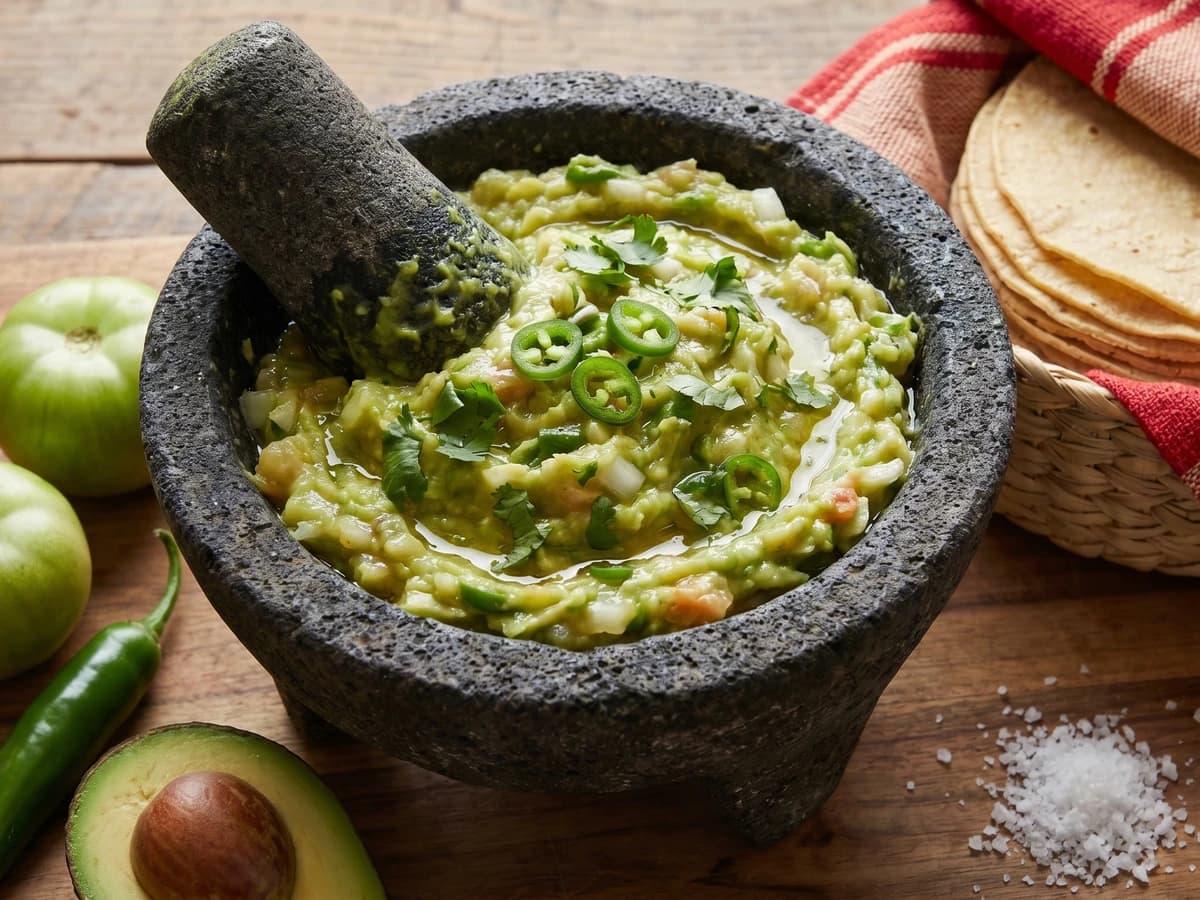
•Volcanic stone molcajete for the chile amashito salsa
•Heavy 5-quart pot or deep cazuela for frying
•Wire rack for draining fried empanadas
Instructions
1
Roast the pejelagarto
Prepare a charcoal grill, a tapesco, or a heavy comal over medium heat. Rub the whole pejelagarto with 1 teaspoon fine sea salt and lay it directly over the heat. Roast 18 to 25 minutes per side, turning carefully, until the armored skin blackens in patches and the flesh near the backbone flakes when tested with a knife. Do not fillet it first. The thick skin protects the meat and gives you the flavor Tabasco cooks want.
2
Pull the fish
Let the pejelagarto cool until you can handle it. Open the skin and pull the white meat away from the bones with your fingers. Work slowly and feel for fine bones. Discard the skin, head, and bones. You should have about 2 cups of roasted fish. This is not canned tuna in a costume. If the fish was not roasted whole first, the filling will taste thin.
3
Cook the recado
Melt 2 tablespoons manteca de cerdo in a wide skillet over medium heat. Add the onion and chile dulce tabasqueño and cook until the onion turns translucent, about 5 minutes. Add the garlic and cook 30 seconds. Add the chopped jitomates and cook 8 to 10 minutes, stirring often, until the tomato loses its raw edge and the mixture thickens. The filling must be moist, not wet, or it will tear the masa.
4
Finish the filling
Fold the pulled pejelagarto into the tomato recado. Add the epazote, black pepper, remaining 1/2 teaspoon fine sea salt, and 2 tablespoons naranja agria juice. Cook 3 to 4 minutes, just until the fish absorbs the tomato and the pan looks glossy, not soupy. Spread the filling on a plate and cool completely. Hot filling breaks empanadas. No me vengas con atajos.
5
Grind the salsa
In a molcajete, grind the garlic clove with the coarse sea salt until it becomes a paste. Add the chile amashito and crush it roughly. Stir in the naranja agria juice. The chile amashito belongs here, in the salsa on the table, not hidden inside the fish filling. That tiny Tabasco chile has a clean bite and it should announce itself.
6
Knead the masa
Put the fresh masa in a bowl. Knead in 2 tablespoons room-temperature manteca de cerdo and enough warm water to make a soft dough that does not crack when pressed. It should feel like the lower part of your ear. If you use masa harina because you cannot reach a tortillería, hydrate it first and let it rest 20 minutes. Fresh masa is better. A compromise is not an upgrade.
7
Press the empanadas
Divide the masa into 16 balls, each about the size of a small lime. Line a tortilla press with cut plastic. Press one ball into a thick 5-inch round, about 1/8 inch thick. Spoon 2 tablespoons cooled pejelagarto filling onto one side, fold the masa over, and press the edges shut through the plastic. Seal well. If you overfill them, they will open in the lard and you will have a mess, not dinner.
8
Fry in lard
Heat 3 cups manteca de cerdo in a heavy pot to 350F. Fry 3 or 4 empanadas at a time, 3 to 4 minutes per side, until the shell is golden, crisp at the edges, and lightly blistered. Keep the heat steady. If the lard is too cool, the masa drinks fat. If it is too hot, the outside browns before the center warms. La manteca es el sabor, but it still needs discipline.
9
Serve from clay
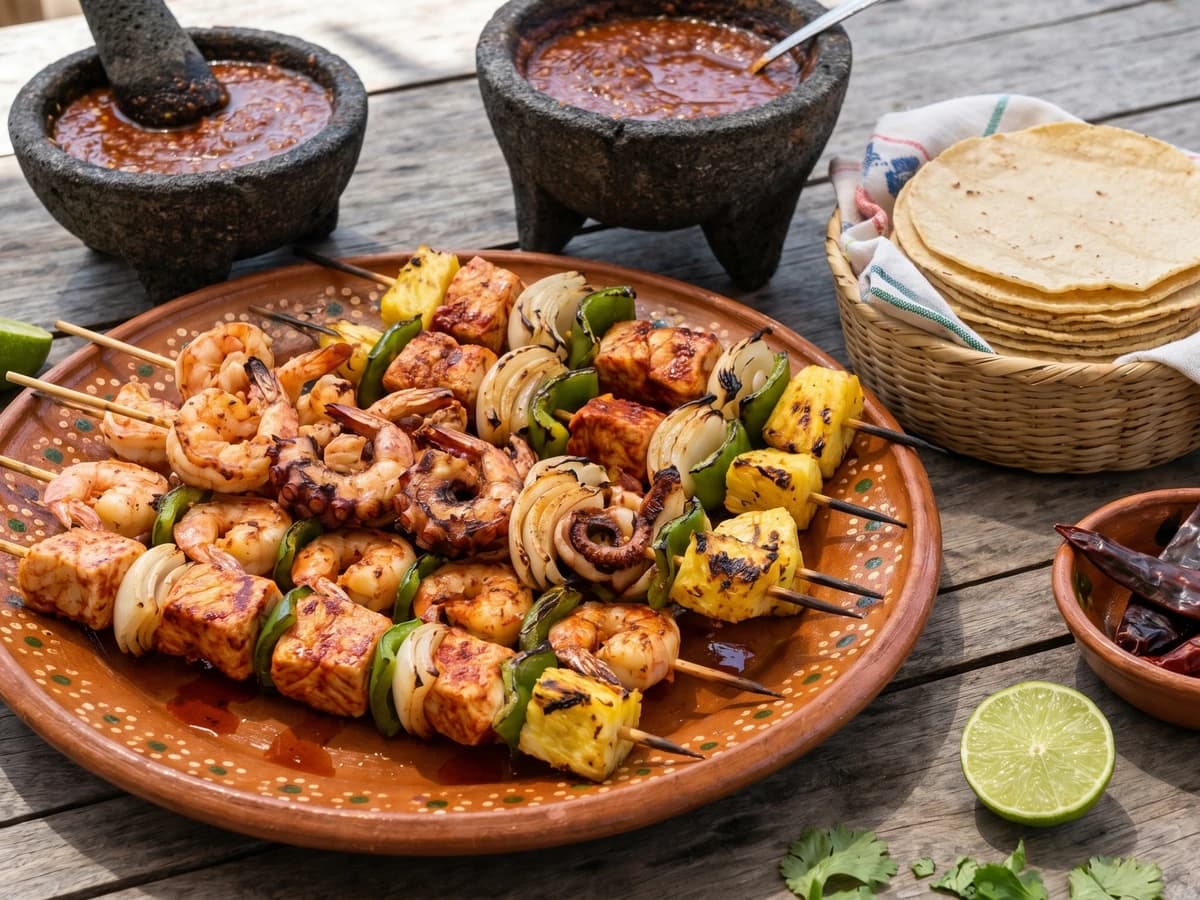
Drain the empanadas on a rack, then pile them on a warm Tabasco clay platter. Serve with the chile amashito salsa and lime halves. Eat them while the shell is crisp and the fish filling is warm. Cada estado, su propia cocina, and this one belongs to the river lowlands of Tabasco.
Chef Tips
•If you are in Tabasco, buy pejelagarto already roasted from a market vendor who sells it whole. Pregúntale a las señoras del mercado. They know whose fish was roasted that morning and whose has been sitting too long.
•Outside the region, pejelagarto is hard to find. Ask a Latin American fish market for gar. If that fails, smoked trout or another firm smoked river fish can stand in, but say the truth: it will be an empanada de pescado, not the Tabasco dish in full.
•Do not put chile amashito in the filling. It is small and sharp and belongs in the salsa, where each person controls the bite. Not all Mexican food is about hiding heat inside the dish.
•Use fresh nixtamalized masa if you can get it. Masa harina works for a weeknight kitchen, but fresh masa gives the shell a deeper corn flavor and a better chew. Si no conoces el mercado, no conoces la cocina.
•Fry in manteca de cerdo. Vegetable oil gives you a flatter shell and a poorer flavor. La manteca es el sabor. Así se hace y punto.
Advance Preparation
•The pejelagarto can be roasted and pulled one day ahead. Refrigerate the meat in a covered container and bring it close to room temperature before making the filling.
•The filling can be cooked one day ahead. Keep it chilled, then let it soften at room temperature for 20 minutes before filling the masa.
•The empanadas can be formed up to 4 hours ahead. Lay them in one layer between sheets of plastic, cover with a damp towel, and refrigerate. Fry just before serving so the shell stays crisp.
•The chile amashito salsa is best the day it is made, but it can sit for 2 hours at room temperature while you fry the empanadas.
Frequently Asked Questions
Nutrition Information
1 serving (about 95g)
Calories
225 calories
Total Fat
13 g
Saturated Fat
5 g
Trans Fat
0 g
Unsaturated Fat
7 g
Cholesterol
30 mg
Sodium
310 mg
Total Carbohydrates
19 g
Dietary Fiber
2 g
Sugars
1 g
Protein
8 g
Where cooking meets culture.
Culinary guides, cultural storytelling, and the editorial depth that makes cooking meaningful.