Tabasco's chanchamitos are small round banana-leaf tamales, achiote-colored and filled with pork guiso, the kind sold warm in Villahermosa markets for breakfast, meriendas, and potluck tables.
Appetizers & Snacks
Mexican
Make Ahead
Comfort Food
Potluck
1 hr
Active Time
2 hr cook•3 hr total
Yield18 small chanchamitos
Tabasco, in the lowlands of La Chontalpa and Centro around Villahermosa, Nacajuca, and Jalpa de Méndez, is where chanchamitos live. They are small round tamales, tied in hoja de plátano, sold in mercados as a botana or a quick breakfast. Not corn husk. Not a long northern tamal. A little green packet, heavy in the hand, stained orange inside from achiote.
The geography is in the ingredients. Banana leaves grow in that humid Tabasco heat, so they became the wrap. Achiote grows in the tropical south, so it colors the masa. Pork is cooked into a guiso with tomato, onion, garlic, naranja agria, and manteca de cerdo. La manteca es el sabor. The chile amashito, that tiny Tabasco chile people confuse with piquín, stays in the salsa on the table. It does not belong inside the chanchamito.
I learned this shape from a señora in the Villahermosa market who tied them faster than I could count. She did not flatten them into little rectangles. She cupped the masa around the pork, made a tight ball, folded the banana leaf, and tied it like she had been doing since childhood. The lesson was clear: the wrap is not decoration. It controls the cooking. La cocina no es decoración, es trabajo.
Chanchamitos belong to the wider Mesoamerican tamal tradition documented in 16th-century sources such as Sahagún's Florentine Codex, but their banana-leaf wrapping and achiote-stained masa place them firmly in the humid Maya south. In Tabasco, especially among Yokot'an or Chontal Maya communities, cooks distinguish chanchamitos from larger tamales such as maneas by their small round shape and tied packet form. Achiote, from the tropical American Bixa orellana plant, was used in Maya cooking before the conquest and remains one of the ingredients that marks the food of Tabasco, Campeche, Yucatán, and Chiapas as its own southern conversation.
The technique, the tradition, and the story behind every dish.
half for the broth, half finely chopped for the guiso
garlic cloves
Quantity
5
3 whole for the broth, 2 finely chopped for the guiso
bay leaf
Quantity
1
kosher salt
Quantity
2 1/2 teaspoons, divided, plus more to taste
manteca de cerdo
Quantity
5 tablespoons
divided
ripe Roma tomatoes
Quantity
2
finely chopped
achiote paste
Quantity
3 tablespoons
divided
fresh naranja agria juice
Quantity
1/4 cup, plus 1 tablespoon
divided
dried Mexican oregano
Quantity
1/2 teaspoon
freshly ground black pepper
Quantity
1/4 teaspoon
fresh nixtamal masa
Quantity
2 pounds
for tamales or tortillas
warm reserved pork broth
Quantity
1 to 1 1/4 cups
divided
hojas de plátano
Quantity
4 large
wiped clean, softened over flame or comal, cut into 8-inch squares, with strips for tying
fresh chile amashito
Quantity
12 to 16
stems removed, for salsa
ripe Roma tomatoes
Quantity
2
roasted, for salsa
garlic clove
Quantity
1 small
roasted, for salsa
fresh naranja agria juice
Quantity
2 tablespoons
for salsa
kosher salt
Quantity
1/2 teaspoon
for salsa
Ingredient
Quantity
pork shouldercut into 1 1/2-inch chunks
1 1/2 pounds
water
6 cups
white onionhalf for the broth, half finely chopped for the guiso
1 medium
garlic cloves3 whole for the broth, 2 finely chopped for the guiso
5
bay leaf
1
kosher salt
2 1/2 teaspoons, divided, plus more to taste
manteca de cerdodivided
5 tablespoons
ripe Roma tomatoesfinely chopped
2
achiote pastedivided
3 tablespoons
fresh naranja agria juicedivided
1/4 cup, plus 1 tablespoon
dried Mexican oregano
1/2 teaspoon
freshly ground black pepper
1/4 teaspoon
fresh nixtamal masafor tamales or tortillas
2 pounds
warm reserved pork brothdivided
1 to 1 1/4 cups
hojas de plátanowiped clean, softened over flame or comal, cut into 8-inch squares, with strips for tying
4 large
fresh chile amashitostems removed, for salsa
12 to 16
ripe Roma tomatoesroasted, for salsa
2
garlic cloveroasted, for salsa
1 small
fresh naranja agria juicefor salsa
2 tablespoons
kosher saltfor salsa
1/2 teaspoon
Equipment Needed
•Tamalera or deep pot with a steamer rack
•Cast iron comal for softening banana leaves and roasting salsa ingredients
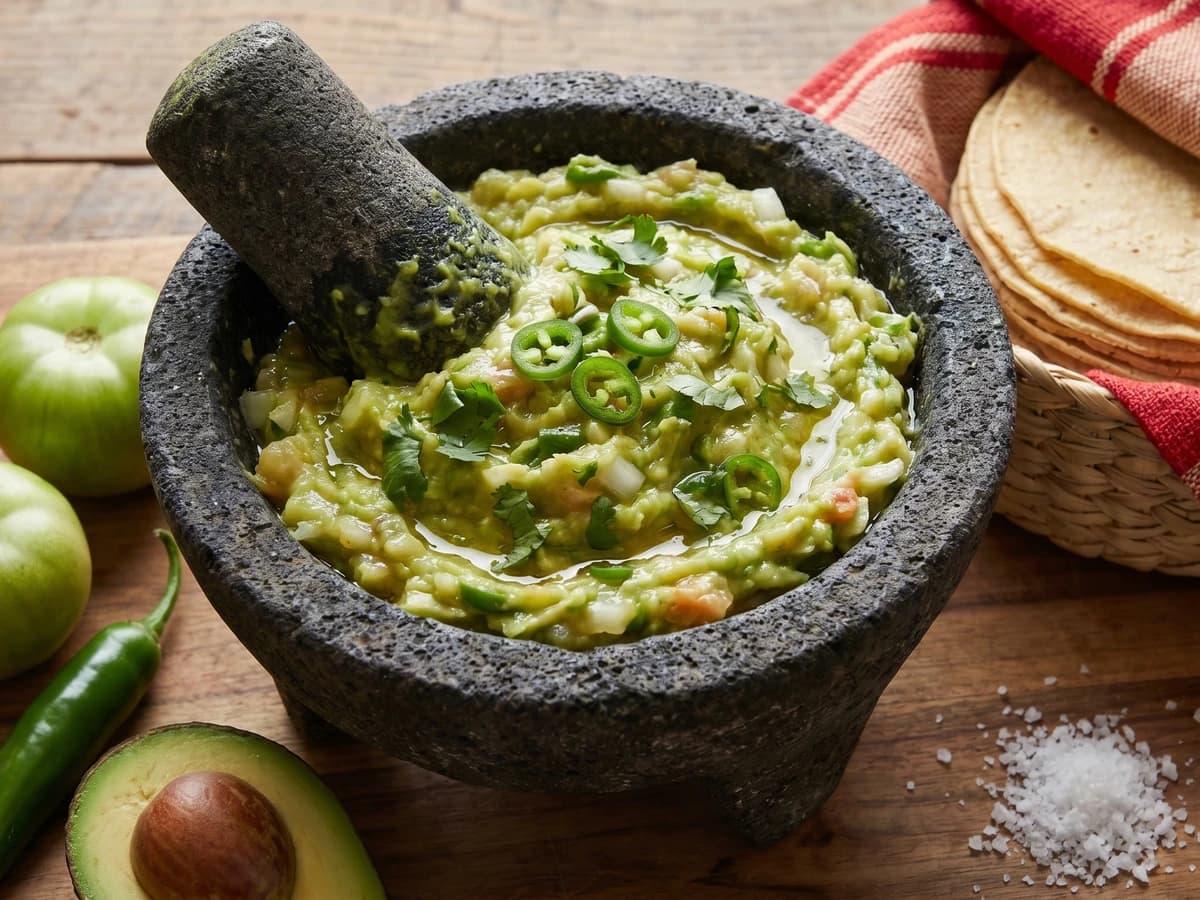
•Volcanic stone molcajete for the chile amashito salsa
•Wide mixing bowl or wooden batea for the masa
•Cotton kitchen twine if banana-leaf strips tear
Instructions
1
Cook the pork
Put the pork shoulder in a heavy pot with the water, half the onion, 3 garlic cloves, bay leaf, and 1 teaspoon salt. Bring to a simmer, then lower the heat and cook gently for 1 hour to 1 hour 15 minutes, until the pork pulls apart with a fork. Skim the first gray foam that rises. Save the broth. That broth is going into the masa, so do not throw flavor down the sink.
2
Make the guiso
Lift the pork from the broth and shred it into small pieces. In a skillet, melt 2 tablespoons manteca de cerdo over medium heat. Add the chopped onion and cook until soft, then add the chopped garlic and chopped Roma tomatoes. Cook until the tomato collapses and the fat turns orange-red. Dissolve 1 tablespoon achiote paste in 1/4 cup naranja agria juice and stir it into the skillet with 1/2 cup pork broth, the oregano, black pepper, and 1/2 teaspoon salt. Add the shredded pork and cook 8 to 10 minutes, until juicy but not wet. A runny filling breaks the tamal open.
3
Soften the leaves
Wipe the hojas de plátano with a damp cloth. Pass each leaf quickly over a gas flame or hot comal until it turns deeper green, glossy, and flexible. Cut into 8-inch squares and tear narrow strips for tying. Hoja de plátano is the correct wrap here. Corn husk makes a different tamal. Cada estado, su propia cocina.
If the leaf cracks when you fold it, it has not been softened enough. Pass it over the flame again. The women in Tabasco markets do this by sight and sound: the leaf relaxes and stops fighting your hands.
4
Mix the masa
In a wide bowl, beat 3 tablespoons manteca de cerdo with your hand or a sturdy spoon until smooth. Work in the fresh nixtamal masa. Dissolve 2 tablespoons achiote paste in 1 tablespoon naranja agria juice and 1/2 cup warm pork broth, then knead it into the masa with 1 teaspoon salt. Add more warm pork broth a little at a time until the masa is soft, orange, and pliable, like wet clay that holds its shape. Achiote stains the masa. It is not there to make the tamal hot.
5
Fill the packets
Lay one softened banana leaf square shiny side down. Put 2 heaping tablespoons masa in the center and pat it into a thick round. Make a shallow hollow with your fingers, add 1 tablespoon pork guiso, then close the masa around the filling so it becomes a small round ball. Fold the banana leaf around it snugly and tie with a strip of leaf. The shape should be small and round, not long like a northern tamal.
6
Steam the chanchamitos
Set a tamalera or deep pot with a rack over simmering water. Line the rack with scraps of banana leaf. Arrange the tied chanchamitos in the pot, seam side down, leaving room for circulation. Cover with another banana leaf and the lid. Cook for 1 hour to 1 hour 15 minutes, checking the water level and adding hot water if needed. They are done when the masa pulls cleanly from the leaf and tastes fully cooked, not chalky.
7
Crush the salsa
While the chanchamitos cook, make the salsa. Crush the chile amashito with the salt in a molcajete. Add the roasted garlic and work it into a paste. Add the roasted tomatoes and crush until rough, then stir in the naranja agria juice. The chile amashito belongs here, in the salsa, not hidden inside the masa. It is tiny and serious. Respect it.
8
Rest and serve
Turn off the heat and let the chanchamitos rest in the covered pot for 10 minutes. Open them at the table so the achiote-stained masa and pork filling show against the green leaf. Serve with the salsa de chile amashito on the side. No cheese. No sour cream. This is Tabasco, not a costume. Así se hace y punto.
Chef Tips
•Use fresh nixtamal masa if you can get it from a tortillería. Masa harina will work only as a compromise: hydrate it with warm pork broth until it feels like soft tamal dough, then let it rest 20 minutes before adding the manteca and achiote.
•Do not replace hoja de plátano with corn husks. The banana leaf gives the masa a greener aroma and keeps the small round packet moist. Without it, you are not making chanchamitos tabasqueños.
•Achiote paste should taste earthy and peppery, not like red dye. Look for Mexican achiote paste in a small brick, preferably one that lists annatto seed, garlic, oregano, and spices. If it only gives color and no smell, leave it at the store.
•The pork should be shoulder, not loin. Loin dries out and gives you a sad filling. Shoulder has the fat and connective tissue that make the guiso taste like it belongs in a mercado.
•Chile amashito is Tabasco's chile. If you cannot find it, use fresh chile piquín for the salsa and understand what you are missing: the bright, sharp bite of the lowlands. A substitution is a compromise, not an upgrade.
Advance Preparation
•The pork guiso can be made up to 2 days ahead and refrigerated. Warm it before filling so the fat loosens and the texture spreads evenly.
•The banana leaves can be wiped, softened, cut, and stacked 1 day ahead. Wrap them in a clean towel and refrigerate.
•Cooked chanchamitos keep refrigerated for 3 days. Reheat them in a steamer until the masa is soft again. Do not microwave them dry unless you like rubbery masa.
•Chanchamitos freeze well after cooking. Keep them wrapped in their leaves, pack airtight, and reheat from frozen in a steamer for 25 to 30 minutes.
Frequently Asked Questions
Nutrition Information
1 serving (about 90g)
Calories
230 calories
Total Fat
12 g
Saturated Fat
4 g
Trans Fat
0 g
Unsaturated Fat
7 g
Cholesterol
31 mg
Sodium
500 mg
Total Carbohydrates
22 g
Dietary Fiber
3 g
Sugars
2 g
Protein
9 g
Where cooking meets culture.
Culinary guides, cultural storytelling, and the editorial depth that makes cooking meaningful.