
Chef Elsa
Bröselnudeln
Broad egg noodles tossed in golden butter-toasted breadcrumbs until every strand is coated and crackling. Four ingredients, fifteen minutes, and a dish that has kept Austrian families fed and happy for centuries.
A cooking platform built around craft, culture, and the stories behind what we eat.
Created by
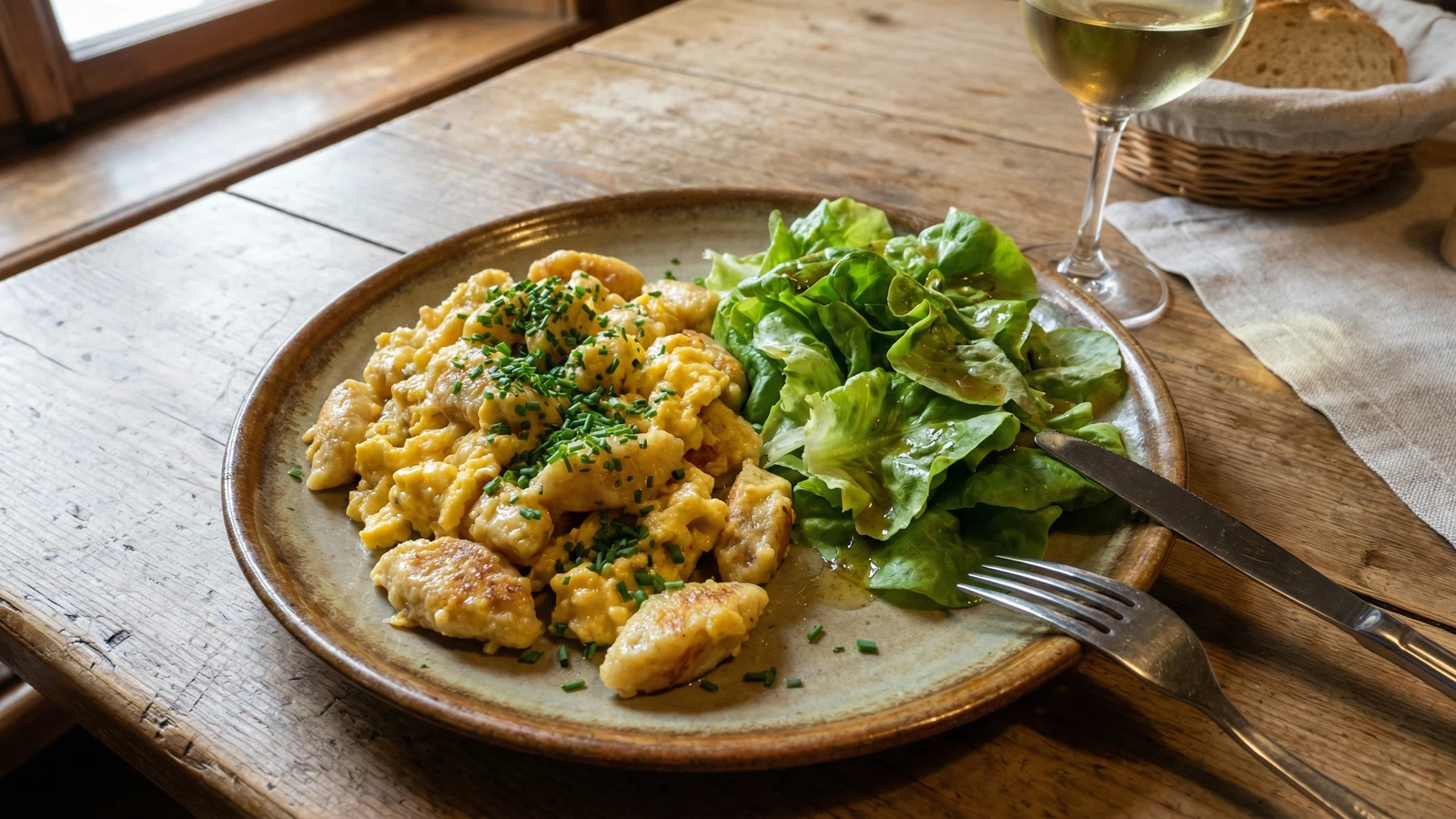
Vienna's weeknight answer to everything: soft flour Nockerl fried golden in butter, scrambled through with eggs and buried under fresh chives. A sharp green salad on the side because the Viennese know that richness needs a counterpoint.
Gretel always said you could judge a cook by what they made on a Monday. Anyone can roast a beautiful piece of meat on Sunday. But Monday, when the fridge is thin and the energy is low, that's when you find out if someone really knows their way around a kitchen. In Austria, the answer to Monday is Eiernockerl.
The dish is almost absurdly simple. You make a soft, sticky dough from flour, eggs, and water, scrape it into boiling salted water in rough little pieces, drain them, then fry the whole lot in good butter with more eggs scrambled through. Chives on top. A sharp green salad on the side. That's it. No sauce, no garnish beyond the chives, no pretension of any kind. Fifteen minutes from stove to table on a night when fifteen minutes is all you've got.
I make this at home in Salzburg more than I'd probably admit to my restaurant guests. It's the meal I reach for when I don't want to think, when the day has been long and the kitchen needs to give me something warm and uncomplicated. The Nockerl pick up the butter and egg in their rough little edges, the chives cut through with that clean onion sharpness, and the salad does what a good Austrian salad always does: it stands next to something rich and says "again." In my grandmother Eva's kitchen, this was Tuesday food, Thursday food, any night the cupboard was running low and nobody minded one bit. This is good Austrian home cooking at its most honest, and it doesn't apologize for being simple.
Eiernockerl mit grünem Salat became Vienna's traditional Monday meal because Monday was the household's leanest day, the pantry emptied by the Sunday roast and the shops often closed. Flour, eggs, and butter were always on hand, and a head of lettuce cost next to nothing at the market. The dish belongs to the broader tradition of Hausmannskost, the home-style cooking that fed Austrian families through centuries of plenty and scarcity alike. Nockerl themselves appear across Austrian, Bohemian, and Hungarian cooking in dozens of forms, from soup garnishes to Salzburger Nockerln, making them one of the Habsburg kitchen's most enduring and versatile building blocks.
Quantity
300g
Quantity
2 large
Quantity
120ml
Quantity
1 teaspoon
Quantity
4 large
Quantity
60g
Quantity
1 generous bunch
finely cut
Quantity
to taste
Quantity
1 large head
washed and dried
Quantity
3 tablespoons
Quantity
2 tablespoons
Quantity
1/2 teaspoon
Quantity
pinch
Quantity
to taste
| Ingredient | Quantity |
|---|---|
| plain flour | 300g |
| eggs (for Nockerl dough) | 2 large |
| cold water | 120ml |
| salt (for dough) | 1 teaspoon |
| eggs (for scrambling) | 4 large |
| unsalted butter | 60g |
| fresh chivesfinely cut | 1 generous bunch |
| salt and black pepper | to taste |
| butter lettuce or mixed soft greenswashed and dried | 1 large head |
| sunflower oil or Styrian pumpkin seed oil | 3 tablespoons |
| white wine vinegar | 2 tablespoons |
| mild mustard (optional) | 1/2 teaspoon |
| sugar (for dressing) | pinch |
| salt and pepper (for dressing) | to taste |
Put the flour in a large bowl. Make a well in the center and crack in the two eggs. Add the salt and the cold water. Stir with a wooden spoon, working from the center outward, until you have a smooth, sticky dough. It should be too wet to shape by hand but too thick to pour. If it's stiff, add a splash more water. If it slides off the spoon like batter, add a dusting more flour. Beat the dough vigorously for a minute or two until it starts to pull away from the sides of the bowl and develops a slight sheen. This builds just enough gluten to give the Nockerl some chew without making them tough. Let it rest for five minutes while you get your water on.
Bring a large pot of generously salted water to a rolling boil. Wet a cutting board and spread a portion of the dough across it in a thin layer. Using a knife or the edge of a metal spatula, scrape small irregular pieces directly into the boiling water. Dip the blade in water between scrapes so the dough doesn't stick. The Nockerl should be rough and uneven, about the size of a hazelnut. Work in batches if your pot isn't big enough to hold them all without crowding. They sink first, then float to the surface after a minute or two. Once they float, give them another thirty seconds. Lift them out with a slotted spoon and drain well.
While the Nockerl cook, tear the lettuce into bite-sized pieces and place them in a large bowl. Whisk together the oil, vinegar, mustard, sugar, and a good pinch of salt and pepper until the dressing comes together and looks slightly creamy. Taste it. The dressing should be noticeably sharp. This salad has one job: to cut through the butter and egg on the plate. If the vinegar doesn't make your tongue pay attention, add a little more. Don't dress the leaves yet. That happens at the last moment, right before serving.
Melt the butter in a large heavy pan over medium-high heat. Don't be shy with it. When the butter foams and the foam just begins to subside, add the drained Nockerl in a single layer. Let them sit undisturbed for two minutes. You want the undersides to pick up golden color and a bit of crunch where they meet the hot fat. Toss or stir them, then let them sit again. You're building texture here, not just reheating. The contrast between the crisp buttery edges and the soft interior is what makes this dish worth eating.
Beat the four eggs with a fork and season with salt and pepper. Turn the heat down to medium. Pour the beaten eggs over the Nockerl and let them set for about fifteen seconds on the bottom before you start stirring. Then fold and turn the mixture gently with a spatula, letting the egg coat and cling to the Nockerl in soft curds. You're not making scrambled eggs with dumpling pieces mixed in. You're wrapping each Nockerl in a thin jacket of just-set egg. Stop cooking while the egg still looks slightly underdone. The residual heat finishes the job. Overcooked egg turns rubbery and the whole dish goes sad on you.
Pour the dressing over the lettuce and toss with your hands until every leaf is lightly coated. Pile the Eiernockerl onto warm plates and scatter a generous handful of chives over the top. Set the salad alongside, not on top, not underneath, alongside. Pick up your fork and eat it while it's hot. Mahlzeit!
1 serving (about 300g)
Culinary guides, cultural storytelling, and the editorial depth that makes cooking meaningful.
Discover Culinary ExplorerChef Elsa
Broad egg noodles tossed in golden butter-toasted breadcrumbs until every strand is coated and crackling. Four ingredients, fifteen minutes, and a dish that has kept Austrian families fed and happy for centuries.

Chef Elsa
Soft Austrian potato dumplings in browned butter with warm, caraway-scented sauerkraut. A meatless Gasthaus meal that's been filling up Alpine kitchens for centuries.

Chef Elsa
Braised beef steaks in a velvety sauce of julienned root vegetables, capers, mustard, and sour cream, the kind of dish that made the Esterházy name famous in kitchens long after it faded from politics.

Chef Elsa
Tyrolean meatless bread dumplings stuffed with handfuls of fresh herbs and soft onions, poached until they float, and served in broth or with brown butter and a sharp green salad.