
Chef Elsa
Bröselnudeln
Broad egg noodles tossed in golden butter-toasted breadcrumbs until every strand is coated and crackling. Four ingredients, fifteen minutes, and a dish that has kept Austrian families fed and happy for centuries.
A cooking platform built around craft, culture, and the stories behind what we eat.
Created by
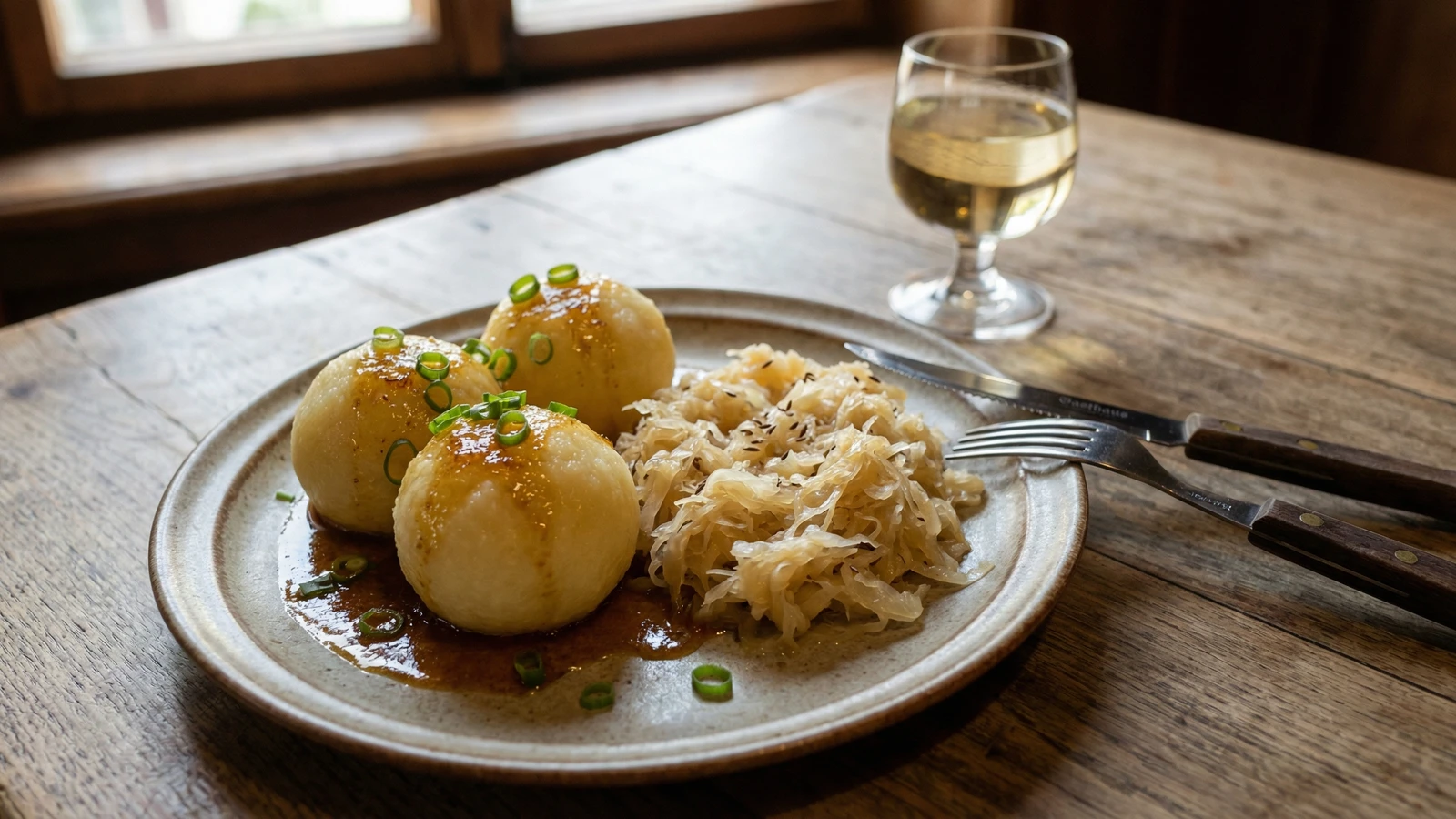
Soft Austrian potato dumplings in browned butter with warm, caraway-scented sauerkraut. A meatless Gasthaus meal that's been filling up Alpine kitchens for centuries.
In my grandmother Eva's kitchen in Kent, the word for potato was always Erdäpfel. Earth apple. Not Kartoffel, which is what the Germans say, and certainly not potato. Gretel would correct me gently if I forgot, the way she corrected anything that drifted too far from Vienna.
Erdäpfelknödel are the quietest kind of cooking. You boil potatoes, rice them while they're still hot, work in a little flour and egg, and shape the dough into round dumplings the size of a tennis ball. Then you poach them in salted water until they float. That's it. The whole dish depends on feel. Too much flour and the Knödel are dense and gummy. Too little and they dissolve in the pot. Gretel always said the dough should feel like a baby's cheek, soft but holding together, and you had to trust your hands more than any measurement.
Served with warm Sauerkraut and a good pour of browned butter, this is a complete meal. No meat needed. It's the kind of food that Austrian farmhouse kitchens have been making since before anyone thought to write recipes down, because the ingredients were always there: potatoes from the root cellar, Kraut from the barrel, butter from the dairy. I serve a version of this at my restaurant in Salzburg when the weather turns cold, and it outsells fancier dishes three to one. People know what they want when the temperature drops, and what they want is a warm bowl of dumplings.
Knödel are among the oldest continuous food traditions in the Alpine regions. Archaeological evidence from a 12th-century settlement in the South Tyrol suggests bread dumplings were already a staple, and potato versions followed once Erdäpfel arrived in Austria in the late 17th century. The pairing with Sauerkraut reflects a pre-refrigeration larder: fermented cabbage kept through winter, potatoes stored in root cellars. Upper Austria and the Waldviertel in Lower Austria both claim the finest Knödel tradition, and the argument shows no sign of resolution.
Quantity
1 kg
unpeeled
Quantity
150g
Quantity
1 large
Quantity
40g
Quantity
1 teaspoon
Quantity
pinch
freshly grated
Quantity
600g
drained lightly, reserving some brine
Quantity
1 medium
finely diced
Quantity
2 tablespoons
Quantity
1 teaspoon
Quantity
150ml
Quantity
1
Quantity
1 teaspoon
Quantity
to taste
Quantity
80g
Quantity
for garnish
finely cut
| Ingredient | Quantity |
|---|---|
| floury potatoes (Agria or King Edward)unpeeled | 1 kg |
| griffiges Mehl (coarse flour) or plain flour | 150g |
| egg | 1 large |
| fine semolina (Grieß) | 40g |
| salt (for dough) | 1 teaspoon |
| nutmegfreshly grated | pinch |
| Sauerkrautdrained lightly, reserving some brine | 600g |
| onionfinely diced | 1 medium |
| lard or unsalted butter (for Sauerkraut) | 2 tablespoons |
| caraway seeds | 1 teaspoon |
| water or vegetable broth | 150ml |
| bay leaf | 1 |
| sugar | 1 teaspoon |
| salt and white pepper | to taste |
| unsalted butter (for browned butter) | 80g |
| fresh chivesfinely cut | for garnish |
Place the potatoes, whole and unpeeled, in a large pot of cold salted water. Bring to a boil and cook until a knife slides through with no resistance, about 25 to 35 minutes depending on size. Don't cut them before boiling. The skins keep the water out, and waterlogged potatoes make gluey Knödel. This is the single most important thing I can tell you about potato dumplings.
Drain the potatoes and peel them while they're still hot. Use a kitchen towel to hold them if you need to, but work quickly. Press them through a potato ricer or food mill onto a clean work surface. Spread them out and let the heat escape for five minutes. You want dry, fluffy potato snow, not a steaming pile. The drier the potato, the less flour you'll need, and less flour means lighter Knödel.
Once the riced potato has cooled just enough to handle but is still warm, sprinkle over the flour, semolina, salt, and nutmeg. Crack the egg into the center. Work everything together with your hands quickly and gently. Knead just until the dough holds together in a smooth mass. If you knead it like bread dough you'll develop the gluten and end up with rubber balls instead of dumplings. Thirty seconds of gentle pressing. That's all it needs. The dough should feel soft and slightly tacky, not sticky and not stiff.
Dust your hands lightly with flour. Pull off a piece of dough about the size of a tennis ball and roll it gently between your palms until smooth and round. Set it on a floured board. Repeat until you have about twelve Knödel. Don't press too hard when shaping. You're coaxing the dough into shape, not compressing it. If the surface cracks, smooth it with damp fingers. A cracked surface lets water in during cooking, and that's how dumplings fall apart.
While you shape the Knödel, get your Sauerkraut going. Melt the lard or butter in a wide saucepan over medium heat. Add the diced onion and cook, stirring occasionally, until soft and just starting to turn golden, about five minutes. Add the caraway seeds and let them toast in the fat for thirty seconds until they smell warm and earthy. Add the Sauerkraut, bay leaf, sugar, and water or broth. Stir everything together. The sugar is not making this sweet. It's rounding off the sharp edge of the Kraut so the flavors sit in balance.
Reduce the heat to low, cover the pan, and let the Sauerkraut simmer gently for 20 to 25 minutes. It should soften and mellow without losing its texture entirely. You want some bite left. Check once or twice that it hasn't dried out, adding a splash of water if needed. Taste and adjust with salt, pepper, or a drop more sugar. Remove the bay leaf before serving.
Bring a very large pot of generously salted water to a boil, then reduce to a steady simmer. The water should show gentle bubbles, not a rolling boil. A hard boil will tear the dumplings apart. Lower the Knödel in carefully with a slotted spoon, working in batches if your pot isn't large enough to give them room. They'll sink to the bottom. Don't touch them. After a few minutes they'll float to the surface on their own. Once they float, let them cook for another 12 to 15 minutes. That sounds like a long time, but the center needs to cook through. A raw center in a Knödel ruins the whole thing.
While the Knödel poach, melt the butter in a small saucepan over medium heat. Let it foam, then watch closely. The milk solids will begin to turn golden and the kitchen will fill with a warm, nutty smell. The moment the butter turns a deep amber, pull it off the heat. This is Nussbutter, and the window between browned and burnt is about ten seconds. Trust your nose. If it smells like roasted hazelnuts, you're perfect. If it smells acrid, start over.
Lift the Knödel from the water with a slotted spoon and let them drain for a moment. Spoon warm Sauerkraut onto each plate or into wide bowls, nestle three Knödel alongside, and pour the Nussbutter generously over the dumplings. Scatter fresh chives on top. Serve immediately while everything is hot. Mahlzeit!
1 serving (about 500g)
Culinary guides, cultural storytelling, and the editorial depth that makes cooking meaningful.
Discover Culinary ExplorerChef Elsa
Broad egg noodles tossed in golden butter-toasted breadcrumbs until every strand is coated and crackling. Four ingredients, fifteen minutes, and a dish that has kept Austrian families fed and happy for centuries.

Chef Elsa
Vienna's weeknight answer to everything: soft flour Nockerl fried golden in butter, scrambled through with eggs and buried under fresh chives. A sharp green salad on the side because the Viennese know that richness needs a counterpoint.

Chef Elsa
Braised beef steaks in a velvety sauce of julienned root vegetables, capers, mustard, and sour cream, the kind of dish that made the Esterházy name famous in kitchens long after it faded from politics.

Chef Elsa
Tyrolean meatless bread dumplings stuffed with handfuls of fresh herbs and soft onions, poached until they float, and served in broth or with brown butter and a sharp green salad.