
Chef Dean
Apple Cinnamon Pancakes
Tender buttermilk pancakes folded with butter-glazed apple pieces and warm cinnamon, stacked high and drowning in maple syrup. This is Sunday morning the way it ought to be.
A cooking platform built around craft, culture, and the stories behind what we eat.
Created by
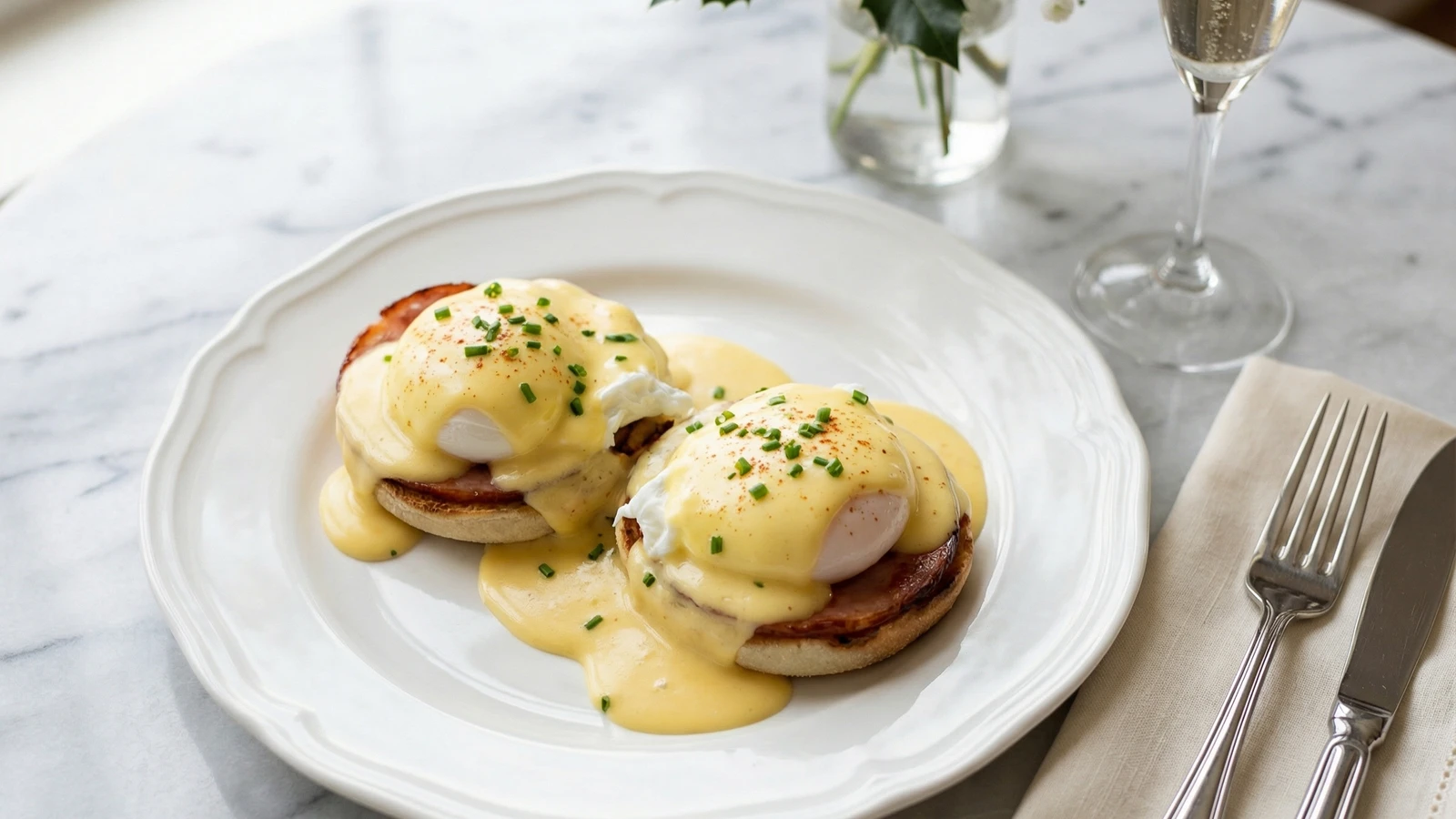
Perfectly poached eggs nestled on savory Canadian bacon and toasted English muffins, blanketed in silky hollandaise with bright lemon bite. This is the brunch dish that makes people feel celebrated.
Eggs Benedict is pure American invention dressed in French technique. The dish appeared in New York City sometime in the 1890s, with at least three establishments claiming credit. Delmonico's. The Waldorf. A hungover stockbroker named Lemuel Benedict who wandered into the Waldorf and ordered buttered toast, poached eggs, crisp bacon, and a pitcher of hollandaise to cure what ailed him. The origin hardly matters now. What matters is that this became our national brunch dish, a celebration of morning excess that turns breakfast into an occasion.
The hollandaise intimidates people. It shouldn't. You're making a warm emulsion, coaxing egg yolks to accept melted butter one spoonful at a time. Patience and low heat are your only requirements. I've taught this sauce to hundreds of nervous students, and once they understand the principle, they never fear it again. The yolks want to hold the butter. You just have to let them.
For holiday gatherings, timing is everything. The good news: nearly every component can be prepared ahead. Muffins split and ready. Bacon warmed in the oven. Poaching water simmering. Your hollandaise held in a warm water bath. When guests arrive, you're merely assembling, not cooking in a panic. That's the secret to hosting well. Do the work beforehand so you can enjoy your own table.
Quantity
4
split
Quantity
8 slices (about 1/4 inch thick)
Quantity
8
Quantity
2 tablespoons
Quantity
4
Quantity
1 tablespoon
Quantity
1 teaspoon
Quantity
1 cup (2 sticks)
melted and warm
Quantity
pinch
Quantity
to taste
Quantity
for garnish
minced
Quantity
for garnish
| Ingredient | Quantity |
|---|---|
| English muffinssplit | 4 |
| Canadian bacon | 8 slices (about 1/4 inch thick) |
| large eggs, very fresh | 8 |
| white vinegar | 2 tablespoons |
| large egg yolks | 4 |
| fresh lemon juice | 1 tablespoon |
| cold water | 1 teaspoon |
| unsalted buttermelted and warm | 1 cup (2 sticks) |
| cayenne pepper | pinch |
| kosher salt | to taste |
| fresh chives (optional)minced | for garnish |
| paprika (optional) | for garnish |
Fill a medium saucepan with two inches of water and bring to a bare simmer. In a heatproof bowl that fits over the pan without touching the water, whisk together the egg yolks, lemon juice, and cold water until the mixture lightens in color, about one minute. The cold water provides insurance against curdling.
Set the bowl over the simmering water. Whisk constantly while adding the warm melted butter in a very thin stream, just a few drops at first. As the sauce thickens and turns glossy, you can pour more confidently. This takes five to seven minutes of steady whisking. The finished hollandaise should coat a spoon and hold its shape when drizzled. Season with cayenne and salt. Remove from heat immediately.
Transfer the hollandaise to a small bowl and nestle it into a larger bowl of warm (not hot) water. Cover with a lid or plate. The sauce will hold for up to an hour this way. Whisk occasionally and adjust seasoning before serving. Hollandaise waits for no one once it breaks, so this holding technique is essential for entertaining.
Fill a wide, deep skillet or sauté pan with three inches of water. Add the white vinegar and bring to a gentle simmer. You want small bubbles rising lazily from the bottom, not a rolling boil. Vigorous water will tear your eggs apart. The vinegar helps the whites set quickly, creating neater pouches.
While the water heats, toast the English muffin halves until golden brown and crisp at the edges. Keep warm under a clean towel. In a skillet over medium heat, warm the Canadian bacon slices until the edges just begin to curl and caramelize, about one minute per side. The bacon should be heated through but not crisp. Transfer to the towel with the muffins.
Crack each egg into a small bowl or ramekin. Using a spoon, create a gentle whirlpool in the simmering water. Slide the egg into the center of the swirl, where the motion will wrap the white around the yolk. Poach for exactly three minutes for a runny yolk, or three and a half for a yolk that flows slowly when cut. Remove with a slotted spoon and drain briefly on a clean towel.
Place two toasted muffin halves on each warm plate. Top each half with a slice of Canadian bacon, then a poached egg. The egg should sit centered on the bacon like a crown. Spoon hollandaise generously over each egg, allowing it to cascade down the sides and pool on the plate. The sauce should blanket the egg completely.
Dust each plate with a whisper of paprika for color. Scatter minced chives over the hollandaise. Serve immediately. Eggs Benedict is not a dish that waits. The yolk must flow when your guests cut into it, mixing with the hollandaise into a sauce of pure golden richness. This is the moment that makes brunch worth the effort.
1 serving (about 315g)
Culinary guides, cultural storytelling, and the editorial depth that makes cooking meaningful.
Discover Culinary ExplorerChef Dean
Tender buttermilk pancakes folded with butter-glazed apple pieces and warm cinnamon, stacked high and drowning in maple syrup. This is Sunday morning the way it ought to be.

Chef Dean
Individual breakfast packages of farm eggs nestled in smoky ham, blanketed with melted sharp cheddar, ready for Sunday morning or make-ahead weekday fuel that tastes like someone who loves you made it.

Chef Ally
Oats softened overnight in yogurt and orchard cider, then crowned with whatever fruit the morning and the season bring to your table. A breakfast that asks almost nothing of you and gives back everything.

Chef Dean
Golden, shatteringly crisp potatoes mingled with sweet roasted peppers and caramelized onions, crowned with eggs whose yolks run like liquid sunshine when you break them open.