Chef Thomas
Anchovy Sauce
A proper white sauce sharpened with pounded anchovy, the old Georgian trick for waking up a piece of poached fish or a slice of roast lamb on a Sunday in spring.
A cooking platform built around craft, culture, and the stories behind what we eat.

Created by Chef Thomas
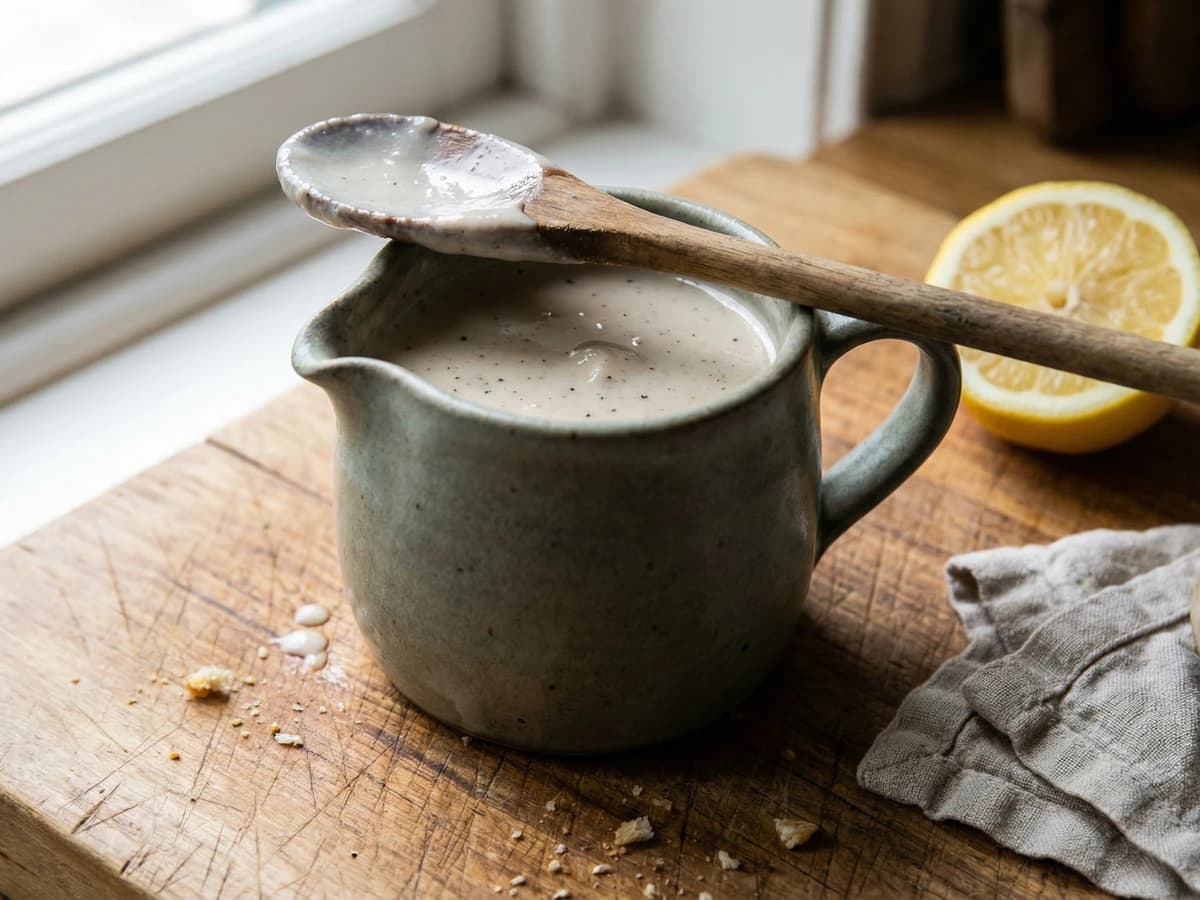
A proper old-fashioned egg sauce, white and gentle and full of softly chopped eggs, the kind of thing that turns a plain piece of fish into a supper worth sitting down for.
This is a sauce for a cold, dark evening when you've been outside too long and the windows have gone black by five o'clock. It belongs to winter and to the months when smoked haddock looks better than anything else on the fishmonger's slab. It is not a clever sauce. It does not need to be.
A proper béchamel, made slowly with milk that has had a bay leaf in it, then chopped hard-boiled eggs folded through with parsley and nutmeg. That's the whole thing. The eggs make it homely in a way that pure white sauce never quite manages on its own. They give it body, texture, something to find with the spoon. It's the sauce my mother made for poached haddock and the sauce I still make now, and the recipe in the notebook hasn't changed in thirty years because there's nowhere left to improve it.
The traditional partner is smoked haddock, gently poached in milk until the flesh just flakes. Spoon the sauce over the top, scatter more parsley, and put a warm plate in front of someone. There are few better feelings. But it's just as good with a piece of plain white fish, or over a baked potato split open and steaming, or with leeks softened in butter. A recipe is a conversation, not a contract. Take it where you need it to go.
We're only making dinner. But on a January evening, this is exactly the sort of dinner that makes the rest of the day make sense.
Quantity
3
Quantity
40g
Quantity
30g
Quantity
500ml
Quantity
1
Quantity
a few
Quantity
small piece
Quantity
a grating
Quantity
to taste
Quantity
to taste
Quantity
small handful
finely chopped
Quantity
a squeeze
| Ingredient | Quantity |
|---|---|
| large eggs | 3 |
| unsalted butter | 40g |
| plain flour | 30g |
| whole milk | 500ml |
| bay leaf | 1 |
| black peppercorns | a few |
| onion or shallot | small piece |
| nutmeg | a grating |
| fine sea salt | to taste |
| white pepper | to taste |
| flat-leaf parsleyfinely chopped | small handful |
| lemon (optional) | a squeeze |
Lower the eggs into a pan of gently simmering water and cook for eight minutes. Not seven, not nine. You want the yolks set through but still a deep yellow, not the chalky grey of an egg that has been forgotten. Lift them out and drop them straight into a bowl of cold water. Leave them there while you make the sauce. Cold eggs peel cleanly; warm ones fight you.
Pour the milk into a small saucepan with the bay leaf, the peppercorns, and the piece of onion. Bring it just to the edge of a simmer, so the surface trembles but doesn't break, then take it off the heat and let it sit for ten minutes. The milk needs to taste of something before it goes into the sauce. Plain milk makes a plain sauce. This is the difference.
Melt the butter in a heavy-bottomed pan over a gentle heat. When it foams, scatter in the flour and stir with a wooden spoon. You're making a paste. Cook it for a minute or two, stirring all the while, until it smells faintly biscuity and the raw flour edge has gone. Don't let it colour. This is a white sauce, and it should stay white.
Strain the warm milk through a sieve into a jug, throwing out the bay, peppercorns and onion. Now add the milk to the roux a ladleful at a time, beating hard with the wooden spoon between each addition. The first splash will seize and look like it's going wrong. Keep going. By the third ladleful it will loosen and turn glossy. Once all the milk is in, let the sauce come to a gentle simmer, stirring, and cook it for five minutes or so until it coats the back of a spoon and tastes of cream rather than flour.
Peel the eggs under a trickle of cold water. Tap them on the counter, roll them gently, and the shells should come away in big satisfying pieces. Chop them roughly on a board. Not too fine. You want proper pieces of egg in the sauce, little nuggets of yolk and white that you can find with a spoon, not a smooth paste. A bit of texture is the whole point.
Fold the chopped eggs into the warm sauce. Add a generous grating of nutmeg, a good pinch of salt, a little white pepper, and the chopped parsley. Stir gently. Taste. Add more salt if it needs it, and a squeeze of lemon if you fancy a bit of lift. The sauce should be thick enough to hold the eggs in suspension but loose enough to pour. If it has tightened too much, slacken with a splash more milk. Spoon it over poached smoked haddock, or a piece of plain white fish, or a baked potato on a Wednesday when nothing else will do.
1 serving (about 180g)
Culinary guides, cultural storytelling, and the editorial depth that makes cooking meaningful.
Discover Culinary ExplorerChef Thomas
A proper white sauce sharpened with pounded anchovy, the old Georgian trick for waking up a piece of poached fish or a slice of roast lamb on a Sunday in spring.

Chef Thomas
A spiced autumn chutney made from a glut of apples and a quiet afternoon, simmered down until the kitchen smells of October and the jars line up on the counter like a small, useful insurance policy.
Chef Thomas
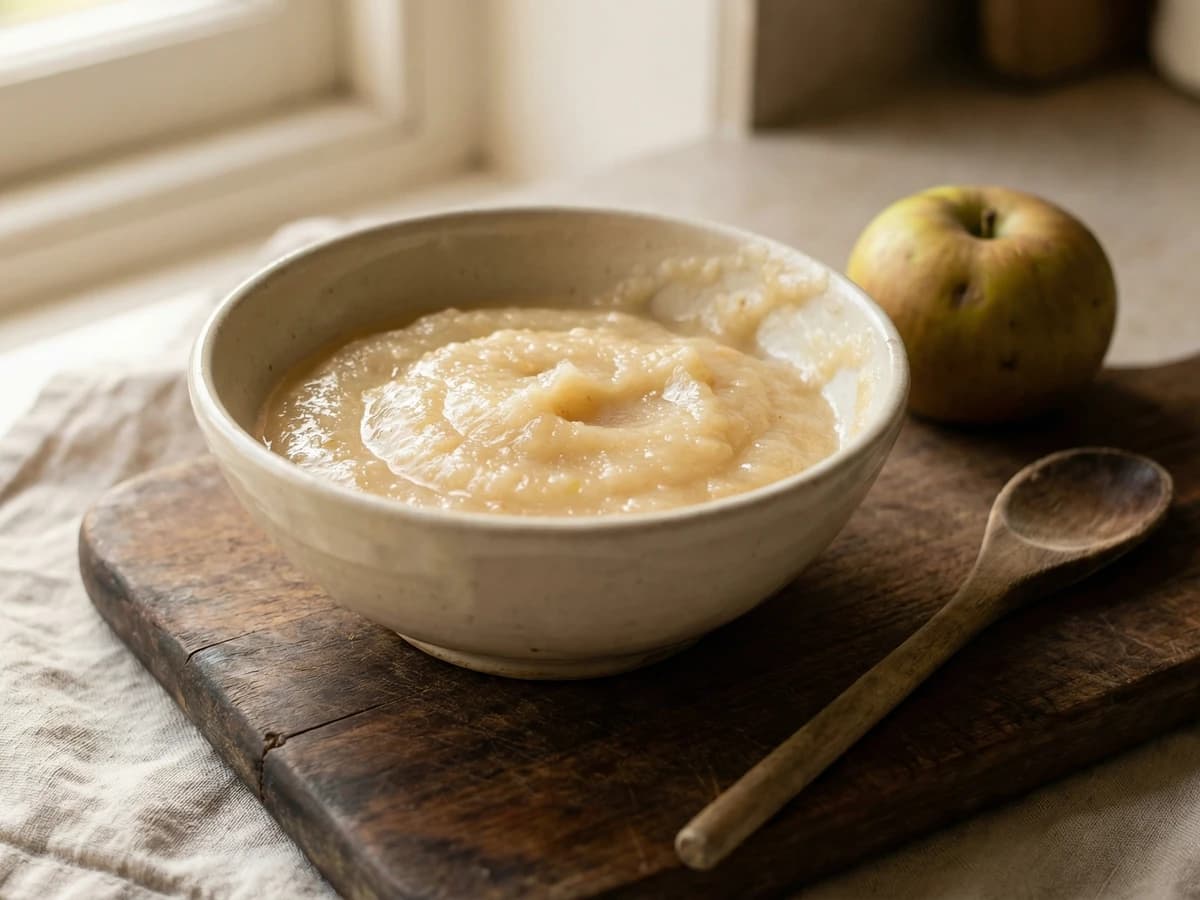
A bowl of sharp, fluffy Bramley apple sauce, made in the time it takes to carve the pork, the kind of small condiment that quietly makes the whole meal make sense.
Chef Thomas
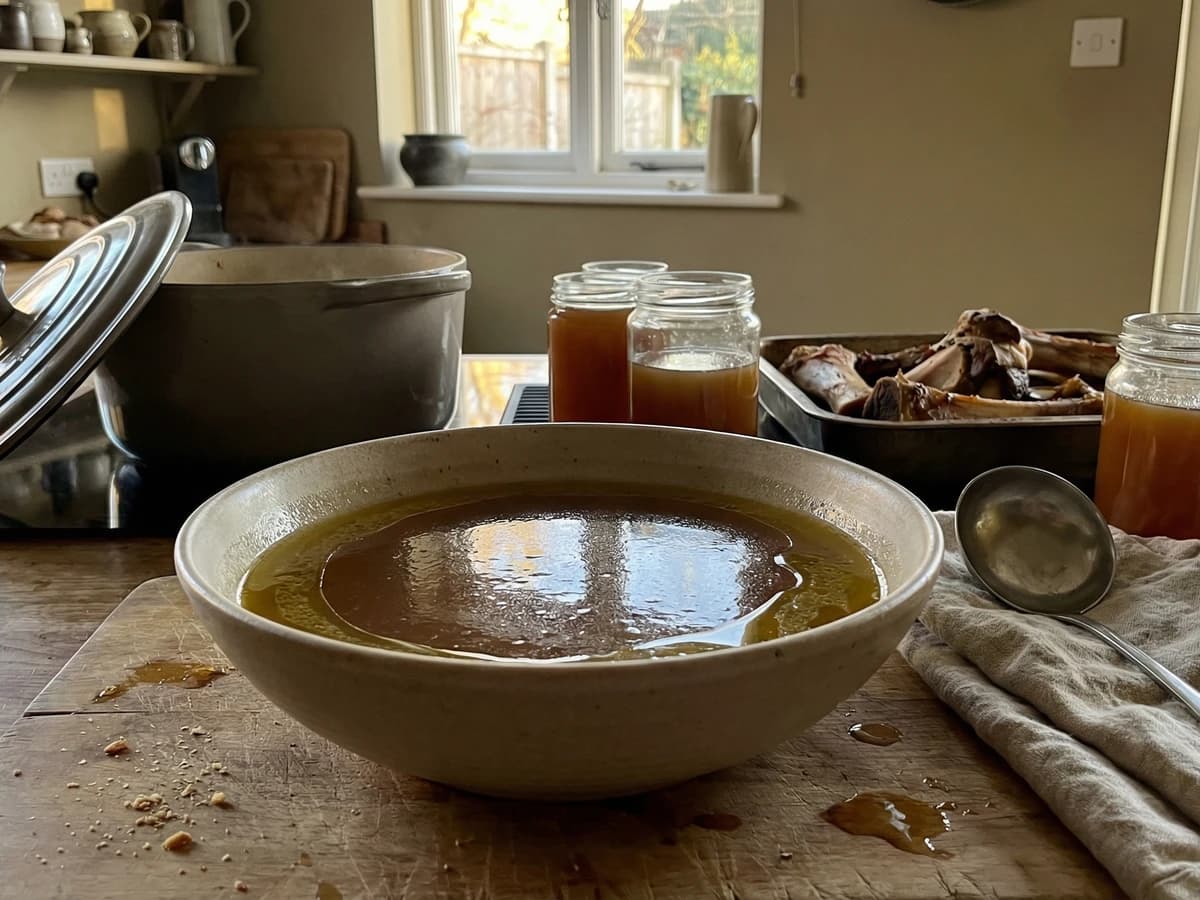
Beef bones roasted until dark, then coaxed for a long afternoon into a deep amber stock, the foundation of every good gravy, every braise, every bowl of winter soup worth the trouble.