Chef Juliette
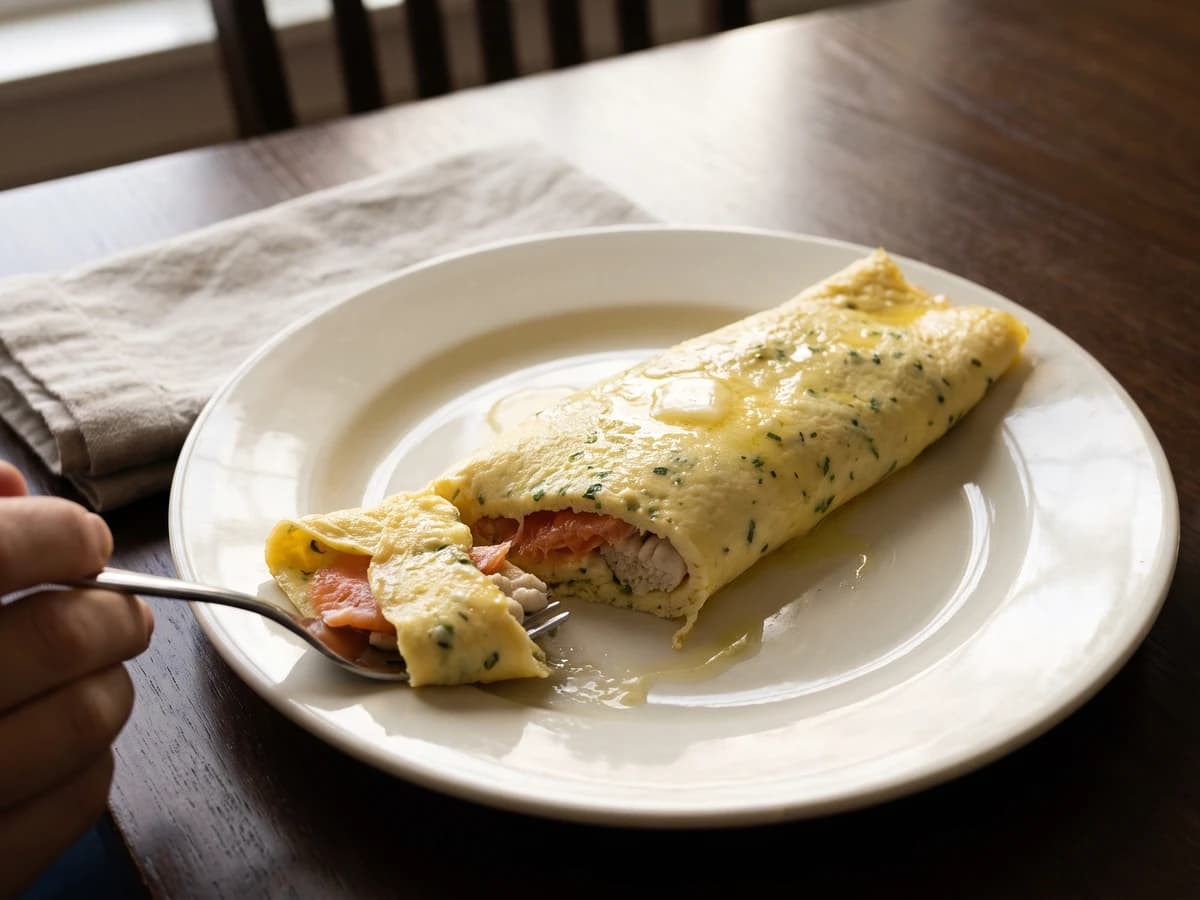
Omelette à l’Écossaise
A creamy omelette aux fines herbes closes around smoked-salmon-wrapped herring milts, gently poached in butter. Have the filling ready, then roll the eggs while they still shine.
A cooking platform built around craft, culture, and the stories behind what we eat.
Created by
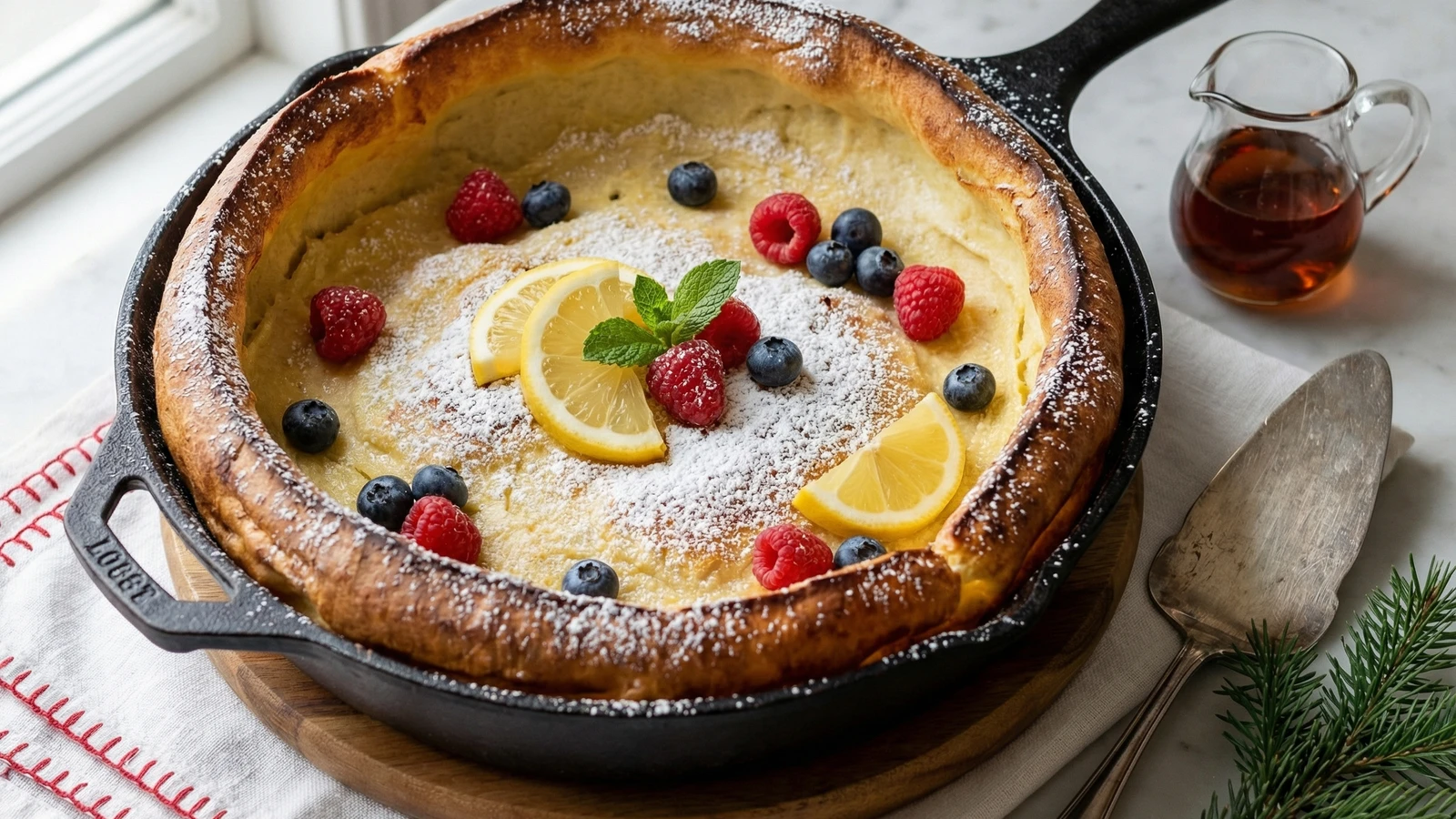
A billowing, golden-edged popover pancake that emerges from the oven like edible architecture, dusted with snow-white sugar and bright lemon. This Seattle-born classic brings theatrical flair to your Christmas morning table.
The Dutch Baby has nothing to do with Holland. This is American ingenuity at its finest, born in a Seattle restaurant called Manca's Cafe sometime around 1900. The name likely comes from a child's mispronunciation of 'Deutsch,' since the dish descends from German pancakes brought over by immigrants. Whatever you call it, this is breakfast as theater.
The technique couldn't be simpler. You blend eggs, milk, flour, and butter into a thin batter, pour it into a screaming-hot cast iron skillet, and let the oven do the work. What emerges fifteen minutes later defies expectation: a golden bowl of eggy custard with edges that climb the sides of your pan like bread dough reaching for sunlight. The center stays tender and custardy while the rim crisps into something approaching a Yorkshire pudding.
Here's what you need to understand: this pancake waits for no one. The moment it leaves the oven, gravity begins its work. Within three minutes, those magnificent peaks will settle into gentle waves. This isn't failure. This is physics. You gather your family, you open the oven door, and you serve immediately. The deflation becomes part of the ritual, the shared gasp followed by the scramble to the table.
For Christmas gatherings, the Dutch Baby offers something no stack of flapjacks can match: drama without labor. While your guests sip coffee and trade stories, the oven produces your centerpiece. One skillet feeds four generously. Two skillets feed a party. Set out your toppings, pull the pancake, and let your audience witness the spectacle before you all dig in together.
Quantity
4
Quantity
1 cup
Quantity
1 cup
Quantity
1 tablespoon
Quantity
1/2 teaspoon
Quantity
1/4 teaspoon
freshly grated
Quantity
1 teaspoon
Quantity
4 tablespoons
Quantity
for dusting
Quantity
1 large
cut into wedges
Quantity
for serving
| Ingredient | Quantity |
|---|---|
| large eggs, room temperature | 4 |
| whole milk, room temperature | 1 cup |
| all-purpose flour | 1 cup |
| granulated sugar | 1 tablespoon |
| fine sea salt | 1/2 teaspoon |
| nutmegfreshly grated | 1/4 teaspoon |
| pure vanilla extract | 1 teaspoon |
| unsalted butter | 4 tablespoons |
| powdered sugar | for dusting |
| lemoncut into wedges | 1 large |
| fresh berries (optional) | for serving |
Position your oven rack in the lower third and preheat to 425°F. Place your cast iron skillet in the oven as it heats. This step is non-negotiable. A properly preheated skillet, hot enough to make butter foam instantly, creates the explosive puff that defines this dish. Give it a full twenty minutes.
Crack the eggs into a blender and blend for 30 seconds until frothy and pale yellow. Add the milk, flour, sugar, salt, nutmeg, and vanilla. Blend on high for one full minute. The batter should be completely smooth, thin as heavy cream, with no lumps whatsoever. A few pulses won't do. You need sustained blending to develop just enough gluten for structure while incorporating air that will expand in the heat.
Let the batter rest at room temperature for at least 10 minutes while your oven finishes preheating. This rest allows the flour to hydrate fully and any air bubbles to stabilize. If you've made the batter ahead and refrigerated it, pull it out now and let it lose its chill. Cold batter hitting hot butter creates a temperature shock that compromises the rise.
Using heavy oven mitts, carefully remove the blazing-hot skillet from the oven. Add all four tablespoons of butter at once. It will foam aggressively and begin to brown almost immediately. Swirl the pan to coat the bottom and sides completely. The butter should sizzle and pop. Work quickly here. You have perhaps thirty seconds before the butter burns.
Give the batter one quick pulse to recombine, then pour it directly into the center of the buttered skillet. Don't stir or spread it. The batter will find its own level. Immediately return the skillet to the lower rack of your oven. Close the door and resist every urge to peek for the first 15 minutes. Opening the door releases heat and can cause a premature collapse.
Bake for 18 to 22 minutes total. Around minute 12, the edges will begin their dramatic climb up the sides of the pan. By minute 18, you'll have a deeply golden rim with patches of dark brown and a puffed center that may rise four inches above the pan's edge. The Dutch Baby is done when the edges are firm and deeply colored and the center, while still pale, no longer jiggles when you shake the pan gently.
Pull the skillet from the oven and place it on a trivet at the center of your table. Dust generously with powdered sugar through a fine-mesh sieve, letting it fall like fresh snow. Squeeze lemon juice over the top. The acid brightens everything and cuts through the richness. Scatter berries if using. Serve immediately, cutting wedges directly from the pan while your guests watch those magnificent edges begin their inevitable, beautiful descent.
1 serving (about 106g)
Culinary guides, cultural storytelling, and the editorial depth that makes cooking meaningful.
Discover Culinary ExplorerChef Juliette
A creamy omelette aux fines herbes closes around smoked-salmon-wrapped herring milts, gently poached in butter. Have the filling ready, then roll the eggs while they still shine.
Chef Juliette
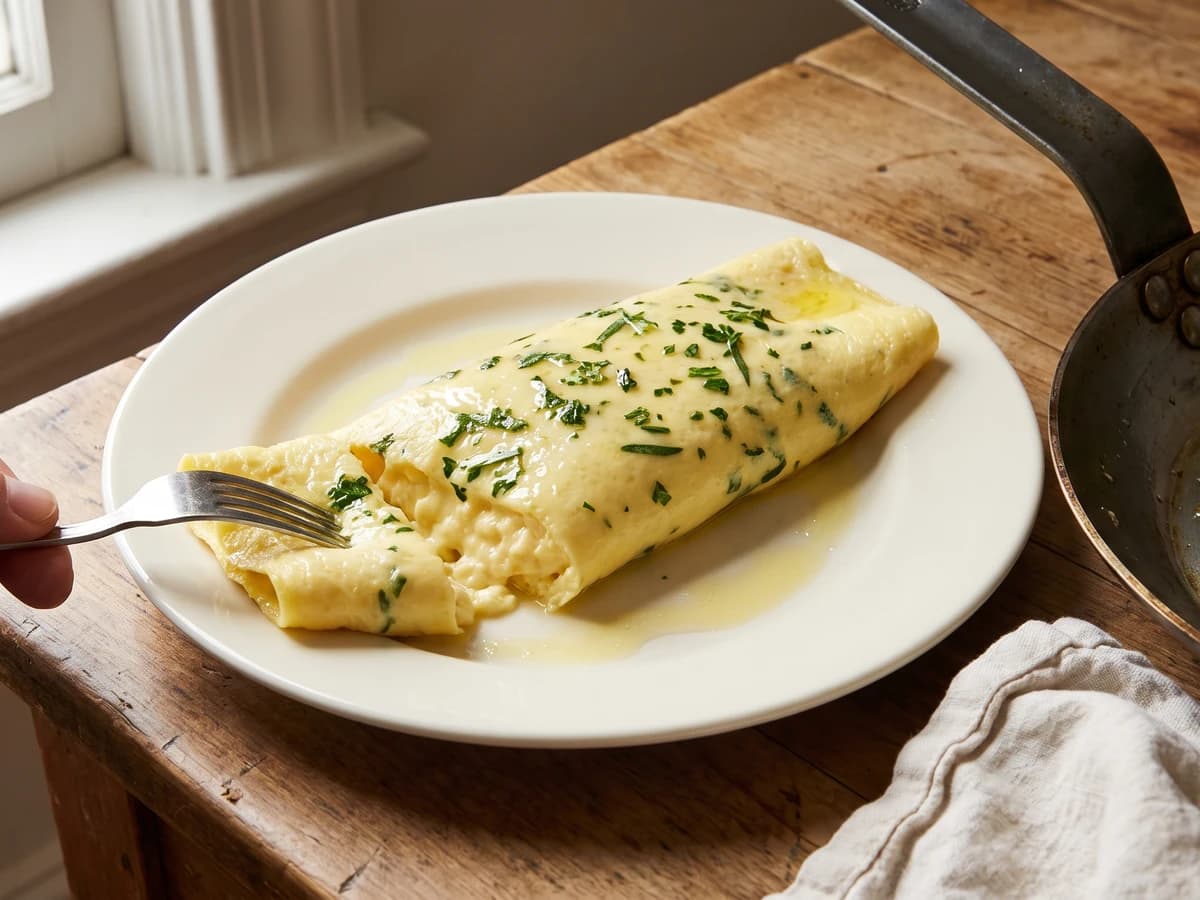
Four tender herbs, hot butter, and two eggs per pan: this rolled omelette teaches the quick hand and good judgment that keep the outside pale and the center creamy.
Chef Juliette
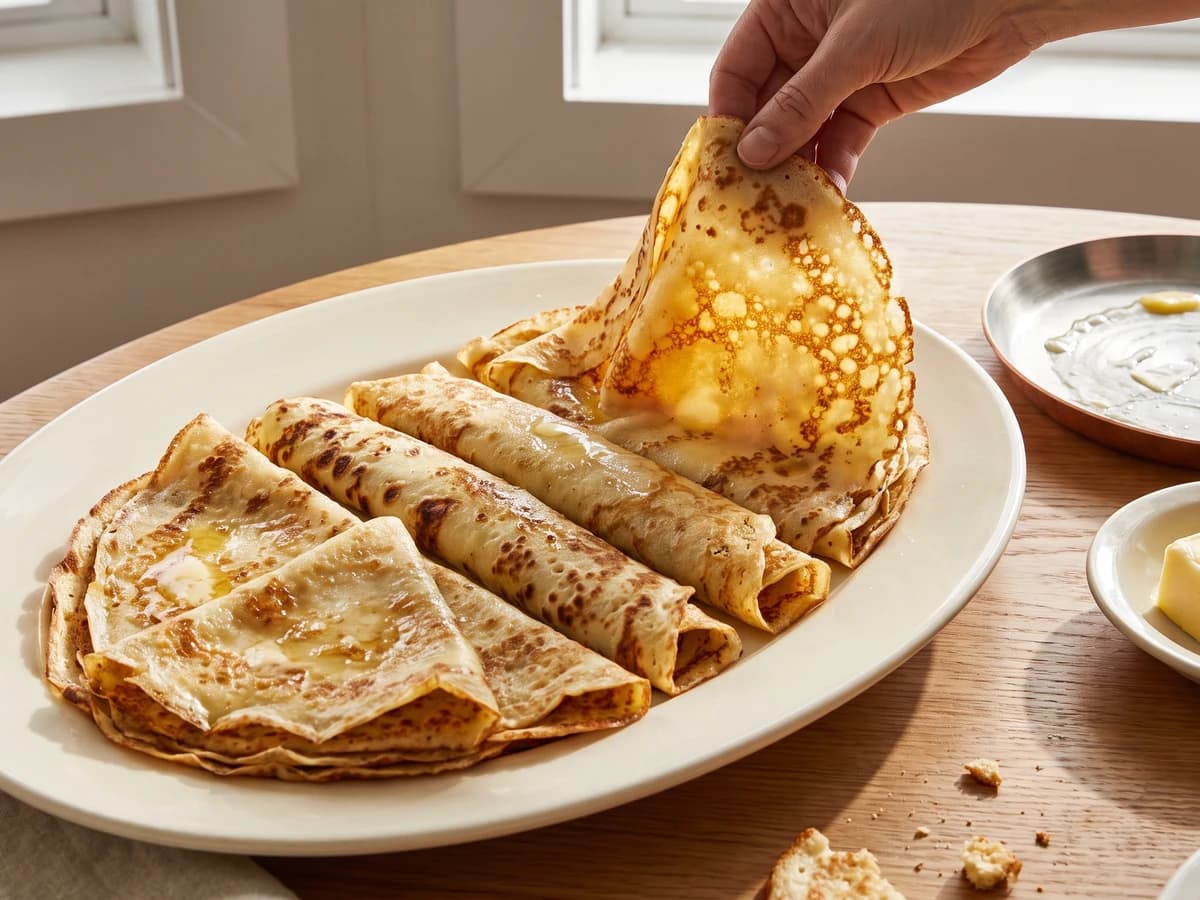
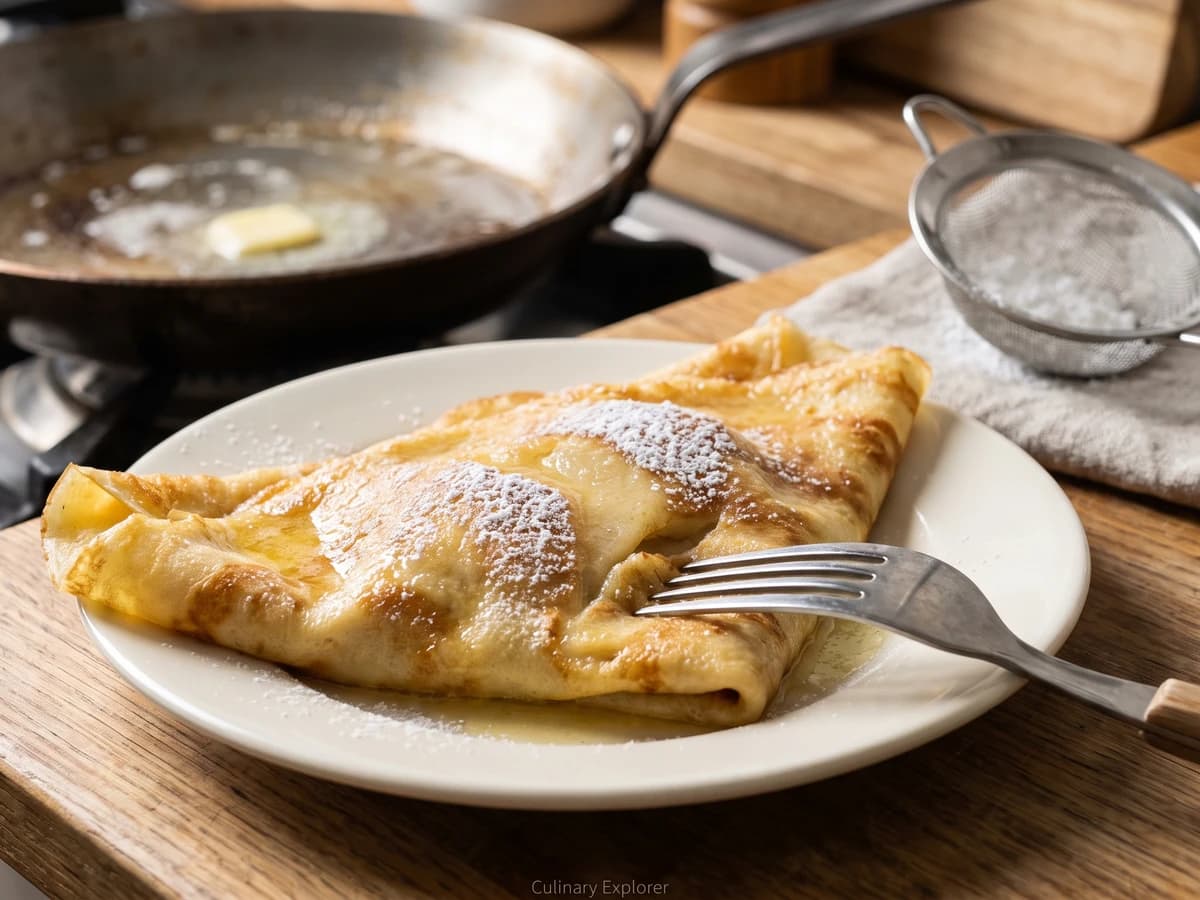
Four batters, one lesson: let the flour drink deeply before cooking, then spread the batter thinly in butter for crêpes and pannequets that bend without becoming tough.
Chef Juliette
Crêpes au Couvent trap ripe Williams pear dice between two thin pours of sweet batter, then turn in one clean toss and reach the table butter-gold, powdered, and burning hot.