Chef Jeong-sun
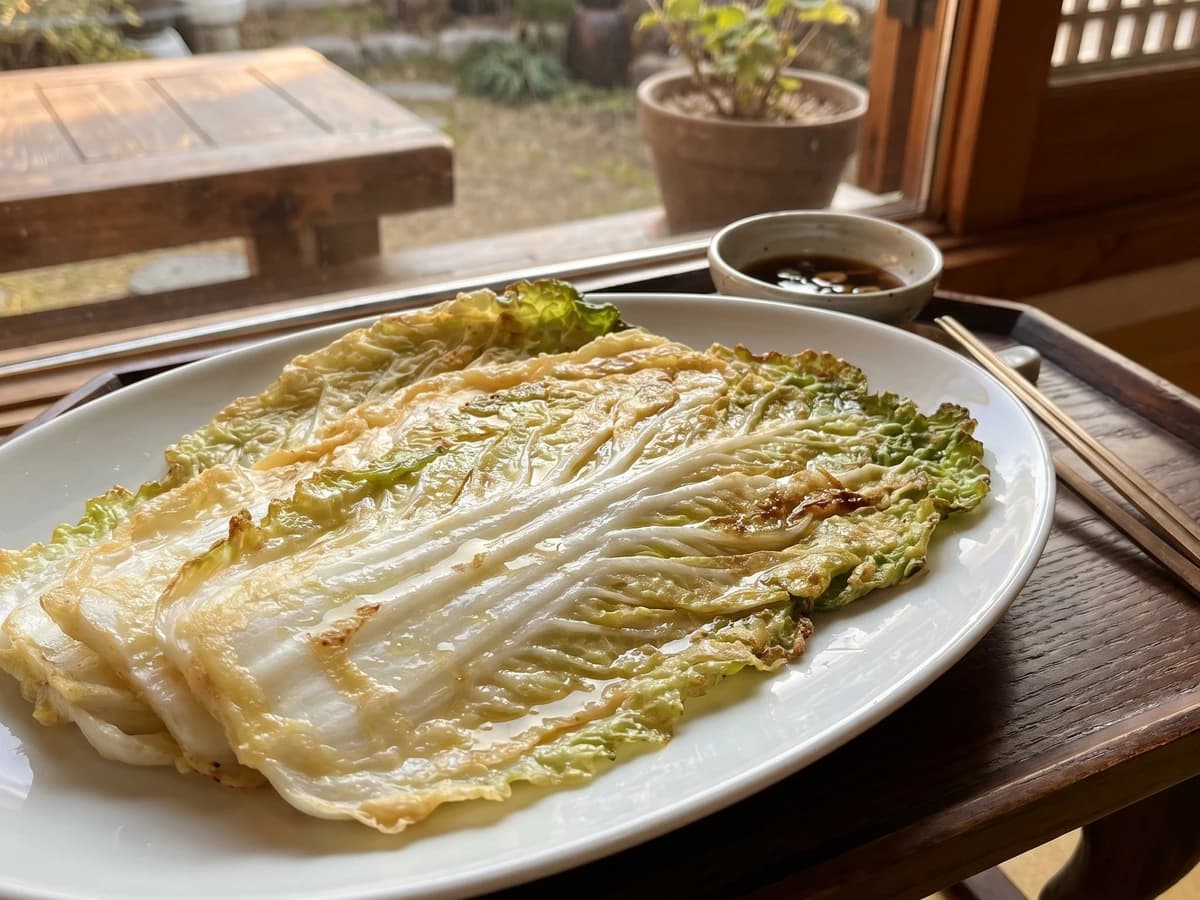
Baechu-jeon (배추전, Napa Cabbage Pancake)
A Gyeongsang home pancake made from one whole napa cabbage leaf at a time, flattened at the rib, brushed in thin salted batter, and fried until sweet, tender, and quietly crisp at the edges.
A cooking platform built around craft, culture, and the stories behind what we eat.

Created by
A quiet Korean tofu jeon, pressed dry and pan-fried until the edges turn pale gold, served with soy-vinegar dipping sauce for a holiday table or plain rice supper.
Dubu-jeon lives or dies before it reaches the pan. Tofu is full of water, and if you don't press it dry, it steams in its own moisture and sits there pale and sulking. Press it, salt it lightly, dust it thinly, and the same cheap block becomes a proper plate of jeon.
This is not the loud dish on the table. It sits beside rice, soup, kimchi, and a few banchan, and somehow people keep reaching for it. On holidays it can appear among other jeon, plain enough for jesa (ancestral rites) when the seasonings stay restrained. On a weeknight, it is supper with a bowl of hot rice and a little cho-ganjang (soy-vinegar dipping sauce).
My teacher Master Seong-nyeo made us fry tofu in silence the first time. 눈동냥, 귀동냥, borrowing with the eyes and ears. We learned that the coating should be thin enough to respect the tofu, not thick enough to hide it. Let it taste like itself. That is the whole lesson.
Tofu entered Korean cooking through long exchange with China and was well established by the Goryeo and Joseon periods, where it became important in temple food, home cooking, and ritual tables. Jeon refers broadly to ingredients coated lightly and pan-fried, and dubu-jeon belongs to the practical home branch of that family: inexpensive, protein-rich, and plain enough to sit on both everyday tables and holiday jesa spreads. In many jesa preparations, strong aromatics such as garlic, scallion, and chili are avoided, which is why the tofu itself stays simply salted and the dipping sauce is served separately.
Quantity
1 block (about 400g)
Quantity
1/2 teaspoon
divided
Quantity
1/4 cup
Quantity
2 large
beaten
Quantity
2 tablespoons, plus more as needed
Quantity
2 tablespoons
Quantity
1 tablespoon
Quantity
1 tablespoon
Quantity
1 teaspoon
Quantity
1/2 teaspoon
Quantity
1 teaspoon
finely sliced
Quantity
1/4 teaspoon
| Ingredient | Quantity |
|---|---|
| firm tofu | 1 block (about 400g) |
| fine sea saltdivided | 1/2 teaspoon |
| all-purpose flour or potato starch | 1/4 cup |
| eggsbeaten | 2 large |
| neutral oil | 2 tablespoons, plus more as needed |
| soy sauce | 2 tablespoons |
| rice vinegar | 1 tablespoon |
| water | 1 tablespoon |
| toasted sesame oil | 1 teaspoon |
| toasted sesame seeds | 1/2 teaspoon |
| scallion (optional)finely sliced | 1 teaspoon |
| gochugaru (Korean chili flakes) (optional) | 1/4 teaspoon |
Drain the tofu and wrap it in a clean kitchen towel or several layers of paper towel. Set it on a plate, place a small cutting board or flat plate on top, and weight it with a can for 15 minutes. This is the step people skip, and it is why their tofu refuses to brown. Water in the tofu becomes water in the pan.
Cut the pressed tofu into 10 to 12 rectangles, each about 1/2 inch thick. Lay them flat and sprinkle both sides with 1/4 teaspoon of the salt total, not more. Rest 5 minutes, then blot the surfaces dry again. The salt seasons the tofu gently and pulls out the last beads of moisture.
Spread the flour or potato starch on a plate. Beat the eggs with the remaining 1/4 teaspoon salt in a shallow bowl until no streaks remain. The flour layer should be a whisper, just enough to help the egg cling. A thick coat gives you fried batter with tofu hiding inside.
Dust each tofu slice lightly in flour or starch, tapping off every loose bit, then dip it in the beaten egg. Let the excess egg drip back into the bowl. Work in batches so the tofu does not sit wet while the pan heats.
Heat 2 tablespoons neutral oil in a wide nonstick or well-seasoned skillet over medium heat. Lay in the tofu in one layer, with space between pieces. Fry 2 to 3 minutes per side, until the egg sets and the edges turn pale gold. Do not chase a dark crust here; dubu-jeon should stay gentle.
Move the fried tofu to a rack or paper towel-lined plate. Wipe out any browned egg bits before the next batch and add a little more oil if the pan looks dry. Old egg bits burn fast and mark the next pieces, and this dish shows every careless minute.
Stir together the soy sauce, rice vinegar, water, sesame oil, sesame seeds, scallion, and gochugaru if using. Taste it before serving. It should be salty, bright, and a little nutty, because the tofu is mild and needs the sauce to wake it up, not bury it.
Arrange the dubu-jeon slightly overlapping on a plate and serve with the dipping sauce on the side. It is best warm, but it is still good at room temperature, which is why it behaves well on a holiday table crowded with other jeon.
1 serving (about 140g)
Culinary guides, cultural storytelling, and the editorial depth that makes cooking meaningful.
Discover Culinary ExplorerChef Jeong-sun
A Gyeongsang home pancake made from one whole napa cabbage leaf at a time, flattened at the rib, brushed in thin salted batter, and fried until sweet, tender, and quietly crisp at the edges.

Chef Jeong-sun
A holiday jeon of fresh shiitake or oyster mushrooms, salted lightly, dusted thinly, and carried through egg in a quiet pan until the mushroom stays earthy and the coating stays tender.

Chef Jeong-sun
Soaked mung beans ground coarse, folded with pork, bracken, sprouts, and kimchi, then fried thick until the edges crisp and the center stays tender enough for a shared table.

Chef Jeong-sun
A summer garlic chive pancake fried thin, crisp at the edges and chewy in the center, with just enough batter to hold the green pile together and a sharp soy-vinegar dip.