Culinary Explorer

A cooking platform built around craft, culture, and the stories behind what we eat.
Discover Culinary Explorer
Deep-Fried Whitebait

Deep-Fried Whitebait

Created by Chef Thomas

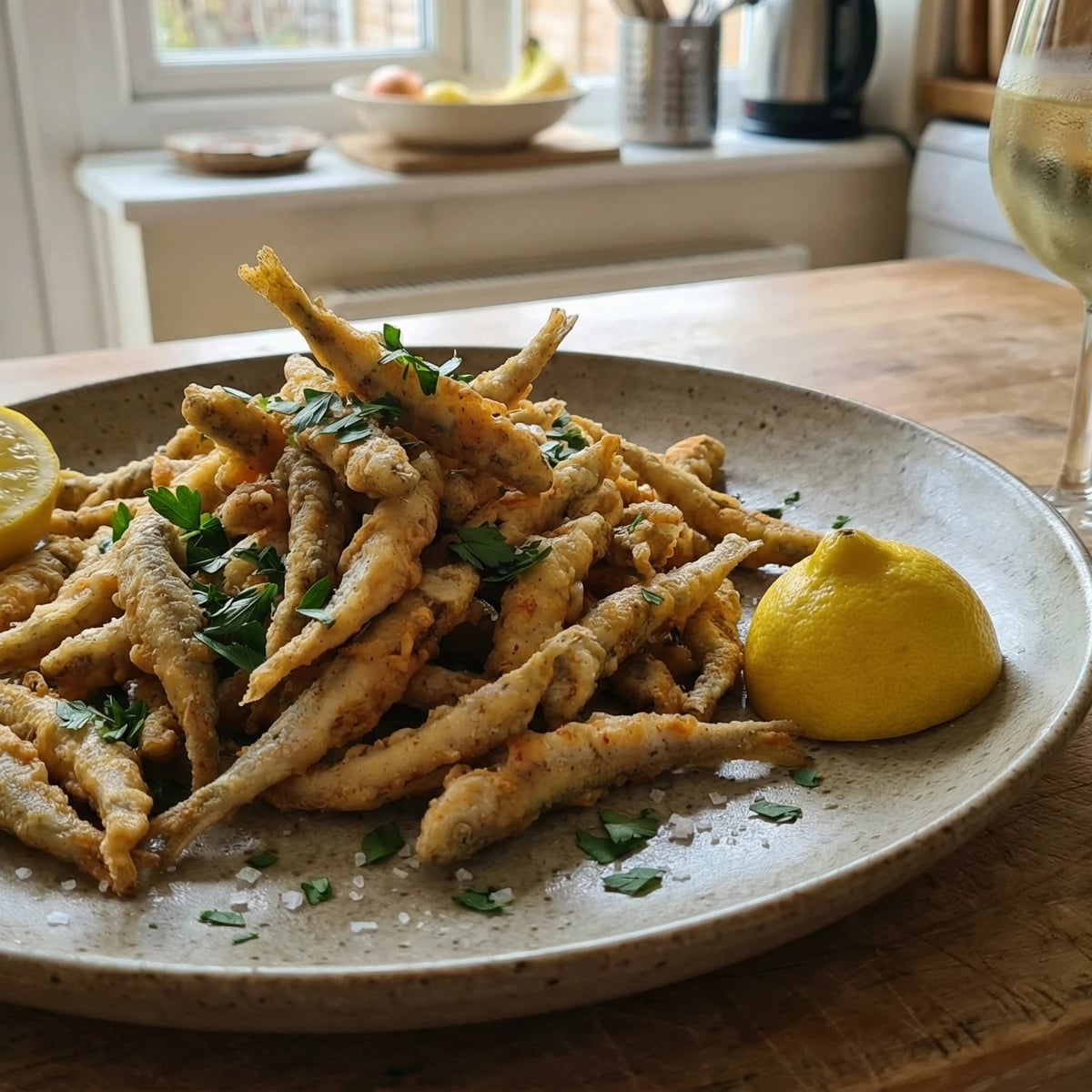
A pile of tiny silver fish, dusted in flour and cayenne and fried until they crackle between your teeth, served with lemon and eaten with your fingers while they're still hot.

Appetizers & Snacks
British
Dinner Party
10 min
Active Time
10 min cook20 min total
Yield4 servings as a starter

The smell reaches the table before the plate does. Hot oil, salt, something crisp and faintly briny. A plate of whitebait, golden and tangled, with lemon alongside and nothing else to complicate it. This is estuary food. Thames food. The sort of thing that used to begin every decent pub supper from Southend to Whitstable and still should.

Whitebait are tiny, whole fish, eaten head to tail, bones and all. If that bothers you, look away. If it doesn't, you're in for something good. They want nothing more than seasoned flour and very hot oil. Two minutes in the pan. That's the extent of the technique. The rest is timing: getting them to the table while they're still crackling, still hot enough to make you blow on your fingers before you reach for another.

I make these when people are coming round and I want something to put on the table while the rest of dinner finishes itself. A bowl of whitebait with drinks, everyone standing in the kitchen reaching over each other, lemon juice on their fingers. There are few better feelings than watching a plate empty that quickly.

The market decides, as always. Fresh whitebait have a clean, sea-salt smell and bright silver skin. If they smell of anything other than the coast, leave them. Frozen will do well enough if fresh aren't to be had, but dry them properly or the oil will make you regret it.

The technique, the tradition, and the story behind every dish.

Discover Culinary Explorer

Ingredients

fresh whitebait

Quantity

400g

plain flour

Quantity

100g

fine sea salt

Quantity

1 teaspoon

cayenne pepper

Quantity

half a teaspoon

black pepper

Quantity

freshly ground, to taste

sunflower or groundnut oil

Quantity

enough for deep-frying

lemons

Quantity

2

halved

flat-leaf parsley (optional)

Quantity

small bunch

roughly chopped

good bread

Quantity

to serve

Equipment Needed

  • Deep, heavy-bottomed saucepan (at least 20cm across)
  • Cooking thermometer (helpful but not essential)
  • Slottedspoon or spider
  • Kitchen paper for draining

Instructions

  1. 1

    Season the flour

    Tip the flour onto a wide plate or into a shallow bowl. Add the salt, the cayenne, and a good grinding of black pepper. Mix it through with your fingers. Taste a pinch. It should be noticeably seasoned, almost too much, because a lot of it will stay on the plate and not on the fish.

  2. 2

    Prepare the whitebait

    Give the whitebait a quick rinse under cold water if they need it, then pat them dry on kitchen paper. Properly dry. This is the only thing that matters with frying. Wet fish in hot oil spits, steams, and goes limp instead of crisp. Dry fish in hot oil crackles and turns golden. Take the time.

    If you can only find frozen whitebait, defrost them overnight in the fridge on a tray lined with kitchen paper. Drain away any liquid and pat them thoroughly dry before flouring.
  3. 3

    Flour the fish

    Toss a handful of whitebait into the seasoned flour and turn them gently until every fish is lightly coated. Shake off any excess. You want a whisper of flour, not a crust. Work in batches so they don't clump together.

  4. 4

    Heat the oil

    Pour the oil into a deep, heavy-bottomed saucepan to a depth of about 8cm. Heat it over a medium-high flame until it reaches 180C. If you don't have a thermometer, drop a small cube of bread into the oil. It should sizzle immediately and turn golden in about thirty seconds. If it sits there quietly, the oil isn't ready. If it goes dark in seconds, it's too hot. Adjust and test again.

    Use a pan with high sides and never fill it more than a third full with oil. Hot oil deserves respect. Keep a lid nearby, not because you'll need it, but because it's sensible.
  5. 5

    Fry until crisp

    Lower a handful of floured whitebait into the oil. They'll hiss and bubble. Don't crowd the pan. Fry for about two minutes, perhaps a little less, until they're golden and crisp and curled slightly at the edges. Lift them out with a slotted spoon and drain on kitchen paper. Sprinkle with a little more salt while they're hot. Repeat with the remaining fish, letting the oil come back up to temperature between batches.

  6. 6

    Serve immediately

    Pile the whitebait onto a warm plate. Scatter the parsley over if you have it. Put the lemon halves alongside, cut-side up. Bring them to the table quickly. Whitebait wait for no one. They should be eaten with fingers, head and tail and all, with bread to mop up the salt and a squeeze of lemon over each handful. That's it. That's the whole thing.

Chef Tips

  • Fresh whitebait from a good fishmonger will always be better, but frozen are perfectly acceptable and often what you'll find. The important thing is to get them bone dry before they go anywhere near the flour. Wet fish and hot oil are not friends.
  • Don't be timid with the cayenne. It shouldn't make the fish hot, just warm, a gentle heat that sits behind the salt and the lemon. You should feel it in your throat, not on your tongue. If you can't taste it, add more next time.
  • Serve with a cold, sharp white wine or a good dry cider. Something that cuts through the oil and the salt. A Muscadet, if you can get one, or a Picpoul. Nothing complicated. The fish are the point.
  • Resist the urge to make a dipping sauce. Lemon is all you need. A sauce says you don't trust the fish, and if the fish are good, they deserve your trust.

Advance Preparation

  • The seasoned flour can be mixed hours ahead and left covered on the counter. It's one less thing to think about when your guests arrive.
  • Whitebait cannot be fried in advance. They must go from pan to plate to table in a matter of minutes. This is not a dish that waits, and it shouldn't have to.

Frequently Asked Questions

Nutrition Information

1 serving (about 120g)

Calories
320 calories
Total Fat
21 g
Saturated Fat
3 g
Trans Fat
0 g
Unsaturated Fat
17 g
Cholesterol
70 mg
Sodium
480 mg
Total Carbohydrates
15 g
Dietary Fiber
1 g
Sugars
1 g
Protein
20 g

Note: Chef personas and recipes are created with AI assistance. Cook with care: follow safe food-handling practices, check doneness with a thermometer when needed, and adapt for allergies and your kitchen.

Where cooking meets culture.

Culinary guides, cultural storytelling, and the editorial depth that makes cooking meaningful.

Discover Culinary Explorer

More from British Snacks & Small Things

Browse the full collection