Chef Remy
Creole Red Gravy
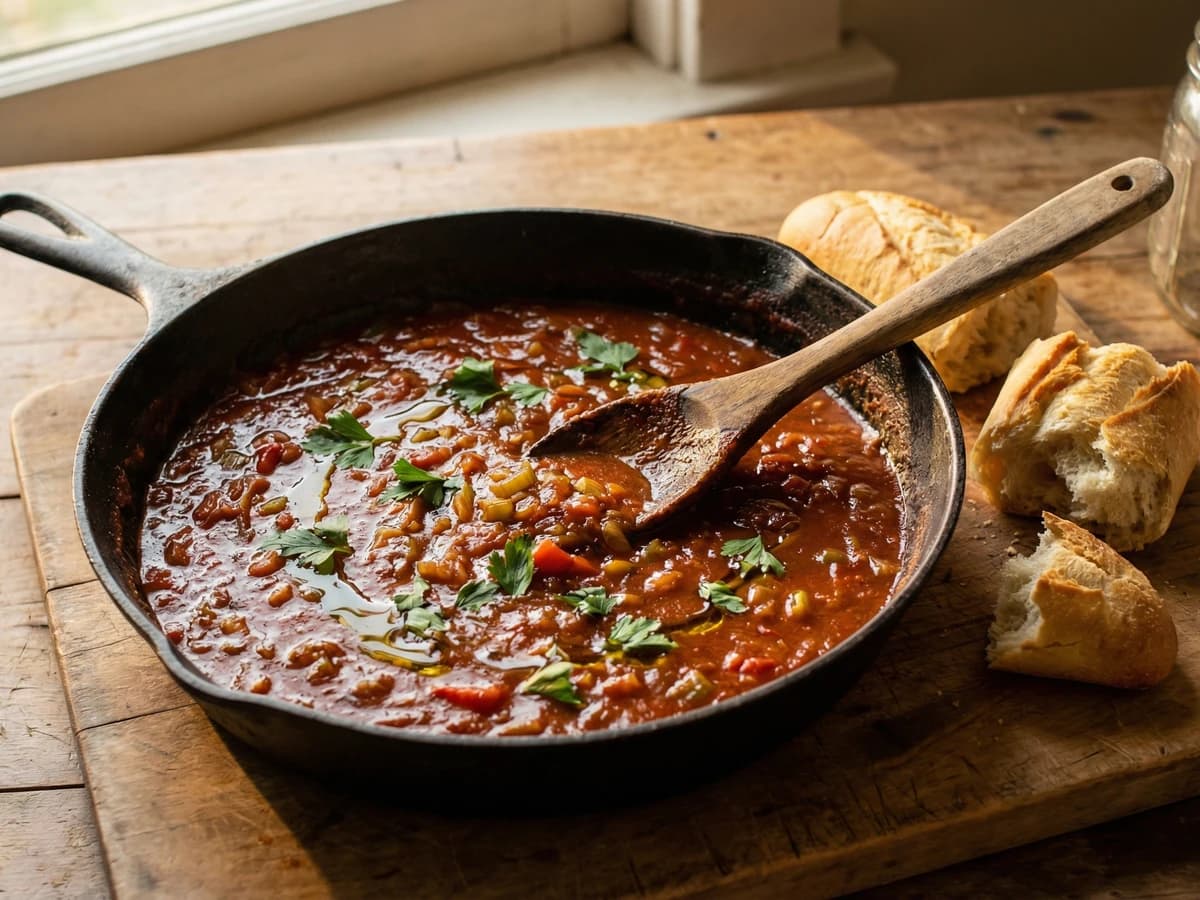
The mother sauce of New Orleans kitchens: slow-simmered tomatoes, the holy trinity, and enough garlic to keep the vampires at bay, spooned generously over everything from scrambled eggs to Sunday pasta.
A cooking platform built around craft, culture, and the stories behind what we eat.

Created by Chef Remy
Sharp Creole mustard meets red wine vinegar and good olive oil, whisked into a peppery emulsion that wakes up everything it touches, from bitter greens to cold roast beef.
Creole mustard is Louisiana's secret weapon. It's got heat, it's got tang, and it carries those whole mustard seeds that pop between your teeth. When you build a vinaigrette around it, you're not making some timid salad dressing. You're making a sauce that stands up and demands attention.
My grandmother Evangeline kept a jar of homemade mustard vinaigrette in her icebox at all times. She'd drizzle it over sliced tomatoes still warm from the garden, spoon it across leftover roast, toss it with whatever greens came up that week. At Lagniappe, we go through gallons of this stuff. It dresses our house salad, finishes our cold meat platters, and makes its way into sandwiches when nobody's looking.
The technique here is simple but demands respect. You're creating an emulsion, forcing oil and vinegar to stay together when they'd rather separate. The mustard does the heavy lifting because those ground seeds contain natural emulsifiers. Whisk steady and add your oil slow. Rush it and the whole thing breaks. Take your time and you'll have a vinaigrette so stable it keeps for weeks.
Quantity
1/4 cup
Quantity
2 tablespoons
Quantity
1/4 cup
Quantity
1 tablespoon
Quantity
2 cloves
minced fine
Quantity
1 teaspoon
Quantity
1/2 teaspoon
freshly cracked
Quantity
1/4 teaspoon
Quantity
1 teaspoon
Quantity
3/4 cup
Quantity
2 tablespoons
minced
Quantity
1 tablespoon
minced
| Ingredient | Quantity |
|---|---|
| Creole mustard | 1/4 cup |
| Dijon mustard | 2 tablespoons |
| red wine vinegar | 1/4 cup |
| fresh lemon juice | 1 tablespoon |
| garlicminced fine | 2 cloves |
| kosher salt | 1 teaspoon |
| black pepperfreshly cracked | 1/2 teaspoon |
| cayenne pepper | 1/4 teaspoon |
| honey | 1 teaspoon |
| extra-virgin olive oil | 3/4 cup |
| fresh parsleyminced | 2 tablespoons |
| fresh chivesminced | 1 tablespoon |
In a medium mixing bowl, combine the Creole mustard and Dijon mustard. The Creole brings the heat and those signature whole seeds. The Dijon smooths things out and helps with emulsification. Whisk them together until uniform.
Whisk in the red wine vinegar, lemon juice, and minced garlic. The combination of vinegar and citrus gives you depth. Vinegar alone can taste flat, one-dimensional. That squeeze of lemon brightens everything and rounds out the sharpness. Add the salt, black pepper, cayenne, and honey. Whisk until the honey dissolves completely.
Here's where patience matters. Set your bowl on a damp kitchen towel so it won't spin. Start whisking steadily with one hand while you drizzle the olive oil in a thin, steady stream with the other. Go slow at first, just drops at a time, until you see the mixture thicken and turn creamy. Once emulsified, you can add the oil a bit faster, but never dump it all in at once.
Fold in the minced parsley and chives. These go in at the end so they stay bright and fresh. Taste your vinaigrette now. This is the most important step. Does it need more salt? More acid? A touch more honey to balance the heat? Trust your palate and adjust. The vinaigrette should taste bold, tangy, and just a little spicy on the finish.
Transfer to a clean jar with a tight-fitting lid. Let the vinaigrette rest at room temperature for at least thirty minutes before using. This gives the garlic time to mellow and the flavors time to marry. Give it a good shake before each use, even though a proper emulsion should hold together.
1 serving (about 30g)
Culinary guides, cultural storytelling, and the editorial depth that makes cooking meaningful.
Discover Culinary ExplorerChef Remy
The mother sauce of New Orleans kitchens: slow-simmered tomatoes, the holy trinity, and enough garlic to keep the vampires at bay, spooned generously over everything from scrambled eggs to Sunday pasta.
Chef Remy
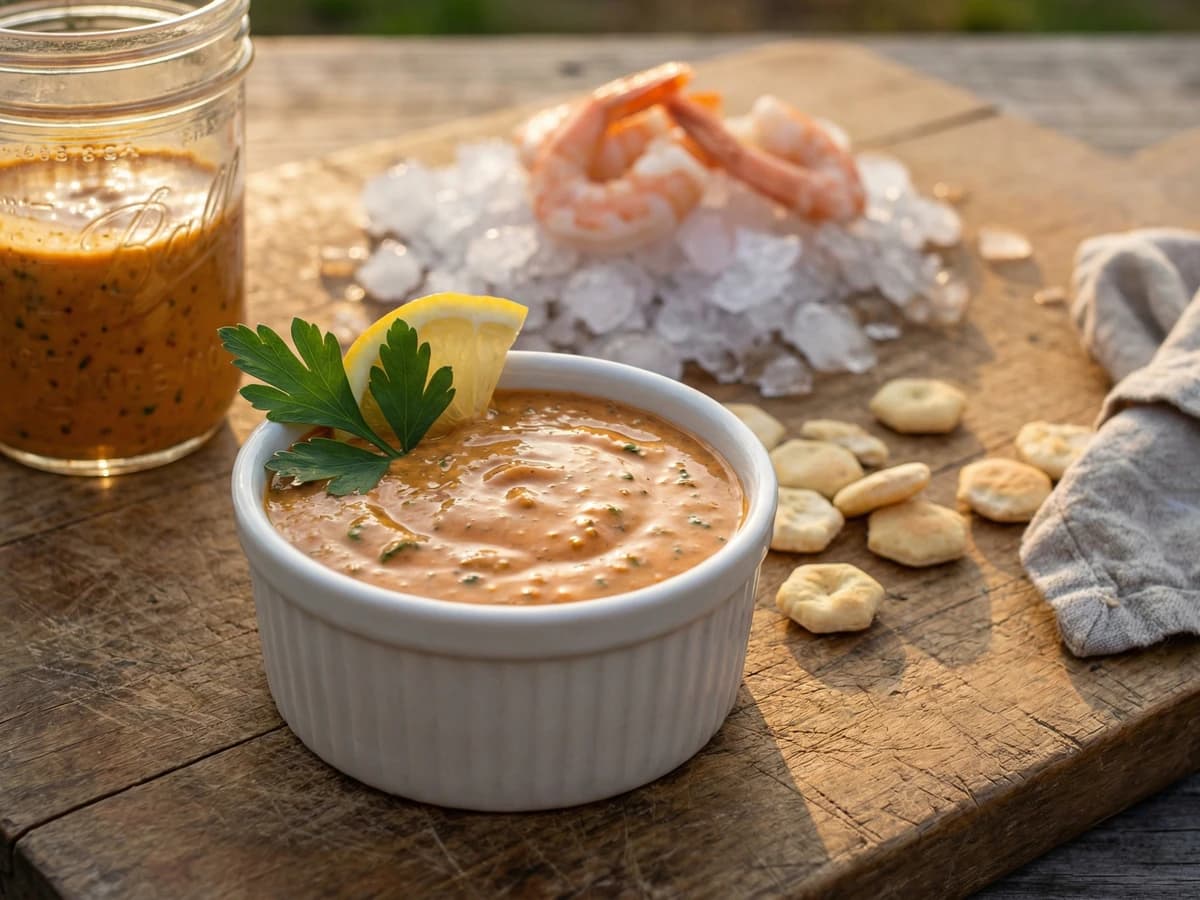
New Orleans' beloved scarlet sauce, creamy with Creole mustard and bright with horseradish, the kind of dip that turns a simple platter of boiled shrimp into a celebration worth remembering.
Chef Remy
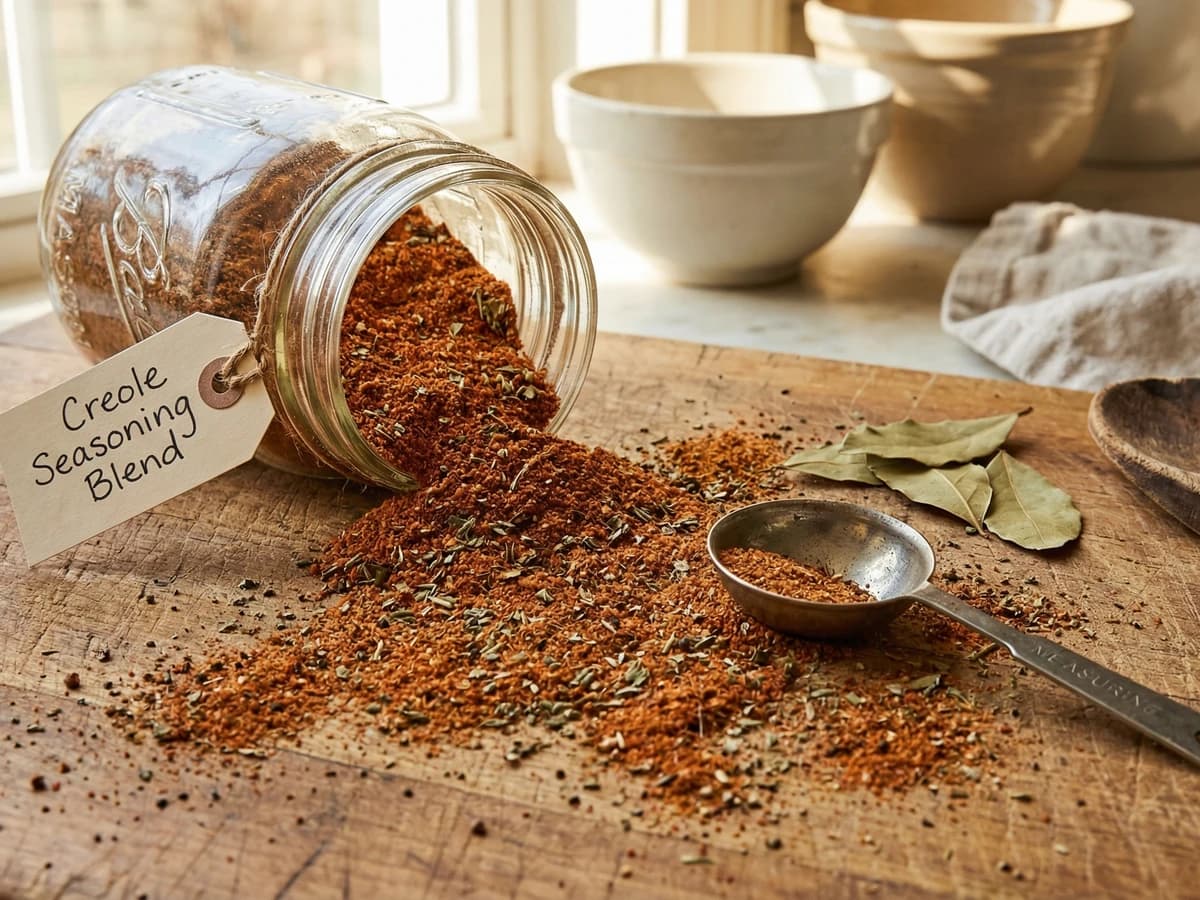
The aromatic foundation of New Orleans home cooking, where paprika meets dried herbs and three kinds of pepper build warmth without aggression, ready to transform everything from gumbo to grilled fish.
Chef Remy
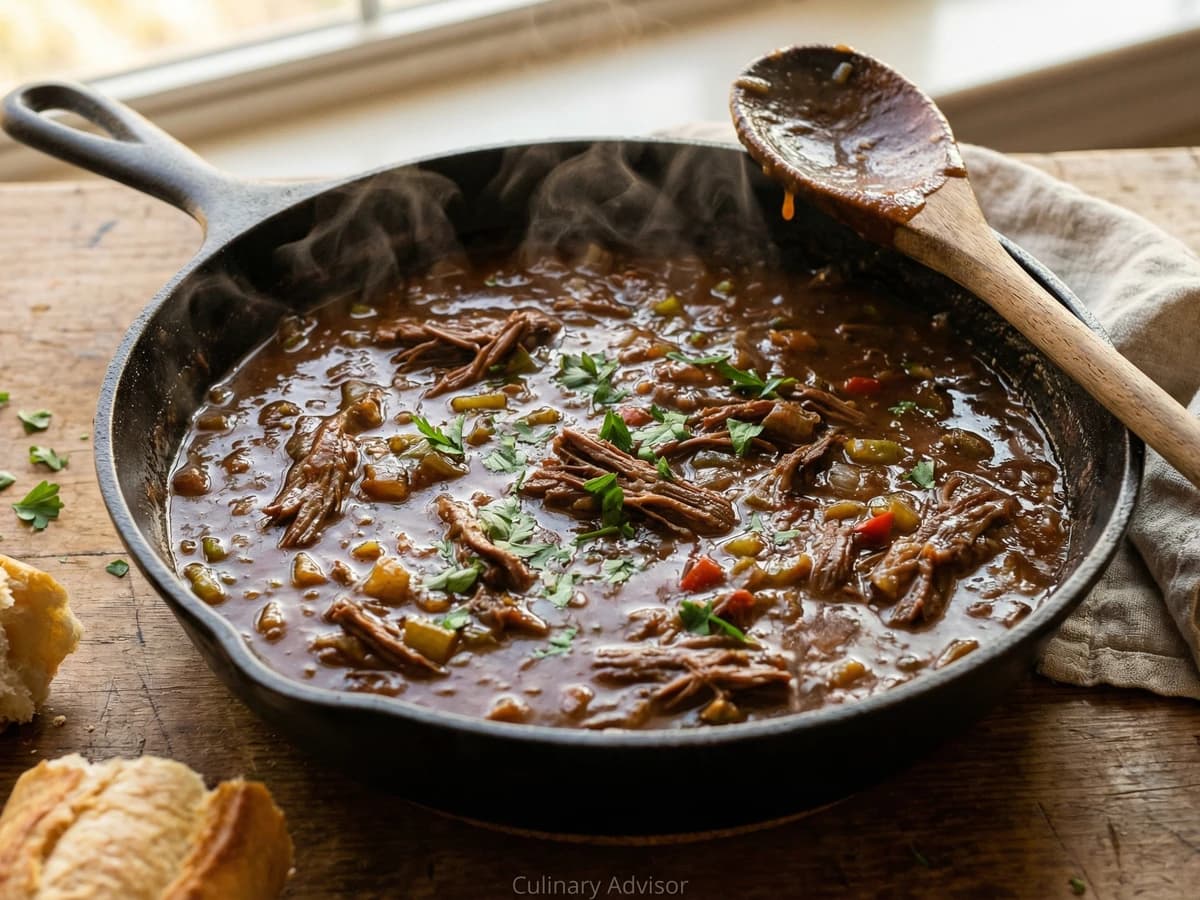
The dark, meaty essence of a proper New Orleans roast beef, slow-simmered until the beef falls apart into silky shreds swimming in rich, Worcestershire-kissed gravy that belongs on po'boys, rice, or anything that needs saving.