
Chef Remy
Cajun All-Purpose Seasoning
A brick-red Louisiana spice blend with layered heat, earthy herbs, and aromatic depth that transforms anything it touches into something worth fighting over at the dinner table.
A cooking platform built around craft, culture, and the stories behind what we eat.
Created by Chef Remy
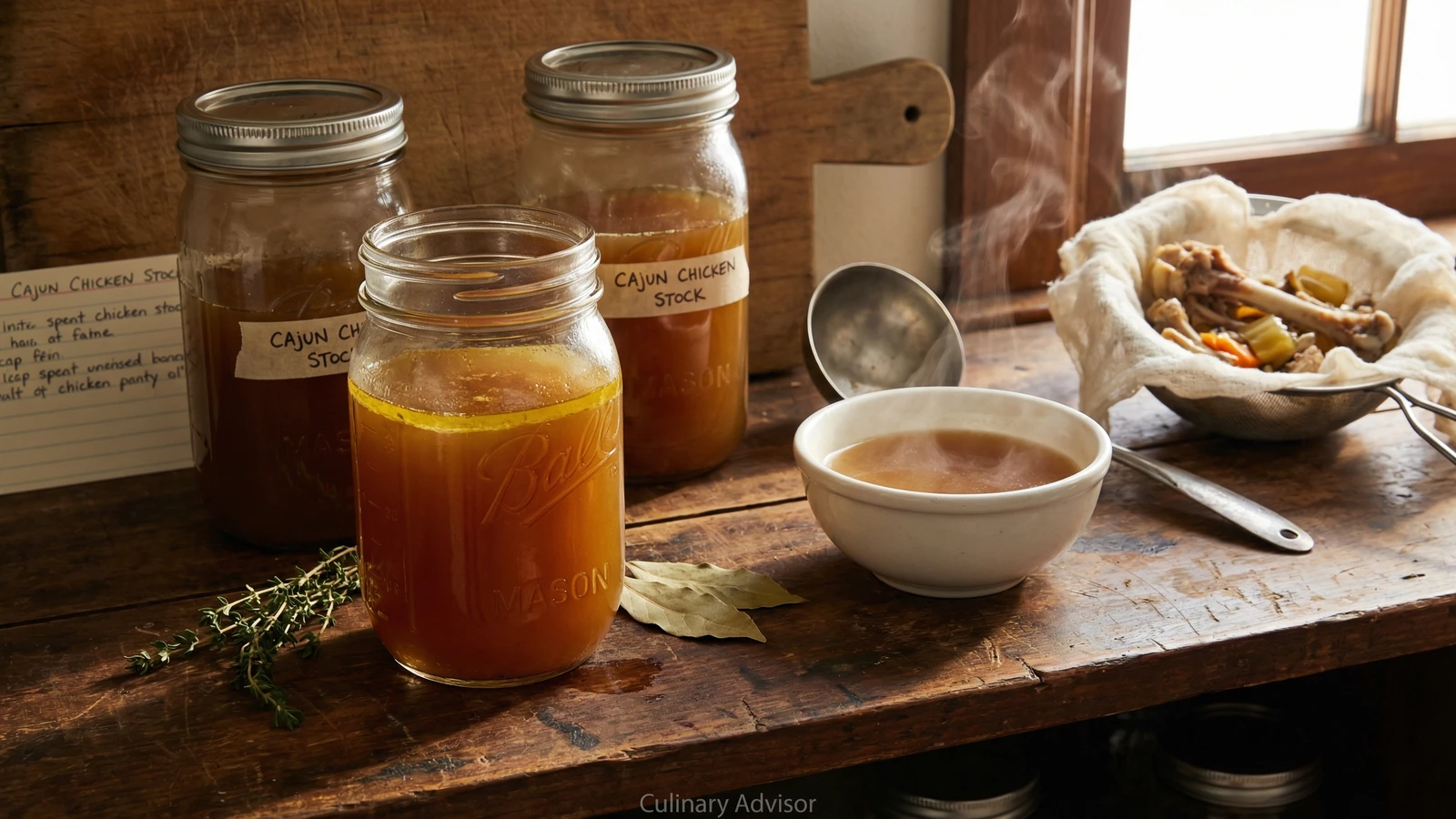
The golden foundation of Louisiana cooking, built from humble chicken bones, the holy trinity, and four patient hours of gentle simmering that transforms simple ingredients into something that makes every dish it touches sing.
Good stock is the secret nobody talks about. You can follow every recipe to the letter, use the finest ingredients, nail every technique, and still wonder why your gumbo does not taste like the gumbo you remember from that little place in Lafayette. The answer is almost always the stock.
At Lagniappe, we make fresh stock every single day. The pot goes on before dawn and simmers through the morning prep, filling the kitchen with that smell that tells you real cooking is happening. My grandmother Evangeline kept a stockpot going on her wood stove for decades, adding bones and scraps, skimming and straining, never letting it run dry. She called it her flavor bank, and she was right. Everything she made tasted better because it started with that liquid gold.
This stock uses the holy trinity (onion, celery, and bell pepper) right from the beginning, building that Cajun backbone into the foundation. The chicken backs and necks are cheap but loaded with collagen, which gives the stock body and richness you cannot get from boneless breasts. Patient cooking does the rest. You cannot rush good stock. The bones need time to surrender their goodness, the aromatics need time to perfume every drop, and you need time to let the magic happen.
Quantity
4 pounds
Quantity
5 quarts
Quantity
2 large
quartered
Quantity
4
cut into 3-inch pieces
Quantity
2
quartered and seeded
Quantity
1
halved crosswise
Quantity
6 sprigs
Quantity
4
Quantity
1 tablespoon
Quantity
1 tablespoon
Quantity
4 sprigs
| Ingredient | Quantity |
|---|---|
| chicken backs and necks | 4 pounds |
| cold water | 5 quarts |
| yellow onionsquartered | 2 large |
| celery stalks with leavescut into 3-inch pieces | 4 |
| green bell peppersquartered and seeded | 2 |
| head of garlichalved crosswise | 1 |
| fresh thyme | 6 sprigs |
| bay leaves | 4 |
| whole black peppercorns | 1 tablespoon |
| kosher salt | 1 tablespoon |
| fresh parsley with stems | 4 sprigs |
Place the chicken backs and necks in your biggest stockpot and cover with five quarts of cold water. Cold water is not optional here. It pulls the proteins out slowly, letting impurities rise as foam you can skim away. Hot water seizes everything at once and gives you cloudy, muddy stock. The water should cover the bones by at least three inches.
Set the pot over medium-high heat and watch it carefully as it warms. Gray foam will start rising to the surface before the water reaches a simmer. This is exactly what you want. Skim it away with a large spoon, clearing the surface every few minutes. Keep skimming until the foam turns white and the liquid looks cleaner. This takes about fifteen to twenty minutes. Do not let the pot boil. A rolling boil churns all those impurities back into your stock.
Once you have skimmed the foam and the water is barely simmering, add the quartered onions, celery pieces, and bell pepper quarters. This is the holy trinity that makes Cajun cooking what it is. Add the halved garlic head, thyme sprigs, bay leaves, peppercorns, salt, and parsley. Stir everything once to distribute, then reduce the heat until you see lazy bubbles rising every few seconds. You want a bare simmer, not a boil.
Let the stock simmer uncovered for three and a half to four hours. The surface should barely tremble, with small bubbles rising here and there. Walk past the pot occasionally and inhale. After the first hour, your kitchen will smell like Sunday at my grandmother Evangeline's house: warm, savory, deeply comforting. The stock is ready when it has reduced by about a third and turned a rich golden color. You will see the fat glistening on the surface in small pools.
Set a fine-mesh strainer over a large bowl or clean pot. Ladle the stock through the strainer, pressing gently on the solids to extract every bit of flavor. Do not mash them or you will cloud your stock. Discard the spent bones and vegetables. They have given you everything they had. Let the stock cool at room temperature for about an hour before refrigerating.
Refrigerate the stock overnight. The fat will rise and solidify into a pale yellow cap on the surface. Lift this off and discard it, or save it for cooking. Underneath you will find golden, wobbly stock that jiggles like gelatin. That wobble tells you the collagen extracted properly. This is liquid gold for your gumbo, your rice and gravy, your étouffée. Taste it cold. Even without heat, you should taste chicken, the trinity, and the herbs.
1 serving (about 240g)
Culinary guides, cultural storytelling, and the editorial depth that makes cooking meaningful.
Discover Culinary ExplorerChef Remy
A brick-red Louisiana spice blend with layered heat, earthy herbs, and aromatic depth that transforms anything it touches into something worth fighting over at the dinner table.

Chef Remy
A fiery blend of paprika, cayenne, three peppers, and dried herbs that transformed American cooking in the 1980s, designed to bloom in screaming hot butter and form an unforgettable crust on fish, chicken, or anything brave enough to hit your cast iron.

Chef Remy
A dark, glossy gravy built on a patient chocolate roux, enriched with the holy trinity and Cajun spices, the kind of honest sauce that turns plain rice into a meal worth remembering.

Chef Remy
A tangy, crunchy celebration of late summer vegetables preserved the way four generations of Louisiana cooks have done it, with bold vinegar, warm spices, and just enough heat to remind you where it came from.